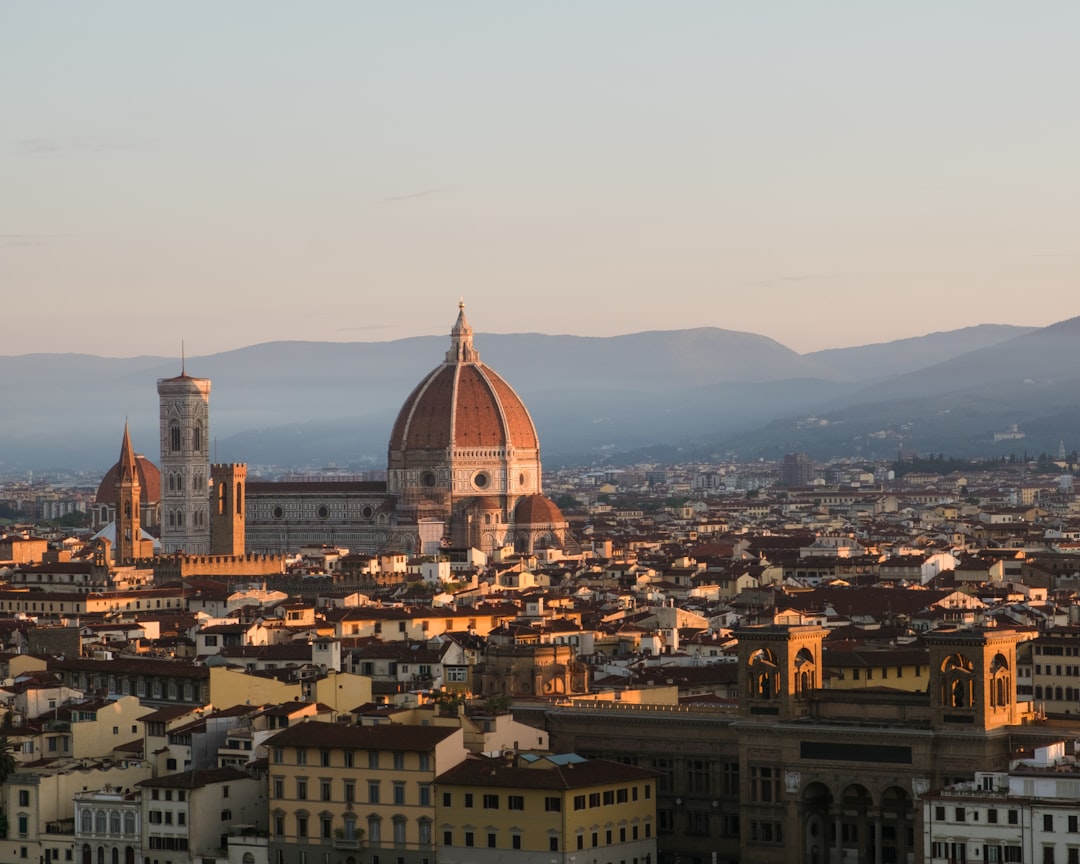
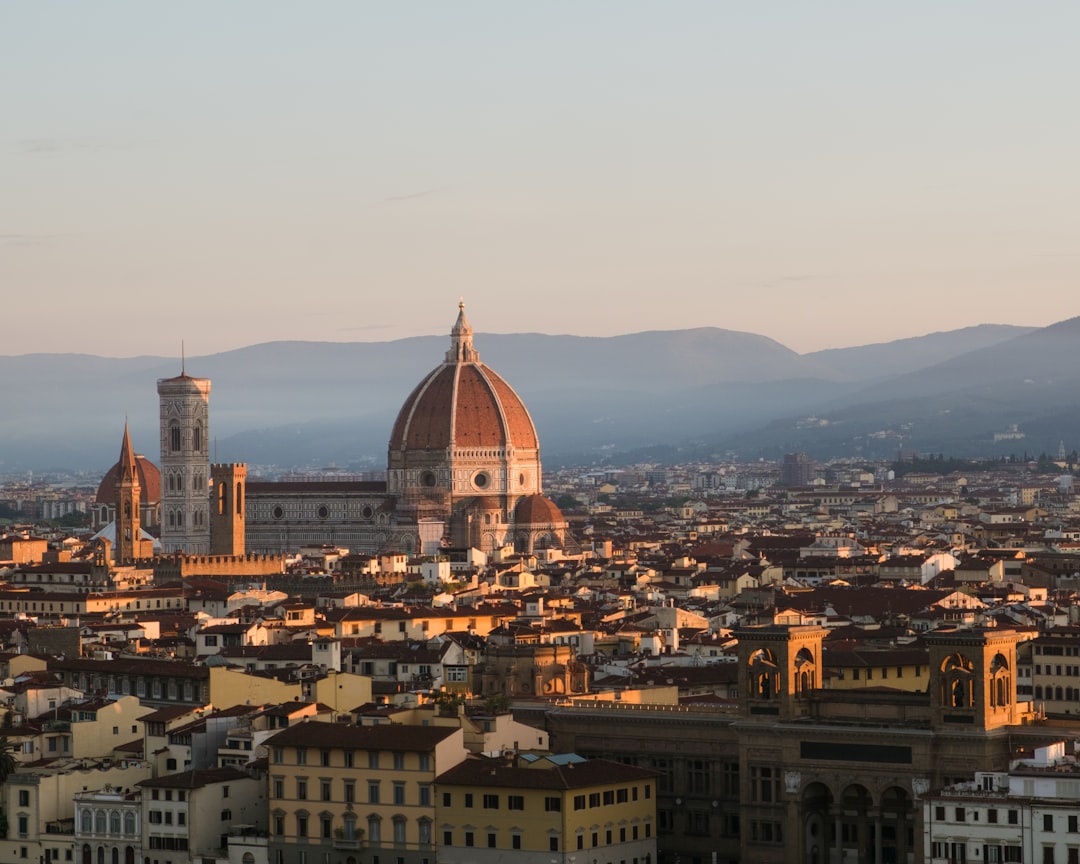
10 Best Things to Do in Florence, Italy — beyond the obvious
A long-term visitor's guide to the city that rewards patience, appetite, and a willingness to look slightly to the left of where everyone else is looking
L
Una guida di
Lena Hofmann
Aggiornata il
29 aprile 2026
Lettura
13 minuti
Comprende
10 luoghi · mappa interattiva
★ Guida d'Italia 2026
Pianifica con cura. Viaggia più a fondo.
1.3M+ luoghi curati nel mondo, mappe offline e itinerari intelligenti — tutto in un'app gratuita.
1.3M+ luoghiMappe offlineItinerari AIGratis
I have lost count of how many times I have stood in the queue for the Uffizi and watched people check their phones while shuffling forward in the sun. I have done it myself. Florence has a way of making you feel that if you are not standing in front of a Botticelli, you are wasting your time — that the city's entire purpose is to funnel you from one canonical experience to the next, from the Accademia to the Ponte Vecchio to a mediocre bistecca at a restaurant with a laminated menu and photographs of the food. The city, which receives well over fifteen million visitors a year, has become expert at absorbing that pressure without quite cracking under it. The historic centre still functions as a living city — people buy bread, argue about parking, take their children to school — even as the tourist apparatus wraps itself around every corner like ivy on old stone.
The thing about Florence is that it genuinely is as rich as advertised, which is both its fortune and its problem. The Renaissance happened here with a density and a self-consciousness that still feels almost aggressive: you cannot walk two hundred metres without encountering something that changed the course of Western art. That weight can be paralysing. Visitors arrive with a list and leave having ticked the list, and somewhere in between they miss the city entirely.
What follows is not a contrarian rejection of the famous things. Some of the famous things are famous for good reason. But it is an attempt to describe Florence as a place that can be inhabited rather than merely visited — a city of side streets, offal sandwiches, encoded self-portraits, and churches that have been doing their quiet work for a thousand years without anyone particularly noticing.
Everyone arrives at Florence: Piazza della Signoria with the same intention — to photograph the copy of Michelangelo's David outside the Palazzo Vecchio, glance at the Fountain of Neptune (which Florentines have always mocked as a waste of good marble), and move on. The square rewards a slower approach. The Palazzo Vecchio itself, a 14th-century fortress-palace that still functions as the city's town hall, is worth entering for the Salone dei Cinquecento alone, a room so large and so covered in Vasari's propaganda frescoes that it takes a few minutes for the eyes to adjust. The piazza outside it is not a museum piece — it is a functioning civic space that has hosted executions, bonfires of the vanities, and political rallies. Savonarola was burned here in 1498, more or less where the tourists now eat gelato.
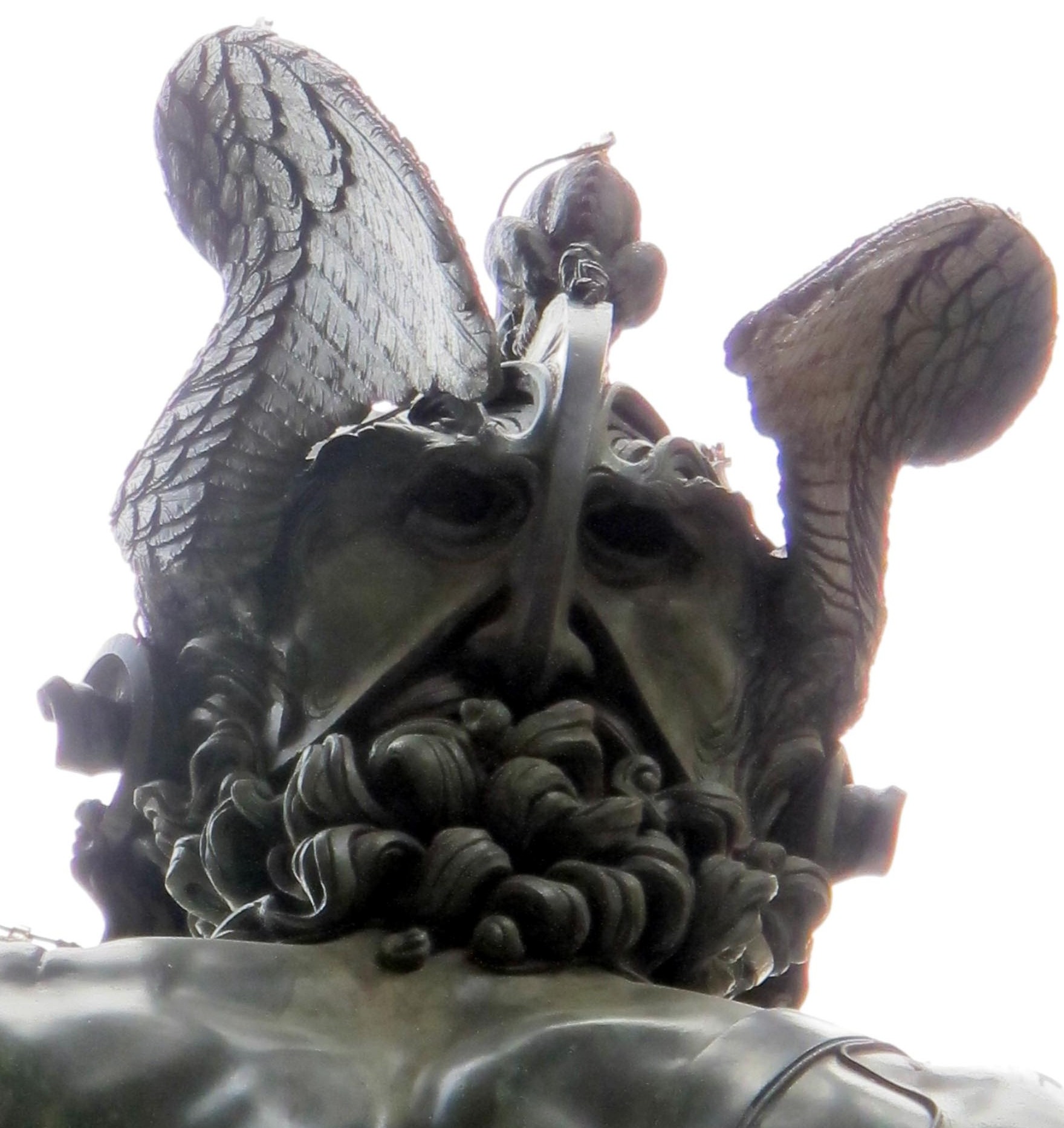
The Loggia dei Lanzi, the open-air sculpture gallery on the south-east corner, is perpetually underexamined. Most people photograph Cellini's Perseus and leave. Stand there for twenty minutes and you will notice that almost nobody does.
Il consiglio del team
Go at 8am, before the tour groups arrive. The piazza has a completely different character — delivery vans, pigeons, a man reading a newspaper — that disappears by nine.
This is the kind of detail that travel writers claim to have discovered independently, and almost never have. The secret of Firenze e l'autoritratto nascosto di Benvenuto Cellini is that the sculptor embedded his own face in the back of Perseus's head — visible if you walk behind the statue and look at the figure's neck and hair with some patience. Cellini was not modest about his talents (his autobiography is one of the most entertainingly self-aggrandising documents of the Renaissance), so the gesture feels less like humility and more like a signature, a small act of authorial insistence in a city where patrons tended to take most of the credit.
The Loggia dei Lanzi, where Perseus has stood since 1554, is free to enter at any hour the piazza is open. That the self-portrait goes unnoticed by the majority of visitors is less a comment on their inattentiveness than on the speed at which modern tourism moves.
Il consiglio del team
Walk around to the rear of the bronze base as well — Cellini packed the pedestal with additional figures that most visitors never see.
A few steps from the piazza's main entrance, on the wall to the right of the main door of Palazzo Vecchio ed il Volto segreto di Michelangelo — near Via della Ninna — there is a profile scratched into the stone. The tradition holds that it is by Michelangelo, drawn with a nail while he waited outside, though the attribution has never been definitively proved and probably never will be. What is certain is that it has been there for centuries, that it is a remarkably assured piece of draughtsmanship for what amounts to graffiti, and that almost every person who walks past it does so without looking up.
The city of Florence is full of these lateral details — things that are not on the official map, not behind a ticket barrier, not explained by a laminated sign. Finding them requires only the habit of looking at walls.
Il consiglio del team
The profile is at roughly eye level, on the right-hand side of the main entrance. If you are looking at the door straight on, turn right and scan the stone blocks — it takes a moment to resolve.
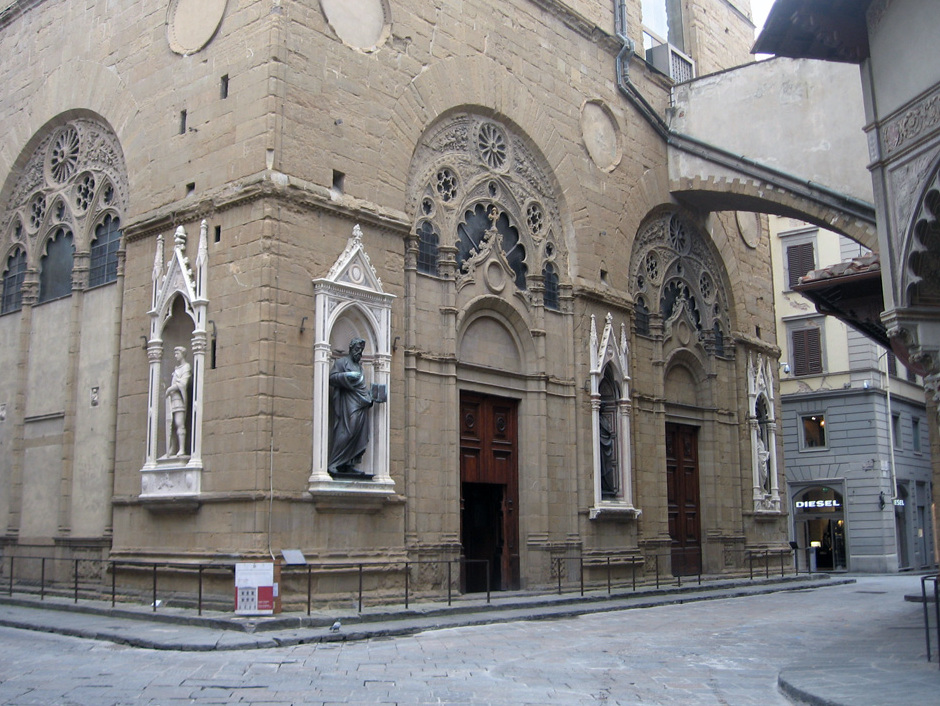
The Chiesa e Museo di Orsanmichele sits on Via dei Calzaiuoli, the pedestrian artery between the Duomo and Piazza della Signoria, which means that thousands of people walk past it every day without registering it as a church at all. The building's history explains the confusion: first documented in 895 as an oratory of San Michele, it was later demolished and rebuilt as a grain market in the 14th century, with the ground floor serving commerce and the upper floors storing emergency grain reserves. The church function was eventually reinstated inside, producing an architectural hybrid that is unlike anything else in the city — Gothic arches containing a tabernacle by Orcagna, surrounded by what was once a loggia for merchants.
The exterior niches, commissioned by the city's guilds and filled with sculptures by Ghiberti, Donatello, and Verrocchio (mostly copies now, the originals upstairs in the museum), constitute an open-air survey of early Renaissance sculpture that you can examine at close range, for free, at any time of day.
Il consiglio del team
The museum on the upper floors is open on limited days — check the current schedule before visiting. The view from up there, across the rooftops toward the Duomo, is worth the small effort of timing your visit correctly.
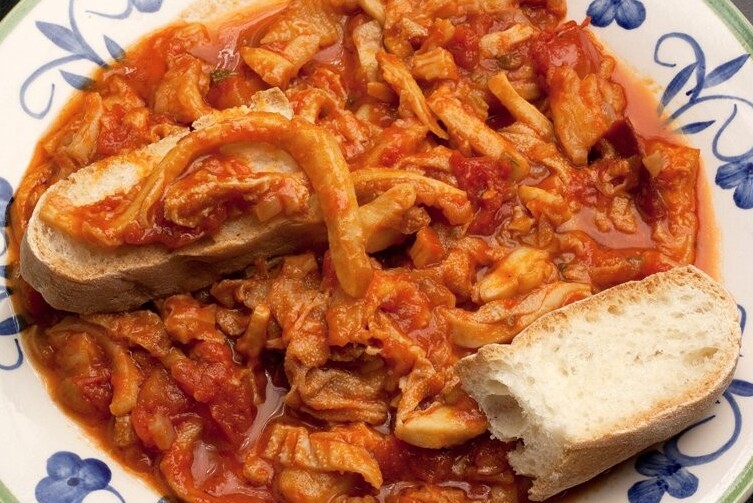
There is a moment, usually on the second or third day in Florence, when a visitor realises that the most interesting food in the city costs about three euros and is eaten standing at a metal counter, not sitting at a restaurant with a view of the Arno. The panino con la trippa alla fiorentina is the clearest example. The trippai — the vendors who operate small carts or kiosk-like stalls, some of which have been in the same families for generations — serve tripe (the lining of the cow's stomach, slow-cooked in tomato and herbs) in a bread roll, sometimes with a spoonful of salsa verde or a pinch of chilli. It is not a dish designed to appeal to the ambivalent. It is rich, slightly gelatinous, and smells of the abattoir in a way that takes some getting used to.
The most famous trippaio is at the Mercato Centrale, but there are others scattered across the centre. The ritual matters as much as the food: you order, you eat standing up, you wipe your hands on a paper napkin, you move on.
Il consiglio del team
Ask for it bagnato — the vendor will dip the top of the roll in the cooking broth before closing it. This is not advertised. It is the correct way.
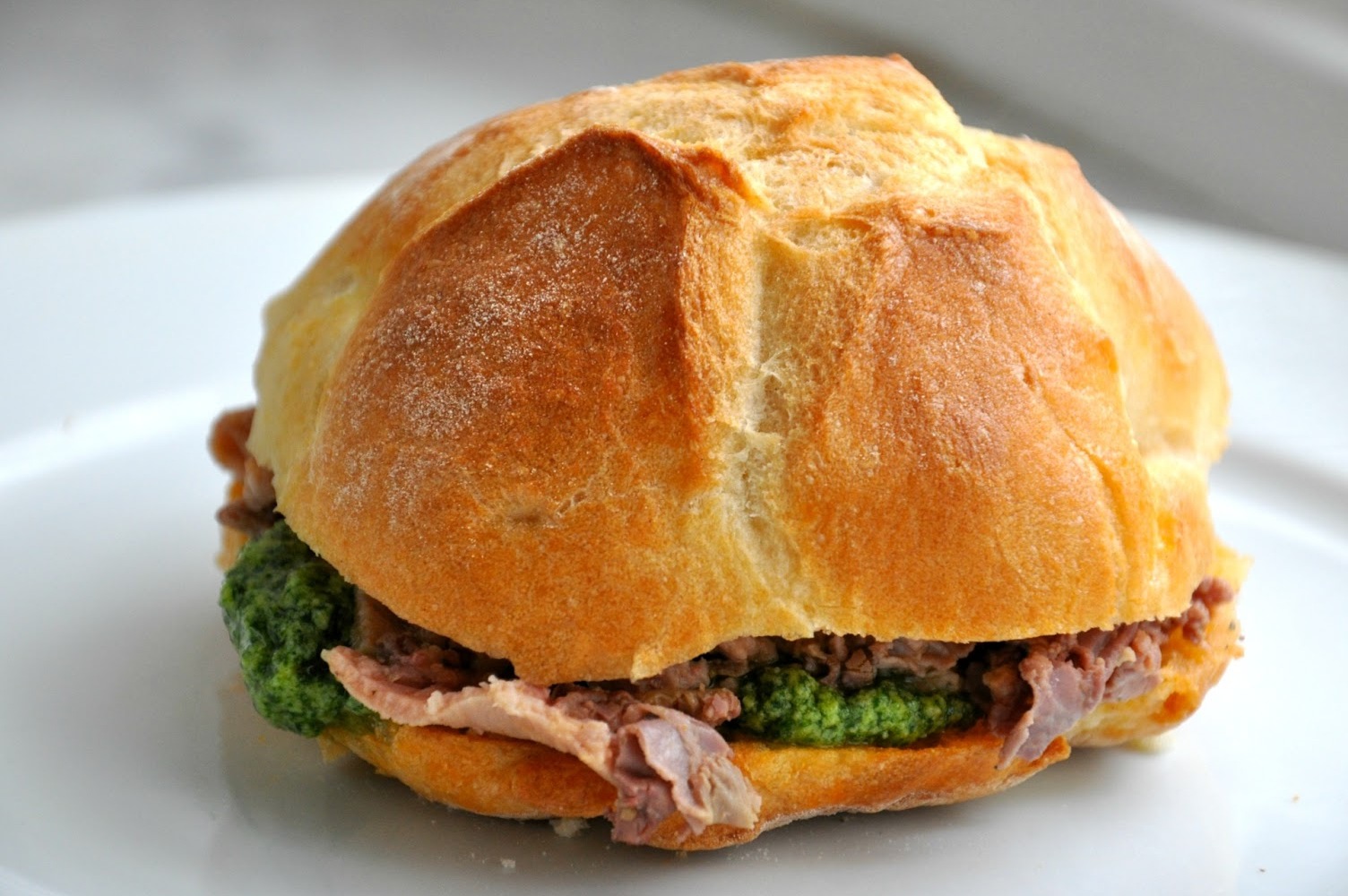
Firenze. il Lampredotto occupies a specific and slightly higher rung in the Florentine offal hierarchy. While tripe is made from various parts of the bovine stomach, lampredotto comes exclusively from the abomasum — the fourth stomach — slow-braised until it collapses into something soft, dark, and intensely flavoured. The name is thought to derive from a resemblance to the lamprey eel, which is either an appetising or deeply unappealing association depending on your disposition. The sandwich is served the same way as the tripe panino, often by the same vendors, and the same bagnato instruction applies.
What is worth understanding about both of these dishes is that they represent a specific Florentine relationship with economy and with place. These were the foods of the workers who built and cleaned and carried things in a city that was simultaneously producing the most expensive art in Europe. That tension — between the monumental and the quotidian — is, in many ways, what Florence is about.
Il consiglio del team
Nerbone, inside the Mercato Centrale, has been serving lampredotto since 1872. It is not a secret, but it is reliable, and the market itself is worth an hour of your time regardless.
Toscana | "IL PAN DI RAMERINO" is one of those regional products that has survived not because of tourism but in spite of it. The name tells you most of what you need to know: ramerino is the Tuscan word for rosemary, and the bread is made from a simple dough enriched with olive oil, rosemary, and raisins — a combination that sounds improbable until you taste it. It was traditionally made for Holy Thursday, though you can find it year-round in the better bakeries. The sweetness of the raisins against the resinous herb and the slight bitterness of good olive oil is the kind of flavour that takes a moment to understand.
Finding a good pan di ramerino requires going to a forno that still bakes it properly, which means avoiding the tourist-facing bakeries near the main monuments and walking a few streets further into residential neighbourhoods. The bread is small, round, scored on top, and slightly glossy from the oil.
Il consiglio del team
The Oltrarno neighbourhood — south of the Arno — has several old-school bakeries that still make it. Buy it warm and eat it without anything on it.
The framing of Cosa vedere a Firenze nel 2026 — a guide to the city's essential places — is useful partly because it acknowledges something that most tourist literature prefers to ignore: Florence in high season is a city under considerable strain. The historic centre, which is not large, receives a volume of foot traffic that would test any urban fabric. The parks and gardens offer a structural alternative that most visitors do not take. The Boboli Gardens, behind the Pitti Palace, are the obvious choice and accordingly crowded, but the Giardino delle Rose on the hillside below Piazzale Michelangelo is less visited and has a view across the city that requires no queue and no ticket. The Cascine park, stretching west along the Arno, is where Florentines actually go on Sunday mornings — a long, flat strip of trees and paths used for running, cycling, and the weekly market.
The city rewards people who leave the centre on foot. The hills above the Oltrarno, the via delle Rampe, the path up to San Miniato — these are not dramatic detours. They are twenty-minute walks.
Il consiglio del team
The Giardino dell'Iris, on the hillside near Piazzale Michelangelo, is open for a limited period in spring when the irises bloom. It is free, almost entirely unvisited, and the city below it is spread out like a map.
Dante e la chiesa di Santa Margherita sits in a narrow lane off Via del Corso, a few steps from the Casa di Dante — the reconstructed house that is more museum than authentic medieval structure. The church itself, which dates to 1032, is genuinely old and genuinely small: a single nave, a few votive objects, a basket near the door where visitors leave notes addressed to Beatrice Portinari, the woman Dante loved from a distance and immortalised in the Vita Nuova and the Commedia. The tradition of leaving notes — requests for love, for consolation, for a specific person to return a feeling — has no official sanction and no particular antiquity, but it has accumulated into something quietly affecting.
The church is known locally as 'la chiesa di Dante' because this is supposedly the parish where the Portinari family worshipped, and where the poet may have encountered Beatrice. The historical evidence for this is thin. The emotional logic of the place is not.
Il consiglio del team
The church is small enough that a tour group fills it entirely. Go early morning or late afternoon, when it is likely to be empty, and take a few minutes to read some of the notes in the basket — they are in a dozen languages.
The conversation around Secret World vs Google Trips — and by extension, around any of the digital tools that promise to optimise a Florence itinerary — points to a genuine problem with how the city is now visited. Florence, the cradle of the Renaissance, is a city that rewards slowness and punishes efficiency. The instinct to maximise, to see everything on the list in the fewest possible days, produces a particular kind of exhaustion that is not physical but perceptual: you stop seeing things because you have seen too many things.
The most useful planning advice is structural rather than logistical. Book the Uffizi and the Accademia in advance — the queues without reservations are genuinely punishing, especially in summer — and then leave the rest of the day unscheduled. Florence is a city where the best things tend to happen in the margins: a courtyard you walked into by accident, a conversation with a vendor, a church door that happened to be open. No app optimises for that.
Il consiglio del team
The Uffizi is open until 10pm on certain evenings in summer. An evening visit, when the light through the windows changes and the crowds thin, is a categorically different experience from a midday one.
There is a line attributed to various Florentines, and probably invented by none of them, to the effect that the city is a museum that people happen to live in. It is meant as a complaint, and it is one worth taking seriously. Florence has been so thoroughly processed by centuries of cultural tourism — the Grand Tour, the Victorian pilgrimage, the contemporary package holiday — that it sometimes feels less like a city than like a very large and very beautiful argument about what cities are for.
And yet. The trippai are still there at seven in the morning. The old women still argue in the queues at the post office on Via Pellicceria. The Arno still floods, occasionally and destructively, as it has since before Dante was born. The notes in the basket at Santa Margherita accumulate in languages that no medieval Florentine could have imagined.
What Florence asks of the people who visit it — and this is not a small ask — is that they pay attention to the city that exists alongside the city they came to see. Not instead of it. Alongside it. The Botticellis are real and they are worth the queue. But so is the bread with rosemary and raisins, eaten standing up on a Tuesday morning in November, when the tourist season has ended and the city has gone back to being itself.
★ Guida tascabile
Porta questa guida con te.
Salvala offline, ottieni le indicazioni a piedi e scopri migliaia di luoghi come questi.
When is the best time to visit Florence to avoid the worst of the crowds?
November through February is when the city is most manageable, though some smaller museums and gardens operate on reduced hours. March and October offer a reasonable compromise — mild temperatures, shorter queues, and the city still functioning at its normal pace. July and August are genuinely difficult: the heat in the narrow streets of the historic centre is oppressive, and the main monuments are at their most congested. If you must visit in summer, arrive early — most major sites open at 8 or 8:30am, and the first hour is markedly calmer than anything after 10.
Do I need to book the Uffizi and Accademia in advance?
Yes, without qualification, from roughly April through October. The Uffizi in particular has a reservation system that allows you to book a specific entry time; without it, same-day queues can run to several hours. The Accademia — home to the original David — is smaller and fills faster. Both can be booked through their official websites. Be aware that third-party booking platforms add a service fee; the official sites are marginally cheaper and the tickets are the same.
Is the historic centre walkable, or do I need public transport?
The historic centre is compact enough that most of the destinations in this guide are within fifteen to twenty minutes' walk of each other. The city has a bus network and a tram line connecting the centre to the main train station and outer neighbourhoods, but within the ZTL — the restricted traffic zone that covers most of the historic centre — private vehicles are prohibited. Taxis and ride-share services can drop you at the edge of the zone. For the Oltrarno and the hillside above it, walking is both practical and, on a clear day, its own reward.
Where should I eat if I want to avoid tourist-trap restaurants?
The simplest rule is distance from the main monuments. Restaurants within two hundred metres of the Duomo, the Uffizi, or the Ponte Vecchio are, with rare exceptions, priced for people who will never return. Walk ten minutes in any direction — particularly toward the Oltrarno, or into the Sant'Ambrogio neighbourhood east of the centre — and the ratio of locals to tourists in any given trattoria shifts noticeably. The trippai and lampredottai carts are a reliable baseline: if a place serves street food to Florentines at seven in the morning, it is not optimised for the tourist trade.
What are the most common mistakes first-time visitors make in Florence?
Trying to see too much in too little time is the most common. Florence is not a city that rewards the itinerary approach — it rewards the habit of stopping, looking, and occasionally abandoning the plan. The second mistake is eating every meal at a sit-down restaurant with a view; some of the most characterful food in the city is served at counters, in markets, or from carts. The third is ignoring the churches that don't charge admission: Orsanmichele, Santa Margherita, and dozens of others are free, uncrowded, and contain work that would be the centrepiece of any museum in a smaller city.
★ Leggila quando vuoi
Salvala sul tuo telefono.
Aggiungi questa guida ai preferiti, pianifica il viaggio offline, scopri luoghi come questi.