10 Best Things to Do in Dubai, UAE — beyond the obvious
A long-term resident's unsentimental guide to a city that rewards the patient and confounds the rushed
L
Una guida di
Lena Hofmann
Aggiornata il
22 ottobre 2026
Lettura
13 minuti
Comprende
7 luoghi · mappa interattiva
★ Guida d'Italia 2026
Pianifica con cura. Viaggia più a fondo.
1.3M+ luoghi curati nel mondo, mappe offline e itinerari intelligenti — tutto in un'app gratuita.
1.3M+ luoghiMappe offlineItinerari AIGratis
I moved to Dubai telling myself it would be eighteen months. That was several years ago. The city has a way of doing that — not through charm exactly, but through a kind of relentless forward motion that makes everywhere else feel slightly slow. I've watched whole neighbourhoods appear from sand. I've watched other neighbourhoods, perfectly functional ones, get bulldozed to make way for something taller and shinier. I've eaten extraordinary food in strip malls and mediocre food in restaurants that cost more than my first car. I have, I'll admit, done the Burj Khalifa twice — once because I wanted to, once because my mother visited and I didn't feel I could refuse her.
Dubai is a city that attracts a particular kind of criticism from people who haven't spent much time here: that it's artificial, soulless, a mirage built on migrant labour and oil money. None of that is entirely wrong, and none of it is entirely fair. The city is contradictory in ways that take time to appreciate. The old creek district feels genuinely lived-in. The desert at the edge of the city is real desert, not a theme park version of one. The food, if you know where to look, reflects one of the most diverse urban populations on earth — roughly two hundred nationalities, which is not a marketing statistic but a fact you feel every time you eat somewhere that isn't a hotel.
What follows is not a list of the tallest, the biggest, or the most expensive. It is, instead, a list of things that have given me genuine pleasure or genuine understanding of this strange, serious, occasionally absurd place. Some of them are well known. None of them are easy to reduce to a caption.
Before you arrive, a practical confession: Dubai is genuinely difficult to navigate without some form of digital scaffolding. The city is not built for wandering. Distances that look manageable on a map turn out to be forty-minute drives in traffic. Neighbourhoods that appear adjacent are separated by highways with no pedestrian crossing for half a kilometre in either direction. The debate around planning tools — whether something like Secret World vs TripIt: La Migliore App per Dubai 2026 represents a meaningful improvement over older itinerary apps — is less trivial than it sounds. The real question any tool has to answer is not 'what is there to do' but 'how do I sequence it so I don't spend my entire trip in a taxi.' Dubai rewards pre-planning more than almost any city I know. The people who have the worst time here are invariably the ones who assumed it would be walkable.
Il consiglio del team
Download an offline map before you land. Mobile data roaming costs are unpredictable, and you will absolutely need navigation the moment you leave the airport.
The concept of a perfect Dubai weekend, as explored in resources like Weekend a Dubai: l'itinerario perfetto con Secret World, tends to assume a particular kind of visitor: someone arriving on a long layover from Europe or Asia, someone who wants the skyline photograph and the gold souk and a meal somewhere with a view. That visitor is not wrong to want those things. But a genuinely useful weekend itinerary should build in one morning with no agenda — specifically a Friday morning in Deira, the old commercial district on the north side of the creek, where the wholesale spice market operates at a pace that has nothing to do with tourism. The smell of cardamom and dried limes at seven in the morning is as close as Dubai gets to an unreconstructed sensory experience.
Il consiglio del team
Friday is the first day of the UAE weekend. Most tourists are sleeping off Thursday night. The creek and Deira are quietest and most themselves before nine a.m.
The pitch behind AI Trip Planner 2026: Scopri Dubai con Secret World is that machine intelligence can personalise a Dubai itinerary in ways that static guidebooks cannot. This is probably true, and also probably overstated. What no algorithm has yet managed is to account for the specific texture of disappointment that is part of any honest Dubai experience: the observation deck that is inexplicably closed for maintenance, the restaurant that was excellent six months ago and has since changed its chef and its entire menu. Dubai moves faster than any database can update. The most useful thing an AI planner can do is tell you what exists. Whether it is worth your time on a particular Tuesday in a particular season is still a matter of human judgment, preferably the judgment of someone who was there last month.
Il consiglio del team
Cross-reference any AI-generated itinerary with recent posts on local expat forums. Openings, closures, and quality shifts happen at a pace that most travel platforms cannot track in real time.
There is a version of Dubai that exists entirely on the surface: the towers, the malls, the beach clubs. Most visitors see only this version, and most of them enjoy it, and most of them leave with photographs that could have been taken by anyone. The kind of preparation suggested by resources like Viaggio a Dubai: Consigli e Itinerari per il 2026 — reading about the city's history, understanding the relationship between the seven emirates, knowing that Dubai's transformation from a pearl-diving port to a global transit hub happened within a single human lifetime — changes what you actually see when you're standing in front of it. The Al Fahidi Historical Neighbourhood, the old wind-tower district in Bur Dubai, makes considerably more sense when you understand that those towers were not decorative but functional: the original air conditioning, channelling desert wind into the rooms below.
Il consiglio del team
The Dubai Museum inside Al Fahidi Fort is small and slightly dated in its presentation, but its collection of photographs from the 1960s and 1970s is worth the modest entry fee for the context alone.
Every piece of advice about Dubai, including this one, should begin with a frank statement about the weather. Viaggio Dubai: Consigli e Itinerari per il 2026 and similar planning guides are correct to emphasise that the city has two very different versions of itself. Between November and March, the temperature is genuinely pleasant — low twenties in the day, cool enough at night to sit outside without discomfort. Between June and September, the heat is not merely uncomfortable but physically limiting: forty-five degrees with humidity that makes the air feel solid. Outdoor attractions, desert excursions, and the old creek area are best experienced in the cooler months. This is not a minor logistical detail. It is the single most important variable in whether your trip is enjoyable or an exercise in moving between air-conditioned spaces.
Il consiglio del team
If you must visit in summer, structure your days so that anything outdoors happens before nine a.m. or after sunset. The city at night in July is actually tolerable, and the light on the towers is different — softer, more orange.
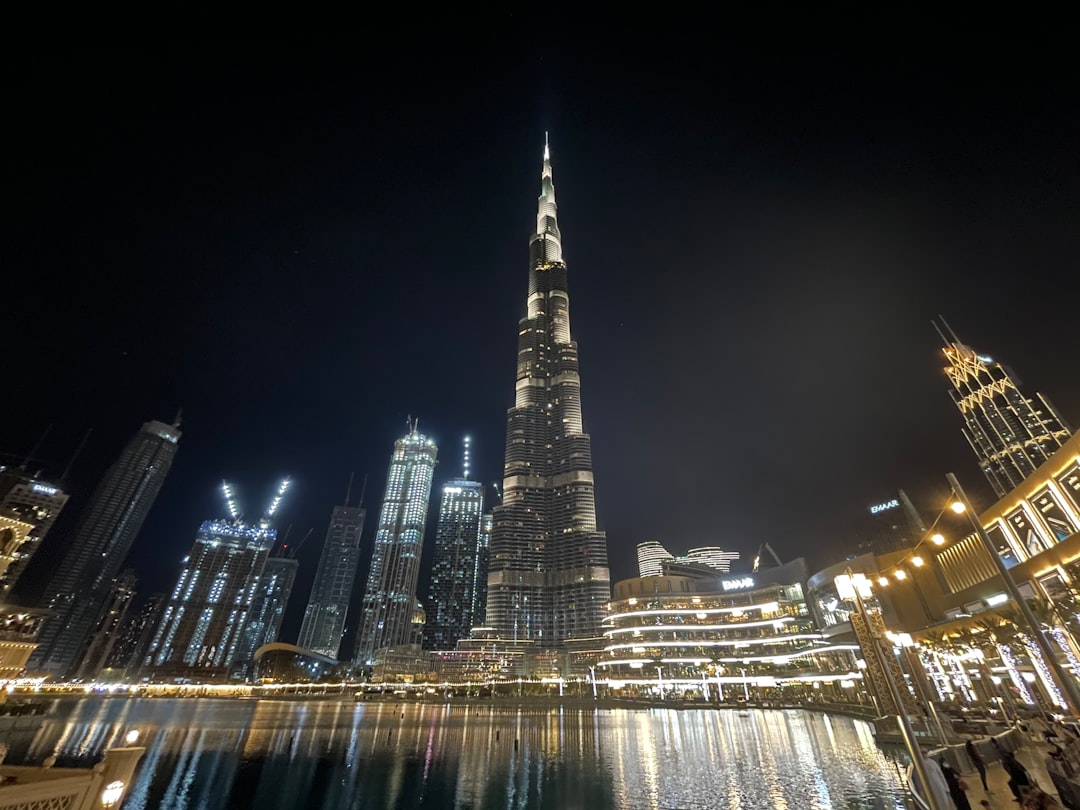
I said I would not make this a list of the obvious, and here I am, including the Burj Khalifa. But the Burj Khalifa: l'icona di Dubai che sfida il cielo is worth including not because it is the world's tallest building — a fact that has been true since its completion in 2010 and will eventually stop being true — but because the view from the observation deck on the 124th floor tells you something about Dubai's geography that no map quite communicates. From up there, you can see how thin the strip of development actually is: a narrow corridor of towers along the coast and the main highways, and then, almost immediately, desert. The city that looks so overwhelming from street level is, from altitude, a relatively modest intrusion into a very large landscape. The queue for the standard ticket is genuinely long. Book the first slot of the morning.
Il consiglio del team
The 'At the Top Sky' experience on the 148th floor costs significantly more but includes a terrace. The standard deck is glass-enclosed. If you are going to do it, the terrace is worth the difference.
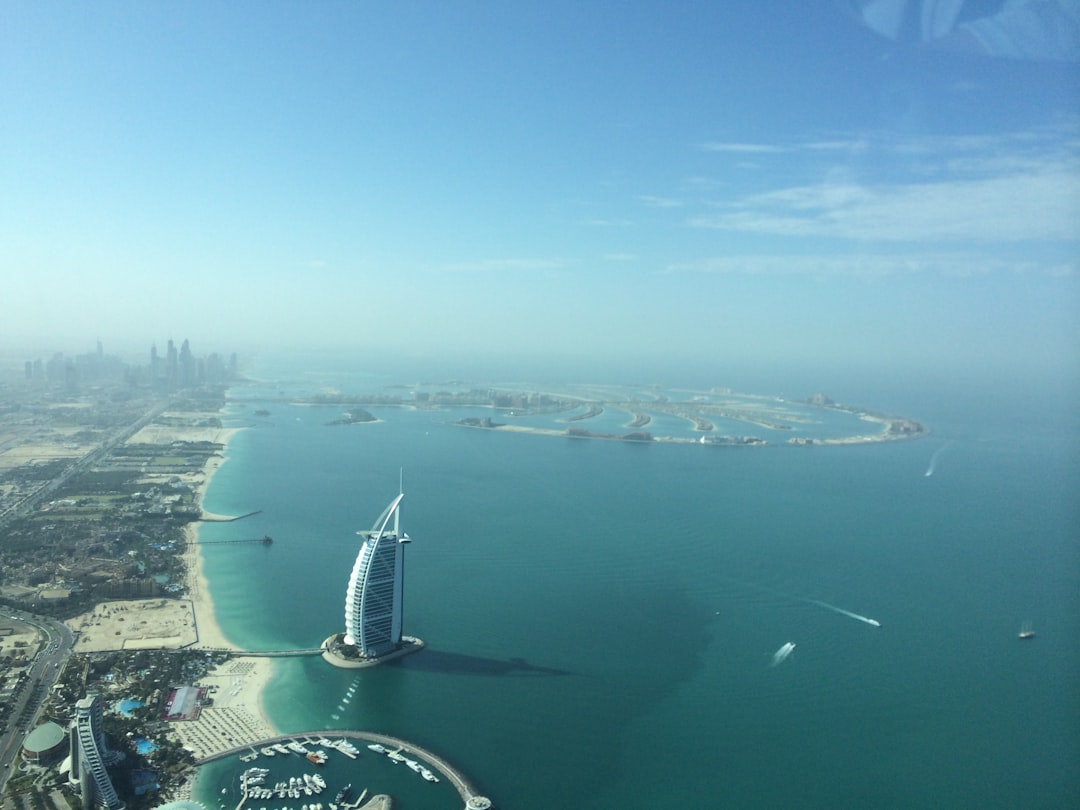
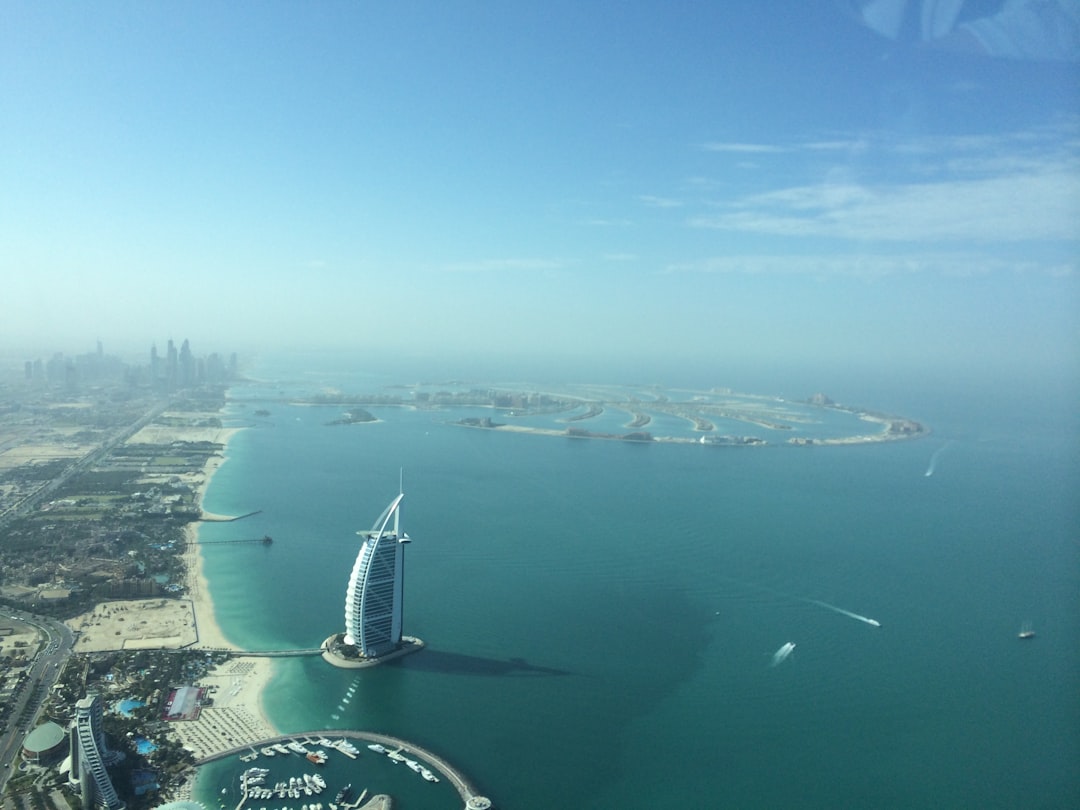
The Souk Madinat Jumeirah is not, by any honest measure, an authentic market. It was built in the early 2000s as part of the Madinat Jumeirah resort complex, designed to evoke traditional Arabian architecture — the wind towers, the narrow covered walkways, the abra boats on the artificial waterways — in a setting that is, at its core, a luxury retail and dining environment. Scopri il Souk Madinat Jumeirah: Un Mercato Iconico a Dubai is the kind of entry that appears in every Dubai guide, and not without reason. The construction is well done. The view of the Burj Al Arab from the waterway is one of the better composed views in the city. The restaurants along the water are, several of them, genuinely good. What it is not is a place to bargain, to find anything locally made, or to experience commerce as the residents of Dubai actually experience it. Go for a drink at dusk. Don't mistake it for the real thing.
Il consiglio del team
The textile souk in Bur Dubai and the gold and spice souks in Deira are a forty-dirham taxi ride away and will give you a more honest version of what market commerce in this city actually looks like.
Dubai will not be everyone's city. It asks a particular kind of patience — with heat, with scale, with the occasional sense that the place is still deciding what it wants to be. Some of the things I have described here will have changed by the time you read this. A restaurant will have closed or changed hands. A neighbourhood that felt emergent will have been finished or abandoned. This is not a failure of the city; it is the city's essential nature. Dubai has always been a place in the process of becoming something else.
What I have tried to resist, in this list, is the temptation to make Dubai sound either better or worse than it is. It is not a city of hidden depths waiting to be discovered by the discerning traveller. It is a city with visible, complicated, sometimes uncomfortable depths that reward the visitor who looks at them directly rather than around them. The abra crossing costs one dirham and takes five minutes. The view from the Burj Khalifa shows you how much desert there is. The food in International City is made for people who live here, not for people passing through. These are not secrets. They are just things that require a little more effort than taking the elevator to the observation deck and pointing a camera at the horizon.
The effort is worth it. I say this as someone who has been making it for several years and has not yet stopped finding things that surprise me.
★ Guida tascabile
Porta questa guida con te.
Salvala offline, ottieni le indicazioni a piedi e scopri migliaia di luoghi come questi.
November through March is the most comfortable period, with daytime temperatures typically between eighteen and twenty-eight degrees Celsius. April and October are transitional — warm but manageable. May through September is genuinely difficult for outdoor activity; temperatures regularly exceed forty degrees and humidity is high along the coast. If you are visiting primarily for indoor attractions, the summer months offer significantly cheaper flights and hotel rates, and the city's malls and indoor venues are uncrowded.
Do I need to dress conservatively in Dubai?
In practice, the dress code in Dubai is more context-dependent than a single rule can capture. In malls, restaurants, and tourist areas, Western clothing is widely worn without issue. At mosques and in the older souk districts of Deira and Bur Dubai, covering shoulders and knees is both respectful and expected. On public beaches, swimwear is acceptable. At beach clubs attached to hotels, the rules are more relaxed still. The main thing to avoid is anything that would be considered explicitly inappropriate in a public space — which is a standard that most visitors apply without thinking about it.
Is Dubai expensive for tourists?
It depends entirely on how you use the city. Hotels and restaurants at the luxury end are among the most expensive in the world. But the metro is cheap and efficient, the abra crossing costs one dirham, and eating in neighbourhoods like International City or at the canteen-style restaurants in Deira costs very little. A visitor who stays in a mid-range hotel, uses public transport, and eats where residents eat can have a perfectly good trip without spending at luxury rates. The city does not require expensive consumption; it just makes expensive consumption very easy to stumble into.
Is alcohol available in Dubai?
Alcohol is available in licensed venues — hotels, certain restaurants, and a small number of standalone bars — but not in public spaces, on the street, or in unlicensed restaurants. The selection is wide and the quality is generally good, but prices are high due to taxation. Drinking in public or being visibly intoxicated outside a licensed venue carries legal consequences. The practical reality for most tourists is that alcohol is easily accessible within hotels and the venues attached to them, and the restrictions are not particularly intrusive as long as you are not looking to drink in the old souk districts or on the metro.
How do I get around Dubai without a car?
The Dubai Metro covers the main tourist corridor reasonably well — from the airport through Downtown Dubai and along Sheikh Zayed Road to the Marina and Jumeirah Beach Residence. It is clean, air-conditioned, and reliable. For destinations off the metro line, taxis are metered, relatively inexpensive by Western European standards, and generally available through the Careem app. Buses exist but are slow and require local knowledge to use efficiently. The abra boats cross the creek for one dirham and are the best form of public transport in the city in terms of sheer experience. Renting a car gives you access to areas the metro does not reach, but parking and traffic in central areas can be a significant frustration.
★ Leggila quando vuoi
Salvala sul tuo telefono.
Aggiungi questa guida ai preferiti, pianifica il viaggio offline, scopri luoghi come questi.