


Chicago resists the kind of easy narrative that cities like New York or Los Angeles generate automatically. It is not glamorous in the obvious way, not gritty in the fashionable way. It is, more than anything, functional — a city built by people who needed it to work, and who built it twice, the second time after the fire of 1871 consumed most of the first attempt. That history of pragmatic reconstruction is visible in the architecture, which ranges from Louis Sullivan's ornate terra-cotta to Mies van der Rohe's steel-and-glass austerity, sometimes within a single city block.
What follows is not a list of the tallest buildings or the most-photographed sculptures, though a few of those appear here because they deserve more serious attention than they typically receive. It is, instead, an attempt to describe what Chicago actually feels like when you move through it slowly, eat in the right neighborhoods, and resist the itinerary that every hotel concierge will hand you with a laminated smile. Some of these places will have queues. Some will disappoint on a bad day. That is, I think, the honest version of the city.
AI Trip Planner Chicago 2026: Rivoluziona la tua esperienza
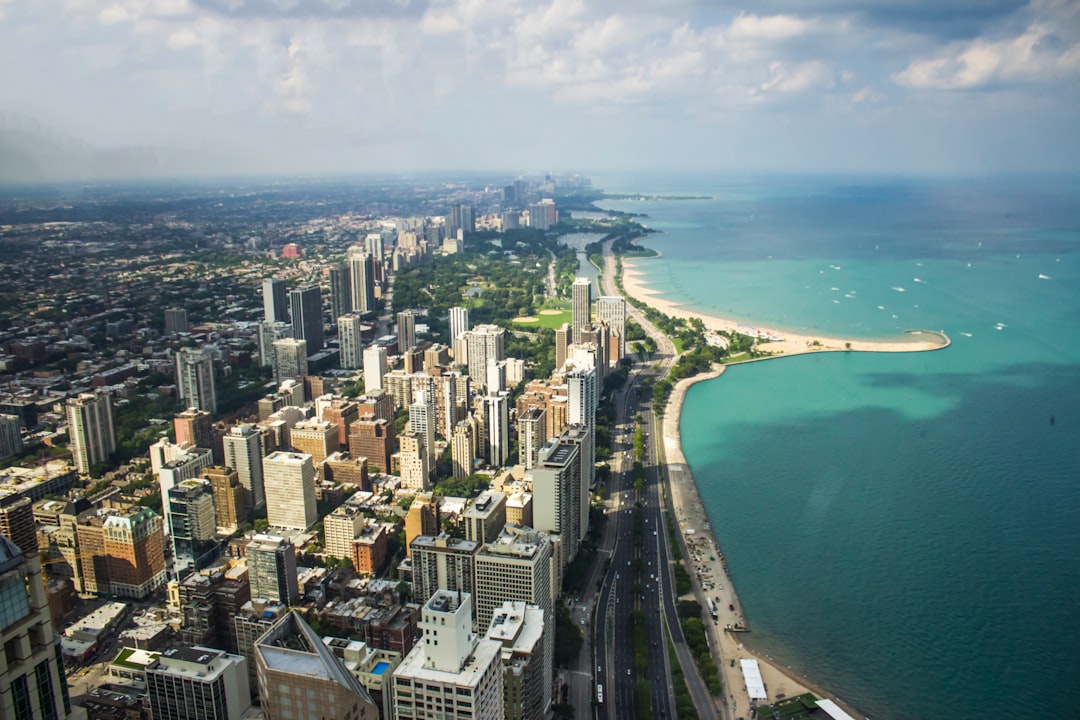
The AI TripAner Chicago 2026 platform, whatever its specific interface, is worth using for one thing above all: building itineraries around the CTA's actual schedule rather than an idealized version of it. The Red Line runs late. The Blue Line is more reliable than its reputation. These are things a good planning tool will tell you; a bad one will not.
Il consiglio del team
Cross-reference any AI-generated itinerary against the CTA tracker app in real time. The system is functional but not forgiving of optimistic timing.
Chicago-Style Deep Dish Pizza
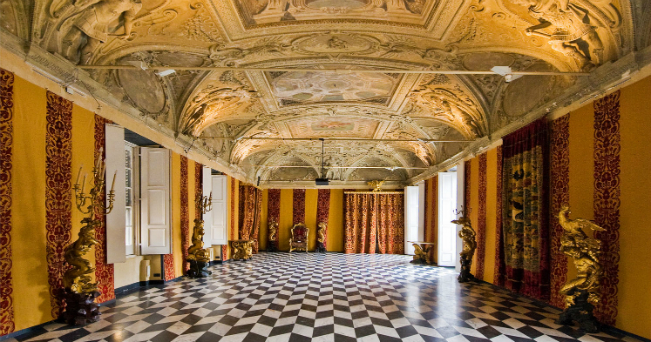
The essential difference is structural. The crust is pressed up the sides of a seasoned cast-iron pan, creating a vessel deep enough to hold layers of cheese, fillings, and then — in the Chicago inversion that still surprises people — a thick layer of crushed tomatoes on top. It takes forty-five minutes to bake. Order it first, then talk. The version at Pequod's in Lincoln Park, with its caramelized cheese crust, is the one that converts skeptics.
Il consiglio del team
Avoid the deep-dish places on Michigan Avenue. The product is identical but the markup reflects the rent, not the quality.
Kiss the Cook BBQ: Un'Icona d'Amore a Chicago
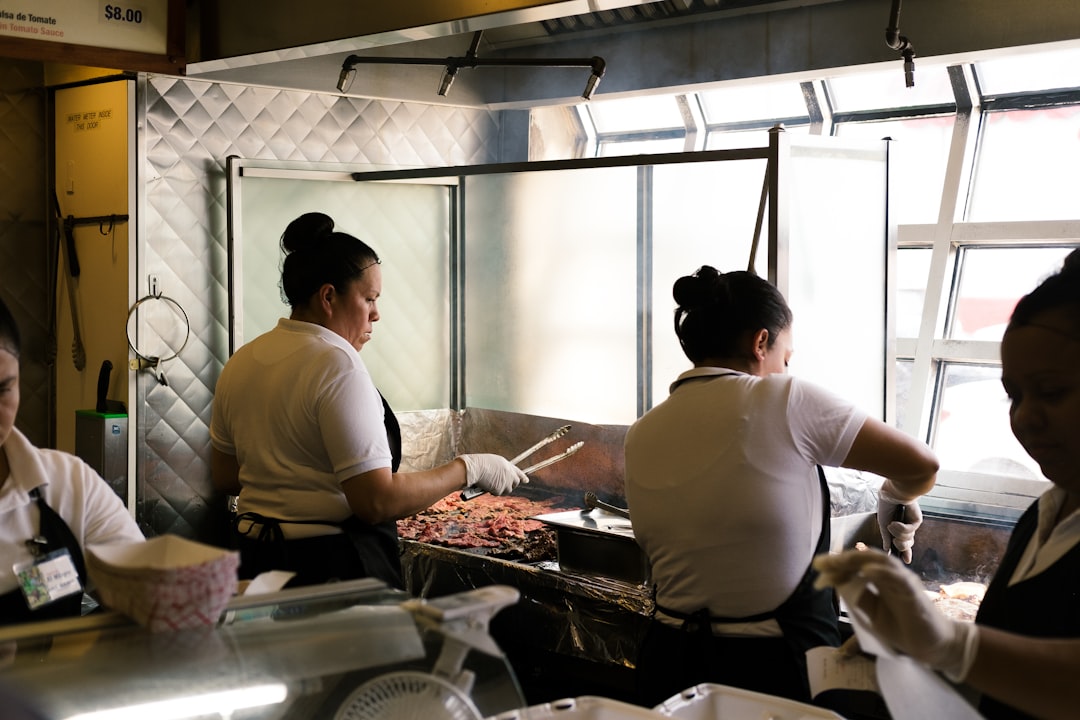
The distance from the center, nearly eight miles, is the point. Getting here requires commitment — a combination of CTA and a short ride, or a direct drive through neighborhoods that tell you more about how Chicago actually lives than anything on the Magnificent Mile. The smoke smell reaches you before the sign does. The seating is not designed for lingering, which is a shame, because the ribs deserve consideration.
Il consiglio del team
Go on a weekday if you can. Weekend crowds at South Side barbecue spots are not a myth, and the best cuts go early.
ART INSTITUTE OF CHICAGO
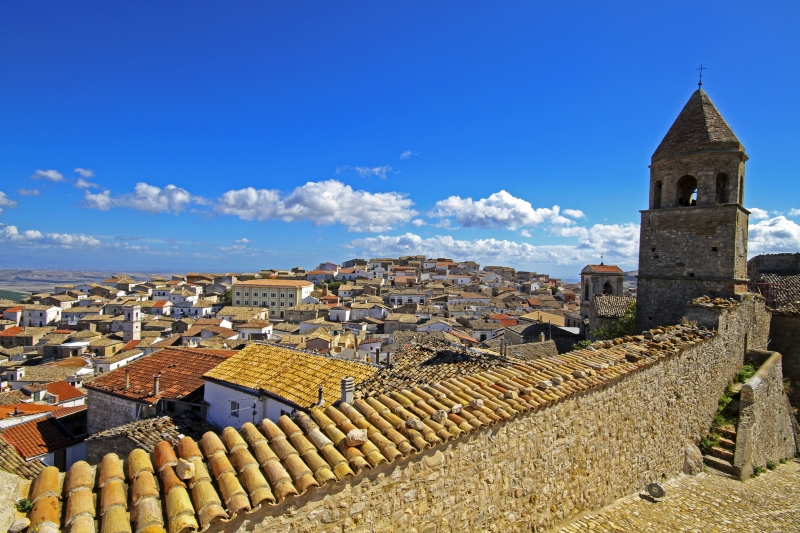
The building itself is worth attention: the original 1893 Beaux-Arts structure on Michigan Avenue, and the Renzo Piano–designed Modern Wing added in 2009, which handles natural light with a restraint that most contemporary museum architecture fails to achieve. Allocate more time than you think you need. The photography collection alone, chronically under-visited, can absorb two hours without effort.
Il consiglio del team
Thursday evenings the museum stays open until eight. The crowds thin considerably after six, and the Impressionist galleries feel entirely different without school groups.
Wood: American Gothic
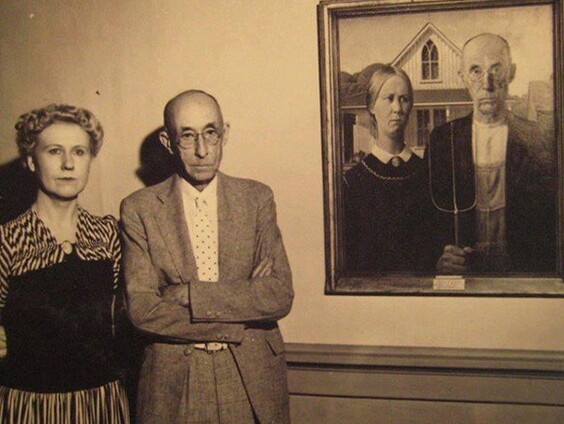
The original hangs in the Art Institute of Chicago, and standing in front of it, you notice things the reproductions obscure: the stitching on the woman's collar, the way the man's face is not angry but exhausted, the pitchfork tines that echo the Gothic window behind them. It is a painting about the weight of a particular kind of American life, and it earns that reading.
Il consiglio del team
The painting is smaller than most people expect — roughly 30 by 25 inches. Position yourself close enough to see the brushwork in the faces.
Crown Fountain in Chicago
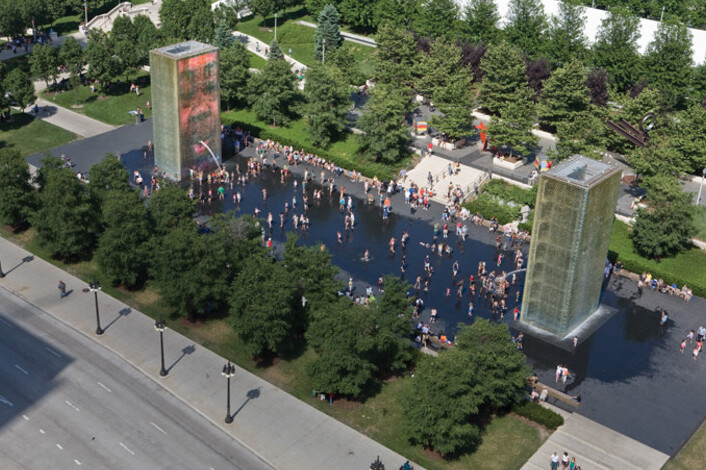
In winter, the water is off and the faces continue their slow rotations in silence, which is, if anything, more affecting. The work was designed by a Catalan artist and executed by the Chicago firm Krueck and Sexton Architects, and the collaboration shows: the engineering is invisible, which is the highest compliment you can pay to public infrastructure. It sits at the edge of Millennium Park, roughly half a mile from the Loop, and is free to approach at any hour.
Il consiglio del team
The fountain faces are drawn from Chicago residents photographed specifically for the project. If you spend enough time watching, you start to read the expressions as a kind of portrait of the city's demographic range.
Lo Skydeck Chicago offre vedute straordinarie della città
The Ledge, a glass-floored box that extends four feet beyond the building's face, is the feature that makes people queue for ninety minutes. It is worth doing once, not because the view is better than from the main observation deck — it is not — but because the experience of standing on glass over a thousand feet of air produces a specific quality of attention that is difficult to replicate. Expect the queue. Budget the time honestly.
Il consiglio del team
Book tickets online in advance and choose a weekday morning slot. The Ledge queue on weekend afternoons can add an hour to an already long wait.
Grant Park is Chicago's front yard
The park contains Buckingham Fountain, the formal gardens, the Petrillo Music Shell, and the northern edge that transitions into Millennium Park. What it does not contain, by design and by a legal covenant dating to the nineteenth century, is buildings. Aaron Montgomery Ward spent years in court defending that covenant. The result is one of the few stretches of urban lakefront in America that remains genuinely public.
Il consiglio del team
The south end of the park, toward Museum Campus, is significantly less crowded than the Millennium Park end and offers cleaner views of the lake without the selfie-stick traffic.
The BP Pedestrian Bridge in Chicago
Those three minutes are worth taking deliberately. The bridge is a gentle S-curve, which means you cannot see both ends simultaneously, which means it feels longer than it is. The deck is made of Brazilian hardwood. The steel panels overhead create a partial enclosure that muffles the traffic below. It is, in the best sense, a piece of infrastructure that asks you to slow down, and in Chicago, where most infrastructure asks you to hurry up, that is a meaningful distinction.
Il consiglio del team
Stand at the midpoint of the bridge at dusk, facing west. The light on the steel and the skyline behind it produces a composition that no postcard has quite managed to capture.
The Magnificent Mile is a mecca for tourists
The shopping is expensive and largely interchangeable with any other high-end retail district in any other American city. That is the honest version. What is not interchangeable is the architecture above the storefronts — the setbacks, the ornamental details, the way the street narrows at certain points and opens at others. Walk it once looking up rather than at the window displays. The city reveals itself differently from that angle.
Il consiglio del team
The old Chicago Water Tower at the north end of the Mile is free to enter and contains a small gallery. Most people walk past it. The building itself, a Gothic Revival structure in Joliet limestone, is the real exhibit.
Chicago is a city that takes a specific kind of patience to understand, which is perhaps why it is perennially underestimated by people who have spent a long weekend here and concluded they have seen it. They have seen the Loop, the lakefront, the deep dish, the Bean — that polished elliptical sculpture in Millennium Park that I have deliberately not included here because it has been written about enough. They have not seen the city that exists in the neighborhoods south and west of downtown, or the one that appears on a Tuesday morning in February when the lake freezes at the edges and the light on the ice is the color of old pewter.
What I keep returning to, after all these years, is the architecture. Not the famous buildings specifically, but the aggregate effect of a city that was rebuilt from almost nothing in the 1870s and has been arguing with itself about what to build ever since. That argument is still visible in the skyline, which contains more contradictions per block than almost any other American city. It is not a comfortable city, and it is not an easy one. It rewards the people who treat it as a subject rather than a backdrop, and it has very little patience for people who do not.
What I keep returning to, after all these years, is the architecture. Not the famous buildings specifically, but the aggregate effect of a city that was rebuilt from almost nothing in the 1870s and has been arguing with itself about what to build ever since. That argument is still visible in the skyline, which contains more contradictions per block than almost any other American city. It is not a comfortable city, and it is not an easy one. It rewards the people who treat it as a subject rather than a backdrop, and it has very little patience for people who do not.