


The standard itinerary — Manneken Pis, Grand-Place, waffles, chocolate, repeat — is not wrong, exactly. It just misses the register in which Brussels actually operates. The city is the capital of Europe in an administrative sense and the capital of Belgium in a constitutional sense, but it is also, more interestingly, a city perpetually uncertain of its own identity. It is Flemish by geography, French by majority language, cosmopolitan by institutional accident, and surrealist by temperament. René Magritte lived here for most of his life, which feels entirely correct.
What follows is not a list of secrets. Most of these places appear on maps and some of them have queues. But they are chosen because each one, approached with a degree of attention, tells you something true about this city — its layered history, its complicated relationship with grandeur, its talent for the absurd, and its occasional, genuine beauty. I have tried to be honest about what disappoints as well as what rewards. Brussels, I think, would prefer it that way.
Grand-Place in Brussel: The Square That Earns Its Reputation
The square is at its most bearable early in the morning, before the tour groups arrive, or on a weekday evening in October when the restaurants have retreated indoors and the cobblestones are wet and the whole thing looks like a stage set that someone forgot to strike. In summer, the biennial flower carpet — a geometric arrangement of begonias covering the square's floor — draws enormous crowds and is, depending on your tolerance for organised spectacle, either charming or exhausting.
Il consiglio del team
The square faces northwest, so afternoon light falls on the guild houses rather than the Town Hall — worth knowing if you're trying to photograph the facades without squinting into the sun.
Grand Place, Brussels Town Hall: Gothic Vertigo in Stone
Guided tours of the interior run on a schedule that Brussels keeps loosely, and the rooms themselves — tapestried, painted, ceremonially heavy — are interesting mainly for what they suggest about 19th-century Belgium's appetite for self-mythologising. The real reason to come is to stand in the Grand-Place and look at the tower from below, watching the gilded St Michael catch whatever light the sky is prepared to offer.
Il consiglio del team
The tourist office inside the Town Hall is useful for maps and transit cards, but the queue on summer mornings can be significant — arrive before 9am or accept the wait.
Saint Michel Cathedral in Brussels: A Building That Took Three Centuries to Finish

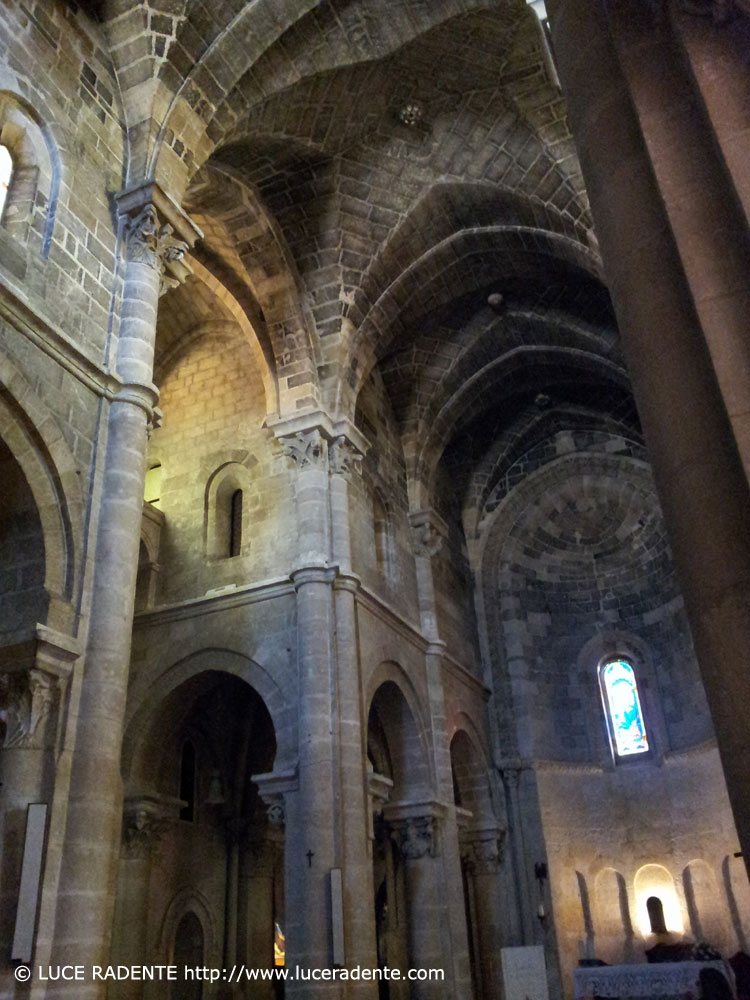
The interior is large and relatively austere by the standards of Gothic cathedrals, which is not a criticism. The Brabantine Gothic style tends toward verticality and restraint rather than ornamental accumulation. The stained glass windows in the transepts, commissioned by the Habsburg dynasty in the 16th century, are worth particular attention — the figures are formal and slightly rigid in the manner of the period, which gives them a quality of concentrated seriousness that more fluid Renaissance glass often lacks.
Il consiglio del team
Mass is held on Sunday mornings and the cathedral fills with a congregation that is genuinely diverse by neighbourhood and language — a more honest cross-section of Brussels than the tourist zone below.
Jeanneke Pis: The Forgotten Counterpart in the Dead-End Alley
The statue dates only to 1987, commissioned by a local restaurateur, and carries none of the 17th-century mythology that surrounds Manneken Pis. It is, in other words, a deliberately absurdist joke — a city that already had one urinating child statue deciding it needed a second one, of the opposite sex, installed in a cul-de-sac behind a locked gate. Brussels finds this sort of thing entirely normal. The alley around it smells, depending on the season, of frites or drains, sometimes both.
Il consiglio del team
The iron railing is usually locked; you peer through the bars, which adds an appropriately undignified quality to the visit. The surrounding Ilôt Sacré neighbourhood has some of the better traditional brasseries in the centre.
The Spectacular Galeries Royales: A Passage That Predates the Eiffel Tower by Fifty Years
The shops inside range from a long-established chocolatier to a bookshop that sells things you actually want to read, to a theatre — the Théâtre du Vaudeville — that operates in a space that has been staging performances since the 19th century. The galleries are not a shopping destination in the contemporary sense; they are an experience of a particular kind of 19th-century urban optimism, the belief that commerce and beauty could share a ceiling without embarrassing each other. On wet evenings, which are frequent, the galleries fill with a cross-section of the city that feels genuinely accidental rather than curated.
Il consiglio del team
The Galerie du Roi, Galerie de la Reine, and Galerie des Princes form three interconnected arms — most visitors walk one and miss the other two. Allow twenty minutes to walk the full circuit slowly.
Arch of Cinquantenaire in Bruxelles: Imperial Ambition, Delivered Late
The arch is most interesting not as an aesthetic object — it is imposing but not particularly subtle — but as a symptom of a young nation's anxious need to assert itself in stone. Belgium in the late 19th century was building an empire in the Congo while simultaneously building monuments to its own democratic birth, a contradiction the arch does not address and the surrounding park does not resolve. Worth sitting with, if you have the patience for that kind of thought.
Il consiglio del team
You can climb to the top of the arch; the view over the park and toward the Atomium to the northwest is useful for orienting yourself in the city's geography.
Parc du Cinquantenaire or Jubelpark: Thirty Hectares of Contested Grandeur

On weekday mornings the park is used by civil servants eating lunch on benches and by joggers doing loops around the central lawn. On weekend afternoons in spring it fills with families, footballs, and the particular kind of organised informality that Brussels parks produce. The museums within the complex are uneven — Autoworld is either fascinating or baffling depending on your relationship to vintage motorcars — but the Royal Museums of Art and History contain one of the more substantial collections of pre-Columbian art in Europe, which is rarely crowded and almost always worth the entrance fee.
Il consiglio del team
The park is a fifteen-minute walk from the Schuman metro station, which passes through the heart of the EU district — the walk itself is a useful orientation to the institutional geography of Brussels.
De Viron Castle: A Detour into the Flemish Periphery
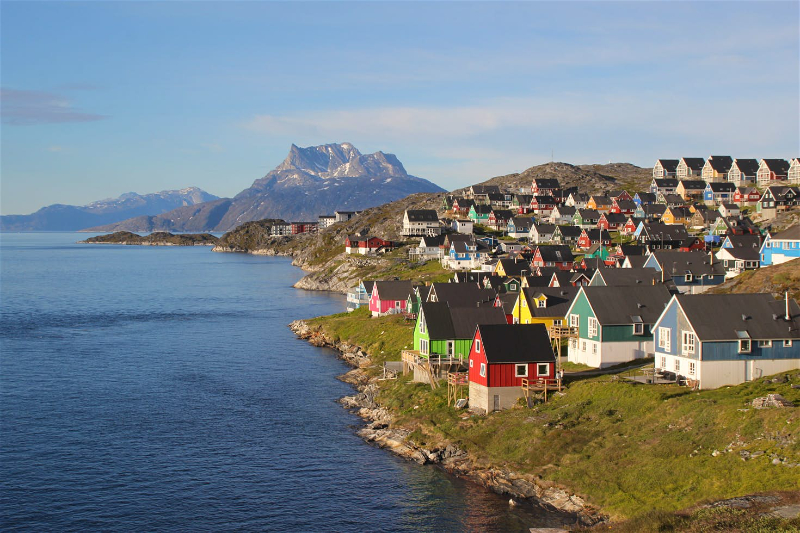
The reason to make the trip is less the castle itself than the exercise of leaving the centre — of discovering that Brussels dissolves, at its edges, into a Flemish suburban landscape of low houses, cycle paths, and communes that operate entirely in Dutch. Dilbeek is officially a Flemish municipality, which means it sits just outside the Brussels-Capital Region, a jurisdictional complexity that the Belgians regard as entirely normal and that most visitors find bewildering. The castle is a modest reward for the journey; the journey is the point.
Il consiglio del team
Dilbeek is reachable by bus from the Gare du Midi, but a bicycle rental from central Brussels makes for a more coherent trip — the route follows relatively flat terrain through the Pajottenland border.
Waterzooi, the Classic Stew of Flanders: A Dish That Crossed a Linguistic Border
In Brussels, waterzooi occupies a middle ground between comfort food and regional identity marker. It is not fashionable in the way that natural wine bars are fashionable, but it is honest — a dish that does what it says and costs roughly what it should. Order it in a traditional brasserie rather than a tourist-facing restaurant near the Grand-Place, where the version is likely to be thinner and more expensive.
Il consiglio del team
The fish version — made with a mixture of freshwater and sea fish — is closer to the original and generally more interesting than the chicken variant, though harder to find outside Ghent itself.
Musée du Cacao et du Chocolat: A Small Museum That Takes Its Subject Seriously
Belgian chocolate's reputation rests on a combination of high cocoa butter content, fine grinding, and the praline tradition established in Brussels in the late 19th century by Jean Neuhaus. The museum contextualises this without excessive self-congratulation, which is more than can be said for the chocolate shops immediately surrounding it on the Grand-Place, where the product is often mediocre and the packaging is doing most of the work. The museum shop sells better chocolate than most of its neighbours at a lower price per gram.
Il consiglio del team
The museum can be covered in under an hour; combine it with a visit to one of the established chocolatiers in the Galeries Royales rather than the Grand-Place shops for a more honest comparison of quality.
Brussels has a way of making you feel, after a few days, that you have not quite understood it — and then, after a few more, that this is probably the correct response. It is a city assembled from competing histories and administrative compromises, where the same street can change its name depending on whether you read the French or Dutch sign, where a triumphal arch stands as a monument to an anniversary it missed by a quarter century, where the most famous statue is a small bronze child doing something undignified.
What the standard itinerary misses is not any particular sight but a quality of attention. Brussels rewards the person who walks past the waffle stand, who takes the tram to the edge of the European Quarter and sits in the park for twenty minutes, who orders the waterzooi in a brasserie where the menu is handwritten and the waiter does not offer to explain the concept of Belgian food. The city is not performing for you. It is doing what it has always done — governing, arguing, eating, building things late — and you are welcome to watch, provided you do not expect it to slow down or look up.
That, in the end, is the most honest thing I can say about Brussels: it is not trying to impress you. And that, after years of cities that are trying very hard indeed, is something close to relief.
What the standard itinerary misses is not any particular sight but a quality of attention. Brussels rewards the person who walks past the waffle stand, who takes the tram to the edge of the European Quarter and sits in the park for twenty minutes, who orders the waterzooi in a brasserie where the menu is handwritten and the waiter does not offer to explain the concept of Belgian food. The city is not performing for you. It is doing what it has always done — governing, arguing, eating, building things late — and you are welcome to watch, provided you do not expect it to slow down or look up.
That, in the end, is the most honest thing I can say about Brussels: it is not trying to impress you. And that, after years of cities that are trying very hard indeed, is something close to relief.