10 Best Things to Do in Boston, USA — beyond the obvious.
A long-term resident's guide to a city that rewards patience, curiosity, and a willingness to ignore the tour buses.
L
Una guida di
Lena Hofmann
Aggiornata il
16 settembre 2026
Lettura
13 minuti
Comprende
10 luoghi · mappa interattiva
★ Guida d'Italia 2026
Pianifica con cura. Viaggia più a fondo.
1.3M+ luoghi curati nel mondo, mappe offline e itinerari intelligenti — tutto in un'app gratuita.
1.3M+ luoghiMappe offlineItinerari AIGratis
I arrived in Boston for the first time in early October, which is either the best or worst month to visit depending on your tolerance for leaf-peeping tourists and the particular kind of civic pride that manifests as unsolicited lectures about Paul Revere. I had been warned that Bostonians were difficult. What I found instead was a city that was simply serious — about its history, its food, its sports teams, and its own sense of itself. It does not perform for visitors. It was here before you arrived, and it will be here after you leave, and it would like you to know that.
Boston is, in area, a surprisingly small city — roughly 48 square miles — which means its density of historical, cultural, and culinary material is almost unreasonable. You can walk from a colonial-era tavern to a world-class research hospital in under twenty minutes. You can eat a bowl of chowder within sight of the harbor where a famous act of political theater involving tea took place in 1773. The past is not curated here so much as it is simply present, sometimes inconveniently so, in the form of a cobblestone street that destroys your ankles.
What follows is not a list of the obvious. You already know about the Red Sox and the Duck Boats. This is about the places and experiences that reward a slower, more attentive kind of travel — the ones that don't appear on the laminated maps handed out at Logan, the ones where the locals actually go, and occasionally the ones where the locals don't go but perhaps should. I have made most of the mistakes so you don't have to. Most of them.
The Freedom Trail is a 2.5-mile line of red brick — sometimes painted, sometimes inlaid — that connects 16 sites fundamental to the founding of the United States, from the Boston Common to the Bunker Hill Monument in Charlestown. Most visitors follow it dutifully in the prescribed direction, behind a costumed guide, in a cluster of matching lanyards. This is a perfectly reasonable way to experience it and also, I would argue, the least interesting. Walk it instead at seven in the morning, starting from the Charlestown end, moving against the current of history. The crowds haven't arrived yet. The light comes off the harbor at an angle that makes the old gravestones in Copp's Hill Burying Ground look like they belong to another century entirely — which, of course, they do. The trail passes through neighborhoods that are still genuinely lived in: the North End's espresso bars are pulling shots before the tourist shops have their shutters up.
Il consiglio del team
The trail is free to walk independently. The guided tours run by the Freedom Trail Foundation are worth the fee if you have children or a genuine interest in the interpretive detail — but for solo adults, a good audio guide and an early start will serve you better than any group.
Faneuil Hall Marketplace has served as a marketplace and meeting hall since 1742, which is the kind of sentence that should stop you cold for a moment. Samuel Adams gave speeches here. Abolitionists argued here. The building has a moral weight that its current retail tenants — chain restaurants, souvenir shops, a man making balloon animals — do not entirely obscure, though they try. The hall itself, on the upper floors, is still used for public events and civic gatherings, and it is worth going upstairs simply to stand in the room and recalibrate. The Quincy Market building, added in 1826, is a handsome Greek Revival structure that deserves more attention than it gets from people who are focused on finding the lobster roll stand. Go on a Tuesday morning in November if you want to understand what the place actually is. Go on a Saturday afternoon in July if you want to understand what it has become.
Il consiglio del team
The small food stalls inside Quincy Market are genuinely useful for a quick lunch — the quality varies, but the clam chowder in a bread bowl is not a lie. Avoid the sit-down restaurants along the perimeter, which charge tourist prices for food that doesn't justify them.
The Bell in Hand Tavern was founded in 1795 by Jimmy Wilson, a town crier who had spent his working life announcing the news of a new republic on the streets of Boston and apparently decided that what he wanted in retirement was a bar. It has been on Union Street, in various configurations, ever since. This is not a quiet, candlelit colonial experience. It is a loud, crowded, sports-bar-adjacent tavern that happens to be operating in a building with genuine historical pedigree, and the combination is either charming or dissonant depending on your expectations. The Sam Adams drafts are cold. The floors are sticky in the way that floors in very old bars are always sticky, which is its own kind of authenticity. What you are paying for, really, is the right to say you had a beer in a place that has been serving beer since George Washington was still alive and occasionally in town.
Il consiglio del team
Come on a weekday afternoon, before the evening crowds arrive. The bar staff are more willing to talk about the history when they're not three-deep in orders, and the space itself becomes legible in a way it isn't when it's packed.
Union Oyster House has been open to diners since 1826, making it among the oldest continuously operating restaurants in the United States — a claim it wears with the quiet confidence of an institution that has survived every food trend of the past two centuries without adopting any of them. The booth in the corner where Daniel Webster reportedly ate is still there. The semi-circular raw bar near the entrance is still staffed by shuckers who work with the efficiency of people who have done exactly this for decades. The oysters — local, cold, properly dressed — are the reason to come. The rest of the menu is competent New England seafood cooking that has not changed much since the Eisenhower administration, which is either comforting or limiting. The room itself is low-ceilinged, dark-paneled, and slightly cramped in the way that 19th-century dining rooms were designed to be, before anyone worried about acoustics.
Il consiglio del team
Sit at the raw bar rather than a table. You'll eat faster, pay slightly less, and have a better view of the craft involved. Waits for tables on weekend evenings can run over an hour — the raw bar is almost always accessible.
A Boston cream pie is not a pie. It is a yellow butter cake filled with pastry cream and finished with a chocolate glaze — the name is a relic of an era when cakes and pies were baked in the same pans and the distinction between them was considered a matter of minor consequence. It became the official Massachusetts state dessert in 1996, which is the kind of legislative act that suggests a legislature with its priorities in reasonable order. The original is credited to the Parker House hotel, now the Omni Parker House on School Street, where the recipe dates to the 1850s. You can order it there, in the hotel restaurant, and you should at least once — not because it is the definitive version but because the room, with its dark wood and old-money quietness, makes the experience feel appropriately ceremonial. After that, the versions at various local bakeries are worth comparing. The differences are subtle and the arguments about them are not.
Il consiglio del team
Mike's Pastry in the North End is famous for cannoli, but their Boston cream pie slice is underrated and the line moves faster than the cannoli queue. If you're comparing versions, the Parker House original is richer and less sweet than most bakery interpretations.
Boston Children's Museum is one of the oldest children's museums in America, having recently passed its centenary — a fact that places it in the company of institutions that predate most of what we now consider modern childhood. The obvious audience is families with young children, and the museum serves them well: the exhibits are tactile, science-forward, and designed with the understanding that a seven-year-old's attention span is finite and their energy is not. But there is a case to be made for visiting without children, particularly the Japanese House — a 230-year-old silk merchant's home from Kyoto that was disassembled, shipped to Boston, and reconstructed inside the museum. It sits there, in the Fort Point Channel neighborhood, with a kind of serene incongruity that is more interesting than most things you will see in a conventional art museum. The building itself, a former wool warehouse on the waterfront, is worth noting.
Il consiglio del team
Friday evenings offer reduced admission for adults. The museum is genuinely less crowded after school hours on weekdays if you're visiting mid-week — the weekend mornings are controlled chaos in the best possible sense, if chaos is what you're after.
The Biblioteca e Museu Mary Baker Eddy sits near the Christian Science Plaza in the Back Bay, and most visitors to Boston walk past it without a second thought. This is a mistake, and not only because the library holds a serious collection of materials related to the life and work of Mary Baker Eddy, the founder of Christian Science. The reason to go is the Mapparium — a stained-glass globe thirty feet in diameter, built in 1935, that you walk through on a glass bridge. The world it depicts is the world as it was in 1935: colonial boundaries intact, nations named as they were then named, the whole political geography of a vanished era rendered in backlit glass. The acoustic properties of the sphere are peculiar — whisper at one end and someone at the other end hears you clearly, which has been producing quiet astonishment in visitors for nearly ninety years.
Il consiglio del team
Photography inside the Mapparium is restricted during timed entry presentations. Go early in the day to secure a spot; the presentations fill up, particularly on weekends. The library's reading rooms are open to the public and are among the more beautiful spaces in the city.
Boston has always been a city that takes its own intelligence seriously — it is, after all, home to two of the world's most consequential research universities and a medical establishment that has a tendency to speak of itself in the third person. So it is not entirely surprising that the city's parks and public spaces are increasingly becoming sites of technological experimentation, including the development of AI-assisted trip planning tools oriented around Boston's green infrastructure. The AI Trip Planner Boston 2026 initiative represents an attempt to use machine intelligence to help visitors navigate the city's considerable network of parks and gardens — the Emerald Necklace, the Public Garden, the Common — in ways that account for seasonal variation, crowd patterns, and personal interest. Whether this will produce genuinely better experiences or simply a more sophisticated version of the laminated map remains to be seen. The parks themselves, in the meantime, are worth visiting with or without algorithmic assistance.
Il consiglio del team
The Emerald Necklace — Frederick Law Olmsted's chain of connected parks stretching from the Back Bay Fens to Franklin Park — is best walked in autumn or early spring, when the crowds are manageable and the light through the tree canopy is worth the effort.
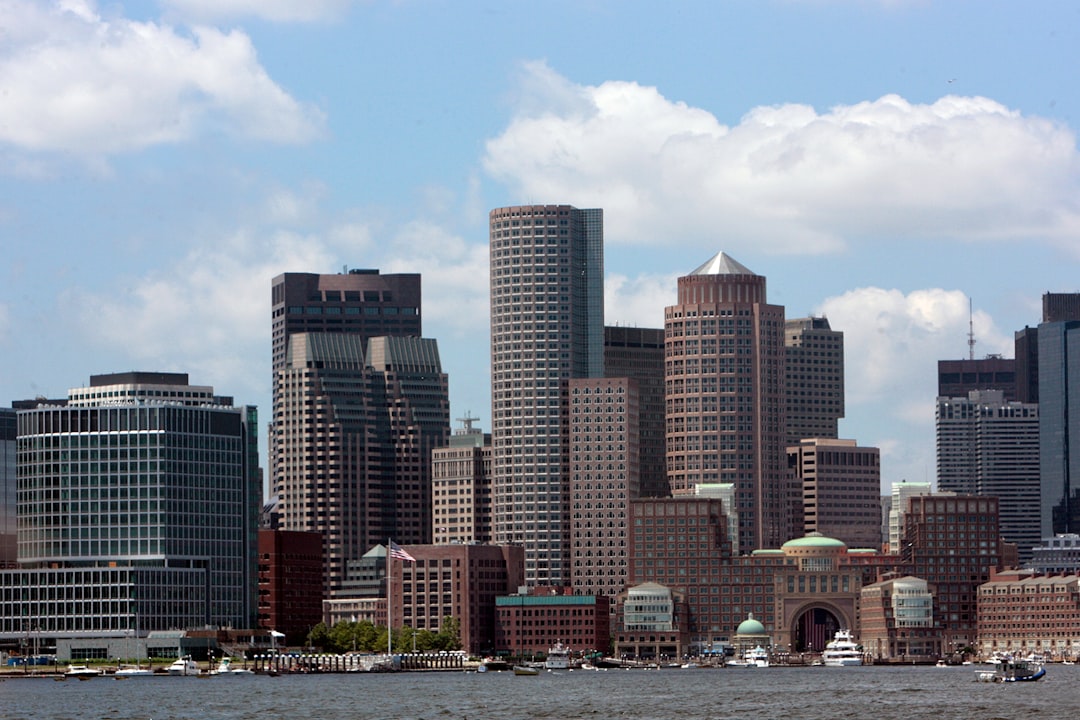
The Boston Harbor Islands State and National Park comprises 34 islands scattered across the harbor estuary where it opens into Massachusetts Bay, and on any given summer weekday the majority of them are essentially empty. This is partly a matter of logistics — you need to take a ferry from Long Wharf, which requires planning — and partly a matter of the particular Boston tendency to be proud of things without actually visiting them. Spectacle Island, the largest and most accessible, has a beach, a café, and views back toward the downtown skyline that put the city in proper geographic context: a small, dense cluster of buildings at the edge of a very large body of water. Georges Island has Fort Warren, a Civil War-era fortification that you can walk through largely unimpeded. Birdwatchers come for the migratory species. Others come simply because the harbor, from the water, is a different city entirely.
Il consiglio del team
Ferries run seasonally — typically May through October — and the schedule is not always reliable in rough weather. Check the Boston Harbor Now website before you go. Bring food; the island café options are limited and close early.
Boston Light is the oldest lighthouse in the United States. A lighthouse was first built on this site — Little Brewster Island, at the outer edge of the harbor — in 1716, making it older than the nation it now serves. The original structure was destroyed during the Revolutionary War; the current tower dates to 1783 and stands 89 feet tall. Access requires a ferry and advance booking through the US Coast Guard, which still operates the light and maintains a keeper — one of the last staffed lighthouses in the country. The trip takes the better part of a day and involves a boat ride past the inner harbor islands, a landing on a small rocky island, and a climb up the lighthouse tower for views that encompass the full sweep of the bay. It is the kind of experience that resets your sense of scale — the city, from out here, is a smudge on the horizon, which is occasionally useful information.
Il consiglio del team
Tours are offered on a limited schedule, primarily on summer weekends, and they book up weeks in advance. The National Park Service manages the tours; check their website early in the season. Bring layers — the wind off the outer harbor is indifferent to whatever the forecast said.
Boston is a city that resists easy summary, which is one of the things that makes it worth returning to. It has the self-assurance of a place that was important before it was famous and has never entirely needed to be the latter. The history is real — not reconstructed, not themed — and it sits alongside the present in a way that is sometimes awkward and always interesting. The neighborhoods argue with each other. The winters are serious. The sports loyalty is tribal in a way that can seem disproportionate until you understand that for many Bostonians, the team is not a distraction from the city's identity but a central expression of it.
What the city asks of its visitors is a kind of patience that the American travel industry does not always encourage. The best things here are not immediately legible. The Mapparium takes a moment to understand. The harbor islands require a ferry. The Freedom Trail rewards the person who walks it alone at dawn more than the person who walks it in a group at noon. Boston is not withholding, exactly. It is simply not trying to make it easy for you, which is, in the end, a form of respect.
★ Guida tascabile
Porta questa guida con te.
Salvala offline, ottieni le indicazioni a piedi e scopri migliaia di luoghi come questi.
September and October offer the most reliable combination of good weather and manageable crowds. The foliage peaks in mid-October, which brings day-trippers from across New England, but the city itself remains navigable. Spring — April and May — is underrated: the Public Garden is at its best, the tourist season hasn't fully arrived, and the weather, while variable, is not the enemy. Summer is popular and warm but brings significant humidity and crowds around the major historic sites. January and February are genuinely cold and are best suited to visitors who have a specific reason to be there.
How do you get around Boston without a car?
Boston is one of the most walkable cities in the United States, and the historic centre is compact enough that most of the destinations on this list are reachable on foot. The MBTA — the 'T' — is the public transit system and covers the broader metro area adequately, if not always punctually. The Green Line, in particular, is slow and prone to delays, which is a known quantity rather than a surprise. Ride-shares are available but expensive during peak hours due to traffic. For the harbor islands and Boston Light, ferry services from Long Wharf are the only practical option.
Is Boston an expensive city to visit?
Yes, by most measures. Hotel rates in the downtown and Back Bay neighborhoods are among the highest in the Northeast, particularly during the academic calendar events — move-in weekends in September, graduation weekends in May — when the university population drives demand. Food costs vary enormously: a bowl of chowder at a tourist-facing restaurant near Faneuil Hall will cost considerably more than the same quality product at a neighborhood spot in Southie or Jamaica Plain. Many of the historic sites are free or low-cost, including the Freedom Trail itself. The harbor island ferries and Boston Light tours are reasonably priced.
How many days do you need to see Boston properly?
Three full days will cover the central historic sites and a meal or two worth having. Five days allows you to get to the harbor islands, spend time in the Back Bay and South End neighborhoods, and eat at the places that require advance planning. A week lets you move at the city's pace rather than your own, which is when Boston starts to make sense as a place rather than a checklist. Day trips to Cambridge — technically a separate city — are worth building in regardless of the length of your stay; Harvard Square and the MIT campus are each a 10-minute T ride from downtown.
What do Bostonians actually eat, beyond the tourist staples?
The clam chowder and lobster roll narrative is not false, but it is incomplete. The North End has been an Italian-American neighborhood since the late 19th century and its restaurants and bakeries reflect that with genuine depth — not just the famous ones with lines around the block. Chinatown, a short walk from the Theater District, is small but serious, and the late-night dining options there outlast most of the rest of the city. The South End has a restaurant density that rewards wandering. Dorchester, further out, has Vietnamese and Cape Verdean food that most visitors never reach. Boston's food culture is less flashy than New York's or Chicago's, but it is more rooted in the communities that actually live here, which is a different kind of quality.
★ Leggila quando vuoi
Salvala sul tuo telefono.
Aggiungi questa guida ai preferiti, pianifica il viaggio offline, scopri luoghi come questi.