10 Best Things to Do in Berlin, Germany — beyond the obvious.
A long-term resident's guide to the city that resists easy summary.
L
Una guida di
Lena Hofmann
Aggiornata il
22 ottobre 2026
Lettura
13 minuti
Comprende
10 luoghi · mappa interattiva
★ Guida d'Italia 2026
Pianifica con cura. Viaggia più a fondo.
1.3M+ luoghi curati nel mondo, mappe offline e itinerari intelligenti — tutto in un'app gratuita.
1.3M+ luoghiMappe offlineItinerari AIGratis
The first time I arrived in Berlin, I did what everyone does: I went to Checkpoint Charlie, took a photograph I later deleted, and ate a döner that cost four euros and tasted of mild disappointment. I stood at the Brandenburg Gate at dusk with a hundred other people who were also, I think, waiting for the city to reveal itself. It didn't. Berlin rarely does, not on the first visit, not even on the fifth. It is a city that withholds, that makes you work for it, that has been bombed, divided, reunified, and gentrified within living memory and has emerged from all of it with an expression that is hard to read — not hostile exactly, but not welcoming in any conventional sense either.
What I have come to understand, after years of returning and eventually staying, is that Berlin's character is inseparable from its gaps. The empty lots that still appear between buildings in Mitte. The way a tram line will carry you from a renovated boulevard into a street that looks barely touched since 1987. The palimpsest quality of the place — layer on layer, each one only partially erased. This is not a city that performs for tourists, which is both its greatest difficulty and its greatest quality.
This list is not a greatest-hits compilation. You can find those anywhere. What follows are ten things that reward attention, that complicate the standard narrative, and that I would actually recommend to someone I respected. Some are famous places approached from an angle most visitors miss. Others are further out, requiring a U-Bahn journey and a mild tolerance for being the only non-local in the room. All of them, I think, tell you something true about Berlin that the postcards don't.
Berlin is the capital city of Germany and one of the 16 states of the Federal Republic, a fact worth pausing on — it is simultaneously a city-state and a national capital, which partly explains why it governs itself with a particular stubbornness. With a population around 3.7 million in the city proper, it is the largest city in Germany, but it does not feel large in the way that London or Paris do. It feels horizontal, spread out, full of air and rubble-memory. The centre of Berlin — Mitte, literally 'middle' — is not really the centre of anything except bureaucratic designation. The real city distributes itself across former East and West in ways that still, decades after reunification, carry a faint ideological charge. Walk from Prenzlauer Berg into Wedding and you are crossing something that is not quite a border but is not nothing either. Start here, with that friction, and the rest of the city begins to make sense.
Il consiglio del team
Avoid the tourist information offices near the Brandenburg Gate. The staff at the smaller neighbourhood Bürgerämter are more useful and will tell you things the official tourism apparatus prefers to leave vague.
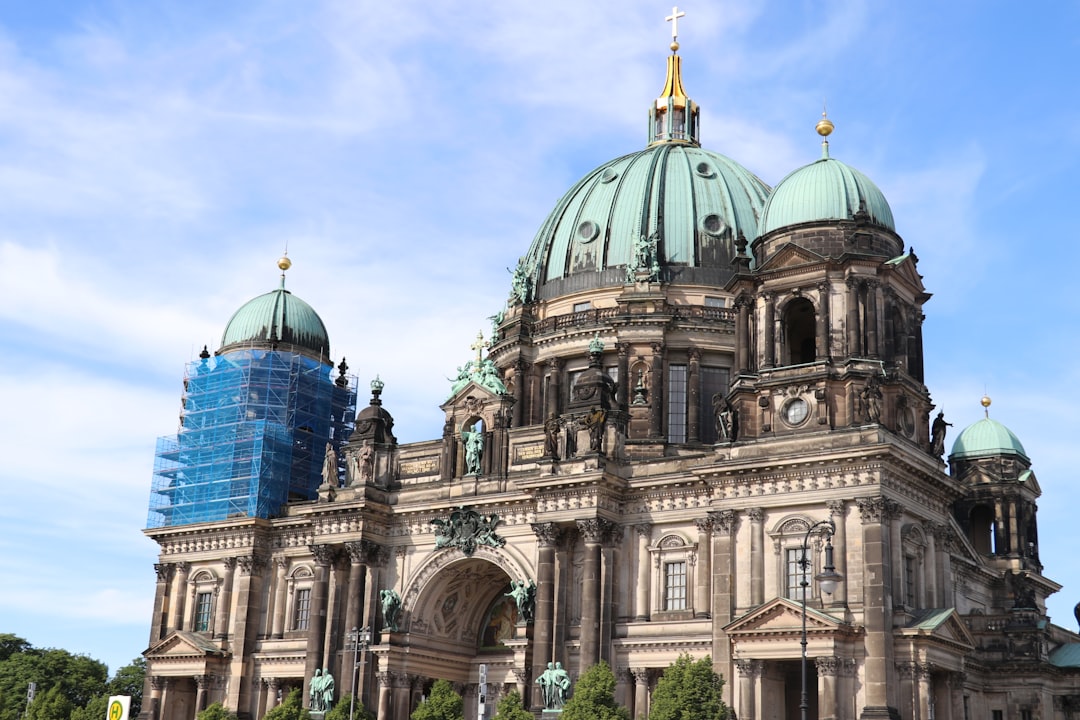
The Berliner Dom stands on the bank of the Spree like a statement that is not entirely sure of itself. Heavy, domed, built between 1894 and 1905 under Kaiser Wilhelm II as a Protestant answer to St. Peter's in Rome, it is, depending on your tolerance for imperial overreach in architectural form, either impressive or slightly absurd. I fall somewhere between the two. What the Dom actually rewards is not the main nave — which is grand in a way that quickly becomes fatiguing — but the crypt below, which holds the sarcophagi of the Hohenzollern dynasty in a long, low, genuinely strange room that most visitors walk through too quickly. There is something unnerving about Prussia's dead arranged so tidily beneath the traffic of Museum Island. The climb to the dome's gallery is also worth the breathlessness: the view across the Spree to the Altes Museum's colonnade is one of the better architectural sightlines in the city.
Il consiglio del team
Entry to the Dom includes access to the crypt and the dome gallery. Go on a weekday morning before the tour groups arrive from the cruise coaches parked on Unter den Linden.
The Altes Museum — originally called the Königliches Museum when it opened in 1830 — occupies a position on Museum Island that is easy to take for granted because it sits so quietly beside the more theatrical Pergamon. But Karl Friedrich Schinkel's building, constructed between 1823 and 1830, is one of the defining works of Neoclassical architecture in Europe, and it deserves to be looked at before you go inside. Stand at the far end of the Lustgarten and study the eighteen Ionic columns of the facade. Schinkel was doing something deliberate here: creating a public institution that announced, through its proportions, that culture was a civic right rather than a royal favour. Inside, the rotunda modelled loosely on the Pantheon in Rome is the kind of space that reorders your sense of scale in a way that the collection — Greek and Roman antiquities, largely — sometimes struggles to match. The building is, in this case, the exhibit.
Il consiglio del team
The museum is closed on Mondays. The Lustgarten in front of it is a reasonable place to sit and eat a sandwich without being moved along, which in central Berlin is rarer than it should be.
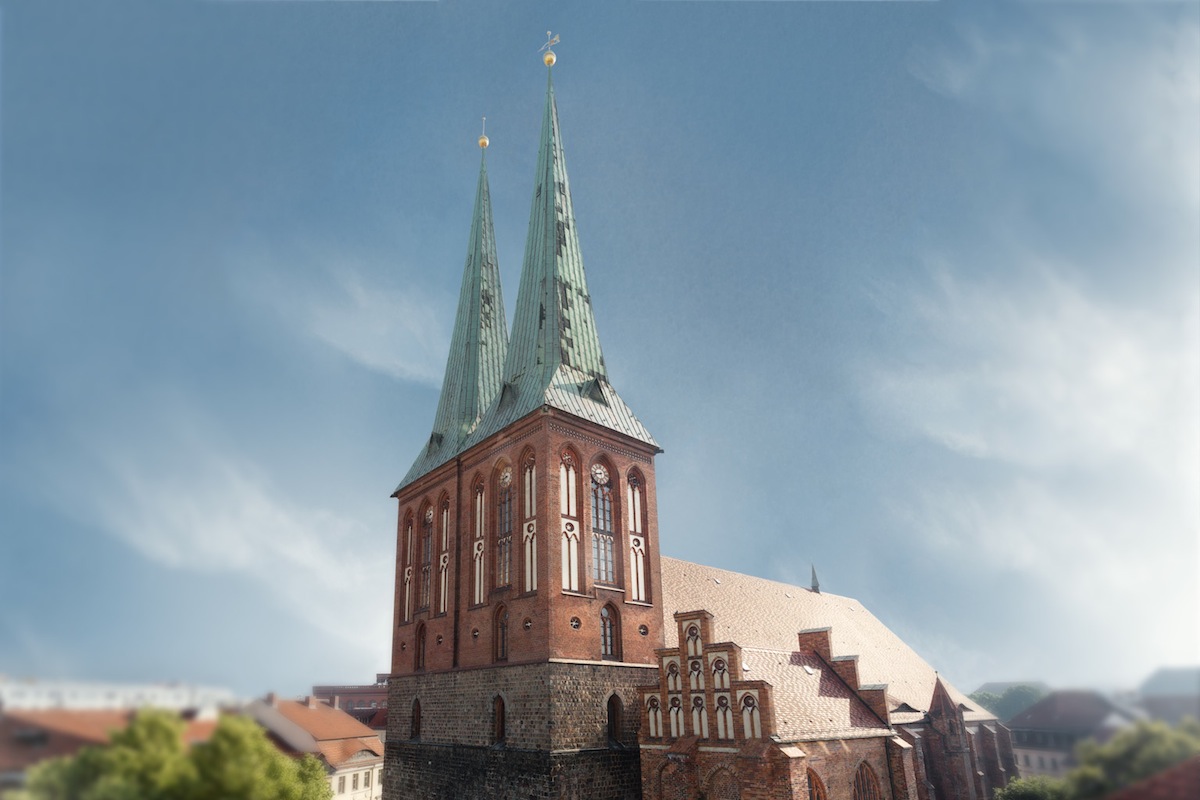
The St. Nikolai-Kirche — St. Nicholas' Church — is the oldest church in Berlin, its origins traceable to the thirteenth century, though what stands today is a composite of medieval stonework and postwar reconstruction. The area around it, the Nikolaiviertel or Nicholas Quarter, was rebuilt by the East German government in the 1980s as a kind of historical theme park — cobblestones, gabled facades, restaurants with menus that gesture at Prussian tradition. It is, to be honest, slightly uncanny. The quarter was assembled rather than preserved, which gives it the quality of a film set that has been used long enough to develop its own patina. The church itself, now functioning as a museum of Berlin's early history, is more interesting than its surroundings suggest. The twin towers are the oldest surviving architectural element in the city centre, and standing inside on a quiet afternoon, when the school groups have gone, it is possible to feel the actual age of the place rather than its reconstruction.
Il consiglio del team
The Nikolaiviertel is often dismissed by Berliners as tourist kitsch, and they are not entirely wrong, but the church museum has a small permanent collection on medieval Berlin that is considerably more rigorous than the quarter's general atmosphere implies.
It is shortly after one in the afternoon, the queue at the Imbiss stand stretches onto the pavement, and nobody is complaining. This is one of the reliable social contracts of Berlin: you wait for your currywurst, you eat it standing up, and you do not make it into anything more than it is. The dish — sliced pork sausage, tomato-based curry sauce, a dusting of curry powder — was reportedly invented in West Berlin in 1949 by Herta Heuwer, who obtained ketchup and Worcestershire sauce from British soldiers and combined them into something that became, improbably, a civic institution. The Currywurst in Berlin carries a weight of working-class nostalgia that is genuine rather than manufactured, which is unusual in a city that has commodified many of its own symbols. The best versions are still found at small, family-run stands rather than the famous tourist-facing operations. The sausage should have some snap. The sauce should be slightly too sweet. The paper tray will disintegrate before you finish.
Il consiglio del team
Avoid the Curry 36 and Konnopke's queues if your time is limited — both are good, but both are also now well inside the tourist circuit. Ask a construction worker or a bus driver where they go instead.
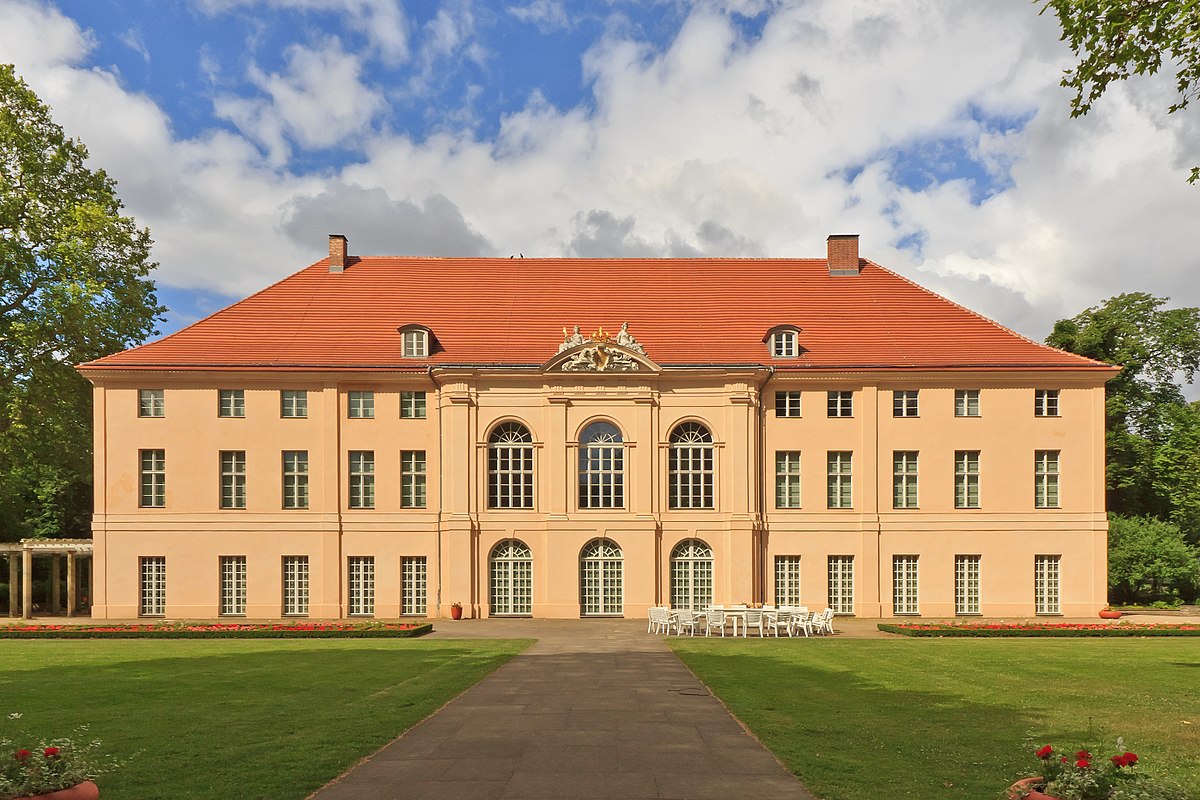
Schönhausen Palace sits in Pankow, in what was East Berlin, about six kilometres north of the city centre — far enough that most visitors never reach it, which is part of its appeal. The baroque castle was the summer residence of Queen Elisabeth Christine, consort of Frederick the Great, in the eighteenth century. Frederick himself preferred Sanssouci in Potsdam, and the marriage was famously unhappy; the palace has the quality of a place where someone waited. After the war, Schönhausen became the seat of the East German Presidency, which adds a layer of political history to the rococo interiors that is genuinely interesting rather than merely curious. Wilhelm Pieck lived here; Erich Honecker used it for state visits. Walking through rooms that served both Prussian royalty and the GDR's version of statecraft produces a mild cognitive dissonance that no museum label quite resolves.
Il consiglio del team
The palace gardens are freely accessible and largely unvisited on weekdays. The tram from Prenzlauer Berg takes around fifteen minutes and passes through streets that still feel substantially unreconstructed.
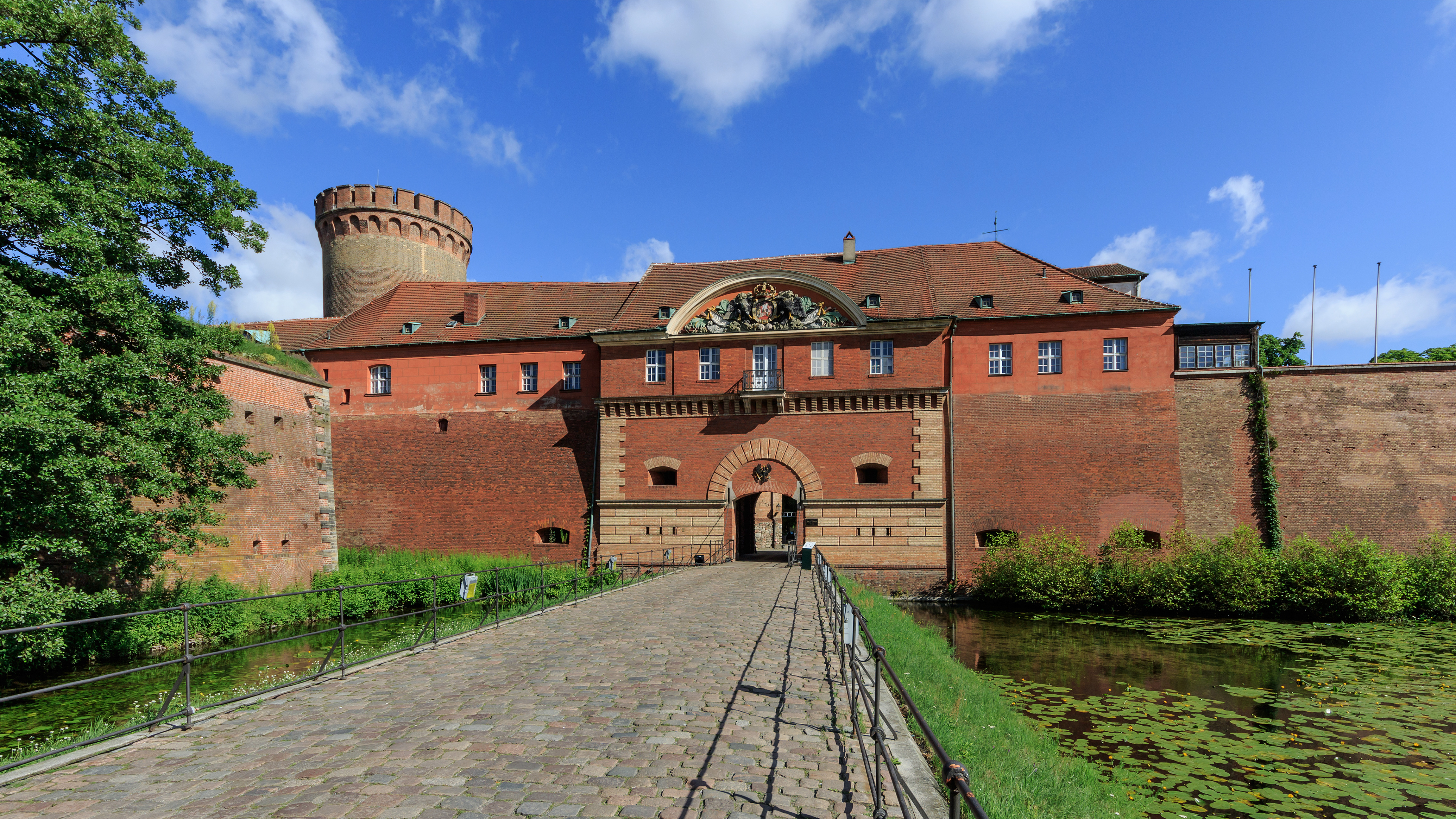
Spandau Citadel is one of the best-preserved Renaissance fortresses in Europe — a claim that sounds like tourism-office language until you actually stand inside the walls and understand that this is a working, intact, sixteenth-century military complex at the western edge of a major European capital. Most Berliners have not been. Spandau itself, the borough that contains it, has a slightly aggrieved relationship with the rest of the city; it was historically a separate town and retains a provincial self-sufficiency that is not unfriendly but is definitely distinct. The citadel hosts concerts and festivals throughout the year, and the acoustics inside the courtyard during summer events are worth the forty-minute S-Bahn journey from Mitte. Outside of events, the fortress museum covers the site's history from its construction in the 1560s through its various uses as a prison and military arsenal. Rudolf Hess was held here briefly after the war, a fact the museum handles with appropriate care.
Il consiglio del team
The U7 to Zitadelle is the most direct route. Allow time to walk along the Havel river bank afterward — the western edge of Berlin, where the city runs out into water and pine trees, is a different country from the one the guidebooks describe.
Berlin's parks — the Tiergarten, Treptower Park, the Volkspark Friedrichshain, the Mauerpark — are not incidental to the city's character; they are structural to it. Berliners use outdoor space with a seriousness that takes visitors from more compressed cities by surprise. On a Sunday in July, the Tiergarten becomes a continuous, loosely organised social event: grills, sound systems, hammocks strung between trees, children, dogs, and a general suspension of the week's obligations. Planning a visit to Berlin's parks and green spaces — especially for 2026, when the city's calendar of outdoor events continues to expand — rewards some advance thought. Apps and itinerary tools have proliferated, and the best alternatives to generic planning platforms are those that integrate local event calendars and public transport routing rather than simply listing attractions. Berlin's geography is sprawling enough that a poorly planned day can consume itself in transit. The parks are distributed across the city's former East and West in ways that reflect the political history of urban planning.
Il consiglio del team
The Volkspark Friedrichshain in the former East contains two large artificial hills built from wartime rubble — Bunkerberg and Großer Bunkerberg — that offer elevated views across the park and are almost entirely unknown to non-residents.
Berlin in 2026 is a city in continuous revision. Construction sites appear and disappear. Neighbourhoods that were peripheral five years ago have been absorbed into the main circuit of visitor interest, while others have quietly become more interesting precisely because the attention moved on. Planning a trip to Berlin — particularly if you want to move beyond the central tourist corridor and into the boroughs where the city actually lives — requires tools that update faster than printed guides. The best digital planning resources for Berlin are those that integrate BVG transit data (the city's public transport network, which is extensive but occasionally baffling to newcomers) with neighbourhood-level recommendations rather than landmark-level ones. A good itinerary for Berlin is not a list of sights connected by the shortest route; it is a sequence of neighbourhoods, each with its own logic, connected by tram or U-Bahn in a way that lets the city's texture accumulate.
Il consiglio del team
Download the BVG Fahrinfo app before arrival. The city's transit network covers almost everything you need to reach, and a seven-day ticket is significantly cheaper than the per-journey alternative.
I have climbed the dome of the Berliner Dom three times, twice in summer and once in February when the light was low and grey and the Spree below had the colour of old pewter. Each time the view has been different enough to justify the climb, which involves a spiral staircase that is narrower than it looks in photographs and requires a degree of patience with the visitors descending in the opposite direction. What the gallery gives you is not a panorama in the conventional sense — the dome is not the highest point in the city — but a specific, mid-level view that places you in proportion to the surrounding buildings in a way that ground level never does. You can see the Television Tower at Alexanderplatz, the green copper of the Altes Museum's colonnade, the Humboldt Forum across the Lustgarten. The city's layers — baroque, socialist, reunified — are visible simultaneously, which is as close to a summary of Berlin's character as any single vantage point offers.
Il consiglio del team
The gallery is windier than visitors expect, even in summer. The best light for photography falls on the western side in the late afternoon, when the sun hits the Lustgarten and the museum facades directly.
There is a particular quality to leaving Berlin that I have not experienced in the same way with other cities. It is not nostalgia exactly — the city is too unsentimental to inspire straightforward nostalgia — but something more like the sensation of having been in the middle of a long argument and stepping out for air before it resolves. Berlin does not conclude. It continues, in its characteristically unfinished way, with or without your presence.
What I hope this list conveys, beyond the practical information, is that Berlin rewards a particular mode of attention: patient, slightly skeptical, willing to take the S-Bahn to the end of the line and walk back. The city's most interesting qualities are not in its landmarks, though some of those landmarks are genuinely worth your time. They are in the spaces between things — the gap between a baroque palace and a GDR housing block, between a currywurst stand at one in the afternoon and the same street at midnight, between what Berlin was and what it is in the process of becoming, which is still, after all this time, genuinely unclear.
That uncertainty is not a flaw. It is, I think, the point.
★ Guida tascabile
Porta questa guida con te.
Salvala offline, ottieni le indicazioni a piedi e scopri migliaia di luoghi come questi.
Late spring (May to early June) and early autumn (September to October) offer the most workable conditions: mild temperatures, longer days, and fewer visitors than July and August. Summer in Berlin is genuinely warm and the city's outdoor culture — parks, canal-side bars, open-air markets — is at its most active, but accommodation prices rise and some attractions develop queues that are genuinely punishing. February is cold and grey but cheap, and the Berlinale film festival in mid-February gives the city an unusual energy.
How do you get around Berlin efficiently?
The BVG public transport network — U-Bahn (underground), S-Bahn (surface rail), trams (primarily in the former East), and buses — covers the city comprehensively. A weekly ticket (7-Tage-Karte) for zones AB covers almost everything within the city boundaries and is considerably cheaper than buying individual tickets. Taxis are available but expensive. Cycling is practical in the flat central districts but requires attention: Berlin's cycling infrastructure is uneven, and the traffic on major roads is not forgiving.
Is Berlin an expensive city to visit?
Relative to other Western European capitals, Berlin remains moderately priced, though the gap has narrowed considerably in the past decade. Accommodation in central neighbourhoods (Mitte, Prenzlauer Berg, Friedrichshain) has become expensive; staying in Neukölln, Wedding, or Lichtenberg reduces costs substantially and gives you a more accurate picture of how the city actually functions. Food ranges from genuinely cheap (Imbiss stands, Turkish supermarkets, Vietnamese restaurants in Lichtenberg) to expensive (the city's fine-dining scene has expanded significantly). Museum entry fees are standard European rates; the Berlin Museum Pass (Museumspass Berlin) is worth purchasing if you plan to visit three or more state museums.
Do I need to speak German to navigate Berlin?
English is widely spoken in central Berlin, in the tourism and hospitality sectors, and among younger residents across most neighbourhoods. In outer boroughs — Spandau, Marzahn, parts of Pankow — English is less reliably available, and making some effort with German is both practically useful and socially appreciated. Berliners are not famously warm to strangers, but they respond well to basic courtesy in their own language. Learning to say 'Entschuldigung' (excuse me) and 'Danke' (thank you) will not transform your experience but will make small transactions considerably less awkward.
Which neighbourhoods should first-time visitors consider staying in?
Prenzlauer Berg offers good transport connections, a high density of cafés and restaurants, and relative safety, at the cost of being thoroughly gentrified and occasionally feeling like a stage set for a certain kind of middle-class Berlin life. Mitte is convenient but expensive and thin on local character. Friedrichshain is cheaper, younger, and closer to the club district along the Spree, which is either an advantage or a disadvantage depending on your preferences. Neukölln — particularly its northern end around Reuterkiez — has become increasingly visited but retains a genuine mix of communities and some of the city's better independent restaurants. For a first visit, Prenzlauer Berg or northern Neukölln are the most workable bases.
★ Leggila quando vuoi
Salvala sul tuo telefono.
Aggiungi questa guida ai preferiti, pianifica il viaggio offline, scopri luoghi come questi.