The city rewards those who look slightly to the left of where everyone else is pointing
L
Una guida di
Lena Hofmann
Aggiornata il
22 ottobre 2026
Lettura
13 minuti
Comprende
13 luoghi · mappa interattiva
★ Guida d'Italia 2026
Pianifica con cura. Viaggia più a fondo.
1.3M+ luoghi curati nel mondo, mappe offline e itinerari intelligenti — tutto in un'app gratuita.
1.3M+ luoghiMappe offlineItinerari AIGratis
There is a particular kind of invisibility that only the most visited cities can produce. Vienna is expert at it. You arrive expecting grandeur — and grandeur is delivered, reliably, on schedule, with excellent public transport connections. The Ringstrasse does its imperial thing. The coffee houses smell of roasted beans and old arguments. The Habsburgs, dead for over a century, still seem to be running the place from a considerable administrative distance. And yet, for all the guided tours and audio headsets and selfie sticks angled at the same facades, Vienna keeps something back. Not because it is secretive, exactly — the city is far too well-organised for mystery — but because the sheer density of what it offers means that even a well-read, culturally attentive visitor will walk past genuinely remarkable things while consulting a map to find something merely famous.
The places in this list are not unknown. Several of them appear in guidebooks, some even in the mainstream ones. What makes them feel hidden is not obscurity but context: the way a baroque clock on a bridge gets overlooked because there is a cathedral three minutes away; the way a garden becomes invisible because everyone is rushing toward a palace. The trick Vienna plays on you is not concealment. It is abundance. When everything is worth seeing, the eye becomes selective in ways that are not always wise.
I have been coming to Vienna for the better part of fifteen years. What follows is not a definitive list — no such thing exists for a city this layered — but it is an honest one. These are the places that stopped me, or slowed me down, or made me reconsider what I thought I already understood about a city I thought I already knew.
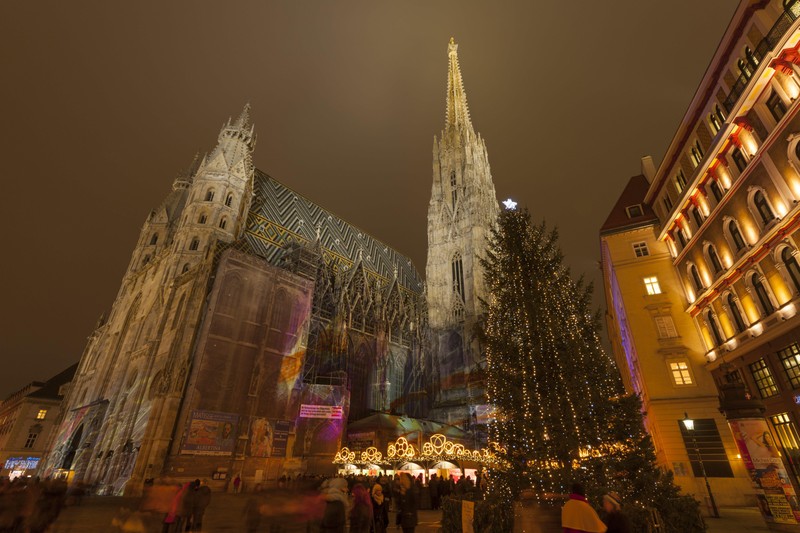
It would be dishonest to call Stephansdom hidden. Three million visitors a year ensure that. But there is a version of this cathedral that almost no one encounters: the one you find when you stop photographing the roof tiles and start paying attention to the catacombs beneath, or the pulpit carved by Anton Pilgram, who reportedly hid his own face peering out from under the stairs. The mother church of the Roman Catholic Archdiocese of Vienna has been rebuilt, bombed, and restored across eight centuries, and each layer of that history is still legible in the stone if you know where to look. Most people look up. The more interesting architecture is at eye level and below.
Il consiglio del team
Book the catacombs tour separately from the main cathedral visit — it runs in small groups and covers the Habsburg burial vaults, which are genuinely different in character from the Kaisergruft across the city.
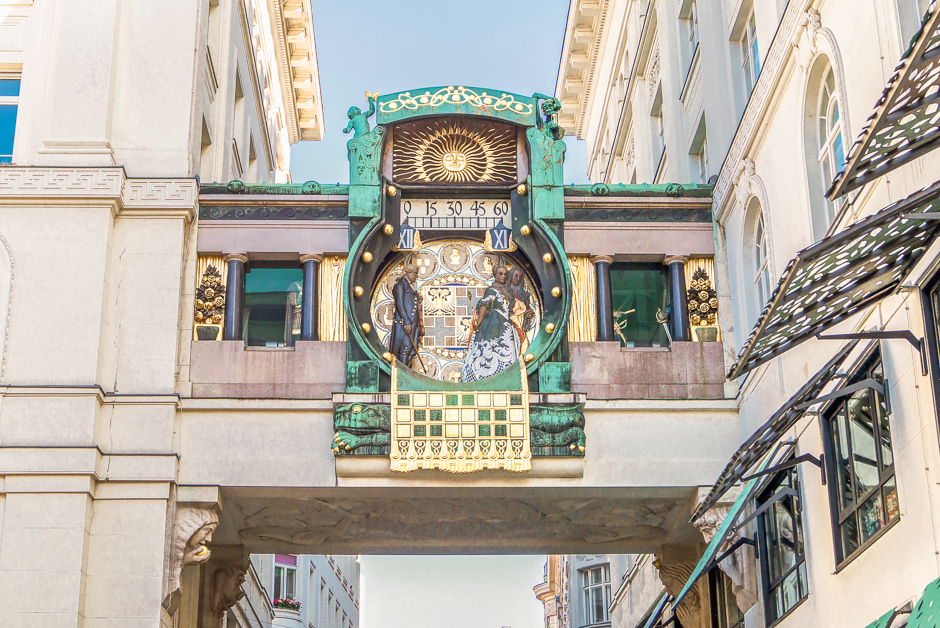
The name is, technically, accurate: the Anchor clock is Vienna's best-known clock. What the name does not prepare you for is the peculiar experience of standing on the small bridge between the two wings of the Anker-Hof building and watching twelve historical figures — from Marcus Aurelius to Maria Theresa — parade past the dial over the course of a day, one per hour. Designed by the Jugendstil painter Franz Matsch in the early twentieth century, the clock is a kind of compressed history lesson set to music. At noon, all twelve figures appear simultaneously. The square below is rarely crowded. That is the puzzle: a mechanical marvel in plain sight, on a busy street, consistently ignored in favour of the cathedral four minutes away.
Il consiglio del team
Arrive at noon on a weekday rather than a weekend — the figures are easier to identify without the crowd, and the accompanying organ music carries further in the quieter air.
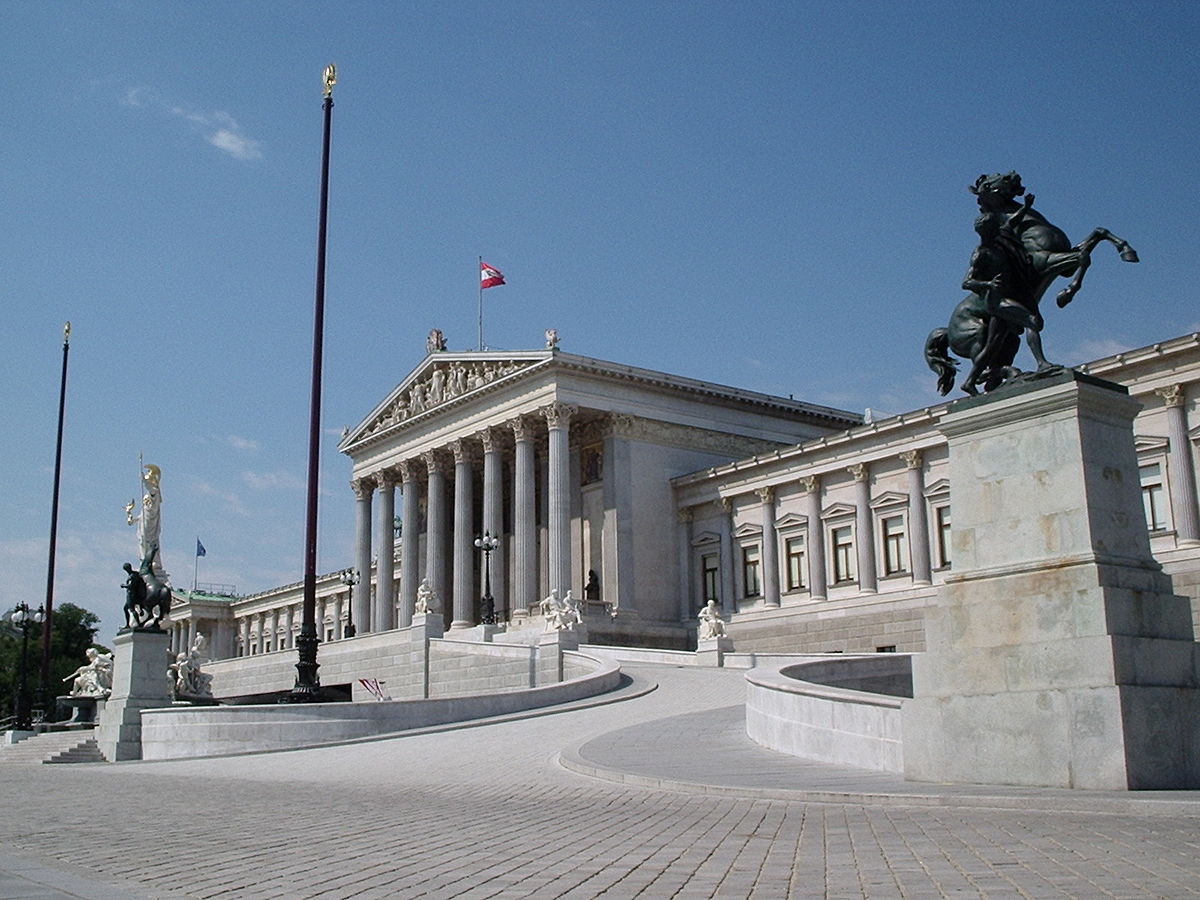
The building that houses the Austrian Parliament is modelled so faithfully on ancient Greek temple architecture that it can produce a mild cognitive dissonance on the Ringstrasse — all that Hellenic geometry sitting between the Rathaus and the Burgtheater, as though someone had relocated the Parthenon to a city with considerably better public transport. Completed in 1883 to designs by Theophil Hansen, it was conceived as a deliberate statement: democracy is an ancient idea, and Austria was taking it seriously. The irony that the building's democratic function was suspended during both the interwar authoritarian period and the Nazi annexation gives the architecture a complicated resonance that the guided tours, to their credit, do not shy away from.
Il consiglio del team
Free guided tours of the interior are available when parliament is not in session — the debating chambers are more intimate than the exterior scale suggests, and the library is rarely mentioned in any review.
The Albertina sits at the southern end of the Imperial Palace complex on one of the last surviving fortress bastions in the city — a detail that most visitors miss entirely because they are already thinking about the Dürer drawings inside. As the largest Habsburg residential palace, it has a dual identity that it wears with some elegance: part grand apartment, part repository of graphic art so extensive that it constitutes one of the most valuable print collections in the world. The permanent collection alone spans from the late Gothic period to the present. The temporary exhibitions tend to be ambitious. What surprises people who finally get inside is how liveable the imperial rooms feel — less frozen ceremony than the Schönbrunn apartments, more like a place someone actually thought about.
Il consiglio del team
The terrace behind the museum, overlooking the Burggarten, is publicly accessible and offers an unusual angle on the Opera House that almost no travel photograph captures.
The Austrian National Library holds more than twelve million items across its various collections, which is a number large enough to be meaningless until you stand inside the Prunksaal — the State Hall — and the scale of the ambition becomes physical. Johann Bernhard Fischer von Erlach designed this room in the early eighteenth century, and his son completed it after his death; the result is a frescoed oval chamber of such theatrical proportion that it has been used as a set for films, which is both understandable and slightly reductive. The library is a working institution. The books on the shelves are real. The globes in the centre of the hall — a pair of massive seventeenth-century instruments — are real. The experience of being in a room where knowledge was understood as something worth housing magnificently is also, unexpectedly, real.
Il consiglio del team
The Papyrus Museum and the Globe Museum are housed in the same complex and covered by the same ticket — both are genuinely specialist collections that receive a fraction of the Prunksaal's foot traffic.
Approximately three million tourists a year pass through Stephansplatz, which means that calling it overlooked requires some qualification. What is overlooked is not the square itself but its archaeology. Beneath the paving stones lies the medieval fabric of Vienna in a form that the city has had the unusual good sense to preserve and display: the Virgilkapelle, a Gothic funerary chapel discovered during U-Bahn construction in the 1970s, sits in a glass-fronted chamber below the square's surface. Most of the people crossing Stephansplatz on any given afternoon have no idea it exists. The square itself — with the cathedral on one side and the luxury retail on the other — is the city's most legible demonstration of how Vienna layers its centuries without apparent embarrassment.
Il consiglio del team
The Virgilkapelle is accessible via the U1 station entrance and charges a modest separate admission — it is one of the few places in central Vienna where you can stand in a medieval room without another tourist in sight.
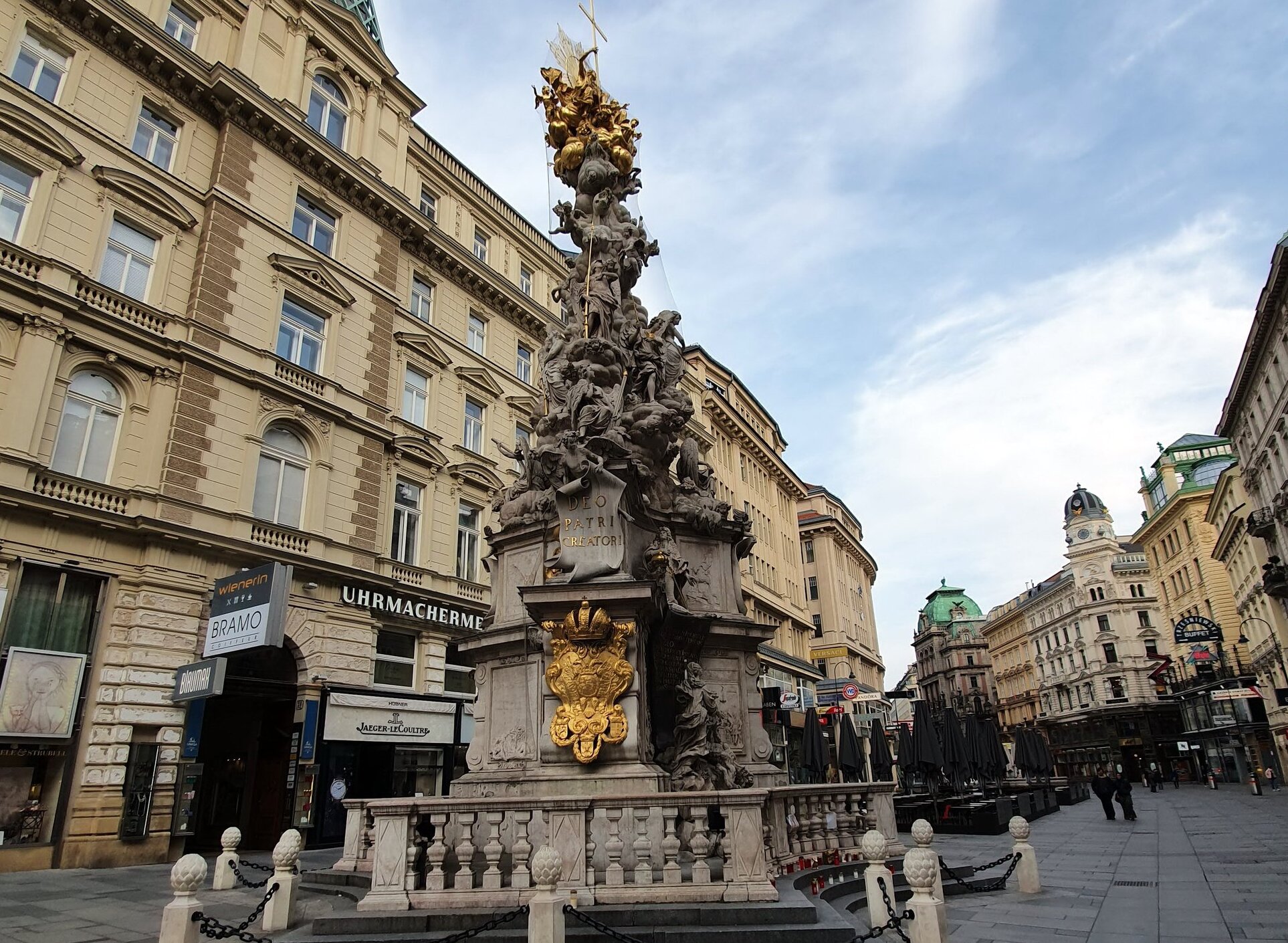
The name means 'ditch', which is the most honest thing about it. The Graben follows the line of the southern moat of the Roman military camp of Vindobona, and the fact that one of Vienna's most elegant pedestrian streets is built on a drainage channel says something useful about how cities transform their inconveniences into assets over time. Today the Graben is lined with high-end shops and anchored by the Pestsäule — the Plague Column, erected in the seventeenth century to commemorate the end of an epidemic — which is a baroque monument of considerable drama that most people walk past without registering what it is commemorating. The street rewards slow movement. The architecture above the shop fronts is consistently interesting and consistently ignored.
Il consiglio del team
Look at the upper storeys of the buildings on the Graben's eastern side — several retain their late nineteenth-century facades largely intact, including ironwork details that the ground-floor renovations have erased at street level.
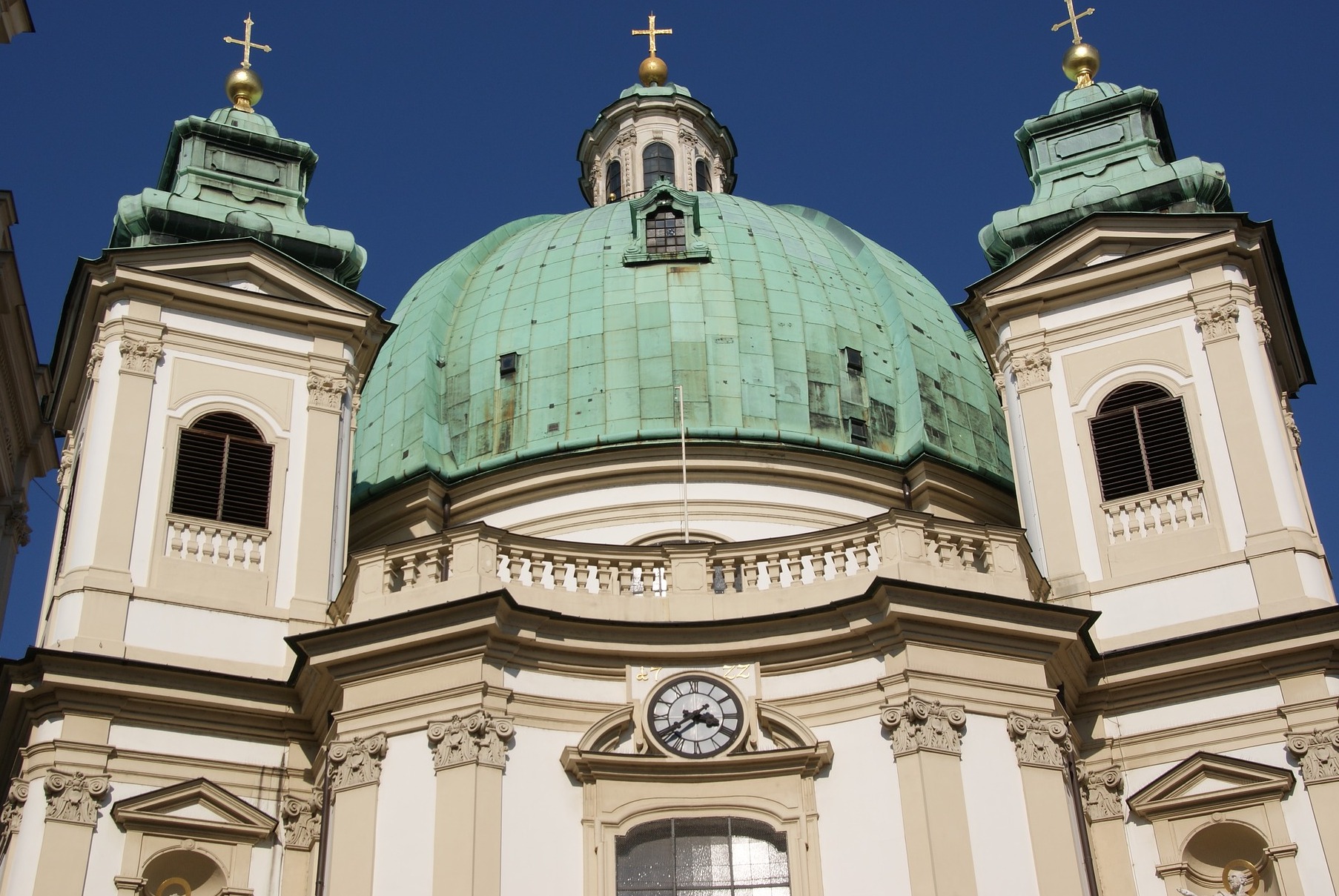
A few steps from the Graben, the Peterskirche presents its elliptical baroque facade to a small square that most visitors cross without stopping, being already committed to a destination elsewhere. The church that stands here now was begun in 1701 — but the site is far older. Tradition holds that one of Vienna's earliest Christian buildings stood here, founded in the eighth century, though nothing of that structure survives above ground. What does survive is a Johann Lukas von Hildebrandt interior of considerable warmth: the oval nave creates an intimacy unusual for a church of this ambition, and the ceiling frescoes have a quality of light in the afternoon that is worth timing your visit around. It is, by any measure, one of the more beautiful interiors in the city. It is also, by some mystery, rarely full.
Il consiglio del team
Classical concerts are held here regularly in the evenings — the acoustics in the oval nave are more interesting than those in larger venues, and ticket prices tend to be considerably lower.
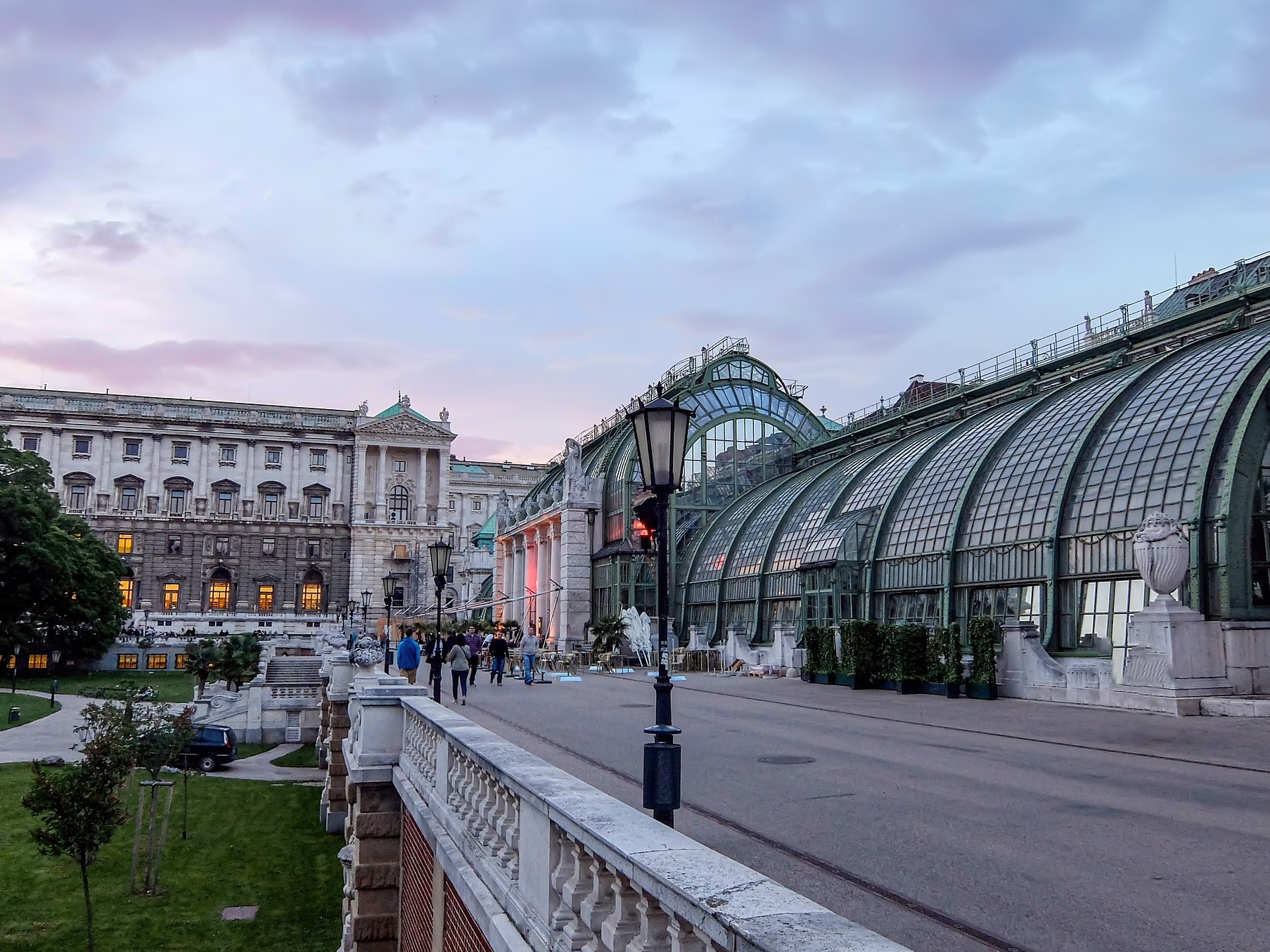
The Burggarten was originally a private imperial garden, opened to the public in the early twentieth century, and it has the slightly relaxed quality of a space that was designed for pleasure rather than ceremony. The Mozart memorial here is probably the most photographed statue in Vienna, which has given it the paradoxical quality of being both extremely visible and somehow unexamined — people photograph it and move on, rather than sitting in the garden and reading, which is what the garden seems designed for. The Palmenhaus at the garden's edge is a wrought-iron and glass greenhouse from 1901 that now operates as a café and bar. In winter, when the garden is quiet and the palms are visible through the steamed glass, it is one of the more atmospheric places in the city to have a drink.
Il consiglio del team
The butterfly house adjacent to the Palmenhaus is technically a separate attraction and is consistently undervisited — it occupies a former imperial greenhouse and is genuinely disorienting in the best way during a grey Vienna afternoon.
Vienna's reputation as an expensive city is real but partial. The city maintains over a hundred parks and public gardens, most of them free, many of them genuinely beautiful, and almost all of them used by locals in ways that tourists rarely participate in. The Prater, the Augarten, the Türkenschanzpark — these are not consolation prizes for budget travellers. They are where the city actually lives when it is not performing for visitors. A picnic in the Augarten, within sight of a baroque orangery and two anti-aircraft towers left over from the Second World War, is a more authentically Viennese experience than many things that cost considerably more. The city's public transport system, consistently ranked among Europe's best, makes all of these spaces accessible without a taxi.
Il consiglio del team
The Vienna City Card covers unlimited public transport and offers museum discounts — for a multi-day visit structured around the city's free parks and reduced-admission institutions, it represents genuine value.
There is a version of Vienna that exists entirely outside the formal tourist infrastructure — in the neighbourhood Beisl where the menu is handwritten, in the second-hand bookshops of the seventh district, in the walking routes along the Danube Canal that connect the inner city to the outer districts without passing a single landmark. The city's public parks are part of this system: designed into the urban fabric from the imperial period onward, they function as connective tissue between the formal attractions. Walking between sites via the parks rather than the main streets changes the character of the city entirely. Vienna rewards this kind of lateral movement — the willingness to follow a street because it looks interesting rather than because it leads somewhere listed.
Il consiglio del team
The Naschmarkt on a weekday morning — when it functions primarily as a working food market rather than a tourist attraction — gives access to a version of the city that the weekend crowds entirely obscure.
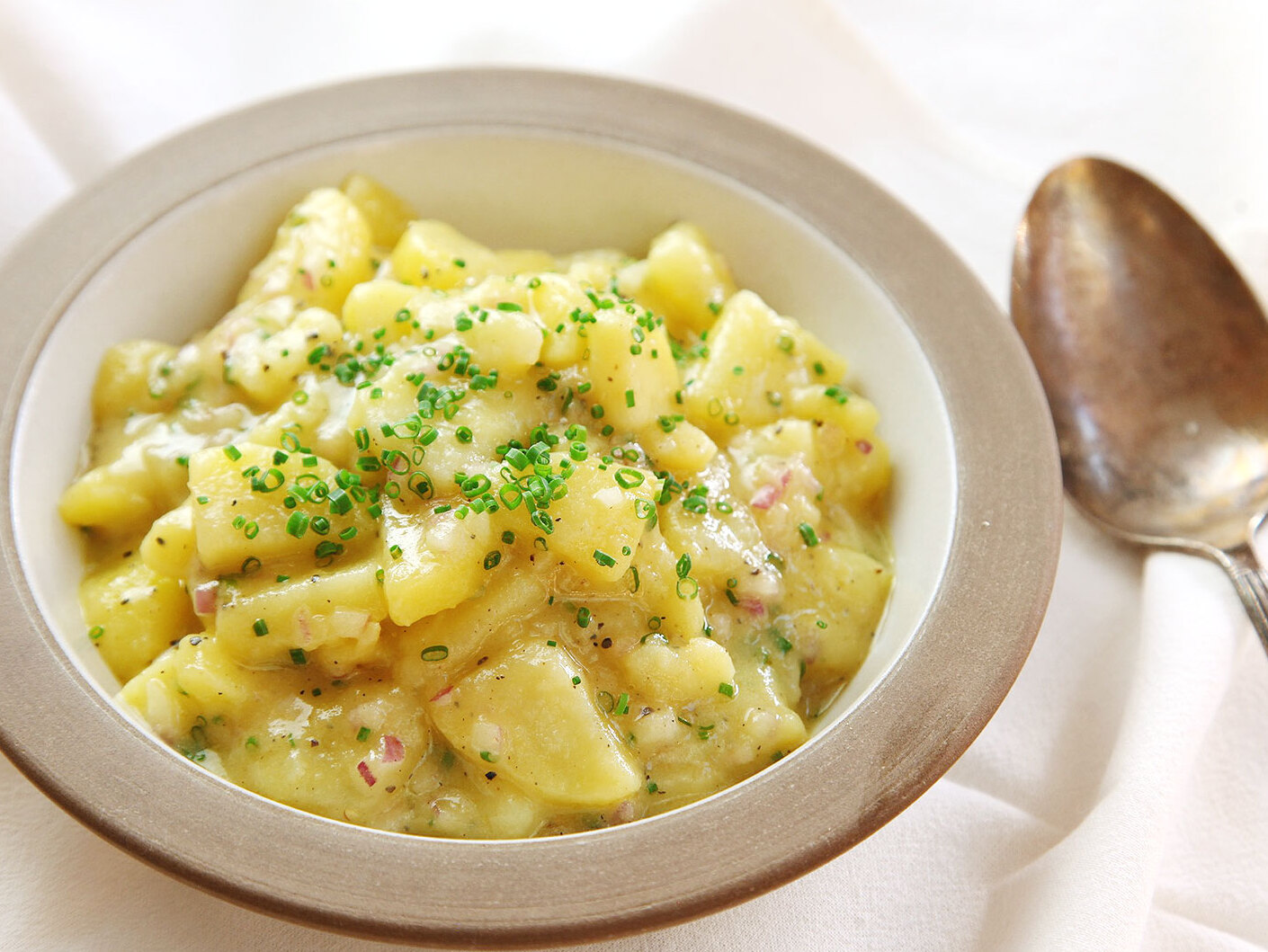
The Erdäpfelsalat — Austrian potato salad — is one of those dishes that reveals a culinary philosophy in a single bowl. There is no mayonnaise. Instead, the potatoes are dressed with white wine vinegar, mild vegetable stock, and oil, producing something lighter and more acidic than its North American counterpart, and considerably more interesting as a result. It is served as a side dish throughout Vienna's traditional restaurants and Gasthäuser, often alongside Wiener Schnitzel, and it is the kind of thing that a visitor might eat without thinking much about it and then spend the flight home trying to recreate. The simplicity is the point — Austrian cooking at its best is about restraint and quality of ingredient rather than complexity of technique.
Il consiglio del team
The Erdäpfelsalat is best at lunch in a working-class Gasthaus in the outer districts — the versions served in the tourist-facing restaurants of the first district tend to be refined to the point of losing the dish's essential directness.
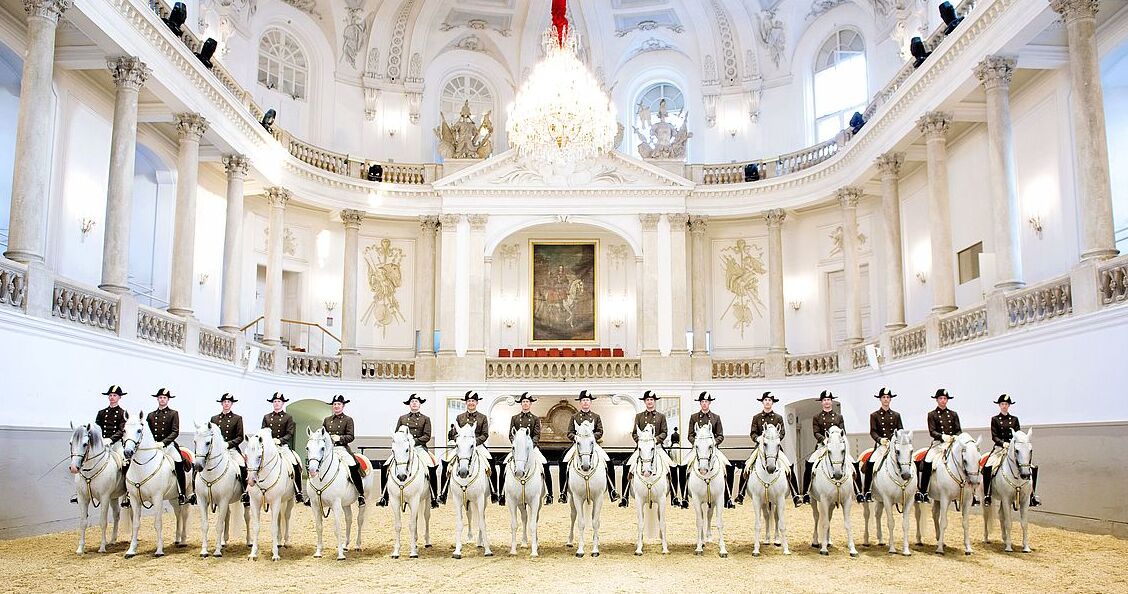
The Spanish Riding School has been performing its precisely codified equestrian art in the Winter Riding Hall of the Hofburg for over four hundred years, which makes it one of the longest continuously operating institutions of its kind in the world. The horses — Lipizzaner stallions, bred to a tradition that predates most modern nation-states — learn their movements over years of training, and the performances have a quality that is closer to dance than to sport. The morning training sessions, which are open to visitors at a lower price than the formal performances, offer something the gala shows do not: the working reality of the institution, the repetition and correction that underlies the apparent effortlessness. It is, in its way, more interesting than the finished product.
Il consiglio del team
Morning training sessions are available on most weekdays when the school is not on tour — check the official schedule in advance, as the calendar varies significantly by season and is not always reflected in third-party booking sites.
Vienna is not a city that gives itself up easily, and it is not a city that rewards impatience. The fifteen places in this list are not secrets — most of them have been there for centuries, and several of them are in every guidebook published in the last fifty years. What they share is a quality of being underweighted in the mental map that most visitors carry. The cathedral gets the attention; the clock on the bridge nearby gets walked past. The grand museum gets the queue; the library inside the same complex gets the afternoon light to itself.
The city's real offer, once you have made peace with the famous things, is this: an almost inexhaustible depth of secondary experience. The second church. The smaller garden. The coffee house that is not the one everyone recommends. Vienna is a city that has been accumulating layers for two thousand years, and the layers do not stop being interesting just because one of them is more famous than the others. Come back more than once. The second visit is always better than the first.
★ Guida tascabile
Porta questa guida con te.
Salvala offline, ottieni le indicazioni a piedi e scopri migliaia di luoghi come questi.
What is the best way to get around Vienna without spending much on transport?
Vienna's public transport network — U-Bahn, tram, and bus — covers the entire city with considerable efficiency. A 24-hour, 48-hour, or 72-hour travel pass offers unlimited travel across all modes and is available from ticket machines at every U-Bahn station. The Vienna City Card adds museum discounts to the transport pass and is worth calculating against your planned visits. For the inner districts, most of the major sites are within comfortable walking distance of each other.
When is the best time to visit Vienna's indoor attractions to avoid crowds?
Weekday mornings — particularly Tuesday through Thursday, before 10am — are consistently quieter at the Albertina, the National Library, and the Café Central. The Spanish Riding School morning training sessions are best booked for weekday slots outside of Austrian school holidays. The Peterskirche and the Anchor Clock on Hohe Markt are rarely crowded at any time, but the light in both is best in the early afternoon.
Are there free things to do in Vienna that are genuinely worth doing?
Yes, and more than most visitors realise. The Burggarten, the Augarten, and the city's other public parks are free and well-maintained. The exterior of the Austrian Parliament Building and the Graben pedestrian street cost nothing to experience. Several museums offer free admission on specific days or for visitors under a certain age — the Vienna City website maintains an updated list. The Anchor Clock on Hohe Markt performs its noon display at no charge.
Is the Café Central worth visiting despite being well-known to tourists?
Yes, with caveats. The interior — a vaulted neo-Gothic hall with marble columns and a genuinely impressive scale — justifies the visit on architectural grounds alone, regardless of the historical associations. The coffee and pastry quality is solid. The experience is more rewarding outside peak tourist hours: early morning or mid-afternoon on a weekday shifts the atmosphere considerably. Treat it as a building you happen to be having coffee in, rather than as a heritage experience, and it tends to deliver.
How much time should I budget for the Austrian National Library's State Hall?
The Prunksaal itself takes between thirty and forty-five minutes to experience properly — long enough to move through the space slowly and look at the ceiling frescoes and the historic globes without rushing. If you add the Papyrus Museum and the Globe Museum, which are covered by the same ticket and housed in the same complex, budget two to two-and-a-half hours in total. The library is closed on Mondays; check the official website for current opening hours, as they vary by season.
★ Leggila quando vuoi
Salvala sul tuo telefono.
Aggiungi questa guida ai preferiti, pianifica il viaggio offline, scopri luoghi come questi.