A city that conceals itself in plain sight, one campo at a time
L
Una guida di
Lena Hofmann
Aggiornata il
4 ottobre 2026
Lettura
12 minuti
Comprende
11 luoghi · mappa interattiva
★ Guida d'Italia 2026
Pianifica con cura. Viaggia più a fondo.
1.3M+ luoghi curati nel mondo, mappe offline e itinerari intelligenti — tutto in un'app gratuita.
1.3M+ luoghiMappe offlineItinerari AIGratis
There is a particular kind of exhaustion that comes from visiting Venice correctly. You arrive, you find the Rialto, you queue for a spritz in a campo that someone's Instagram algorithm has already colonised, and you leave feeling vaguely cheated — as if the city withheld something from you. It did. But not maliciously. Venice hides not by being obscure but by being overwhelming. The sheer density of beauty creates a kind of aesthetic noise that drowns out the quieter frequencies. A Gothic staircase spiralling up a courtyard wall. A bridge with no railings that the city forgot to modernise. A painting so mysterious that art historians have been arguing about its meaning for five centuries. These things are not hidden in the way that a speakeasy is hidden. They are hidden the way a sentence you've read a hundred times suddenly reveals a meaning you missed every single time before. That is Venice's trick. It does not bury its secrets — it leaves them in the open, trusting that most visitors will be too busy photographing gondoliers to notice. The places in this list are not unknown. Several appear in guidebooks. A few have their own Wikipedia entries. What makes them feel hidden is something subtler: the way the city frames them, the silence that surrounds them even in high season, the sense that you have stumbled onto something that was not arranged for your benefit. That feeling — earned, not manufactured — is the closest Venice comes to giving you something for free.
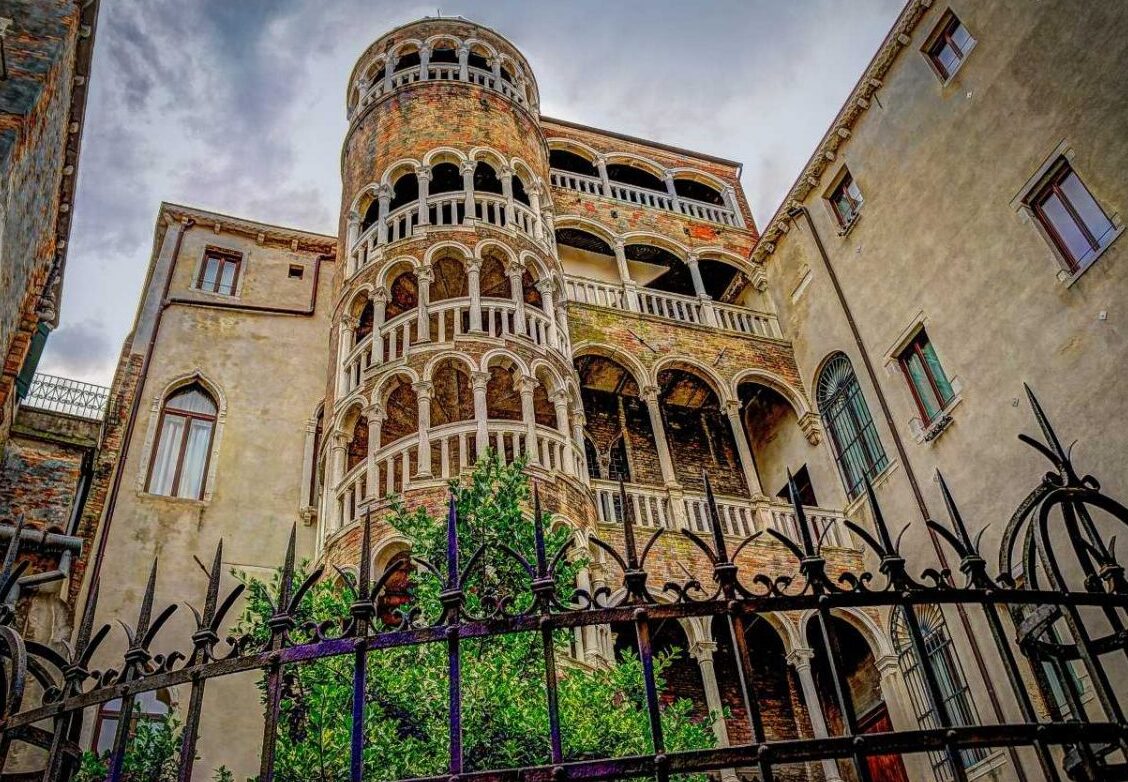
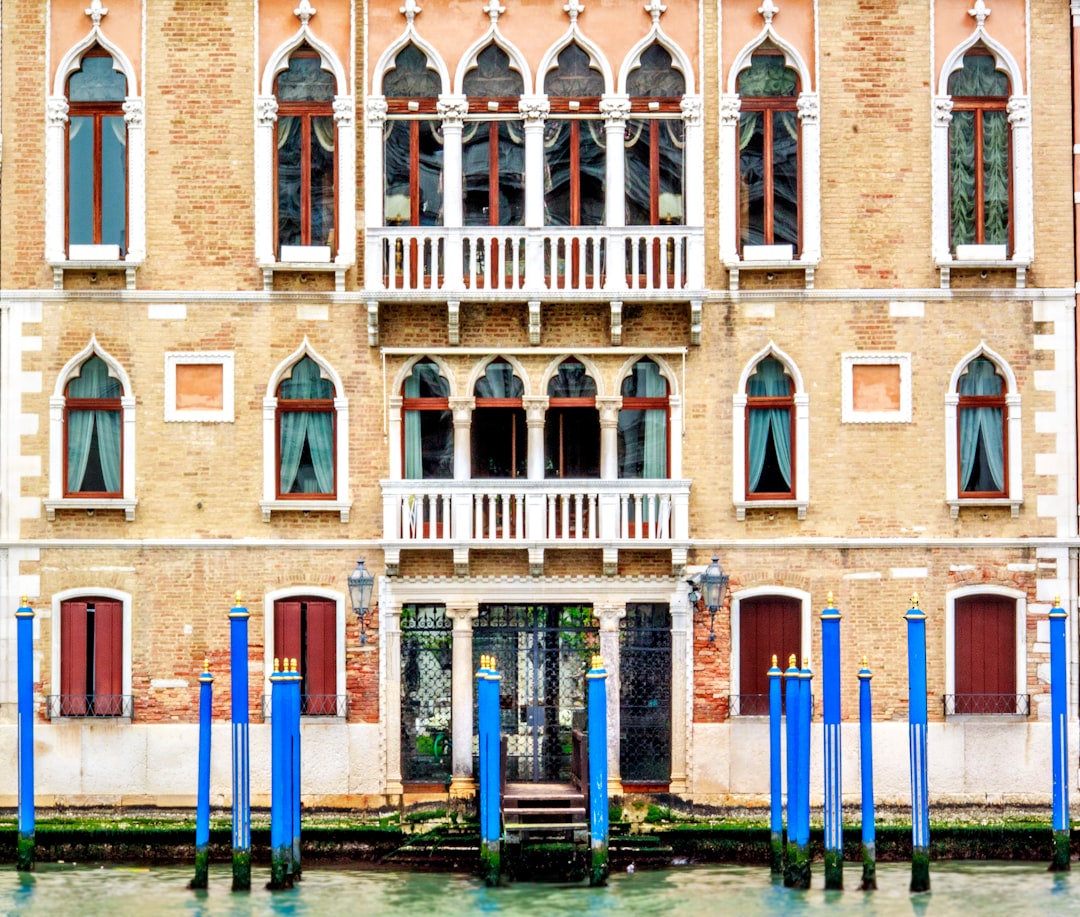
Most of Venice's architectural drama happens on the water. Palazzo Contarini del Bovolo stages its entirely in a courtyard you have to search for, down a narrow alley in the San Marco sestiere. The name gives the game away — bovolo means snail in Venetian dialect — and the external spiral staircase that wraps around the palazzo's loggia tower is exactly that: a slow, baroque helix of arches and columns that seems to have been designed by someone who had never been told what a staircase was supposed to look like. Built around the late fifteenth century, it borrows from Gothic, Renaissance and Lombardesque traditions simultaneously, which sounds chaotic and somehow isn't. The palazzo has passed through multiple families over five centuries, each leaving the staircase alone, perhaps because nobody could quite agree on what to do with it.
Il consiglio del team
Visit in the late afternoon when the light catches the loggia arches from the west and the stone takes on a warmth the morning completely refuses to offer. The courtyard is small, so arrive before tour groups do.
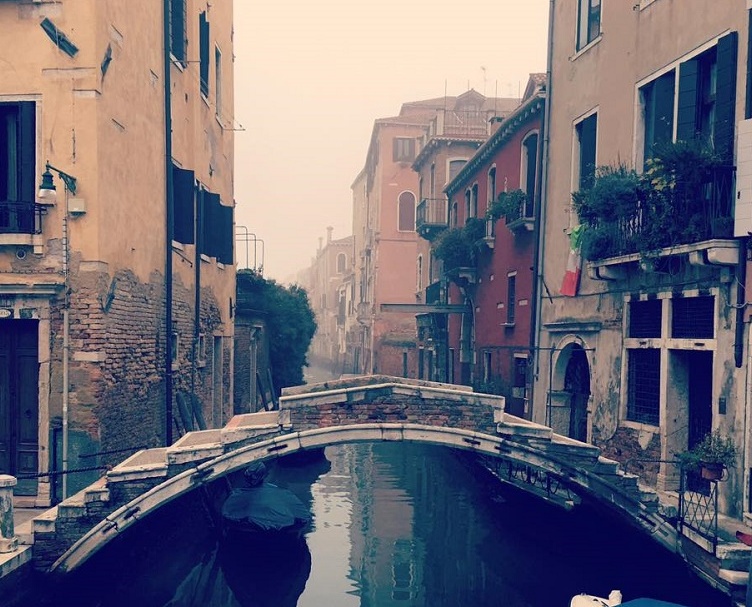
Venice has 446 bridges, which means that most of them receive approximately zero attention from visitors who have already ticked off the Rialto and the Accademia. The Ponte del Chiodo, tucked into the Cannaregio sestiere near the Fondamenta della Sensa, earns its distinction by being one of the few bridges in the city that was never fitted with railings — a detail that was standard on all Venetian bridges until the Republic began adding them in the eighteenth century. Standing on it feels faintly transgressive, like using a door that was never meant to be a door. The bridge is small, unadorned, and connects two private properties, which means it sees almost no foot traffic beyond the people who live on either side of it. It is, in the most literal sense, a bridge that the city forgot to update.
Il consiglio del team
The Ponte del Chiodo is easiest to find by walking north from the Campo dei Mori — look for the narrow calle that leads to the Fondamenta della Sensa and keep your eyes low rather than up.
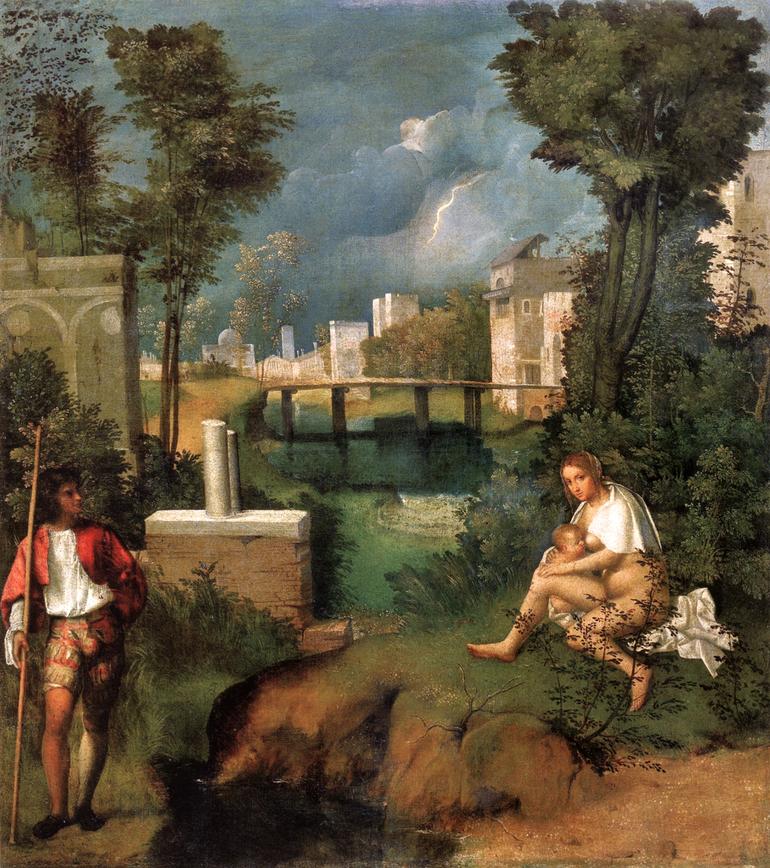
Housed in the Gallerie dell'Accademia, Giorgione's La Tempesta is one of those paintings that art historians have been circling for centuries without landing. Completed in the early sixteenth century, it depicts a soldier, a nursing woman, a storm-lit landscape and a city in the background — and nobody, including the people who have devoted careers to studying it, agrees on what it means. Is it an allegory? A pastoral fantasy? A private commission with a meaning lost to time? The painting is relatively small, which surprises people who have only seen reproductions, and that intimacy makes the encounter oddly unsettling. You stand close to something that was clearly painted with great intentionality and find yourself completely locked out of its logic. Venice has many great paintings. This is one of the few that actively resists you.
Il consiglio del team
The Accademia can feel overwhelming — most visitors sprint toward the Bellinis and Titians. Slow down in the room where the Tempesta hangs and give yourself at least ten minutes with it alone. The painting rewards patience in a way that few others do.
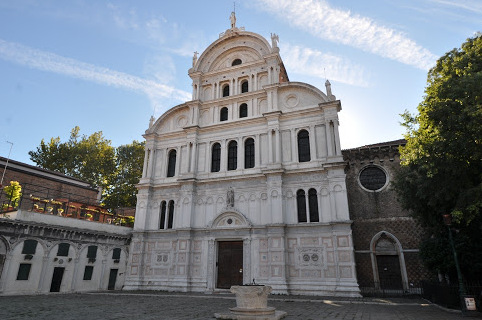
The Chiesa di San Zaccaria sits in a campo just east of the Piazza San Marco, which means it benefits from proximity to the city's most visited square while somehow escaping the worst of its crowds. The church's history stretches back to the ninth century, though the current structure dates largely from a fifteenth-century rebuilding in Venetian Gothic and Renaissance styles. Inside, the second altar on the left holds Giovanni Bellini's Sacred Conversation — an altarpiece completed around 1505 that is considered one of the finest examples of Venetian Renaissance painting still in its original location. The church was also intimately connected to the doge and the Venetian nobility, which gave it a political weight that shaped its architecture and its art collection in equal measure. The crypt, partially flooded and lit by candles, is one of the more quietly atmospheric spaces in the city.
Il consiglio del team
The crypt is accessible for a small fee and is often overlooked even by visitors who make it to the church. The flooded floor and medieval sarcophagi create an atmosphere that no amount of tourist infrastructure has managed to domesticate.
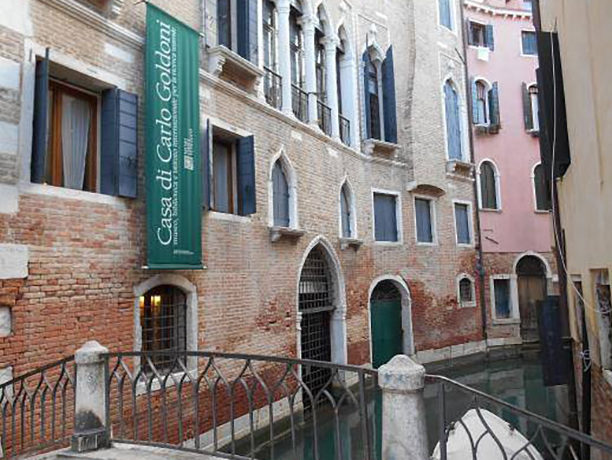
Carlo Goldoni is to Italian theatre roughly what Molière is to French — a writer who transformed a popular form into something with genuine literary weight. His house in the San Polo sestiere, now managed by the Musei Civici Veneziani, offers an exhibition dedicated to his life and the commedia dell'arte tradition he both drew from and systematically dismantled. The building itself is a fifteenth-century Gothic palazzo with a courtyard that contains a wellhead and a covered external staircase — the kind of domestic architecture that Venice produced in extraordinary quantities and that now largely survives only in fragments. The collection includes puppets, theatrical documents and period materials that give the visit a texture beyond the biographical. It is the kind of museum that rewards people who arrive curious rather than obligated.
Il consiglio del team
The courtyard staircase alone is worth the entrance fee if you are interested in domestic Venetian Gothic architecture — it is one of the better-preserved examples in the city and receives a fraction of the attention that Palazzo Contarini's more famous spiral does.
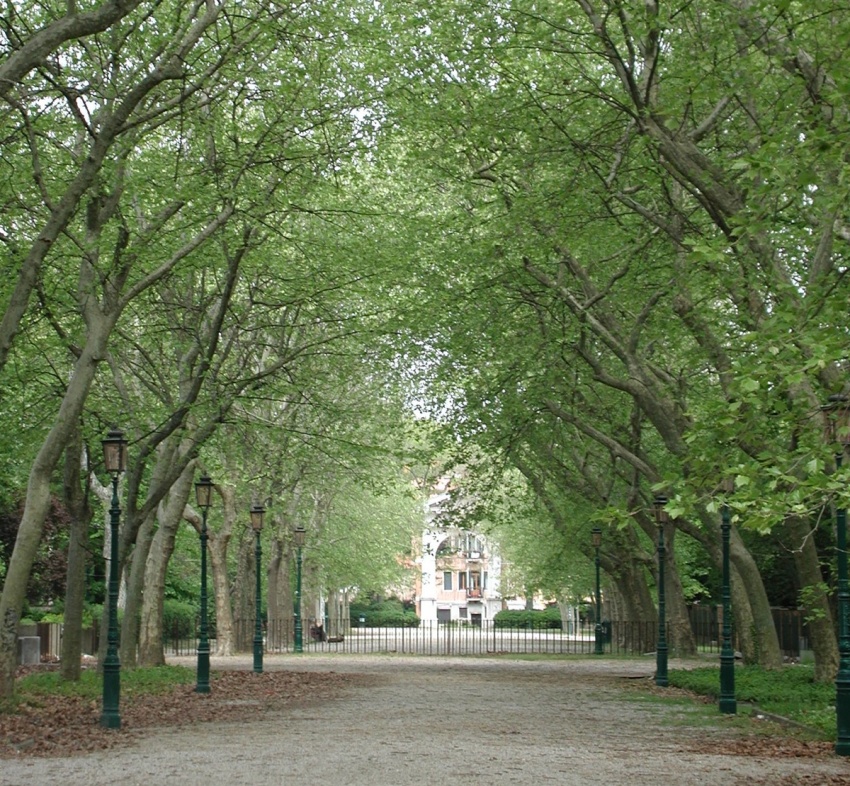
The Giardini della Biennale in the Castello sestiere are best known as the site of the Venice Biennale's national pavilions — a collection of early twentieth-century buildings that constitute an accidental museum of European nationalist architecture. But the gardens carry a stranger layer. Local legend holds that in 1921, near the statue of Garibaldi that stands within the gardens, a figure in a red shirt appeared and began disturbing passers-by. The story has the quality of all good urban legends: just specific enough to feel credible, just vague enough to resist verification. Whether you read it as folklore, political allegory — Garibaldi's red-shirted followers were, after all, the defining image of Italian unification — or simple ghost story, it gives the gardens a dimension that the art-world crowd tends to overlook entirely.
Il consiglio del team
Visit the Giardini outside Biennale season when the pavilions are closed and the gardens are used almost exclusively by locals walking dogs and elderly residents taking the air. The atmosphere is entirely different from the art-fair version.
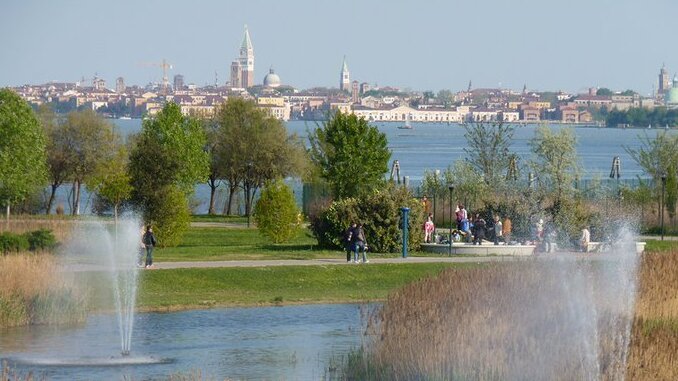
Mestre is the mainland part of the Venice municipality — the industrial, residential, unglamorous counterpart that most visitors see only from the train window and immediately disregard. Parco San Giuliano sits on the edge of the lagoon at Mestre, a large green space that was reclaimed from an industrial wasteland and transformed into a park with cycling paths, sports facilities and views across the water toward Venice itself. It is, in other words, one of the few places where you can look at Venice from the outside rather than navigate it from within. The park is used almost entirely by locals and represents a version of the lagoon city that the tourism industry has no particular interest in selling. That alone makes it worth the short journey from the historic centre.
Il consiglio del team
Rent a bicycle at the park entrance and follow the lagoon-side path to its eastern end for a view of Venice's skyline that is unencumbered by other tourists, selfie sticks or the infrastructure of organised sightseeing.
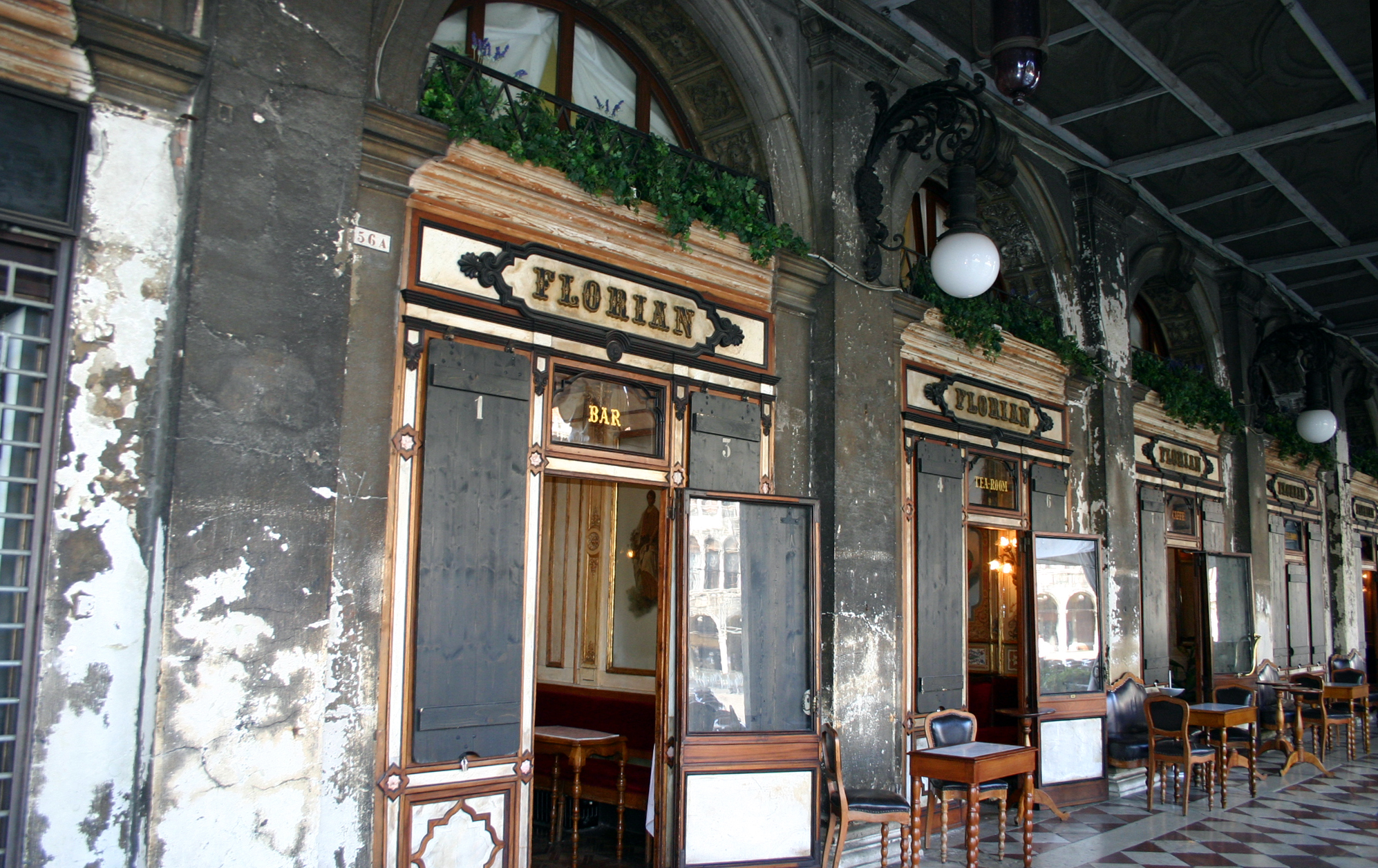
Caffè Florian opened in 1720 in Piazza San Marco and has been cited as the first café in Italy — a claim that is contested in the way that all such founding claims are contested, but that carries enough historical weight to be taken seriously. The interior, with its series of small frescoed rooms and mirrored walls, has been preserved with the kind of obsessive fidelity that borders on taxidermy. The prices are what they are — you are paying for the room, the history and the orchestra on the square as much as for the coffee — and the experience of sitting inside rather than at the outdoor tables is genuinely different. Casanova allegedly visited. Byron allegedly visited. The café has been used as a backdrop for so much Venetian mythology that it has become difficult to see clearly. Sit inside on a grey November morning with the piazza nearly empty and it becomes, briefly, possible.
Il consiglio del team
The indoor rooms are the point — not the outdoor tables. Order at the bar if you want to experience the space without the full sit-down price, and go in the off-season when the interior retains something of its original function as a place of conversation rather than spectacle.
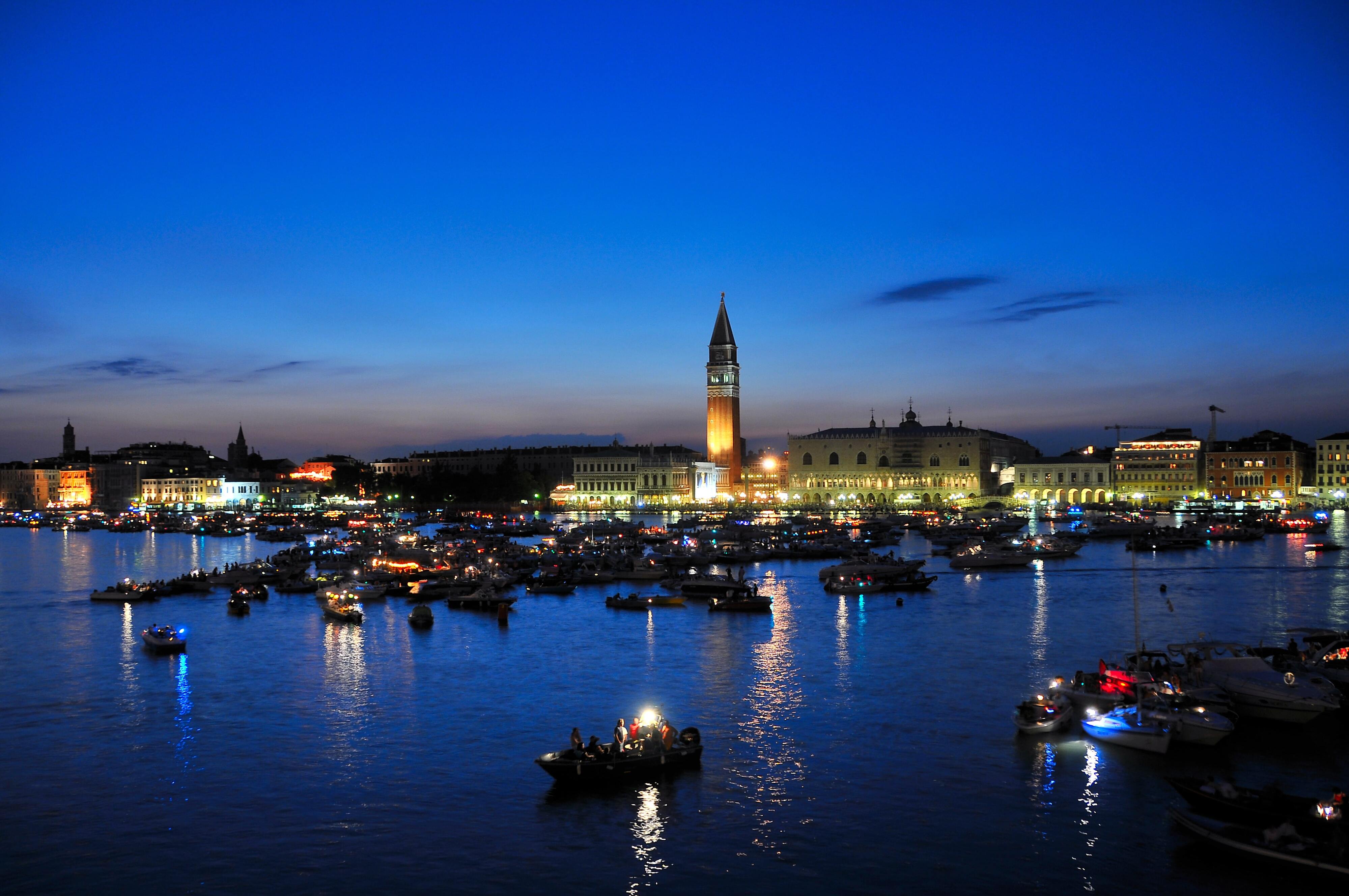
Venice's UNESCO World Heritage status, granted to the city and its lagoon in 1987, is one of those designations that has become so familiar it has lost its capacity to astonish. What it actually means is this: the entire city — its canals, its islands, its historic centre, the surrounding lagoon ecosystem — is considered a single, irreplaceable cultural and natural site. The light that changes through the hours, the morning fog that dissolves the distinction between water and sky, the way the city's reflection shifts with the tide — these are not incidental qualities. They are part of what UNESCO recognised as worth protecting. Viewing Venice as a unified monument rather than a collection of individual attractions changes the way you move through it. You stop hunting for the next thing and start paying attention to the connective tissue: the water, the light, the silence between the buildings.
Il consiglio del team
Take a vaporetto along the Grand Canal at dusk on a weekday in late autumn — not as a tourist attraction but as a way of reading the city as a whole. The light at that hour, on that route, does more to explain Venice's UNESCO status than any individual building can.
Venice rewards preparation in a way that few cities do, because its geography — no cars, limited transport options, a labyrinthine street plan that resists intuition — means that the gap between a well-planned visit and an improvised one is unusually wide. The practical advice that circulates about Venice in 2026 tends to cluster around the same themes: book accommodation inside the historic centre rather than on the mainland if you can afford it, use the vaporetto sparingly and walk more than you think is reasonable, visit the major sites early or late rather than at midday, and accept that the city will disorient you regardless of how many maps you study. The difference between being lost by accident and being lost by choice is entirely a matter of attitude, and Venice is one of the few places where the latter is genuinely productive.
Il consiglio del team
The vaporetto Line 1 along the Grand Canal is the slowest and most crowded option — and also the most useful for orientation. Take it once, in full, from Piazzale Roma to San Marco or vice versa, before you begin walking, to build a spatial understanding of the city's main artery.
The debate about which digital tool best serves a Venice visit is, in some ways, a proxy for a larger argument about what travel is actually for. Venice is one of the most complex cities in the world to navigate — its address system is notoriously opaque, its streets are not always where maps suggest they should be, and the vaporetto network requires a different kind of spatial thinking than metro or bus systems do. Apps that promise to optimise the experience tend to route visitors toward the same corridors and the same sites, which is efficient but counterproductive if what you are actually looking for is the version of the city that exists beyond the algorithm. The most useful navigation tool in Venice remains, somewhat embarrassingly, a paper map studied in advance and then largely ignored in favour of following the sound of water.
Il consiglio del team
Download an offline map before you arrive — connectivity in the narrower calli can be unreliable — but treat it as a safety net rather than a guide. The city's sestieri each have a distinct character that becomes legible only through walking, not through following a blue dot.
Venice is a city that has been written about so extensively that the writing has become part of the problem. Every visitor arrives with a pre-formed image — the gondolas, the carnival masks, the slow sinking — and the city obliges by providing all of it. What it does not provide, unless you ask for it, is the quieter version: the bridge without railings, the painting without an explanation, the ghost in the garden, the café at seven in the morning when the piazza belongs to the pigeons and the cleaners. These fifteen places are not a secret itinerary. They are an invitation to pay a different kind of attention. Venice does not reward the visitor who moves fastest or photographs most. It rewards the one who notices that the light changed between one end of the calle and the other, and stops to work out why. That is the version of the city worth travelling for — and it has been there all along, waiting without any particular urgency for you to arrive.
★ Guida tascabile
Porta questa guida con te.
Salvala offline, ottieni le indicazioni a piedi e scopri migliaia di luoghi come questi.
When is the best time of year to visit Venice if you want to avoid the worst of the crowds?
November, early December and January are consistently the quietest months in Venice. The weather is cold and occasionally foggy — which, depending on your disposition, is either a drawback or the most atmospheric condition in which the city can be experienced. March and late October offer a reasonable compromise between tolerable weather and manageable visitor numbers. July and August, and the period around Carnival in February, are the most crowded and should be approached with realistic expectations.
How do you get from Venice's historic centre to Murano, and how long should you allow for the visit?
Vaporetto lines 4.1 and 4.2 run from Fondamenta Nove to Murano in approximately 15 minutes. The DM line from Piazzale Roma and the Ferrovia (train station) also serves Murano directly. Allow at least three hours for a visit that goes beyond the glassblowing demonstrations — the Museo del Vetro, the Basilica dei Santi Maria e Donato and a walk along the island's quieter fondamenta all repay time. Staying past the mid-afternoon departure of most day-trippers transforms the experience.
Is it possible to attend a performance at Teatro La Fenice without booking months in advance?
It depends on the production and the season. Major productions — particularly anything involving a celebrated conductor or cast — sell out well in advance, sometimes within days of tickets going on sale. However, the Fenice regularly programmes smaller-scale events, recitals and chamber concerts that are easier to access at shorter notice. Checking the official website in the week before your visit is worthwhile, and weeknight performances in the shoulder seasons (October–November and February–March) are generally more available than weekend dates.
What is the most practical way to navigate Venice without getting hopelessly lost?
Accept that getting somewhat lost is inevitable and build it into your schedule rather than fighting it. Before you arrive, study a paper map of the six sestieri (San Marco, Castello, Cannaregio, San Polo, Santa Croce and Dorsoduro) to internalise the basic geography. In the city, navigate by sestiere and by the yellow signs pointing toward major landmarks — Rialto, San Marco, Ferrovia, Piazzale Roma — rather than by street name. Download an offline map for emergencies. The city is small enough that being lost rarely means being more than twenty minutes from where you need to be.
Are the Giardini della Biennale accessible outside of the Biennale exhibition periods?
Yes — the gardens themselves are publicly accessible year-round as a green space, though the national pavilions are closed when no exhibition is running. Outside Biennale years and between exhibition periods, the Giardini function as a neighbourhood park used primarily by Castello residents. This is, arguably, when they are most worth visiting: the architecture of the pavilions is visible from the outside, the gardens are quiet, and the atmosphere is entirely different from the art-fair version that most visitors know.
★ Leggila quando vuoi
Salvala sul tuo telefono.
Aggiungi questa guida ai preferiti, pianifica il viaggio offline, scopri luoghi come questi.