A city this layered doesn't hide its secrets. It simply waits for you to slow down enough to notice them.
L
Una guida di
Lena Hofmann
Aggiornata il
29 aprile 2026
Lettura
13 minuti
Comprende
30 luoghi · mappa interattiva
★ Guida d'Italia 2026
Pianifica con cura. Viaggia più a fondo.
1.3M+ luoghi curati nel mondo, mappe offline e itinerari intelligenti — tutto in un'app gratuita.
1.3M+ luoghiMappe offlineItinerari AIGratis
Let me be honest about something: Rome does not really have hidden places. Not in the way travel writing likes to pretend. The city has been walked, written about, painted, filmed, and argued over for more than two millennia. Every alley has been somebody's discovery. Every courtyard has already appeared in somebody else's Instagram grid, captioned with a Latin phrase they found on Google.
What Rome does have — and this is the thing that keeps drawing serious travellers back — is depth. Layers of time compressed so tightly that you can stand in front of something genuinely extraordinary and fail to register it, because your eye has already been trained to look for the Colosseum, the Trevi Fountain, the Spanish Steps. The famous things create a kind of visual noise that drowns out everything else.
The places in this list are not secret. Several of them are technically famous. A few sit within metres of the most photographed monuments on earth. But they share a quality that I find more valuable than obscurity: they are places where even well-travelled visitors stop performing tourism and start actually looking. Where the crowds thin, or the context shifts, or the light falls in a way that nobody thought to put on a postcard.
I have spent years returning to Rome between the obvious visits, arriving in November when the tour groups thin, eating at counters rather than terraces, and learning to treat the city's density not as an obstacle but as the whole point. These fifteen places are my attempt to articulate what that slower, more attentive Rome looks and feels like. Come prepared to walk past things you think you already know.
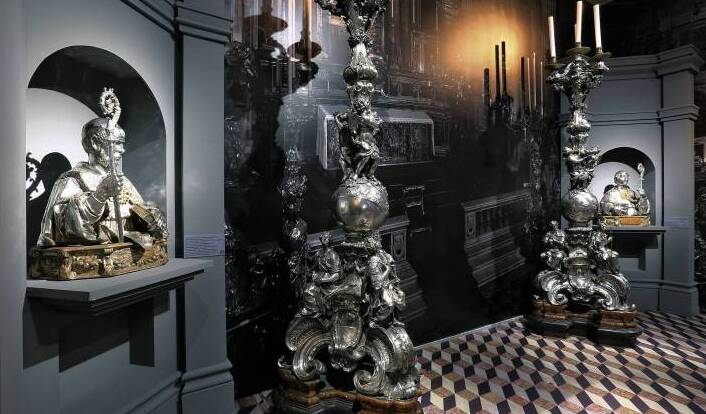
Tucked inside the Vatican Museums' Cortile della Pigna, this fountain is so elegantly understated that most visitors stride past it on their way to the Sistine Chapel, necks already craned toward the ceiling they haven't yet seen. The design is simple to the point of severity: a slender stem rising from a shallow basin, two stylised tulip corollas stacked like botanical geometry, and at the apex, a bronze pine cone from which water once flowed through narrow channels. The pine cone itself is ancient — a Roman artefact that gave its name to the entire courtyard — and the juxtaposition of that weathered bronze against Bramante's Renaissance architecture is quietly extraordinary.
What strikes you, if you stop, is the restraint. In a city that defaults to theatrical excess in its water features, this one whispers.
Il consiglio del team
Visit early in the morning when the museums first open. The courtyard is almost always quieter than the interior galleries, and the morning light hits the bronze pine cone at an angle that afternoon visitors never see.
Most visitors to the Vatican Museums spend their energy tilting their necks at the Sistine Chapel ceiling and then stumble, slightly dazed, into the Cortile della Pigna without quite registering what they are looking at. The Fontana della Pigna is worth the pause. A slender, elegant stem rises from a shallow basin, supporting two stylised tulip corollas, and from these corollas water once issued in delicate threads — a piece of hydraulic poetry from an era when fountains were engineering statements as much as aesthetic ones. The pine cone itself, a colossal ancient bronze that gives the courtyard its name, is a separate and older object entirely, but the fountain frames it with quiet authority.
What strikes you, if you stop, is the restraint. Rome is a city of theatrical water — Trevi, Navona, the Quattro Fiumi. This is something else: a fountain that whispers.
Il consiglio del team
Enter the Cortile della Pigna from the Museums' internal route rather than rushing through. Stand with your back to the pine cone and look at the fountain alone — the geometry becomes clearer without the bronze giant competing for your attention.
The Vittoriano — that enormous white marble wedding cake dominating Piazza Venezia — is one of Rome's most divisive structures. Romans have called it the typewriter, the false teeth, the wedding cake. Foreign visitors often photograph it and move on without entering. Both responses miss the point. Step inside and you find yourself inside a monument of genuine complexity: the Altare della Patria proper, the Tomb of the Unknown Soldier, the eternal flame, and a building whose sheer ambition — completed in 1935 after decades of construction — says something uncomfortable and important about Italian nationalism and the price of unification.
The building is not subtle. But subtlety was never the intention. Understanding what it was built to say, and by whom, and at what cost to the medieval neighbourhood demolished to make room for it, transforms a piece of bombastic architecture into a historical argument you can walk through.
Il consiglio del team
Take the free lift to the top terrace, the Quadriga level. The panorama over the Roman Forum is among the best in the city, and most visitors don't realise it exists until they're already inside.
The Altare della Patria — more formally the Monumento Nazionale a Vittorio Emanuele II, and affectionately or rudely nicknamed the 'wedding cake' or the 'typewriter' by Romans who have always had complicated feelings about it — is not hidden in any conventional sense. It dominates the skyline of central Rome with the blunt confidence of a building that knows it is controversial. And yet most visitors treat it as a backdrop: something to photograph the front of and then leave.
This is a mistake. The monument's interior contains layers that reward the curious: the Tomb of the Unknown Soldier, the Museo Centrale del Risorgimento (more on that shortly), and a rooftop terrace that offers one of the most structurally interesting vantage points in the city. The building is, in its own overwrought way, a genuine piece of unified Italy's architectural ambition — and understanding it changes how you read the city around it.
Il consiglio del team
The free elevator to the mid-level terrace is well-known; the paid panoramic lift to the very top is far less crowded and offers a 360-degree view that contextualises Rome's topography in a way no map quite manages.
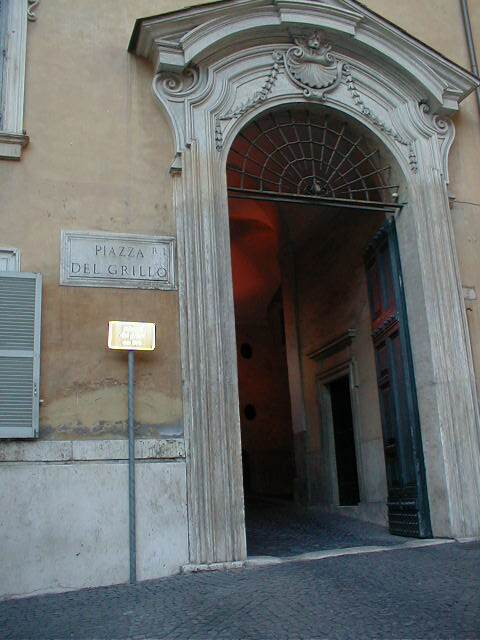
In the small, slightly scruffy Piazza del Grillo — a square that feels like it belongs to a quieter city entirely — this seventeenth-century palazzo sits with the self-possession of a building that knows it has nothing to prove. The facade and its two lateral wings form a composition that is dignified without being grand, the kind of aristocratic architecture that was built for living in rather than impressing from a distance. Most visitors to this part of Rome are heading toward the Imperial Fora or the Forum of Augustus and walk straight past without registering the square at all.
The palazzo gained a certain cultural afterlife through Alberto Sordi's 1981 film Il Marchese del Grillo, but the building predates that association by centuries. Stand in the piazza for ten minutes and you will likely have it entirely to yourself.
Il consiglio del team
The piazza connects via a short passage toward the Torre dei Conti and the area around the Forum of Augustus — combine both into a single slow walk and you'll cover ground that most day-trippers never reach.
Tucked into the small Piazza del Grillo, in the shadow of the Torre delle Milizie and wedged between the Imperial Fora and the Suburra neighbourhood, the Palazzo del Grillo is the kind of seventeenth-century Roman residence that most people walk past at speed because they are heading somewhere else. The façade and its two lateral wings have a particular quality of faded grandeur — the sort of building that seems to be conducting its own private conversation with the centuries, indifferent to whether you join in.
The palazzo was made internationally famous by the 1981 Alberto Sordi film of the same name, in which the Marquis del Grillo is a magnificently dissolute Roman nobleman. Locals of a certain generation still quote it. The building itself, however, predates the film's fame by several centuries and deserves attention on its own architectural terms.
Il consiglio del team
The piazza in front is one of the quieter spots in this part of Rome — a place to sit with a coffee from a nearby bar and watch the neighbourhood's unhurried rhythms, particularly on weekday mornings when the tourist tide hasn't yet arrived.
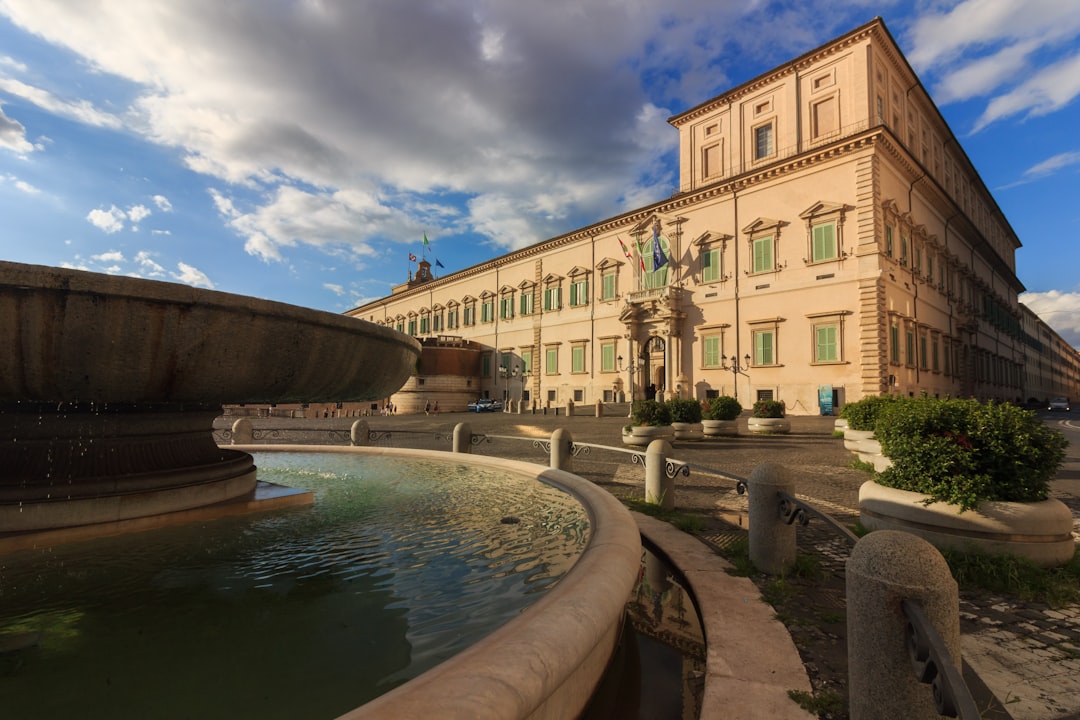
The Quirinal Palace is the official residence of the President of the Italian Republic, which means most people assume it is simply not accessible and therefore don't look further. That assumption is wrong, and missing the Quirinale is one of Rome's more avoidable oversights. The palace sits on the highest of Rome's seven hills, and its gardens — some of the finest formal gardens in the city — are open to the public on specific days. The interiors, open for guided visits on weekends, reveal a building that served as the papal summer residence for nearly three centuries before becoming the seat of the Italian state.
The scale is genuinely surprising: over a thousand rooms, tapestries, frescoes by Guido Reni, and a chapel that puts many parish churches to shame. The crowds here are a fraction of what you'll find at the Vatican.
Il consiglio del team
Book the guided interior visit well in advance through the official Quirinale website — slots fill quickly, especially on Sundays, but weekday availability is often better than visitors expect.
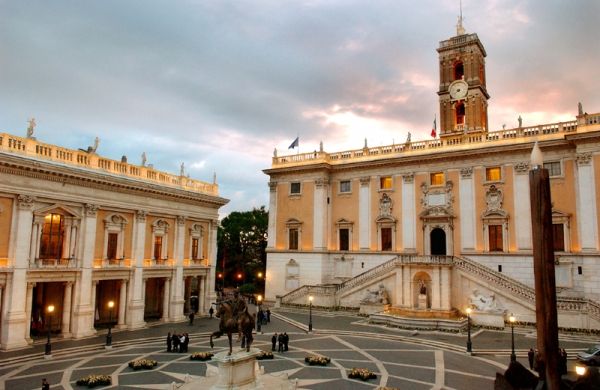
The Capitoline Hill has been Rome's symbolic and civic heart since antiquity, and the piazza that Michelangelo designed for it — completed long after his death, as these things tend to go in Rome — is one of the most considered public spaces in the world. But the terrace, or rather the set of three terraces accessible from different points around the hill, is something that even visitors who make it to the Capitoline Museums often overlook.
Two of the three terraces are freely accessible, and they offer perspectives on the Forum and the city that are fundamentally different from the more celebrated viewpoints on the Palatine or the Gianicolo. The angle here is intimate rather than panoramic — you are looking down into the archaeology rather than across the skyline, and that proximity to the layers of Roman time has a particular quality of gravity.
Il consiglio del team
The terrace directly behind the Senatorial Palace, overlooking the Forum, is best visited in the late afternoon when the light falls obliquely across the ruins. It is also, for reasons that remain mysterious, consistently less crowded than the Forum entrance below.
Rome's churches are so numerous that even devoted visitors develop a kind of sacred-space fatigue by the third day. Santa Maria sopra Minerva is the antidote to that fatigue, partly because it is genuinely unlike almost anything else in the city. Built on the site of a temple to Minerva — hence the name — it is one of the very few Gothic churches in Rome, and stepping inside after the city's relentless Baroque is a genuine recalibration of the senses. The ribbed vaulting, painted in deep blue and gold, has a northern European austerity that feels almost foreign here.
The church also holds Michelangelo's Cristo della Minerva, a marble Christ figure that is less visited than his Pietà in St Peter's but arguably more interesting for being accessible at close range. The relics of Saint Catherine of Siena rest beneath the high altar.
Il consiglio del team
The Fra Angelico frescoes in the Carafa Chapel, in the right transept, are among the finest works by that painter in Rome and receive almost no foot traffic — bring a small torch if you want to see the detail properly.
The Palazzo del Quirinale sits on the highest of Rome's seven hills and has served, across its long history, as a papal summer residence, a Napoleonic administrative centre, the royal palace of a unified Italy, and now the official residence of the Italian President. That institutional weight tends to make visitors assume it is inaccessible. It is not, or at least not entirely.
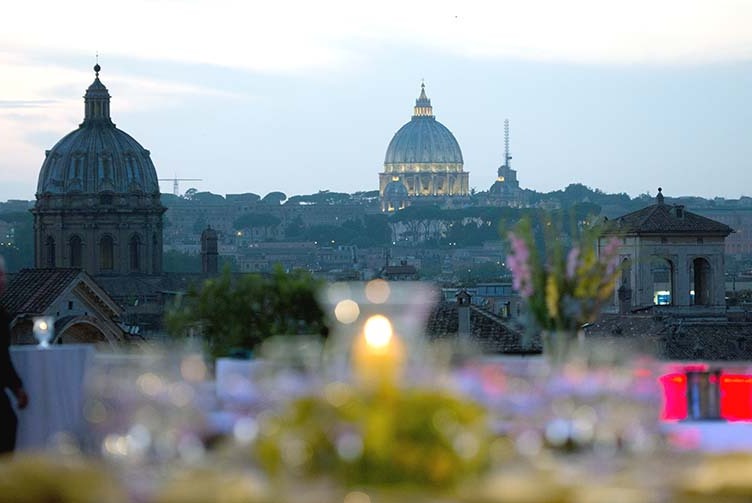
The state apartments open to the public on certain days reveal an interior of considerable grandeur — frescoed halls, Flemish tapestries, works by Melozzo da Forlì — but what surprises most is the garden, one of the largest private gardens in Rome, which occasionally opens for guided visits. The views from the Quirinal Hill across to St Peter's dome are among the most quietly satisfying in the city, without the performance of the more obvious vantage points.
Il consiglio del team
Book the guided garden visits well in advance through the official presidential website — they are limited in number and fill quickly, but the experience of walking through a working head-of-state's garden with a knowledgeable guide is genuinely unlike anything else in the city.
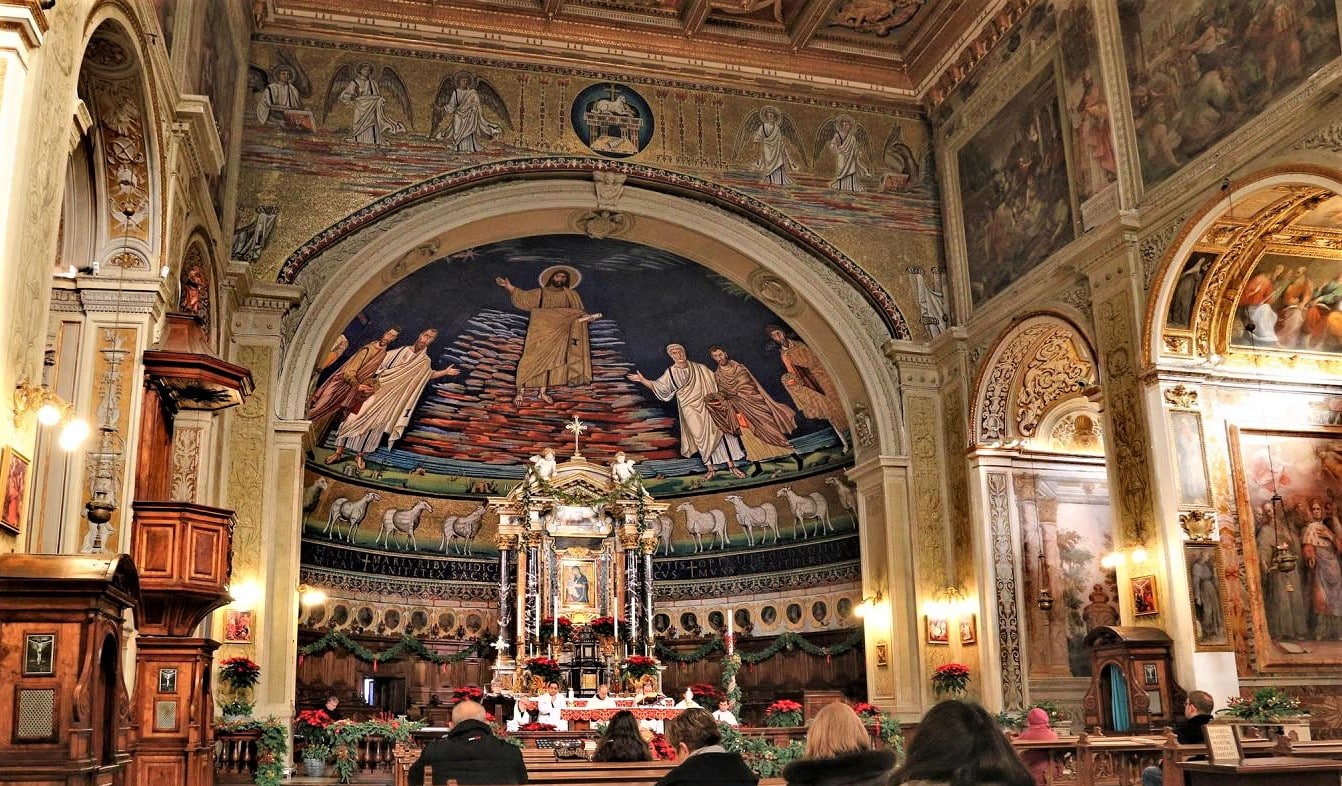
This is one of Rome's oldest churches, and it occupies a position — physically and historically — that should make it famous. Incorporated into the structures of the Roman Forum, it was consecrated in the sixth century by Pope Felix IV, who repurposed two existing Roman buildings: the Temple of Romulus and the Hall of Vespasian's peace library. The apse mosaic, dating from the same period, is among the finest examples of early Christian art in existence: Christ descending against a sky of burning orange and gold, the apostles arranged with a formal solemnity that predates Byzantine influence.
And yet the basilica is consistently, bafflingly quiet. Visitors pour past its entrance on the Via Sacra without pausing. The Neapolitan presepe — a Baroque nativity scene of extraordinary complexity — displayed in the adjoining cloister is a separate discovery entirely.
Il consiglio del team
The church is entered from Via dei Fori Imperiali rather than from within the Forum itself — this separate entrance means you can visit for free, independently of the Forum ticket, which almost nobody seems to realise.
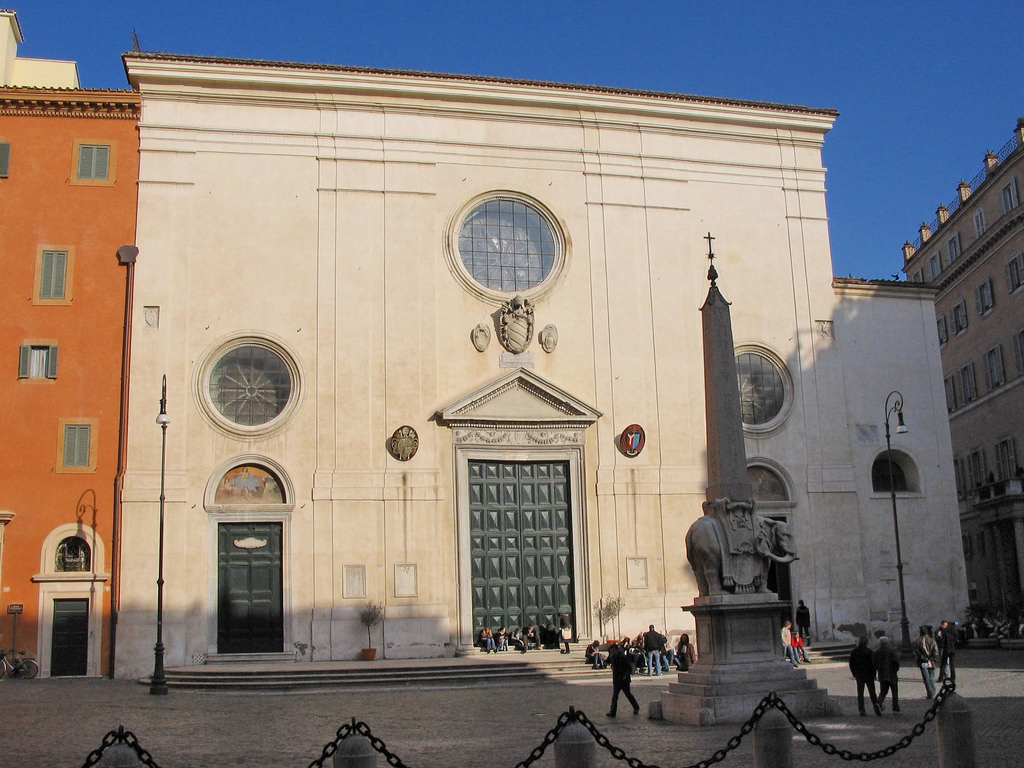
Rome is not, by reputation, a Gothic city. The medieval northern European style never quite took hold here the way it did in Milan or Venice, which makes Santa Maria sopra Minerva — built over the ruins of a temple to Minerva, as the name announces without embarrassment — all the more disorienting. Step inside and the ribbed vaulting, the pointed arches, the blue-painted ceiling spangled with gold stars produce an effect that feels genuinely foreign to Rome, in the best possible way.
The church holds the relics of Saint Catherine of Siena, one of Italy's patron saints, and a Christ figure by Michelangelo that tends to be overlooked because it stands in a side chapel rather than at the altar. Fra Angelico is buried here. Galileo was tried here, or nearby — the historical record is slightly contested on the precise location. The accumulation of significance is, even by Roman standards, remarkable.
Il consiglio del team
The church sits directly behind the Pantheon, which means the piazza in front of it is almost always quieter than the one you just left. Enter from the side door on the left if the main door is closed — it usually isn't locked.
Inside the Basilica di Sant'Agostino in Campo Marzio, in the first chapel on the left, hangs a painting that caused a minor scandal when it was unveiled around 1604 and has been quietly causing one ever since. Caravaggio's Madonna dei Pellegrini — also known as the Madonna di Loreto — depicts the Virgin appearing to two pilgrims, and the controversy at the time centred on those pilgrims: dirty feet, worn clothes, the mud of actual travel still on them. The Madonna herself stands in a doorway like a woman interrupted in her own home, holding a very solid, very heavy-looking child.
The painting is not in a museum. It hangs in a working church, lit by natural light, surrounded by candles. Seeing Caravaggio in this context — as it was intended, as a devotional object rather than an exhibit — changes the experience entirely.
Il consiglio del team
Visit in the late afternoon when the light through the church windows is warmest. Bring coins for the timer light in the chapel, which gives you a better view of the lower portion of the canvas where the pilgrims' feet are rendered.
The Basilica dei Santi Cosma e Damiano is one of the oldest churches in Rome to have been adapted directly from an ancient Roman structure — in this case, a temple complex in the Forum of Vespasian. What makes it extraordinary, and what most visitors to the nearby Roman Forum entirely miss, is the sixth-century Byzantine mosaic in the apse: a golden, hieratic Christ in a deep purple sky, flanked by saints and apostles, with a river of fire running below.
The mosaic belongs to a moment in early Christian art before the medieval conventions had fully calcified — there is something both archaic and vivid about it, a directness of gaze that more polished later work often loses. The church also contains a remarkable seventeenth-century Neapolitan nativity scene — a presepe of extraordinary complexity — displayed in a room off the nave.
Il consiglio del team
The entrance is from Via Sacra, not from within the Forum itself, which means you can visit without paying Forum admission. Most people walking the Via Sacra don't look up and to the right — the church entrance is easy to miss.
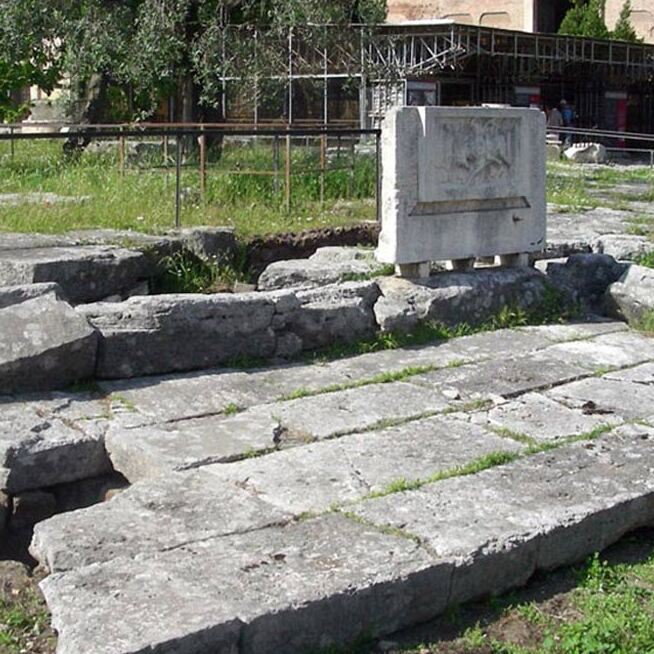
In the middle of the Roman Forum, surrounded by the ruins that every visitor has come to photograph, there is a small, easily missed pit in the ground protected by a low railing. This is the Lacus Curtius — an ancient sacred site near the Curia, the seat of the Roman Senate — and it is one of those places where mythology and topography converge in a way that is genuinely strange. The Romans believed this shallow stone-lined well was an entrance to the underworld, a literal opening in the earth through which the dead might communicate with the living.
The stories attached to it are multiple and contradictory, as Roman foundation myths tend to be. But standing over it, in the middle of what was once the most powerful city on earth, and thinking about what the people who built all of this believed lay beneath their feet — that is not a small thing.
Il consiglio del team
The Lacus Curtius is best observed from the elevated Palatine Hill path that overlooks the Forum floor — from that angle you can see its position relative to the Curia and begin to understand the Forum's original spatial logic.
In the Basilica di Sant'Agostino in Campo Marzio, in a chapel to the left of the nave, hangs a painting that caused a minor scandal when it was unveiled in the early seventeenth century and has been causing quiet scandal ever since. Caravaggio's Madonna dei Pellegrini — also known as the Madonna di Loreto — shows the Virgin appearing at a doorway, holding the Christ child, while two pilgrims kneel before her with their backs to the viewer. The pilgrims' feet are dirty. Their clothes are worn. The Madonna has the face of a real Roman woman.
This was not how sacred figures were supposed to look, and the painting's original audience said so loudly. Today, the controversy has become part of the work's meaning: Caravaggio insisting, with characteristic stubbornness, that holiness and humanity are not in opposition.
Il consiglio del team
The church is rarely crowded, even in high season, and the painting hangs in natural light that shifts through the day. Come in the morning when the light from the windows is most direct, and give yourself time to stand in front of it without rushing.
The Capitoline Hill offers three separate panoramic terraces, and the distinction between them matters more than most visitors realise. The most photographed view — the Forum seen from above — is genuinely excellent, but the terraces that face outward over the modern city are where things get interesting. The Campidoglio was, for centuries, the symbolic centre of Roman civic power, and Michelangelo's piazza design — the oval pavement, the converging staircases, the precise geometry of the surrounding palaces — was a deliberate statement about the relationship between ancient authority and Renaissance order.
Two of the three terraces are free to access without entering the museums. The third, inside the Capitoline Museums complex, offers a rooftop view that most visitors miss because they're absorbed in the collections below. All three reward the patience to stand still and look in multiple directions.
Il consiglio del team
The rear terrace overlooking the Forum is busiest at midday. Come at opening time or in the early evening, when the Forum's long shadows create a completely different reading of the ruins below.
In the middle of the Roman Forum, surrounded by the ruins of temples and basilicas that receive most of the attention, there is a small, easily overlooked depression in the stone pavement. This is the Lacus Curtius, one of the most ancient sacred sites in Rome, predating most of what surrounds it. A small stone well marks the spot, and the mythology around it is characteristically Roman in its layered ambiguity: depending on which ancient source you consult, the lake formed when the earth opened and could only be closed by Rome's most precious possession — a Roman soldier, Marcus Curtius, rode his horse into the void to seal it.
The site was believed, in antiquity, to be an entrance to the underworld. Standing over it now, in the middle of the Forum's archaeological traffic, that original charge is still faintly present.
Il consiglio del team
Most visitors to the Forum follow a linear path between the major monuments and walk directly past the Lacus Curtius without stopping. A Forum map will mark it — look for the low railing and the relief carving of a horseman set into the pavement.
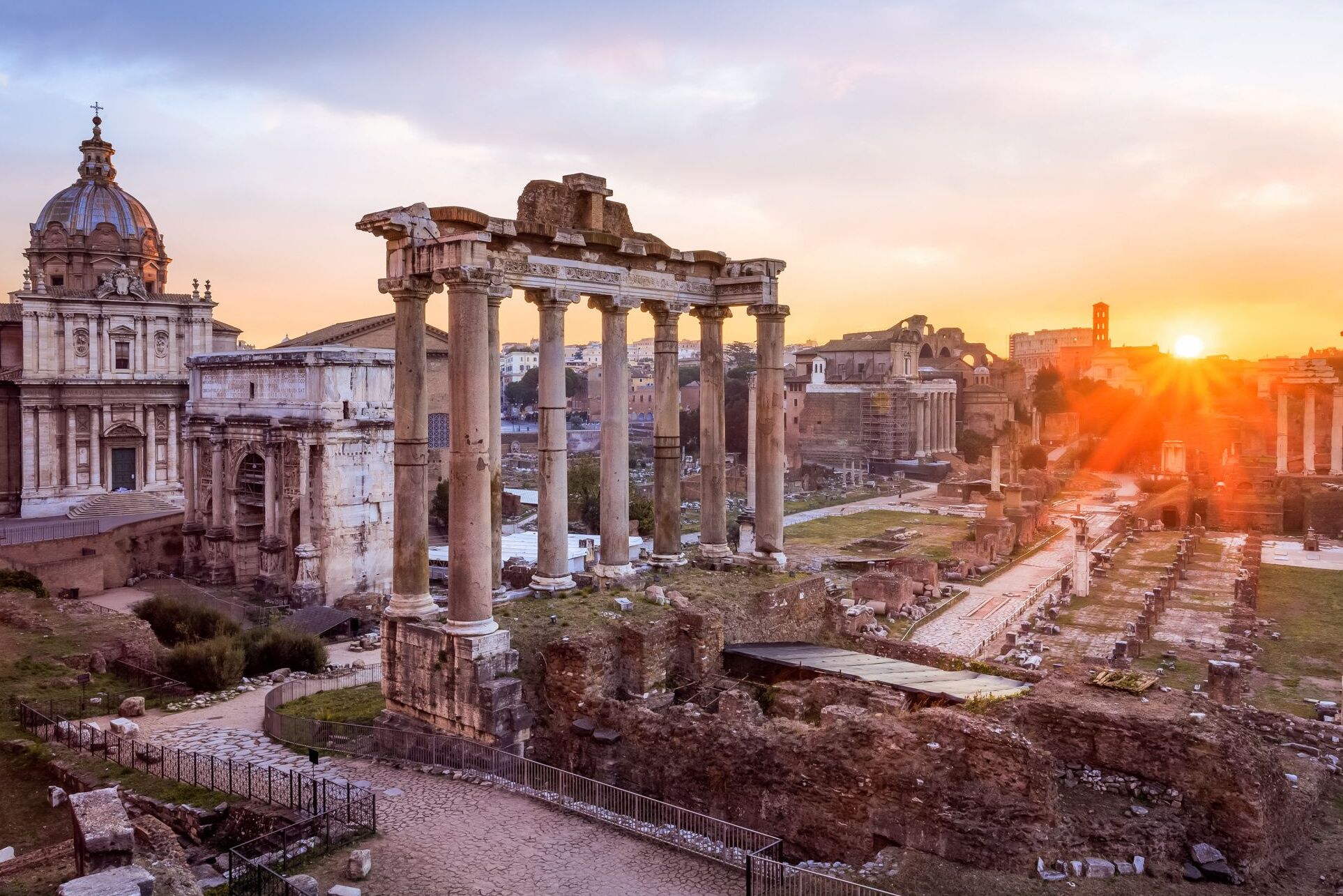
The Forum Romanum is, on paper, one of the most visited sites in Rome. In practice, most visitors walk through it quickly, identify the columns they recognise from guidebook covers, and leave feeling vaguely underwhelmed. The problem is orientation: the Forum is not a single monument but a compressed accumulation of centuries, and without a sense of its chronological layers, it reads as rubble rather than narrative.
Historians believe the Forum served as the centre of Roman religious, political, and social life for roughly a thousand years — from the early Republic through the late Empire. The Temple of Saturn, the Arch of Septimius Severus, the Via Sacra itself: these are not decorative ruins but the actual physical infrastructure of a government that shaped the legal and administrative architecture of Western civilisation. Slowing down here is not optional. It is the whole exercise.
Il consiglio del team
Rent the official audio guide rather than relying on a general app — the Forum's spatial complexity requires site-specific narration, and the official version includes access points that casual visitors walk past.
Inaugurated in 1970 to mark the centenary of Rome becoming Italy's capital, the Museo Centrale del Risorgimento occupies the left wing of the Vittoriano and documents the long, complicated, and often violent process by which a collection of separate Italian states became, in the second half of the nineteenth century, a single nation. It is a museum that Italians arguably need more than foreign visitors, and yet it is foreign visitors who might find it most revelatory.
The collection includes documents, weapons, portraits, and personal effects from the key figures of the Risorgimento — Garibaldi, Mazzini, Cavour — and the overall effect is of a nation still in the process of understanding what it has made of itself. The museum is almost always quiet, which is extraordinary given that it sits inside one of the most visited buildings in Rome.
Il consiglio del team
Admission to the museum is included with the general Vittoriano entrance, which itself is free. The combination of the museum's thoughtful chronology and the building's rooftop views makes for a half-day that most visitors to this part of Rome entirely miss.
The Imperial Fora — a series of monumental squares built between 46 BC and 113 AD — run alongside the Via dei Fori Imperiali in a sequence that represents the successive ambitions of Julius Caesar, Augustus, Vespasian, Nerva, and Trajan. Each emperor built his own forum as a political statement, and the cumulative effect is a kind of architectural arms race frozen in stone. The Forum of Augustus, with its surviving wall of peperino and travertine, is particularly striking; the Forum of Trajan, anchored by Trajan's Column with its spiralling narrative reliefs, is among the most sophisticated pieces of public communication in the ancient world.
Most visitors see the Imperial Fora from street level, through railings, while walking between the Colosseum and Piazza Venezia. Underground tours, available on booking, reveal a completely different dimension of the site.
Il consiglio del team
The Mercati di Traiano — Trajan's Markets — provide the best elevated view of the Imperial Fora complex and house a small but well-curated museum. Entry is separate from the Forum ticket and the crowds are dramatically thinner.
The Capitoline Museums have a legitimate claim to being the oldest public museums in the world — Pope Sixtus IV donated a collection of bronze sculptures to the Roman people in 1471, and the institution has been accumulating significance ever since. And yet, despite this pedigree and despite containing some of the most important ancient sculpture in existence — the original Marcus Aurelius equestrian statue, the Capitoline Wolf, the Dying Gaul — the Capitoline Museums are consistently less crowded than the Vatican Museums or the Borghese Gallery.
Part of this is geography: the hill requires a walk, and visitors already tired from the Forum sometimes skip it. This is a significant error of prioritisation. The Palazzo Nuovo's gallery of ancient portrait busts alone — an unbroken line of Roman faces staring back across two millennia — is worth the climb.
Il consiglio del team
The internal walkway connecting the two museum buildings passes over the Via del Campidoglio and offers a view down into the Forum that is available nowhere else. Don't rush through it — the perspective is unlike anything from ground level.
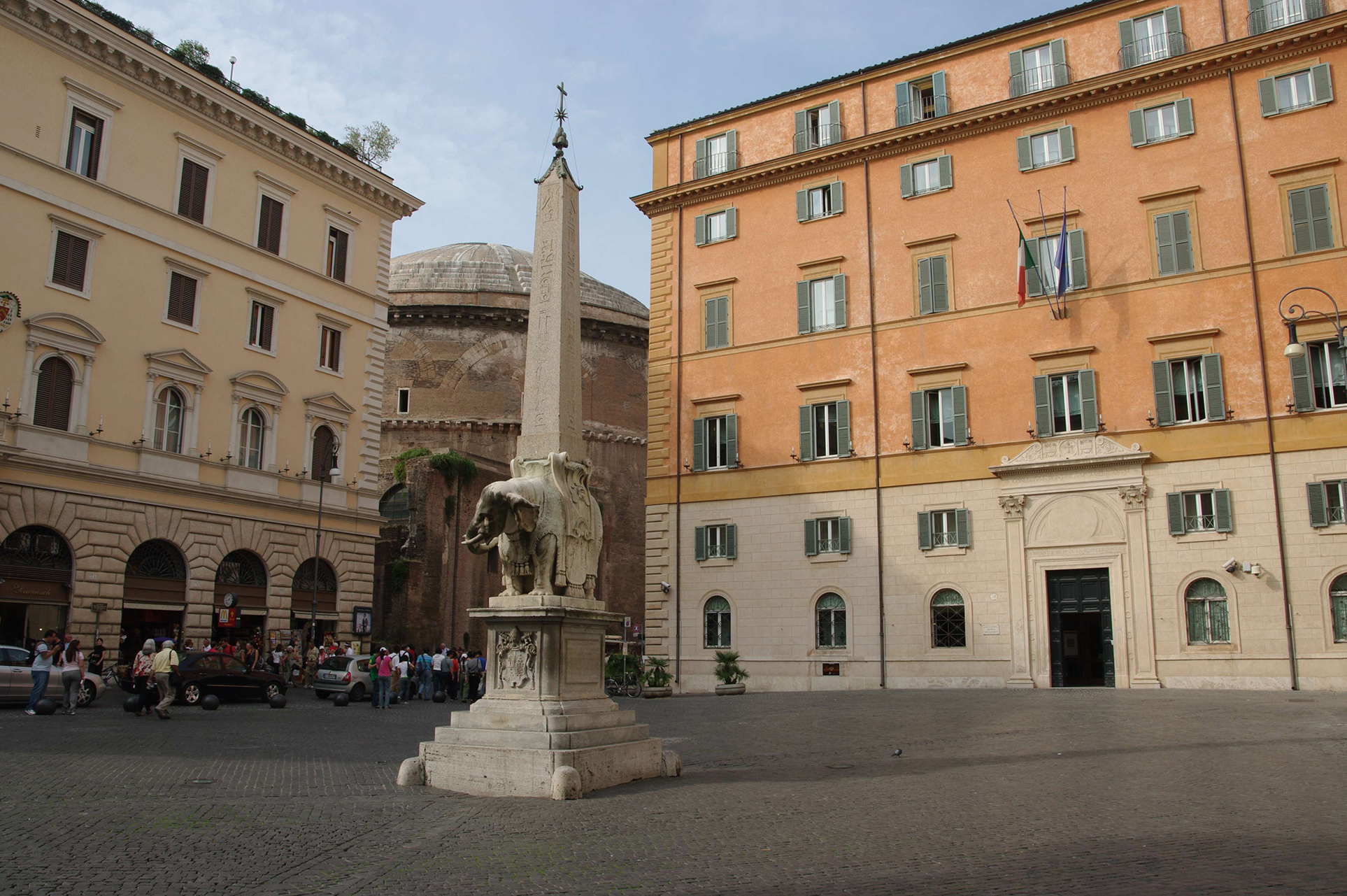
Behind the Pantheon, in a small piazza that most tourists pass through without stopping, stands one of Rome's most quietly charming monuments: a small marble elephant supporting an ancient Egyptian obelisk, designed by Bernini in 1667. Romans call it il Pulcino — the chick — with the affectionate diminutive that the city reserves for things it has decided to adopt as its own. The obelisk dates from the reign of the Pharaoh Apries and was brought to Rome in antiquity; the elephant base was Bernini's playful solution to the problem of how to display it at human scale.
The piazza itself is worth lingering in. It functions as a neighbourhood square as much as a tourist attraction, and the contrast between the Pantheon's Roman gravity fifty metres away and this small, whimsical thing in its own modest space is a perfect example of Rome's tonal range.
Il consiglio del team
The inscription on the base of the elephant, composed by the Dominican scholar Domenico Paglia, translates roughly as: 'Let any who see these figures carved on the obelisk of wise Egypt understand that a robust mind is needed to support solid wisdom.' Worth reading before you move on.
Palazzo Sciarra, a short walk from the Trevi Fountain, houses the permanent collection of the Fondazione Roma — a survey of Italian art from the fifteenth to the twentieth century that feels, given its quality and range, almost perversely under-visited. The collection moves through five centuries with a curatorial confidence that never feels encyclopaedic: there are works here that would anchor major galleries in other cities, displayed in rooms that retain the palazzo's original architectural character.
The Fondazione also hosts temporary exhibitions that tend to be more adventurous than the permanent collection's classical trajectory might suggest. The combination of a handsome historic building, a serious permanent collection, and a location that places it minutes from some of Rome's most trafficked streets — and yet somehow outside the tourist circuit — makes it one of the more quietly satisfying afternoons the city can offer.
Il consiglio del team
The palazzo's courtyard is accessible even when the museum is closed and is one of the more elegant small courtyards in this part of the city. Check the Fondazione Roma website for current exhibition programming, which changes seasonally.
Inaugurated in 1970 to mark the centenary of Rome becoming the capital of unified Italy, the Museo Centrale del Risorgimento occupies the left wing of the Vittoriano and receives a fraction of the attention of the building that houses it. This is a museum about the making of modern Italy — the Risorgimento, the wars of unification, the political figures who assembled a nation from a patchwork of kingdoms, duchies, and papal territories — and it does the job with a seriousness that rewards visitors who arrive with some prior knowledge.
The collection includes documents, uniforms, weapons, portraits, and political ephemera from the period between roughly 1796 and 1870. For anyone interested in European nationalism, the nineteenth century, or the particular complexity of Italian identity, this is an hour very well spent.
Il consiglio del team
Entry is free and the museum is rarely crowded, even when the piazza outside is packed. Combine it with the Vittoriano's rooftop terrace visit for a complete reading of the building's historical and architectural argument.
The small piazza directly behind the Pantheon is one of those Roman spaces that exists in a permanent state of being almost-noticed. Visitors pour out of the Pantheon, blink in the light, and typically turn left or right toward a bar without registering what stands in the centre of the piazza: an ancient Egyptian obelisk balanced on the back of a small marble elephant, designed by Bernini in 1667 and executed by his student Ercole Ferrata. Romans call the elephant il Pulcino — the chick — with an affection that the sculpture's slightly anxious expression seems to have earned.
Bernini apparently intended the elephant as a symbol of strength supporting ancient wisdom — the obelisk originally stood near a temple to Isis. Whether or not you accept the allegory, the object itself has a quality of whimsy that is rare in Rome's generally serious public sculpture.
Il consiglio del team
The piazza is at its best very early in the morning, before the Pantheon queue forms, when the elephant stands in near-solitude and the surrounding streets are still being hosed down by the municipal cleaning crews. This is Rome at its least performed.
The Capitoline Museums are, technically, the world's oldest public museums — Pope Sixtus IV donated the founding collection of bronzes to the Roman people in 1471, nearly four decades before the Vatican began assembling what would become its own collections. That history alone should make them a priority. What actually makes them extraordinary is the collection itself: the Capitoline Wolf, the equestrian statue of Marcus Aurelius, the Dying Gaul, the Capitoline Venus, and a gallery of ancient portrait busts so psychologically precise they feel like photographs.
The museums also contain, on the upper floor, a gallery of paintings that most visitors skip entirely in favour of the sculpture. The Caravaggio canvases here — including the Fortune Teller and John the Baptist — are shown in rooms that feel genuinely intimate compared to the Vatican's scale.
Il consiglio del team
The passageway connecting the Palazzo dei Conservatori and the Palazzo Nuovo runs underground, beneath the piazza, and passes through a section of ancient Roman road and the foundations of the Tabularium — Rome's ancient state archive. Don't rush through it.
The Roman Forum is, of course, not hidden. It is one of the most visited archaeological sites on earth, and yet it belongs on this list because the way most people experience it — at speed, between the Colosseum and the Palatine Hill, photographing the three columns of the Temple of Castor and Pollux and then moving on — is a form of not really seeing it at all. The Forum Romanum was, for centuries, the centre of the known world: the place where laws were made, trials conducted, triumphs celebrated, and emperors deified.
To stand in it and actually read the topography — to understand which building stood where, and why, and what it meant that these structures were built in this sequence — requires a slowness that the standard tourist circuit does not encourage. The Forum rewards the visitor who arrives with a plan and then abandons it.
Il consiglio del team
The Forum is included in the combined Colosseum ticket, but the entrance queues at the Colosseum are far longer. Enter via the Forum's own entrance on Via Sacra or from the Palatine Hill side to save significant time, then work your way toward the Colosseum.
Palazzo Sciarra, just off the Corso, houses the permanent collection of the Fondazione Roma — a survey of Italian art spanning from the fifteenth to the twentieth century that is almost never mentioned in the same breath as Rome's major museum destinations. That omission is the city's loss and the attentive visitor's gain. The collection moves through five centuries with an editorial intelligence that larger institutions often sacrifice for comprehensiveness, and the palazzo itself — a seventeenth-century building with frescoed ceilings and a courtyard that has barely changed — is part of the experience.
The works range from Renaissance panel paintings through Baroque altarpieces to nineteenth-century academic canvases and early twentieth-century modernism. It is not a greatest-hits collection. It is something more interesting: a coherent argument about how Italian visual culture evolved.
Il consiglio del team
Check the Fondazione Roma's website before visiting — the permanent collection is sometimes partially closed during temporary exhibition installations, and knowing the current configuration in advance saves disappointment.
The Imperial Fora — a series of monumental public squares built between 46 BC and 113 AD by Julius Caesar, Augustus, Vespasian, Nerva, and Trajan — are in some ways the most misunderstood major archaeological site in Rome. They run alongside the Via dei Fori Imperiali, the broad road that Mussolini drove through the ancient city in the 1930s, and most visitors experience them from above, peering down from the pavement level at the excavated ruins below.
But the Fori Imperiali are not simply a continuation of the Roman Forum — they represent a distinct political project, each emperor building his own forum as a statement of power and legitimacy. Trajan's Forum, the largest and most intact, with its column depicting the Dacian Wars in a continuous spiral of carved relief, is an object of such ambition that it still reads as extraordinary even from the street.
Il consiglio del team
Guided underground tours of the Imperial Fora are available and take you into excavated sections not visible from street level. These tours are bookable through the Rome archaeological pass system and offer a completely different spatial understanding of how these structures related to each other.
There is a version of Rome that you can complete in three days: the Colosseum, the Vatican, the Trevi Fountain, a plate of cacio e pepe, and a flight home with a tote bag from a leather market. That version is not wrong. It is simply incomplete, in the way that reading only the chapter headings of a very long novel is incomplete.
The Rome in this list is not a corrective to that experience. It is what comes after — or alongside — when curiosity starts to outpace the itinerary. When you find yourself standing in front of a sixth-century mosaic in an empty church, or looking down at a stone pit that the Romans believed opened onto the dead, and thinking: I did not know this was here, and now that I do, I cannot quite unknow it.
That is what the city does to people who give it time. It does not reveal itself. It simply stops hiding from those who have learned to look at it properly. Come back more than once. The second visit is always better than the first.
★ Guida tascabile
Porta questa guida con te.
Salvala offline, ottieni le indicazioni a piedi e scopri migliaia di luoghi come questi.
Do I need to book tickets in advance for any of these places?
For the Roman Forum and Imperial Fora, advance booking is strongly recommended, particularly between April and October when queues can be substantial. The Capitoline Museums also benefit from pre-booking. The Quirinal Palace guided visits should be booked through the official website well ahead of your visit. Churches such as Santa Maria sopra Minerva, Sant'Agostino, and the Basilica dei SS. Cosma e Damiano are free to enter and require no booking, though they observe midday closing hours — typically between noon and 3 or 4pm.
Are any of these destinations accessible for visitors with limited mobility?
The Vittoriano and its internal museums, including the Museo Centrale del Risorgimento, have lift access to most levels. The Capitoline Museums have been progressively adapted for accessibility, though some areas of the older building remain challenging. The Roman Forum and Imperial Fora involve uneven ancient paving and significant walking on unpaved surfaces — mobility aids can be used but the terrain is genuinely difficult in places. The churches on this list are generally accessible at ground level, though interior steps vary. Contact individual sites directly for current accessibility information before visiting.
What is the best time of year to visit Rome if I want to avoid the largest crowds?
November through early March offers the thinnest crowds at most sites, with the exception of the Christmas and New Year period. October and April are shoulder months with manageable visitor numbers and pleasant temperatures. The peak summer months — July and August — bring the heaviest tourist traffic but also see many Romans leave the city, which means some neighbourhood restaurants and local businesses close. If your schedule is flexible, a November visit to Rome is one of the better-kept secrets in European city travel: cool, quiet, and lit with a low autumn light that does extraordinary things to the stone.
How should I structure a day that takes in several of these destinations efficiently?
The geographical concentration of most entries on this list makes logical routing relatively straightforward. The Vittoriano, Museo del Risorgimento, Capitoline Hill terraces, and Capitoline Museums can be combined into a single morning. The Roman Forum, Imperial Fora, and the Basilica dei SS. Cosma e Damiano cluster naturally into an afternoon. Santa Maria sopra Minerva, Piazza della Minerva, and the Caravaggio in Sant'Agostino form a tight triangle near the Pantheon that works well as a late-afternoon circuit. The Quirinal Palace and the Fondazione Roma collection require separate half-days. The Fontana della Pigna is inside the Vatican Museums, which needs its own dedicated visit.
Are there entry fees for the churches on this list, and what should I know about dress codes?
Entry to Santa Maria sopra Minerva, Sant'Agostino (where the Caravaggio hangs), and the Basilica dei SS. Cosma e Damiano is free, though donations are welcomed and some chapels within larger churches may require a small fee for lighting. The Vatican Museums, which include the Fontana della Pigna's courtyard, charge a significant entry fee and should be booked well in advance. Dress code applies to all religious sites on this list: shoulders and knees must be covered for both men and women. Scarves and lightweight wraps are practical solutions if you are visiting in summer and plan to move between churches and outdoor sites on the same day.
★ Leggila quando vuoi
Salvala sul tuo telefono.
Aggiungi questa guida ai preferiti, pianifica il viaggio offline, scopri luoghi come questi.