Places that reward curiosity over guidebook obedience
L
Una guida di
Lena Hofmann
Aggiornata il
16 ottobre 2026
Lettura
12 minuti
Comprende
15 luoghi · mappa interattiva
★ Guida d'Italia 2026
Pianifica con cura. Viaggia più a fondo.
1.3M+ luoghi curati nel mondo, mappe offline e itinerari intelligenti — tutto in un'app gratuita.
1.3M+ luoghiMappe offlineItinerari AIGratis
New York keeps its secrets poorly. Not because they're hard to find, but because we've stopped looking. We arrive with a mental checklist—Empire State, Times Square, the Statue of Liberty—and our eyes glaze over everything else. The city becomes a series of photo opportunities rather than a place to inhabit, even briefly.
The places in this essay aren't secret in the sense that locals guard them jealously. They're overlooked because they require something the postcard economy doesn't encourage: attention. A willingness to descend into a shuttered subway station. To notice a chapel tucked between office towers. To understand that the oldest restaurant in the city isn't a destination; it's a building that happened to serve food when everything around it was still being decided.
These aren't the places that will make your Instagram account sing. They're the places that, weeks after you leave, you'll find yourself thinking about—not because they were remarkable in isolation, but because they revealed something true about how New York actually works. How it survives. How it remembers. The city doesn't hide these places. We just forget to see them.
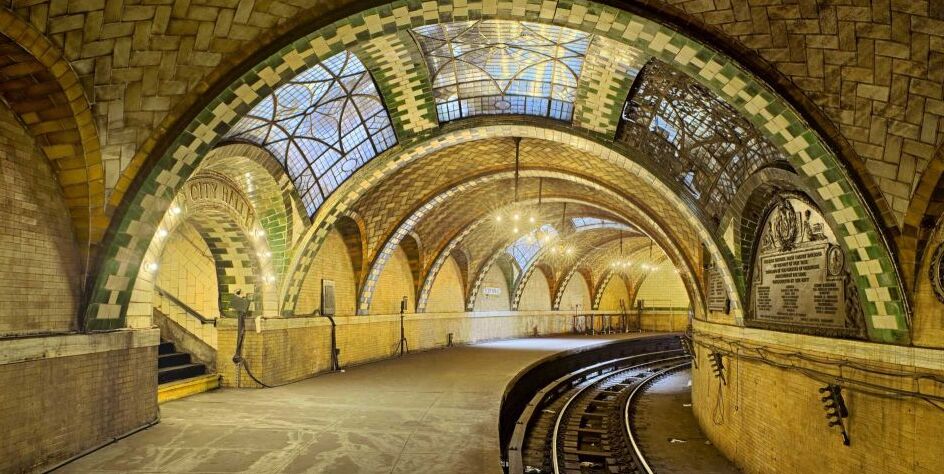
Most New Yorkers ride past this station daily without registering what they're seeing. Closed to regular service in the early twentieth century, Old City Hall Subway Station remains accessible to those riding the downtown 6 train—you can glimpse it as your car curves around the terminal loop. The stained glass windows and ornate arches belong to an era when the subway was still a civic achievement worth ornamenting. It's a time capsule that moves, a ghost of ambition that predates the assumption that public infrastructure should be purely utilitarian. The station represents a moment when New York believed underground transit deserved beauty.
Il consiglio del team
Ride the 6 train to Brooklyn Bridge–City Hall, sit on the downtown-facing side of the car, and look carefully as you decelerate into the final stop. The architecture reveals itself in glimpses.
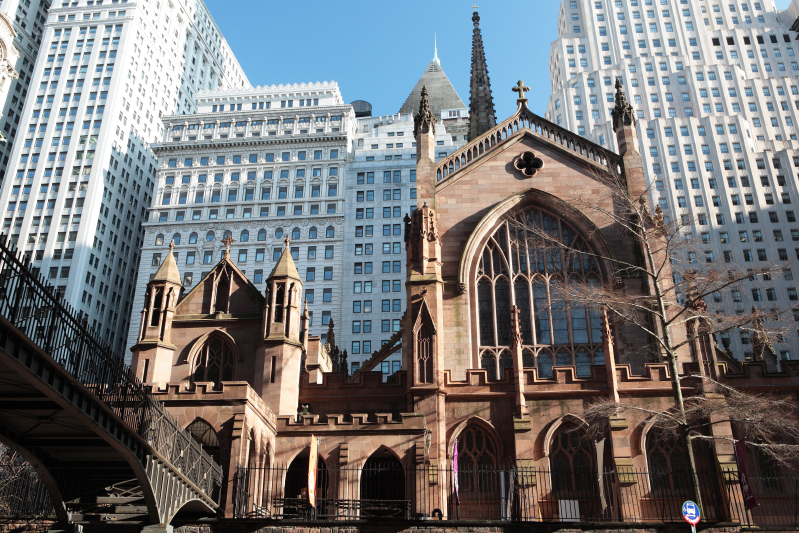
Trinity Church occupies the intersection where commerce and faith collide most visibly in New York. Located where Broadway meets Wall Street, this National Historic Landmark has stood since 1846, though its history extends further back—the Church of England's New York community acquired the land in the colonial period. The Gothic Revival structure rises from Lower Manhattan's concrete and glass like a deliberate reminder that the financial district was once a neighborhood with spiritual anchors. Inside, the quiet is almost accusatory. The graveyard holds names that shaped early American history. Few visitors venture beyond the vestibule; fewer still sit in the pews.
Il consiglio del team
Visit midday on a weekday when the streets are crowded but the church interior is nearly empty. The contrast is instructive.
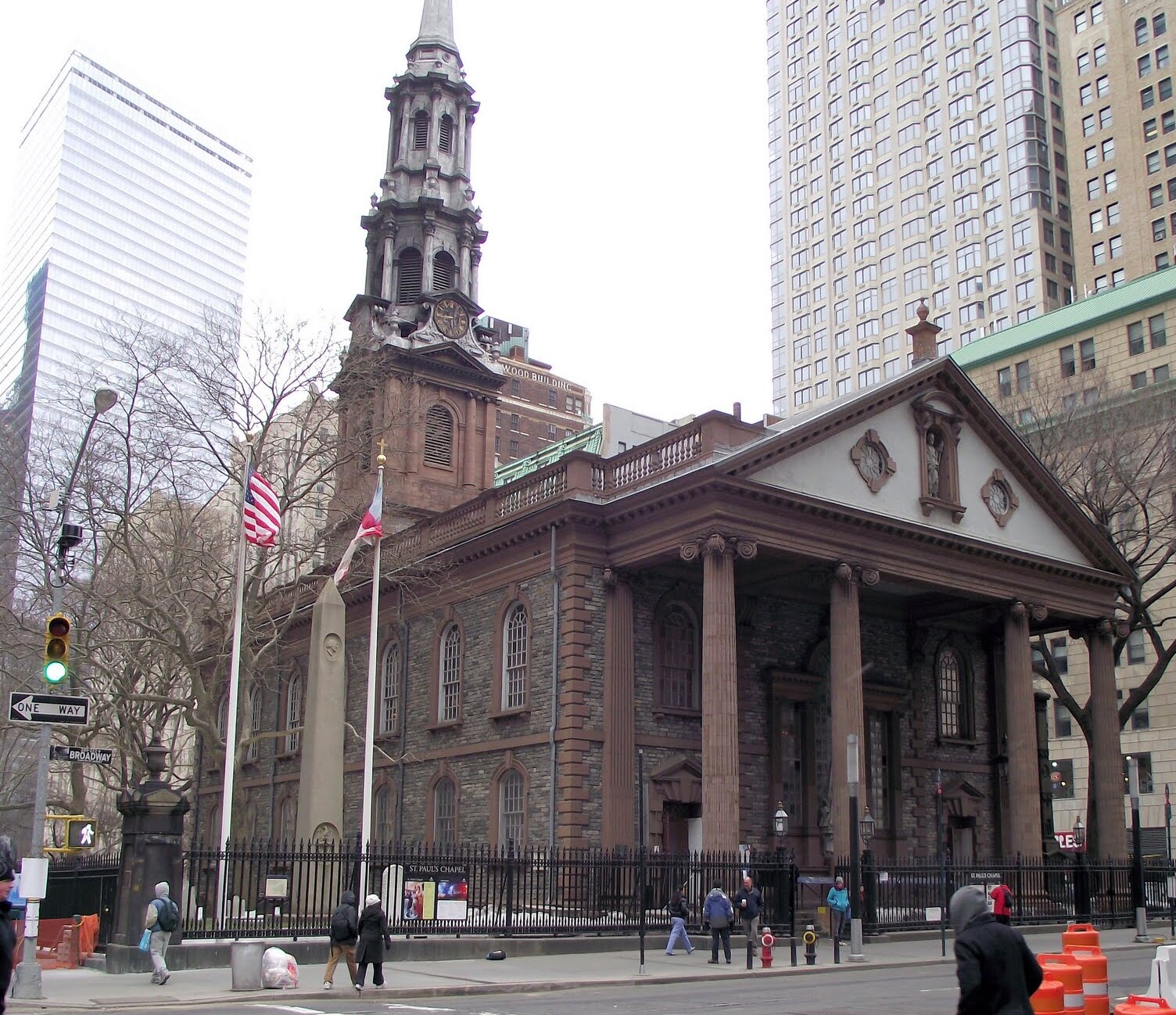
St. Paul's Chapel claims a distinction that matters: it's the oldest church or public building in continuous use in Manhattan. That continuity is not accidental. The chapel survived the Great Fire of 1776, survived the city's transformation from colonial port to industrial metropolis, and survived September 11th—it stood just blocks from the World Trade Center and became a refuge for recovery workers. The building's longevity isn't photogenic. Its power lies in what it represents: a structure that was built to last, by people who assumed their institutions would outlive them. In a city obsessed with the new, this chapel's quiet persistence reads as almost radical.
Il consiglio del team
The chapel's garden, tucked behind the building on Fulton Street, is one of Lower Manhattan's most serene spaces and almost never crowded.
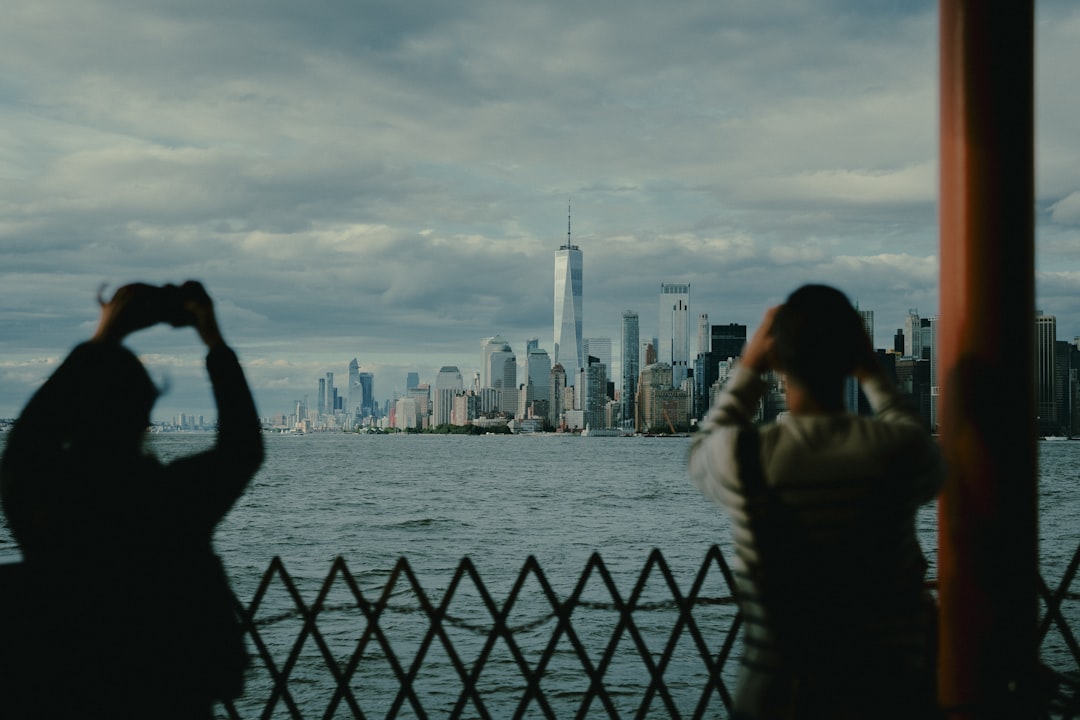
One World Trade Center, also known as Freedom Tower, is the tallest skyscraper in the Western Hemisphere and the fourth-tallest in the world. It's also a building that most New Yorkers have learned not to look at. Perhaps because its existence is still too recent, too laden with the weight of what it replaces. The tower rises from a footprint that was empty for years—a void in the city's skyline that became a void in its consciousness. The building itself is architecturally sophisticated: a rotating square that spirals upward, designed to catch light differently depending on the angle and time of day. But what makes it worth visiting isn't the architecture. It's the act of standing at its base and understanding that cities do, eventually, rebuild themselves.
Il consiglio del team
The observation deck offers views, but the real experience is walking around the building's perimeter at street level, watching how the facade shifts as you move.
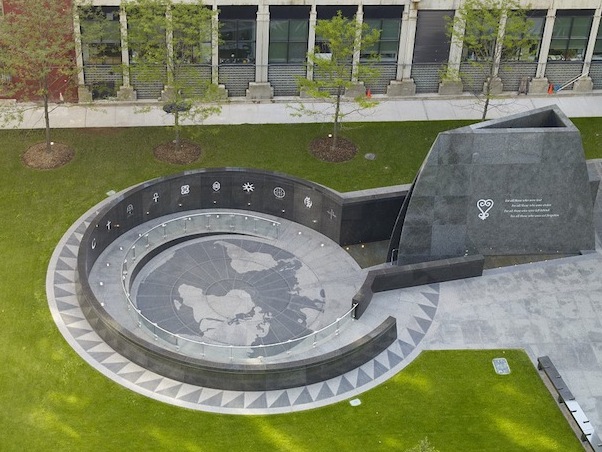
Between approximately 1690 and 1794, about 15,000 free and enslaved African Americans were buried on a 6.6-acre plot in Lower Manhattan, on Broadway. The ground was paved over, built upon, forgotten. It wasn't until the late twentieth century that the site was recognized and excavated. The African Burial Ground National Monument now stands as a deliberate act of historical correction—a place where New York acknowledges a past it spent centuries erasing. The monument itself is modest: a granite wall, inscribed names, a door that opens onto the actual earth. What strikes visitors is not the scale but the density of what was forgotten, and how recently we chose to remember.
Il consiglio del team
The visitor center offers context that the monument alone cannot provide. Spend time reading the individual stories before standing at the site itself.
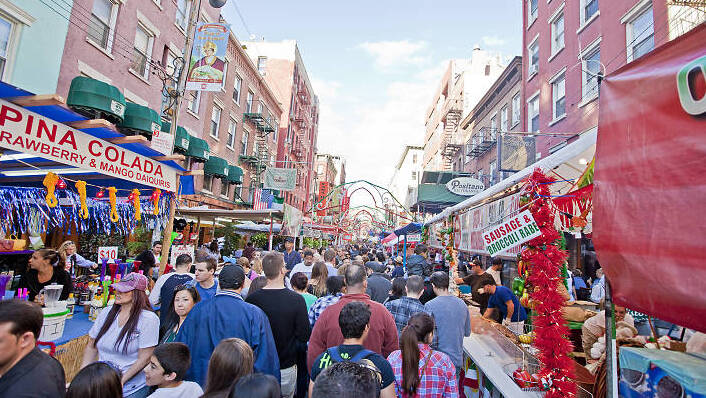
Little Italy was once the largest Italian American neighborhood in the United States. Immigrants from Naples and Sicily arrived in the 1880s and built a community that felt, for a time, like a transplanted village. That density has dispersed. What remains is smaller, more fragmented, but also more honest about what neighborhoods actually are: places where people lived, worked, and occasionally celebrated together. The neighborhood doesn't perform itself for visitors the way it once did. The storefronts are less theatrical. But that's precisely why it's worth visiting. You're seeing a neighborhood as it actually functions, not as it's been packaged for consumption.
Il consiglio del team
Skip Mulberry Street during the Feast of San Gennaro and explore the side streets instead, where restaurants serve to locals rather than tourists.
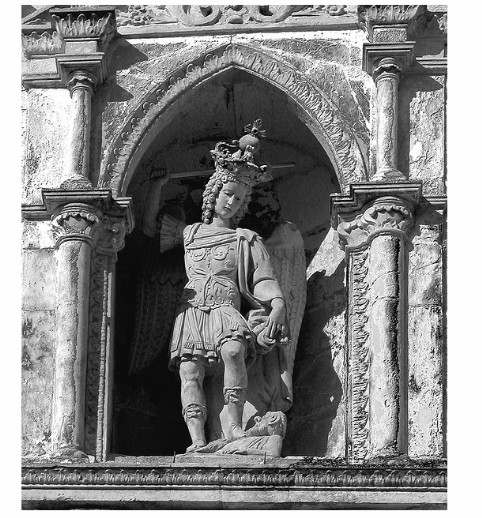
The Feast of San Gennaro is ostensibly a celebration of faith—a tipping of the hat to the Patron Saint of Naples. But what draws crowds is the festive atmosphere, the delicious food, and the colorful processions. The feast has become so large, so commercial, that it's easy to dismiss as a tourist trap. But there's something worth witnessing in how a religious observance transforms into a neighborhood festival. The boundary between sacred and secular blurs. People come for the fried food and stay because they've encountered something genuinely communal. In a city where most public spaces are designed for transaction rather than gathering, the feast represents an older logic of how cities function.
Il consiglio del team
Attend on a weeknight rather than a weekend. The crowds are smaller, the atmosphere less frantic, and you can actually taste the food without fighting for it.
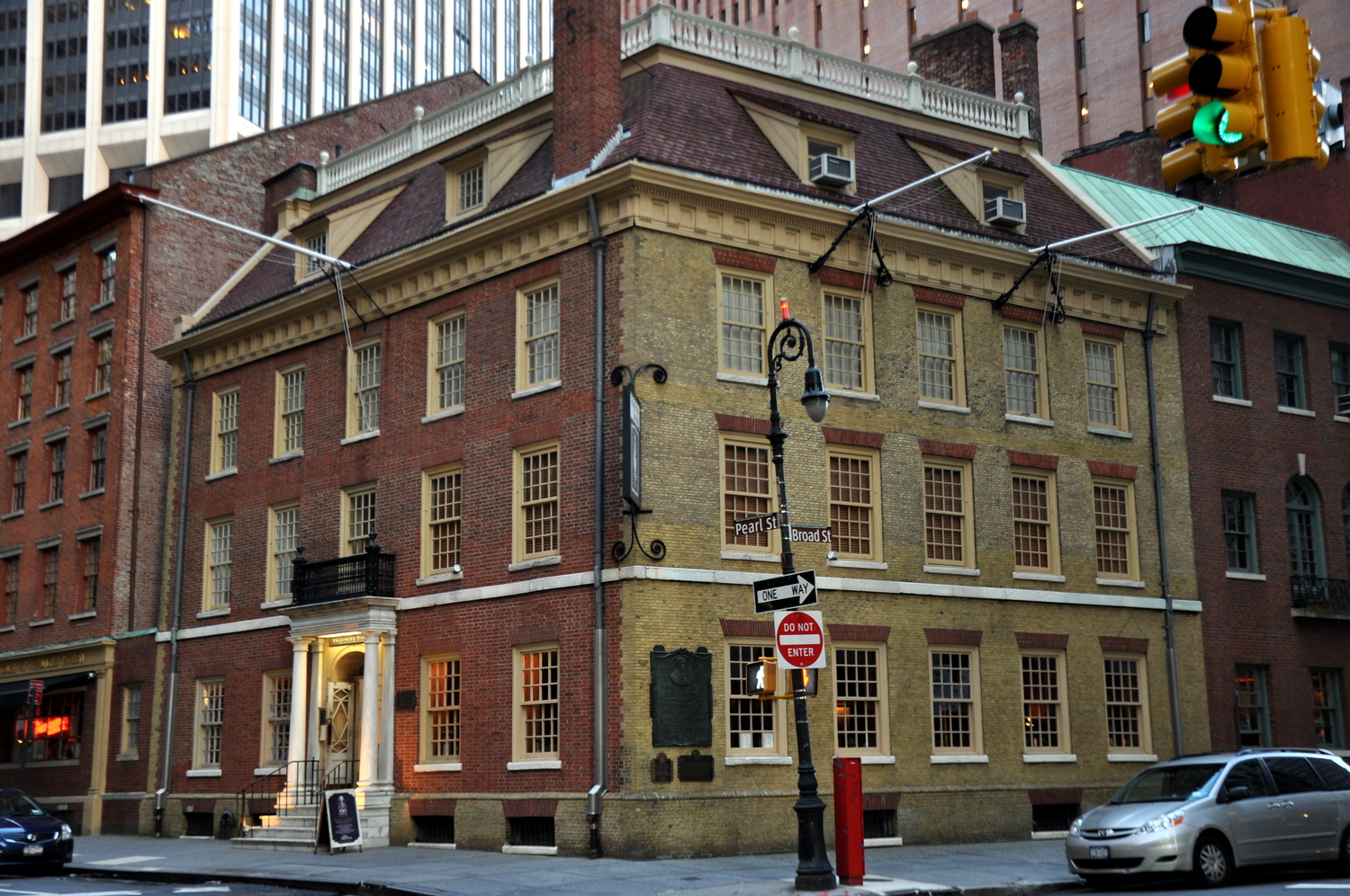
Fraunces Tavern dates to 1762 and holds the title of oldest restaurant in the city, though there's some scholarly debate about the building's actual age. What matters is that the structure itself is old enough to have witnessed the city's transformation from colonial port to capital of a new nation. The tavern served as a headquarters during the American Revolution. George Washington dined here. The building survived, was rebuilt, was restored, and now operates as both a restaurant and a museum. The food is competent but not exceptional. What you're consuming is the experience of sitting in a room where decisions were made that altered history. That's not nothing.
Il consiglio del team
Visit for lunch rather than dinner—you'll encounter fewer tourists and more people who actually live in the neighborhood.
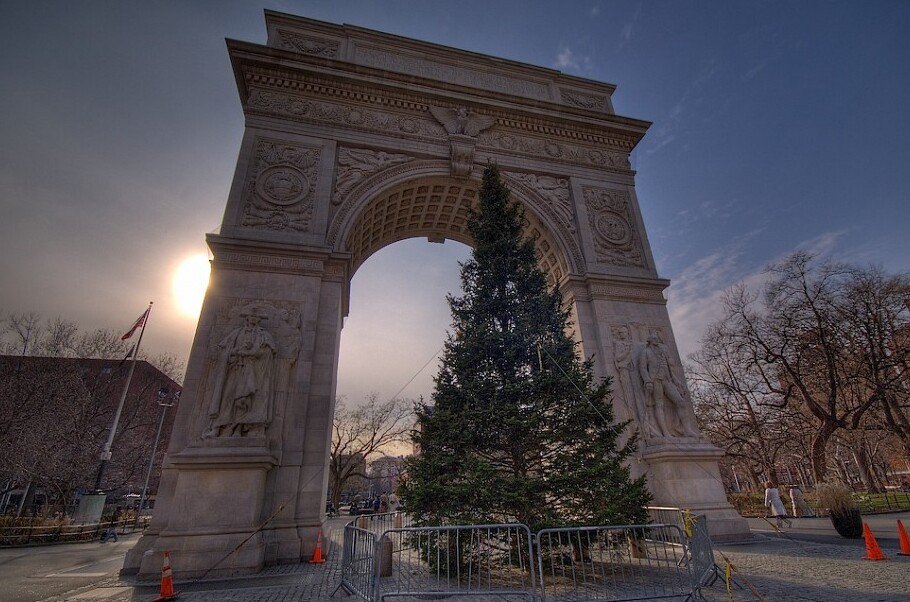
Washington Square Park is named for George Washington, who was inaugurated as the first President of the United States in New York City on April 30, 1789. The park itself became a gathering place—for musicians, artists, protesters, and simply people with nowhere else to be. It's one of the few spaces in Manhattan where different versions of the city collide visibly. Street musicians perform under the arch. Students from NYU spread across the lawns. Vendors sell everything from pretzels to political literature. The park is chaotic and uncontrolled in ways that most of New York no longer permits. That's precisely why it remains vital.
Il consiglio del team
Sit on the benches around the fountain's perimeter and watch the crowd rather than joining it. You'll see the park's actual social dynamics more clearly.
Wall Street is a 0.7-mile stretch running from Broadway to the East River in Lower Manhattan's Financial District. The name itself has become shorthand for American capitalism—for both its ambitions and its excesses. Walking the actual street is anticlimactic. It's narrow, often shadowed by the buildings that line it, crowded with people moving purposefully from one transaction to the next. But that ordinariness is instructive. The street's power lies not in its appearance but in what it represents: the physical location where decisions made in conference rooms affect the lives of millions. The street itself is just stone and asphalt. The meaning is what we've collectively decided to attach to it.
Il consiglio del team
Walk the street early in the morning, before the crowds arrive, when you can actually see the architecture and read the plaques on the buildings.
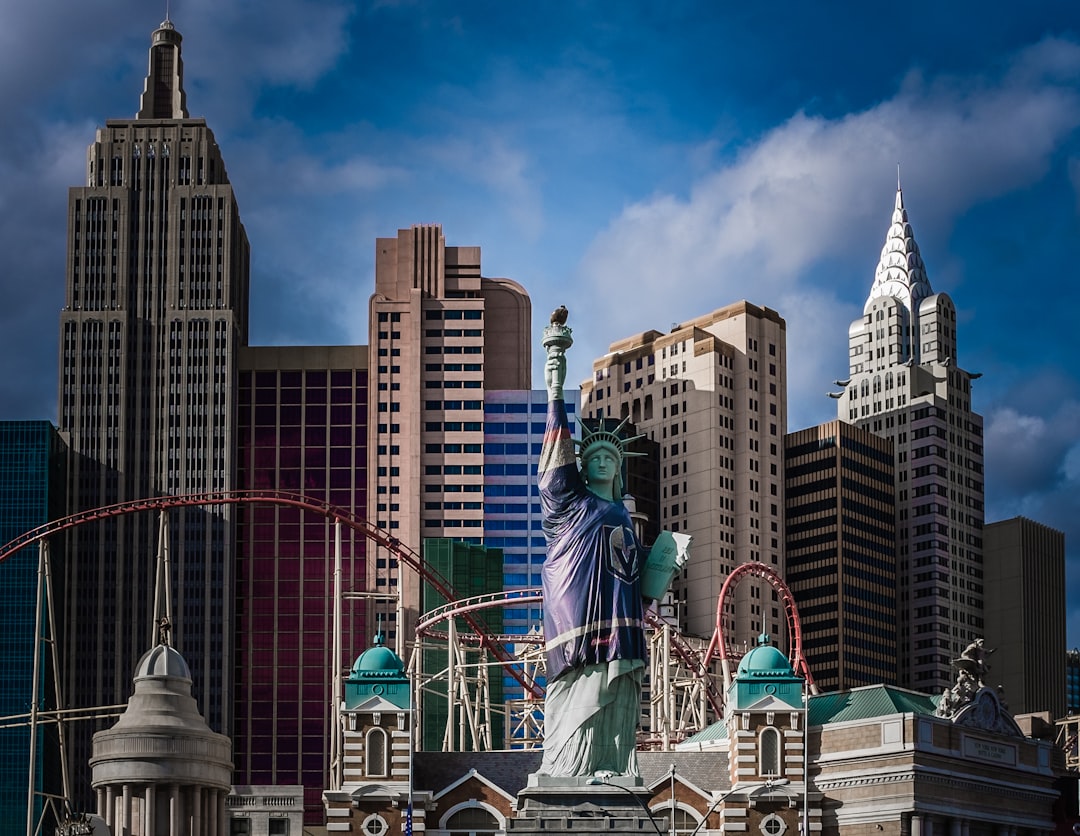
The Statue of Liberty was a gift from France to the United States and represents Libertas, the Roman goddess of freedom. The tablet she holds is inscribed with the date of the American Declaration of Independence. The statue has become so heavily trafficked, so thoroughly commercialized, that it's easy to assume there's nothing left to experience beyond the crowds and the ferry lines. But stand at the base and look upward, and the scale recalibrates. The statue is enormous. The engineering that lifted it into place was a feat. The symbolism, however worn by overuse, still carries weight. Millions of people have stood in this spot and understood themselves as arriving at something significant.
Il consiglio del team
Skip the crown reservation and take the ferry to Liberty Island just to walk around the base. The monument is more powerful when you're not fighting crowds inside it.
New York in 2026 is a city that refuses to stop reinventing itself. The new JFK Terminal 6, opened in 2025, welcomes visitors with design inspired by Art Deco movement—a nod to the era when air travel was still glamorous and airports were civic monuments. The terminal represents a shift in how the city thinks about infrastructure. Rather than pure utility, there's an attempt to make the arrival experience itself meaningful. This impulse extends throughout the city. New developments try to reference historical moments. Old buildings are preserved alongside new ones. The result is a city that's actively negotiating with its own past, even as it builds toward an uncertain future.
Il consiglio del team
If you're arriving via JFK, spend time in Terminal 6 before leaving the airport. It's a genuine architectural statement, not just a functional space.
The first Thanksgiving Day celebration in North America occurred in 1578 when English explorer Martin Frobisher arrived on the continent and ordered a ceremony to thank God for protection during the voyage. The holiday has since become so embedded in American culture that its origins seem almost irrelevant. What matters now is the ritual: family gatherings, turkey as the centerpiece, gratitude as the stated purpose. In New York, Thanksgiving manifests as the Macy's parade, the Thanksgiving Day football games, and thousands of restaurants offering special menus. The holiday reveals how cities absorb traditions and transform them into something distinctly local while maintaining connection to something larger.
Il consiglio del team
If you're in New York for Thanksgiving, skip the parade crowds and instead visit a neighborhood restaurant where the meal is served to people who actually live nearby.
Secret World is a digital travel guide used by over 100 million travelers annually. The app promises to unveil mysteries and immerse users in cultures. What it actually does is mediate experience through a screen. That's not inherently bad—technology can reveal things that unguided wandering might miss. But it can also flatten experience into information. The best way to use such tools is as a supplement rather than a substitute. Let the app tell you what exists, then put the phone away and experience it directly. New York is dense enough that you'll find unexpected things simply by walking. The app can help you understand what you've found.
Il consiglio del team
Use the app to identify neighborhoods and landmarks, but spend at least half your time exploring without consulting it. Serendipity requires some element of being lost.
Planning a week in New York from scratch is genuinely difficult. The Metropolitan Museum of Art requires three hours minimum. The distance between neighborhoods can be deceptive. The number of choices is paralyzing. Apps like Secret World and TripIt attempt to solve this problem by organizing information and suggesting itineraries. Both have merit. Secret World emphasizes discovery and cultural context. TripIt focuses on logistics and scheduling. Neither is inherently superior. The choice depends on whether you want the app to guide your experience or simply support decisions you're already making. The best approach involves using both selectively—letting technology handle the purely informational work while reserving your mental energy for actual engagement with the city.
Il consiglio del team
Spend your first day without consulting either app. Get lost. Notice what catches your attention. Then use the apps to deepen understanding of what you've already encountered.
There's a particular kind of exhaustion that comes from visiting New York as a checklist. You arrive, you photograph the designated landmarks, you leave feeling as though you've accomplished something. But accomplishment and experience aren't the same thing. The places in this essay won't give you the satisfaction of completion. They're not designed to be conquered. They're designed to be inhabited, briefly, with some attention paid to how they actually function.
The city will keep changing. Buildings will be demolished. Neighborhoods will transform. The restaurants will close and new ones will open. The only constant is the act of paying attention—of walking past something dozens of times and finally actually seeing it. That's not a hidden gem. That's just seeing. New York rewards curiosity more than any city in the world, but only if you're willing to slow down enough to be curious. The postcard destinations will always be there. But the real city—the one that reveals itself to people willing to look—that's what you came for.
★ Guida tascabile
Porta questa guida con te.
Salvala offline, ottieni le indicazioni a piedi e scopri migliaia di luoghi come questi.
What's the best time to visit these less-trafficked sites?
Weekday mornings, particularly Tuesday through Thursday between 9 AM and 11 AM, offer the least crowded experiences. Avoid lunch hours (noon–2 PM) and evening rush (5–7 PM). The Feast of San Gennaro is an exception—it's worth experiencing despite crowds, but weeknights are preferable to weekends.
Do I need tickets or reservations for any of these places?
Most outdoor spaces and streets are free. Trinity Church and St. Paul's Chapel are free to enter but may have requested donations. Fraunces Tavern charges for museum entry (around $5) but the restaurant is open to the public. The African Burial Ground visitor center is free. The Statue of Liberty and One World Trade Center observation deck require tickets ($24–$27 for Liberty, $38–$45 for the tower).
How do I get around to visit all of these in one trip?
These sites cluster in Lower Manhattan, making them accessible via the subway system. Use the 6 train for Old City Hall Subway Station and the 4/5 trains for other downtown locations. Walking between sites is often faster than waiting for trains. Budget 2–3 hours per neighborhood, including travel time. You could feasibly visit 4–5 sites in a full day without rushing.
Are these places safe to visit alone, especially at night?
Lower Manhattan is generally safe during business hours and early evening. The African Burial Ground and Trinity Church are in well-traveled areas. Washington Square Park is safe until late evening but becomes less welcoming after 11 PM. Avoid walking alone in unfamiliar side streets after dark. Use the subway rather than walking long distances at night.
What if I'm only in New York for one day?
Prioritize the African Burial Ground, Trinity Church, and a walk down Wall Street—these are geographically clustered in Lower Manhattan and take 2–3 hours total. Add Washington Square Park if you have time (requires traveling uptown). Skip the Statue of Liberty and One World Trade Center observation deck on a single-day visit; they consume too much time with logistics.
★ Leggila quando vuoi
Salvala sul tuo telefono.
Aggiungi questa guida ai preferiti, pianifica il viaggio offline, scopri luoghi come questi.