15 Hidden Gems in New Orleans — beyond the postcard
A city that wears its mythology so loudly that the quieter truths get drowned out. Here is where to listen.
L
Una guida di
Lena Hofmann
Aggiornata il
11 ottobre 2026
Lettura
12 minuti
Comprende
13 luoghi · mappa interattiva
★ Guida d'Italia 2026
Pianifica con cura. Viaggia più a fondo.
1.3M+ luoghi curati nel mondo, mappe offline e itinerari intelligenti — tutto in un'app gratuita.
1.3M+ luoghiMappe offlineItinerari AIGratis
There is a particular kind of invisibility that only the famous can achieve. New Orleans understands this better than almost any city on earth. It is so thoroughly mythologised — the jazz, the beads, the wrought iron, the slow-motion decadence — that even seasoned travellers arrive with a mental map already drawn, and spend their days confirming what they already believed rather than discovering what they didn't know to look for. The postcard is so vivid that it obscures the city behind it.
I have been coming to New Orleans for the better part of fifteen years, and I still catch myself walking past things I have never properly seen. Not because they are obscure — some of them appear in every guidebook — but because the city's noise is so insistent that it trains your attention toward the obvious. The Bourbon Street economy depends on you not looking left or right. The ghost-tour industry depends on you not asking too many questions. Even the most informed traveller, the one who has read the histories and knows the neighbourhoods, can find themselves moving through a curated version of the city rather than the actual one.
What follows is not a list of secrets. Most of these places are known. Several are documented, photographed, and discussed at length in academic papers. What makes them feel hidden is something more atmospheric: they exist in the gaps between the things you were told to see, and the city does very little to direct you toward them. You have to want to find them. That wanting — that small act of curiosity over convenience — is, in the end, the only real admission ticket New Orleans ever asks for.
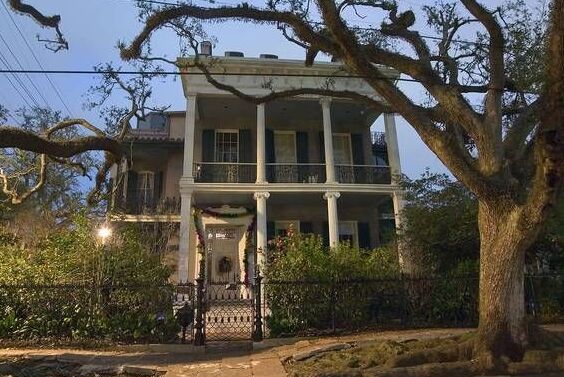
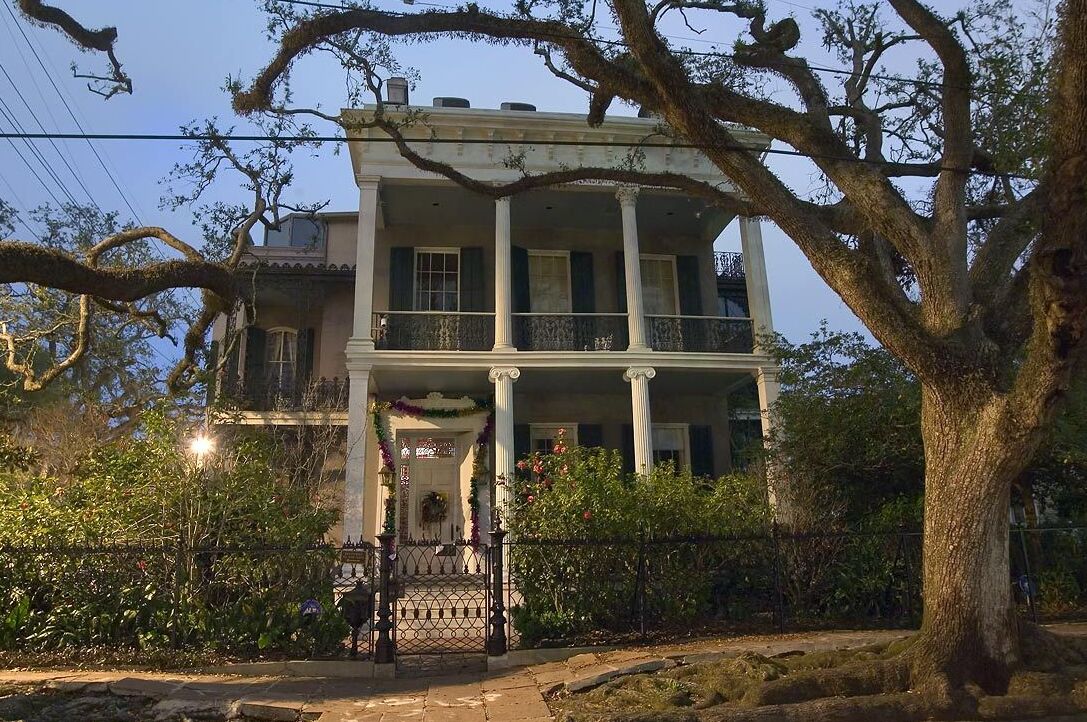
The mansion at 1239 First Street in the Garden District is known locally as The Rosegate House, named for the rosette pattern pressed into its iron fence — a detail so specific and so quietly insistent that it rewards the kind of slow walking most tourists have already abandoned by day two. It is widely considered one of the most canonical examples of how New Orleans's domestic architecture absorbed Greek Revival ambitions and made them subtropical, softening the severity of the form with galleries, shade, and ornament. The house is privately owned and not open for tours, which is precisely why it retains its dignity. You stand on the pavement and look, and the city asks nothing more of you than that.
Il consiglio del team
Walk the block in the late afternoon when the low sun catches the fence pattern at an angle. The rosettes cast small circular shadows that the midday light completely flattens.
Founded in 1797, this building on Chartres Street carries one of the city's stranger footnotes: in the early nineteenth century, the mayor of New Orleans offered it as a refuge for Napoleon Bonaparte during his exile. Napoleon never arrived — he died before the plan could be executed — but the gesture itself says something important about New Orleans's relationship with outsized ambition and romantic failure. The building absorbed that energy and held it. The interior, with its peeling plaster and dim light, feels less like a bar and more like a room that has been waiting for someone who will never come. The Pimm's Cup served here has become its own tradition, which Napoleon would almost certainly have found undignified.
Il consiglio del team
The courtyard at the back is the least-photographed part of the building. Arrive before noon on a weekday and you may have it entirely to yourself.
Founded in 1775, this low, dark building on Bourbon Street is one of the oldest surviving structures in the French Quarter — and one of the few that actually looks its age. It was supposedly the base of operations for Jean Lafitte, the privateer, smuggler, spy, and celebrated hero of the Battle of New Orleans, who used the blacksmith-shop cover to run a rather more profitable enterprise. The building's Creole cottage architecture — thick brick walls, no foundation, wooden shutters — predates the Spanish colonial rebuilding that defined most of the Quarter after the great fires. It is now a bar, which is fitting. Lafitte would have approved of the lack of pretension.
Il consiglio del team
The bar operates almost entirely by candlelight after dark, which makes it genuinely difficult to read the drinks list. Order the dark rum neat and accept the ambiguity.
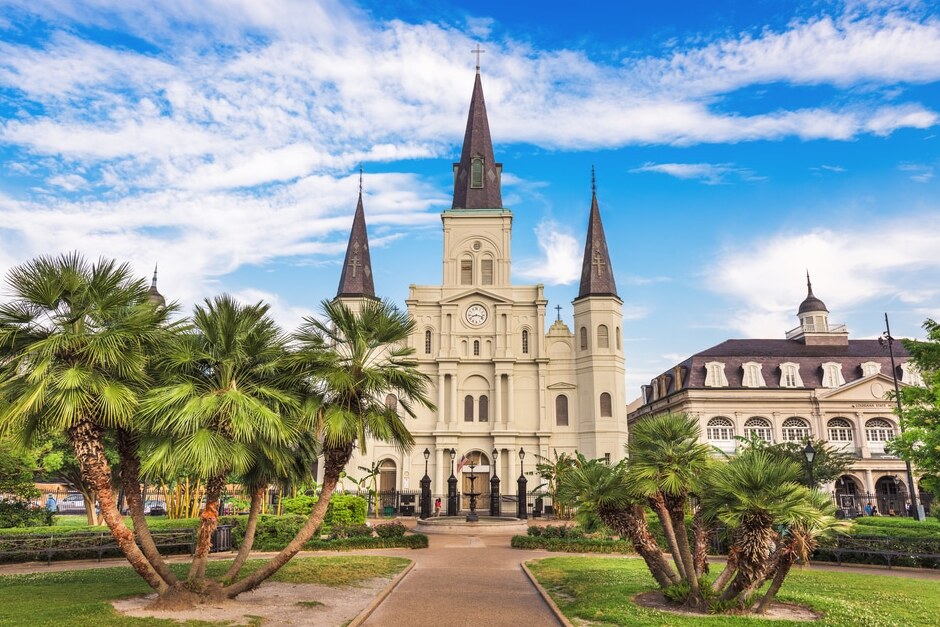
Few cities in the world are so identified with a single building as New Orleans is with St. Louis Cathedral, and that familiarity has made it almost impossible to actually see. It appears on every piece of city merchandise, every aerial photograph, every establishing shot in every film set here. The result is that most visitors stand in front of it and see the image rather than the structure — the white façade, the three steeples, the flags — without registering the specifics of what makes it architecturally peculiar: a Spanish colonial building wearing French ecclesiastical clothes, rebuilt and modified so many times that it is essentially a palimpsest of the city's competing colonial inheritances. Go inside on a Tuesday morning, when the tour groups thin out.
Il consiglio del team
The alley behind the cathedral, Pirate's Alley, runs between the church and the Cabildo and is almost always quieter than the square in front. It is a better place to understand the building's scale.
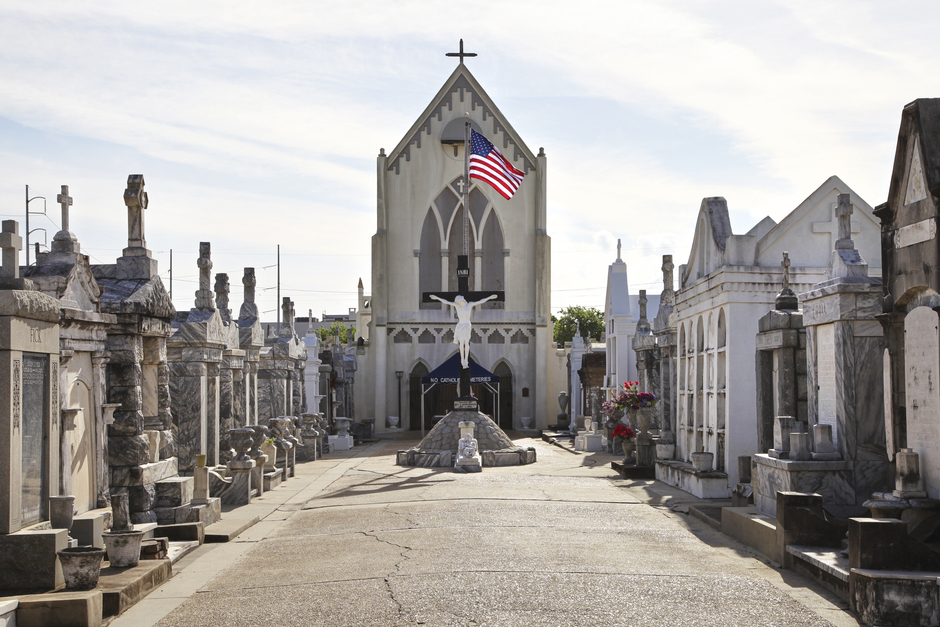
Located in the St. Roch Cemetery in the Seventh Ward, this small chapel is home to one of the most peculiar and quietly moving spaces in the city. The shrine of St. Roch — patron saint of the sick — is lined with ex-votos: plaster casts of healed limbs, discarded crutches, glass eyes, orthopedic braces, all left by those who believed they had been cured through intercession. The practice dates to a yellow fever epidemic in the nineteenth century, when the local priest prayed to St. Roch and reportedly lost none of his congregation. The room is small enough that you cannot stand in it without being surrounded by the evidence of other people's desperate hope. It is not comfortable. It is not meant to be.
Il consiglio del team
The cemetery itself is a functioning Catholic burial ground, so dress respectfully and move quietly. The chapel is usually open during daylight hours but hours can be irregular — check before making a special trip.
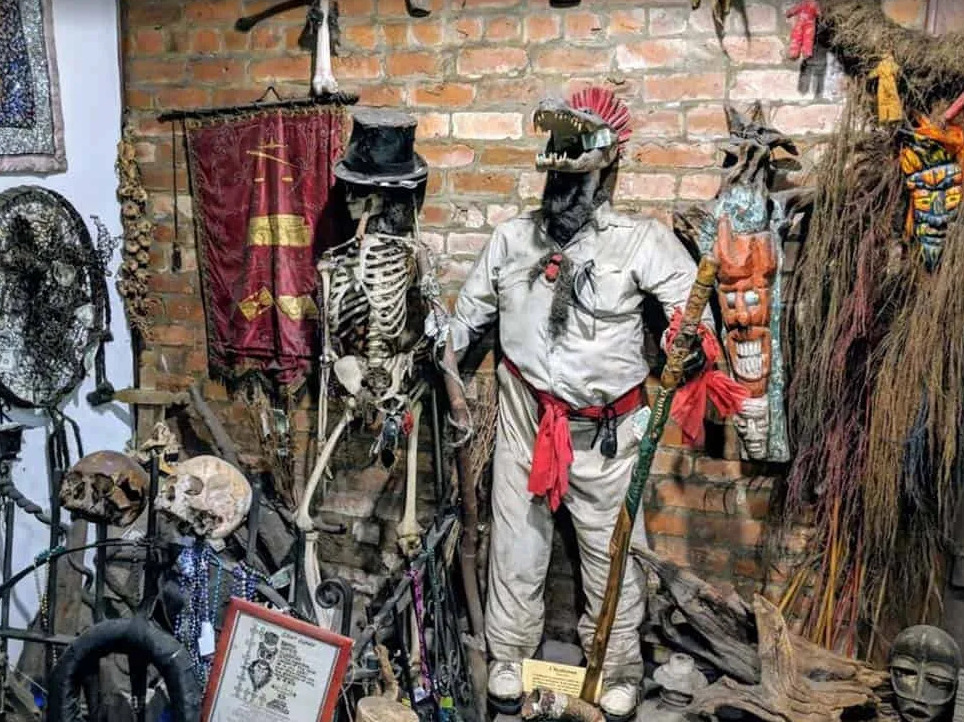
Tucked between Bourbon and Royal Street in the French Quarter, the New Orleans Historic Voodoo Museum occupies just two rooms, which is either a limitation or a curatorial choice depending on your generosity. The collection is dense, atmospheric, and deliberately disorienting — altars, gris-gris bags, ritual objects, photographs, and explanatory panels that take the subject seriously rather than sensationalising it for tourist consumption. Louisiana Voodoo is a syncretic tradition with deep roots in West African religious practice, and the museum treats that lineage with more rigour than most of the ghost-tour operators who invoke it nightly a few streets away. It is not a polished institution. That is part of its credibility.
Il consiglio del team
The museum sells hand-made gris-gris bags prepared on the premises. Whether you believe in their efficacy or not, they are more interesting souvenirs than anything sold on Bourbon Street.
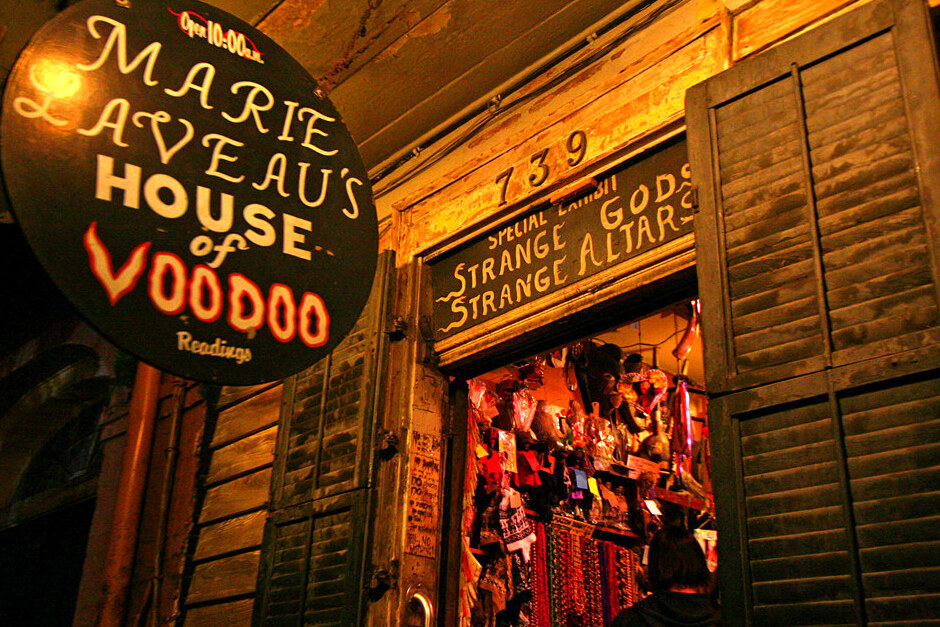
On Bourbon Street, in the former home of the second Voodoo Queen of New Orleans, this museum and shop occupies a building with a specific human history that most of its visitors walk past without registering. Marie Laveau — the first, and then her daughter who took the same name and the same authority — was one of the most powerful figures in nineteenth-century New Orleans, operating across the lines of race, religion, and law in ways that still unsettle easy categorisation. The shop sells the expected inventory of candles and charms, but the building itself, if you stand still long enough to feel it, carries something that the merchandise cannot replicate. The city's relationship with Voodoo is complicated by commercialisation. This address is where that tension is most visible.
Il consiglio del team
Ask the staff about the history of the building specifically, not the general Laveau mythology. The answers are more specific and more interesting than the standard narrative.
Bananas Foster was invented in New Orleans at Brennan's Restaurant in the 1950s, reportedly as a way to use up the bananas arriving in bulk through the port, which was then one of the largest banana-importing operations in the world. The dish — bananas in a sauce of butter, brown sugar, cinnamon, dark rum, and banana liqueur, served over vanilla ice cream — is tableside theatre as much as food, the rum flambéed in a way that makes the preparation part of the experience. What is less often discussed is how the dish encodes a specific moment in the city's economic history: the convergence of Caribbean trade routes, French culinary technique, and a restaurateur's practical problem-solving. It tastes better when you know that.
Il consiglio del team
Brennan's on Royal Street is the original location, but several other restaurants in the city prepare the dish. The tableside flame is not merely decorative — it burns off the alcohol and changes the flavour profile of the sauce.
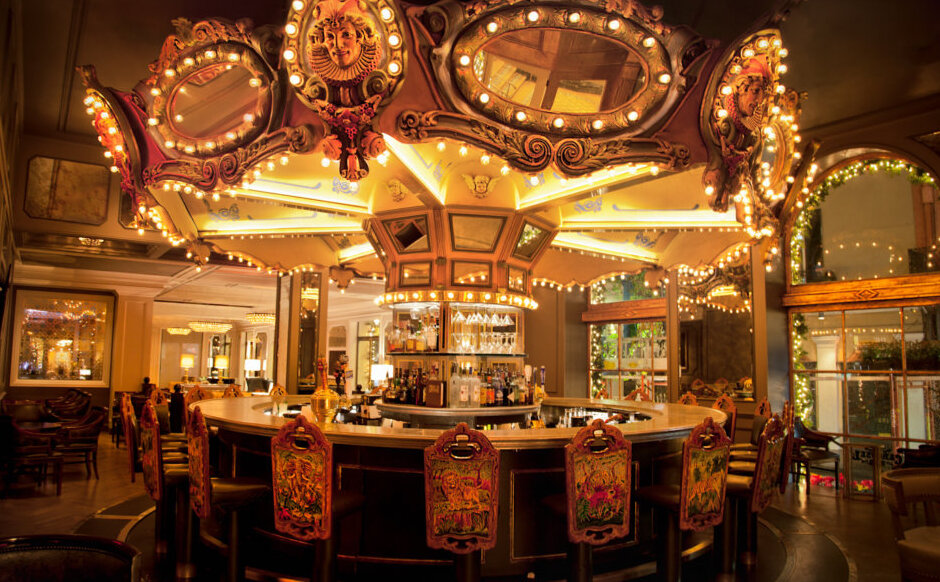
The Carousel Bar inside the Hotel Monteleone on Royal Street is one of the most celebrated bars in a city that takes its bars with genuine seriousness. The bar itself rotates — slowly, almost imperceptibly, completing a full revolution roughly every fifteen minutes — which means that if you sit long enough, you will have seen the entire room without moving. The effect is less disorienting than it sounds and more meditative than you would expect. The bar has been a gathering point for writers and travellers since the mid-twentieth century, and the cocktail list is serious without being precious. The Vieux Carré, a New Orleans original of rye, cognac, sweet vermouth, and Bénédictine, was invented here. Order it and sit still. The room will do the rest.
Il consiglio del team
The bar fills quickly after 6pm. Arrive at opening time — usually mid-afternoon — when the light through the lobby windows is softer and the seats at the bar itself are actually available.
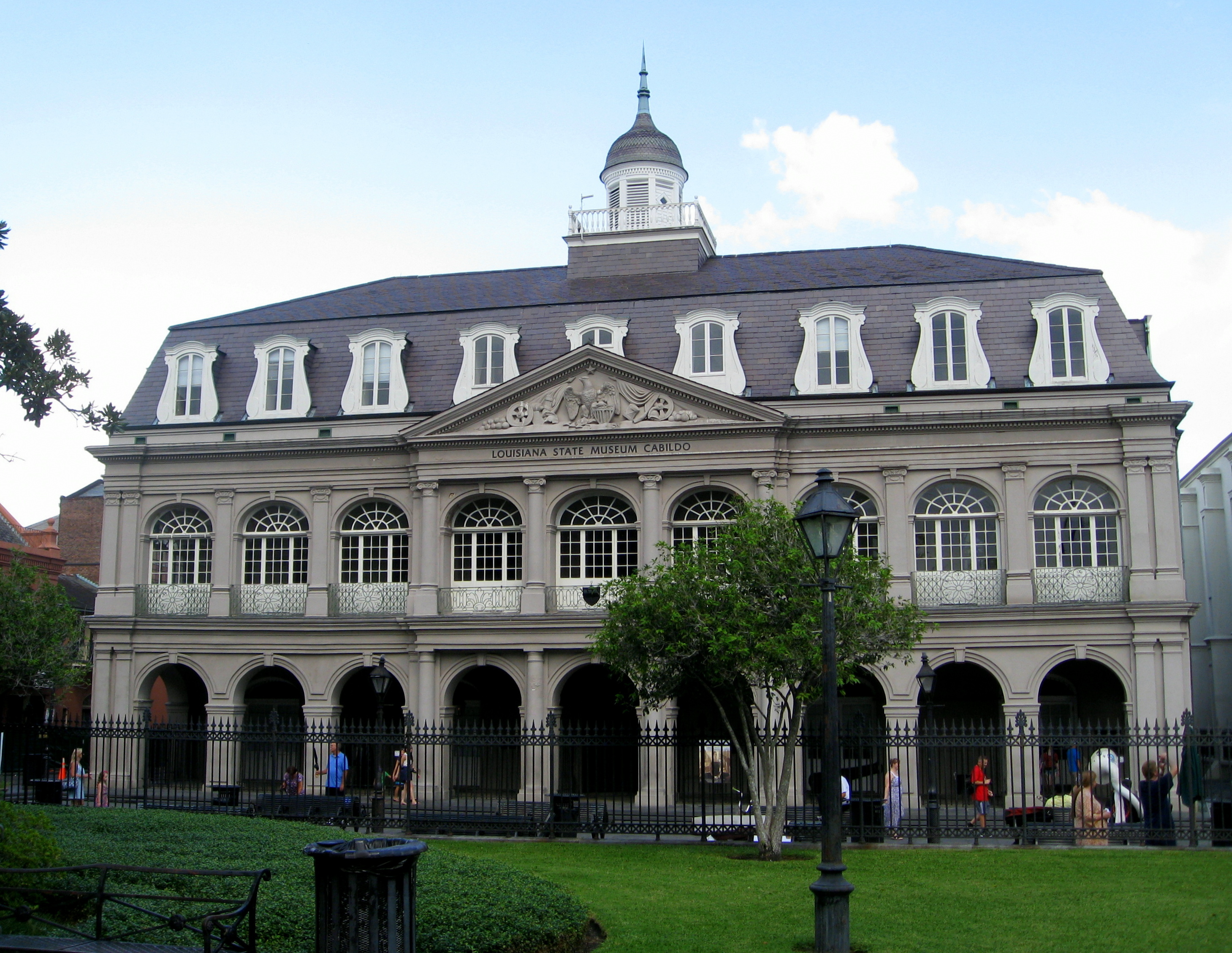
Jackson Square is one of the most photographed spaces in New Orleans, which has made it effectively invisible to the kind of looking that actually yields something. The square is anchored by the equestrian statue of Andrew Jackson, flanked by the Cabildo and the Presbytère, and backed by St. Louis Cathedral — a composition of Spanish colonial governance and French Catholic authority that tells you most of what you need to know about who built this city and why. What the photographs miss is the human ecosystem of the square itself: the tarot readers, the portrait artists, the street musicians, the fortune tellers who have been working these flagstones for generations. It is a living square, not a preserved one, and that distinction matters.
Il consiglio del team
The Cabildo, which neighbours the cathedral, houses the Louisiana State Museum and contains some of the most significant documents and artefacts of the colonial period. Most visitors photograph the exterior and never go in.
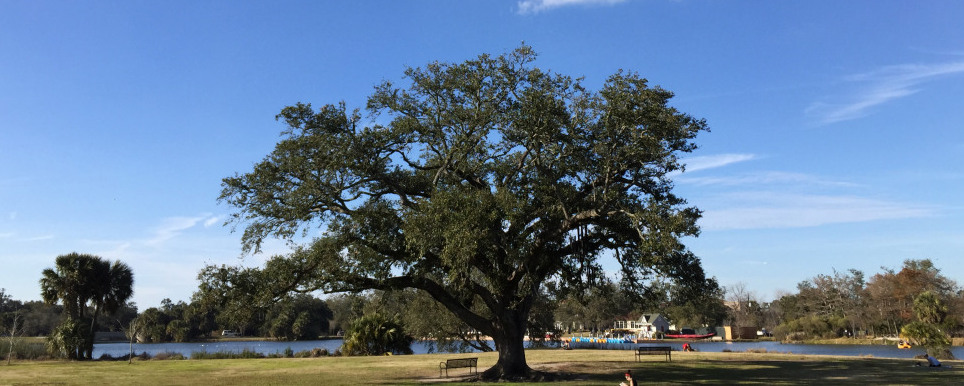
In City Park, on the far northern edge of the city from the French Quarter, a large live oak has been fitted with a series of hidden wind chimes, tuned to produce a specific melody when the air moves through them. The Singing Oak is the work of local artist Jim Hart, who installed the chimes in the branches so that the tree itself becomes the instrument. The effect is genuinely strange — you hear music before you understand its source, and when you locate the chimes they are subtle enough that the sound seems to belong to the tree rather than to any human intervention. City Park is itself an undervisited space, a vast and slightly melancholy expanse of live oaks and lagoons that feels nothing like the French Quarter and everything like the city's actual interior life.
Il consiglio del team
The chimes respond to light breezes rather than strong wind, so the music is more consistent on calm days with a gentle air movement. Midmorning in autumn tends to produce the most sustained sound.
New Orleans is a city that resists the standard digital navigation toolkit. The street grid in the French Quarter is logical enough, but once you move into the Marigny, the Bywater, or the Tremé, the city's topography — shaped by the curve of the river rather than a surveyor's grid — starts to confuse the standard map applications. Planning a visit for 2026 means thinking carefully about which tools are actually calibrated for this city's specific geography and cultural texture. The most useful applications tend to be those built around the city's neighbourhood logic rather than its tourist infrastructure — tools that understand that the distance between two points in New Orleans is often less important than the character of what lies between them.
Il consiglio del team
Download an offline map before arrival. The French Quarter has reasonable connectivity, but several of the city's most interesting neighbourhoods — including parts of the Tremé — have patchy signal in older buildings.
It is worth approaching the mansion at 1239 First Street from the corner of Chestnut rather than directly along First Street, because the angle reveals the relationship between the main house and the service dependencies behind it in a way that the frontal view obscures. The Rosegate House is widely considered one of the most canonic examples of New Orleans's Garden District domestic architecture — a tradition that absorbed Greek Revival forms and adapted them to a subtropical climate and a specific social hierarchy. The rosette fence pattern that gives the house its name is a detail that repays close attention: it is both ornamental and structural, a demonstration that in the best New Orleans architecture, these categories were never truly separate.
Il consiglio del team
The Garden District is best walked rather than driven, and the blocks around First Street reward a slow circuit. The residential streets here are quieter than the main tourist corridors even on busy weekends.
Every city has a version of itself that it performs for strangers, and a version that it keeps for everyone else. New Orleans performs better than almost any other city in the world — the music, the food, the architecture, the mythology are all genuinely extraordinary, and the performance is not false. But the performance is also not the whole thing. The whole thing includes the quiet cemetery in the Seventh Ward, the tree in City Park that plays itself in the wind, the bar on Chartres Street that has been waiting for someone who will never arrive. It includes the fence pattern on a First Street mansion that most people walk past without looking down. The city does not hide these things. It simply does not announce them. That is a distinction worth understanding before you arrive, and worth remembering after you leave. The places that stay with you longest are rarely the ones you were told to find.
★ Guida tascabile
Porta questa guida con te.
Salvala offline, ottieni le indicazioni a piedi e scopri migliaia di luoghi come questi.
What is the best time of year to visit New Orleans if you want to avoid the largest crowds?
Late autumn — specifically November and early December — tends to offer the most favourable balance of manageable crowds and tolerable weather. The summer months are extremely hot and humid, and the period around Mardi Gras (typically February or March) brings the city's largest visitor volumes. January, outside the Mardi Gras run-up, is also relatively quiet and the weather is mild by most standards, though some smaller venues operate reduced hours.
Are the places listed here accessible on foot, or do they require transport?
The French Quarter destinations — including Napoleon House, Jean Lafitte's Blacksmith Shop, the Voodoo Museum, Marie Laveau's House of Voodoo, Jackson Square, and St. Louis Cathedral — are all within comfortable walking distance of each other. The Garden District sites, including The Rosegate House, are best reached by the St. Charles Avenue streetcar. St. Roch Chapel and The Singing Oak in City Park both require a short ride by rideshare or taxi from the French Quarter.
Is the Hotel Monteleone's Carousel Bar appropriate for non-hotel guests?
Yes. The Carousel Bar is open to the public and does not require a hotel reservation. It is a functioning bar within the hotel lobby, and walk-in guests are welcome during operating hours. Seating at the rotating bar itself is limited, so arriving earlier in the evening or during afternoon service hours gives you the best chance of securing a spot at the bar rather than at a table.
How should visitors approach the religious and spiritual sites on this list — St. Roch Chapel, the Voodoo Museum, and Marie Laveau's House of Voodoo?
St. Roch Chapel is an active Catholic shrine within a functioning cemetery. Visitors should dress modestly, move quietly, and treat the space as a place of ongoing devotion rather than a museum exhibit. The Voodoo Museum and Marie Laveau's House of Voodoo represent a living spiritual tradition, not a historical curiosity. Both venues ask that visitors engage with reasonable seriousness. Photography restrictions, where indicated by staff, should be respected without negotiation.
What is the practical advice for visiting The Singing Oak in City Park?
City Park is a large public space and is free to enter. The Singing Oak is located within the park near the ancient live oak grove — a map search for 'Singing Oak New Orleans City Park' will give you a reliable pin. The chimes are wind-dependent, so the experience varies considerably by weather conditions. The park itself is worth extended exploration: it contains the New Orleans Museum of Art, botanical gardens, and one of the largest collections of mature live oak trees in the United States.
★ Leggila quando vuoi
Salvala sul tuo telefono.
Aggiungi questa guida ai preferiti, pianifica il viaggio offline, scopri luoghi come questi.