Borghi&Tesori by Secret World — la più grande guida di viaggio al Mondo
En · Guida di viaggio
Guida di viaggio · Edizione 2026

15 Hidden Gems in Munich — beyond the postcard

A city that hides in plain sight, for those willing to look sideways

L
Una guida di
Lena Hofmann
Aggiornata il
11 maggio 2026
Lettura
12 minuti
Comprende
14 luoghi · mappa interattiva
15 Hidden Gems in Munich — beyond the postcard
★ Guida d'Italia 2026

Pianifica con cura. Viaggia più a fondo.

1.3M+ luoghi curati nel mondo, mappe offline e itinerari intelligenti — tutto in un'app gratuita.

1.3M+ luoghi Mappe offline Itinerari AI Gratis
There is a particular kind of invisibility that afflicts the most visited cities in Europe. It is not the invisibility of obscurity — Munich is hardly undiscovered — but the invisibility of familiarity. When a place is photographed ten million times a year, the photographs become the place. People arrive already knowing what they are going to see, and so they see exactly that, and nothing else. They walk past the door they were never told about. They eat the thing they recognised from a list. They leave having confirmed what they already believed.

I have been coming to Munich for the better part of two decades, and the city still manages to surprise me — not because it conceals itself, but because it rewards a certain quality of attention. The beer halls are real. The baroque grandeur is real. The Oktoberfest is as loud and golden as advertised. But alongside all of that, there is a quieter Munich: a city of tucked-away libraries, of science museums so vast they swallow entire afternoons, of parks where surfers ride a standing wave in the middle of a landlocked metropolis, of film studios that smell of sawdust and old illusions.

The places in this list are not secret in the conspiratorial sense. Several of them are technically famous. What makes them feel hidden is the way mass tourism flows around them — the way the crowd's attention is so thoroughly captured by the obvious that the interesting is left alone. That is the best kind of hiddenness. It requires no map coordinates. It requires only the willingness to look where everyone else forgot to.
Part one — The essentials
1 Library|Architecture|Art Nouveau · 0.5 km

Juristische Bibliothek: Munich's best kept secrets
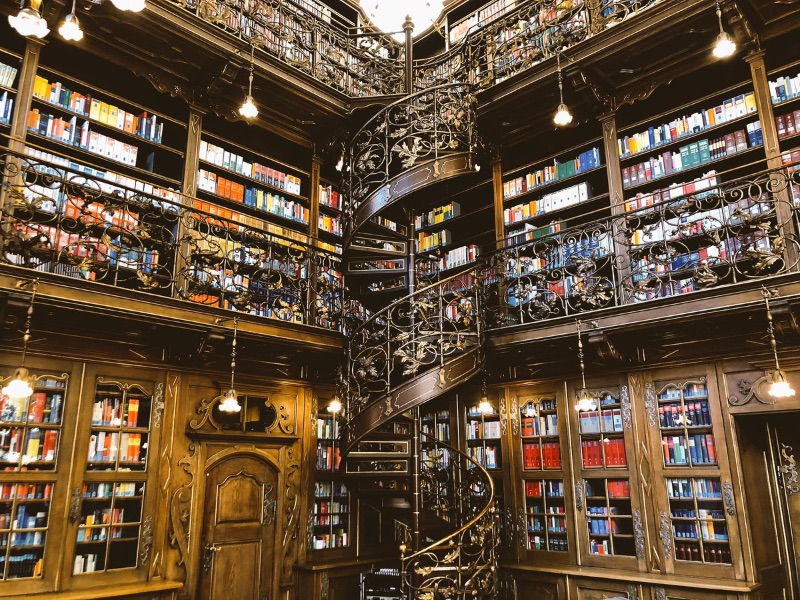
Juristische Bibliothek: Munich's best kept secrets
Most visitors to the Neues Rathaus — Munich's neo-Gothic town hall on Marienplatz — crane their necks at the facade, watch the Glockenspiel perform its mechanical theatre, and move on. Almost none of them push through the right door to find what is arguably the most beautiful interior in the city centre. The Juristische Bibliothek, the city's legal library, occupies a hall of such considered Art Nouveau elegance that it feels less like a place of legal scholarship and more like a set designer's idea of what scholarship should look like: vaulted ironwork, warm timber shelving, the particular hush of a room that takes books seriously.

It functions as a working library, which is precisely why tourists miss it. There is no ticket desk, no audio guide, no queue. You simply walk in, and the room receives you without fanfare.
Il consiglio del team Visit on a weekday morning when the library is open to the public. The light through the upper windows is at its most flattering before noon, and the room is usually entirely empty of tourists.
2 Palace|History|Architecture · 0.8 km

Residenz, il palazzo reale di Monaco di Baviera: ten lifetimes of Wittelsbach ambition
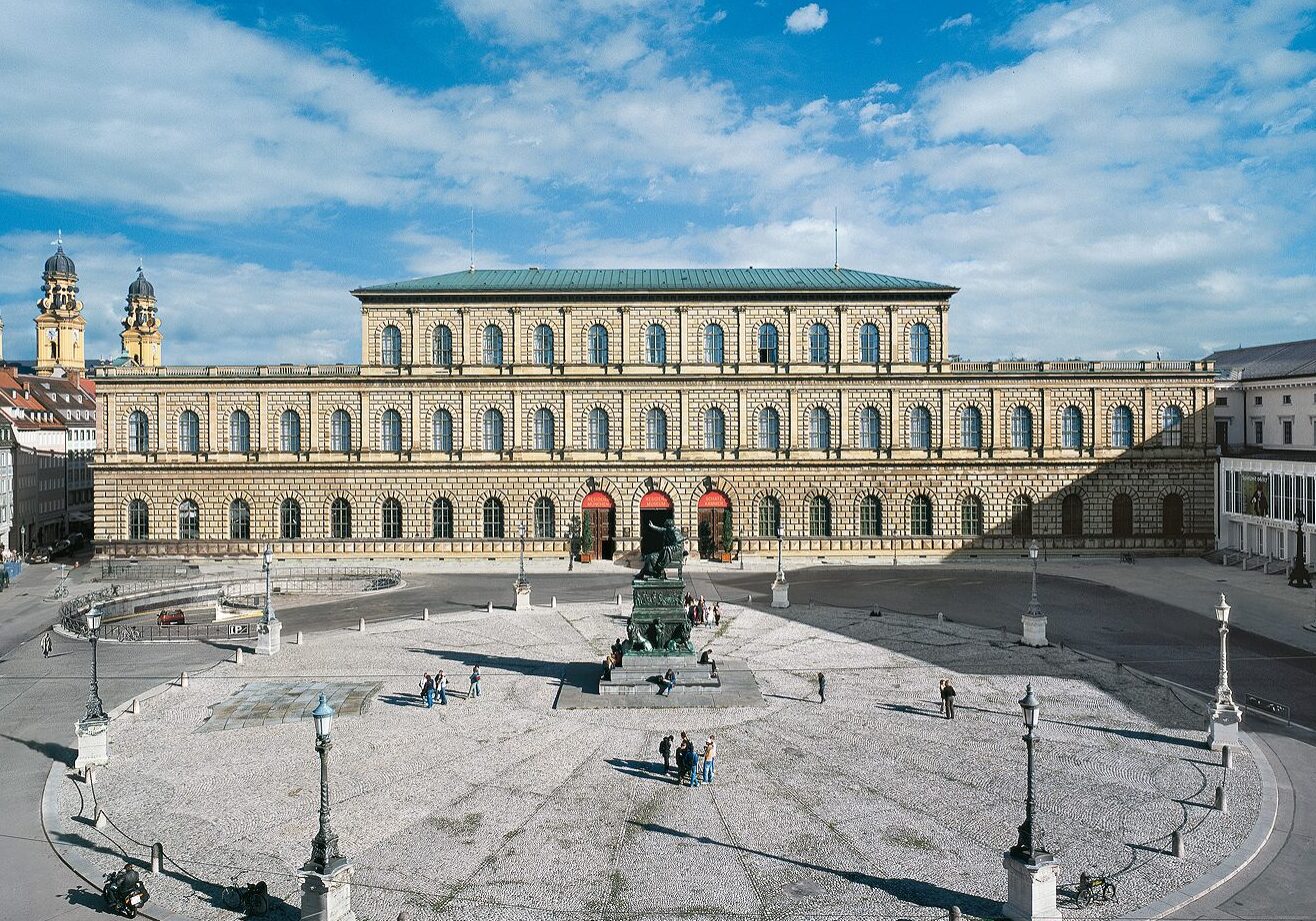
Residenz, il palazzo reale di Monaco di Baviera: ten lifetimes of Wittelsbach ambition
The Residenz is, on paper, one of Munich's most celebrated attractions — and yet it is routinely under-visited relative to its scale and significance. With 130 rooms open to the public, the Cuvilliés-Theater (a rococo jewel of gilded tiers and red velvet that survived the Second World War only because its carved interior had been removed for safekeeping), the Schatzkammer treasury, and the Hofgarten beyond, this is a complex that rewards days rather than hours. Most visitors give it ninety minutes and leave feeling vaguely satisfied, having seen perhaps a tenth of it.

The Wittelsbach dynasty's centuries of accumulation are on full display here — not as dusty relics but as a genuinely coherent argument about power, taste, and the relationship between the two.
Il consiglio del team The Antiquarium, a barrel-vaulted Renaissance hall stretching over 66 metres, is the oldest surviving room in the complex and one of the grandest interiors north of the Alps — yet most visitors walk past its entrance entirely.
3 Palace|Medieval|Dynasty · 0.8 km

Residenz Palace: the castle that kept growing
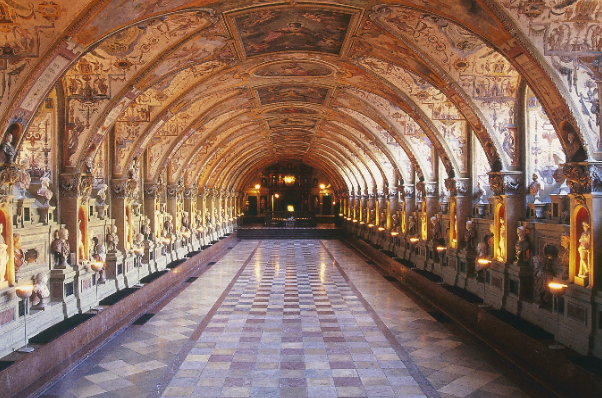
Residenz Palace: the castle that kept growing
Where the previous entry approaches the Residenz through its interiors, this is the story of its bones — the architectural accumulation of a dynasty that could not stop building. What began in 1385 as a modest castle at the edge of the medieval city became, over successive centuries, a palimpsest of European architectural ambition: Renaissance courtyards layered over Gothic foundations, baroque apartments grafted onto Renaissance wings, neoclassical additions pressed against all of it like a polite afterthought.

To walk through the Residenz Palace with some awareness of its building history is to experience Munich's entire political biography compressed into a single address. The city grew around it, and the palace grew with the city, each expansion reflecting a new moment of Wittelsbach confidence or anxiety.
Il consiglio del team The Brunnenhof — the fountain courtyard — is one of the most serene spaces in central Munich and is often completely empty even when the surrounding streets are crowded.
4 Monument|History|Architecture · 0.8 km

Munich: Field Marshal's Hall: the loggia that history chose
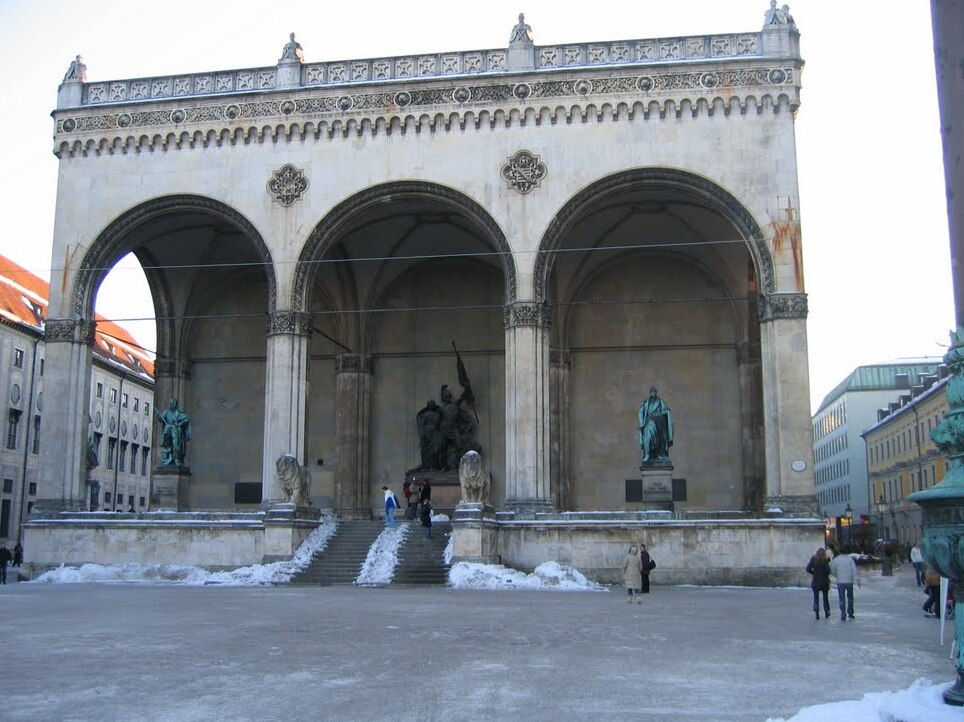
Munich: Field Marshal's Hall: the loggia that history chose
Built between 1841 and 1844 at the southern end of Ludwigstrasse, the Feldherrnhalle — Munich's Field Marshal's Hall — is one of those monuments that accumulates historical weight so densely it becomes difficult to see clearly. Modelled on the Loggia dei Lanzi in Florence, it was conceived as a monument to Bavarian military glory. But it is better known now for a single November morning in 1923, when a failed putsch ended here in gunfire, and a young agitator named Adolf Hitler was arrested nearby. The site became a focal point of Nazi ritual in the years that followed.

Today the loggia stands at the head of Odeonsplatz with a kind of architectural composure that belies its complicated biography — which is, perhaps, exactly why it repays careful attention.
Il consiglio del team The small Catholic memorial chapel on the western side of the Feldherrnhalle — the Viscardi-Gasse passage — was used by Münchners who wanted to avoid giving the Nazi salute at the site; locals called it the 'Drückebergergasse', the shirkers' alley.
Part two — A little deeper
6 Museum|Science|Technology · 0.6 km

German Museum is Munich's vast German Museum: science on an impossible scale

German Museum is Munich's vast German Museum: science on an impossible scale
The Deutsches Museum sits on its own island in the Isar and presents, without apparent embarrassment, a survey of human scientific and technological achievement so comprehensive that it takes multiple visits simply to understand its own floor plan. Prehistoric tools share the building with full-scale mining galleries, original aircraft, marine vessels, and interactive exhibitions on everything from musical acoustics to nuclear physics. It is the kind of institution that was built during a period of absolute faith in the idea that knowledge could be systematised and displayed — and it retains that faith with an endearing stubbornness.

Most visitors spend three hours and leave overwhelmed. The correct approach is to choose two or three galleries and treat them as destinations in themselves rather than stops on a comprehensive tour.
Il consiglio del team The mining exhibition in the basement — a reconstructed network of mine shafts you can actually walk through — is one of the most atmospheric spaces in any museum in Germany, and is consistently overlooked in favour of the aircraft hall upstairs.
7 Museum|Science|Innovation · 0.6 km

Scopri il Deutsches Museum di Monaco di Baviera: the faro of knowledge
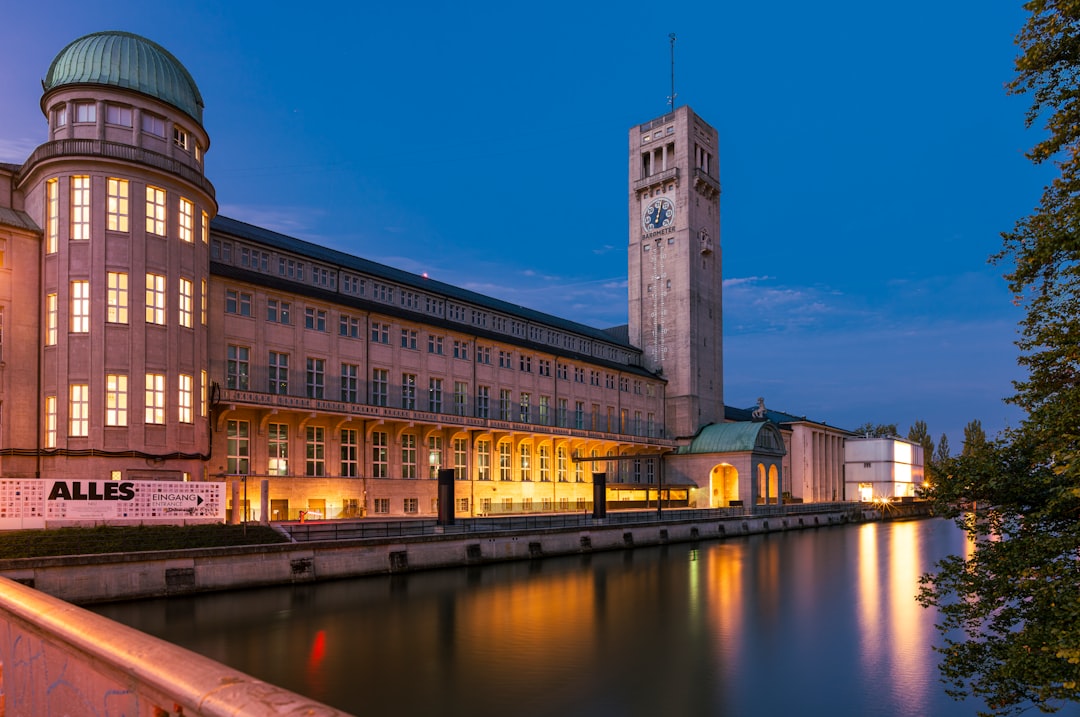
Scopri il Deutsches Museum di Monaco di Baviera: the faro of knowledge
Approached from the riverbank on a grey morning, the Deutsches Museum has the silhouette of a minor cathedral — which is not entirely inappropriate, given the quasi-religious conviction with which it was built. Founded in 1903 by Oskar von Miller, the museum was conceived as a monument to the idea that science and technology were the defining forces of modern civilisation, and that ordinary people deserved access to both.

That democratic impulse still animates the place. The interactive installations — many of them mechanical, analogue, and requiring actual physical engagement — feel genuinely educational in a way that more modern, screen-heavy museums sometimes do not. There is a pleasure in turning a handle and watching a principle demonstrate itself that no touchscreen has yet fully replicated.
Il consiglio del team The museum's rooftop observatory is open on clear evenings for public viewing sessions — a detail that appears in almost no tourist literature and is known primarily to Munich's amateur astronomy community.
8 Museum|History|Culture · 0.7 km

Münchner Stadtmuseum (City Museum): the city's honest self-portrait
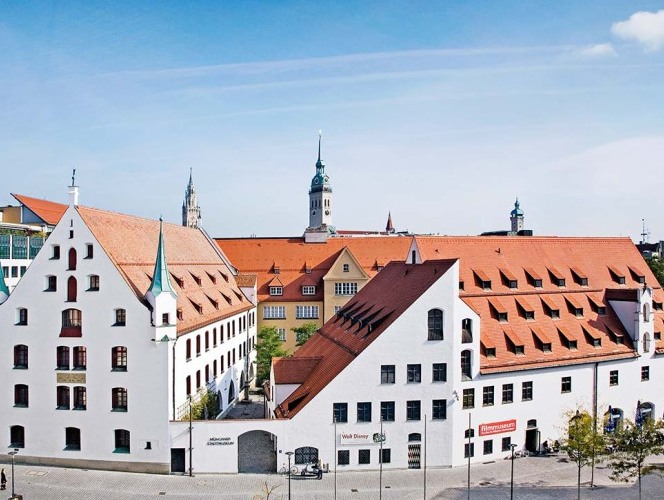
Münchner Stadtmuseum (City Museum): the city's honest self-portrait
The Münchner Stadtmuseum occupies a former arsenal on St.-Jakobs-Platz, and there is something appropriately layered about a museum of civic history housed in a building that once stored weapons. The collections are genuinely eclectic — musical instruments sit alongside marionettes, historical photography alongside weaponry, fashion alongside the kind of vernacular objects that most museums quietly discard. Together they build a portrait of Munich that is considerably more complicated than the lederhosen-and-lager shorthand that the city's marketing has sometimes encouraged.

The permanent exhibition on National Socialism in Munich is particularly worth seeking out: unflinching, carefully contextualised, and a necessary counterweight to the city's more celebratory self-presentations.
Il consiglio del team The museum's café, in the internal courtyard, is used almost exclusively by locals and museum staff — it is one of the quieter lunch spots in the city centre.
9 Museum|Civic History|Collections · 0.7 km

Stadtmuseum (Museo Civico di Monaco di Baveria) - Secret World: the arsenal remembers
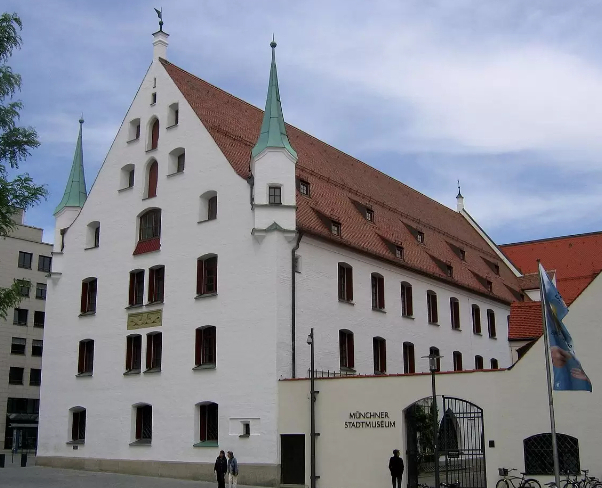
Stadtmuseum (Museo Civico di Monaco di Baveria) - Secret World: the arsenal remembers
A companion entry to the Münchner Stadtmuseum, this perspective emphasises the building itself as much as the collections within it. The former arsenal — Zeughaus — is one of the oldest surviving secular buildings in Munich, its thick walls and low-ceilinged ground floor retaining a physicality that the upper galleries, however carefully curated, cannot quite match. To stand in the lower rooms and consider what they were built to contain is to be reminded that the city's history did not begin with beer gardens and baroque.

The museum's approach to its own city is admirably unsentimental. It does not flinch from the difficult decades, and it does not oversimplify the pleasant ones. It is, in the best sense, a civic institution doing civic work.
Il consiglio del team The collection of historical marionettes — some dating to the early nineteenth century — is one of the finest in Europe and is almost never mentioned in mainstream travel coverage of Munich.
Part three — Off the obvious path
10 Square|Historic Centre|Urban Life · 0.5 km

Marienplatz, il cuore di Monaco: the square that earns its reputation
Marienplatz,  il cuore di Monaco: the square that earns its reputation
It would be a kind of false modesty to pretend that Marienplatz is hidden — it is the unambiguous centre of Munich, the square around which the city organises itself, and it has been so since the twelfth century. What is hidden, or rather overlooked, is the quality of attention the square rewards when you are not consulting a guidebook or waiting for the Glockenspiel to perform.

The Mariensäule — the column at the square's centre, erected in 1638 to mark the city's survival of plague and Swedish occupation — is one of those monuments that becomes invisible through familiarity. Stand beside it on a quiet Tuesday morning and consider what it was built to commemorate, and the square becomes something other than a backdrop.
Il consiglio del team The view from the Neues Rathaus tower — accessible by lift — gives a perspective on Marienplatz and the city beyond that no street-level photograph can replicate, and the queue is rarely more than a few minutes.
11 Square|Urban Culture|Meeting Point · 0.6 km

Scopri Marienplatz: il cuore pulsante di Monaco di Baviera: the living room of a city
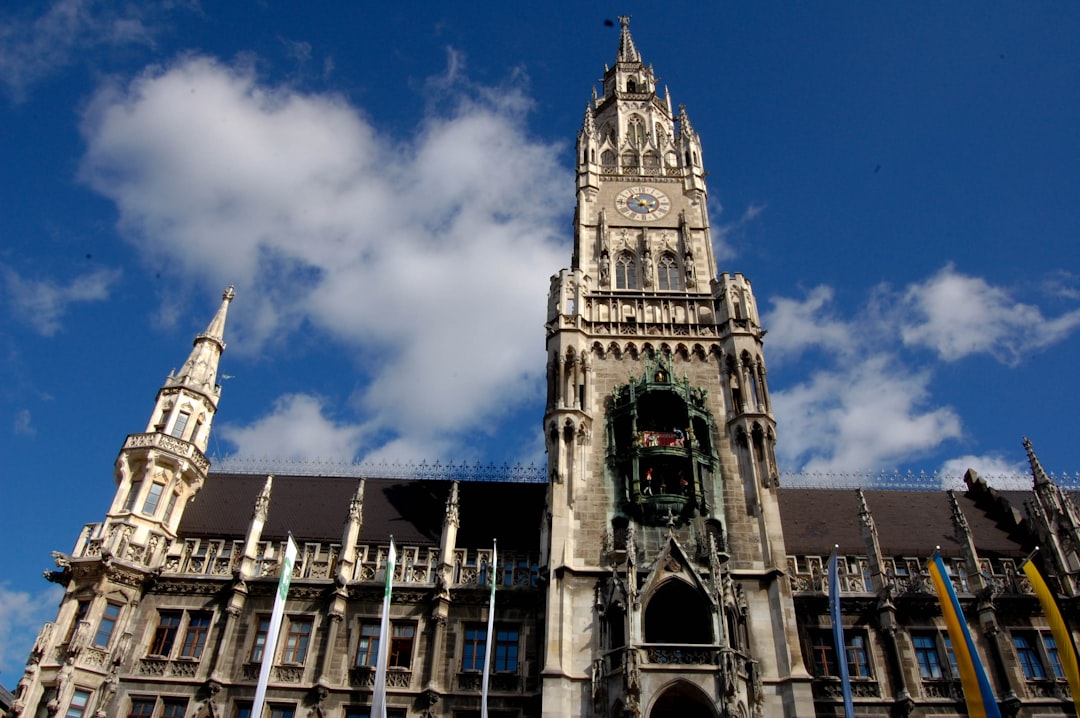
Scopri Marienplatz: il cuore pulsante di Monaco di Baviera: the living room of a city
Every city has a space that functions as its collective living room — the place where people go not to do anything in particular but simply to be in the city together. For Munich, that space is Marienplatz, and it performs this function with a consistency that is worth pausing to appreciate. The square hosts Christmas markets, political demonstrations, football celebrations, and ordinary Tuesday lunches with equal hospitality.

What distinguishes Marienplatz from equivalent squares in other European cities is the relative absence of the purely commercial — the square has not been entirely surrendered to souvenir shops and chain restaurants, and its edges still contain enough ordinary urban life to feel inhabited rather than merely visited.
Il consiglio del team The Viktualienmarkt, a short walk south of Marienplatz, is Munich's daily food market and one of the finest in Germany — arrive before nine in the morning to see it at its most local and least touristic.
12 Monument|Architecture|Clocktower · 0.6 km

Munich | The Glockenspiel building: the clock that earns its audience
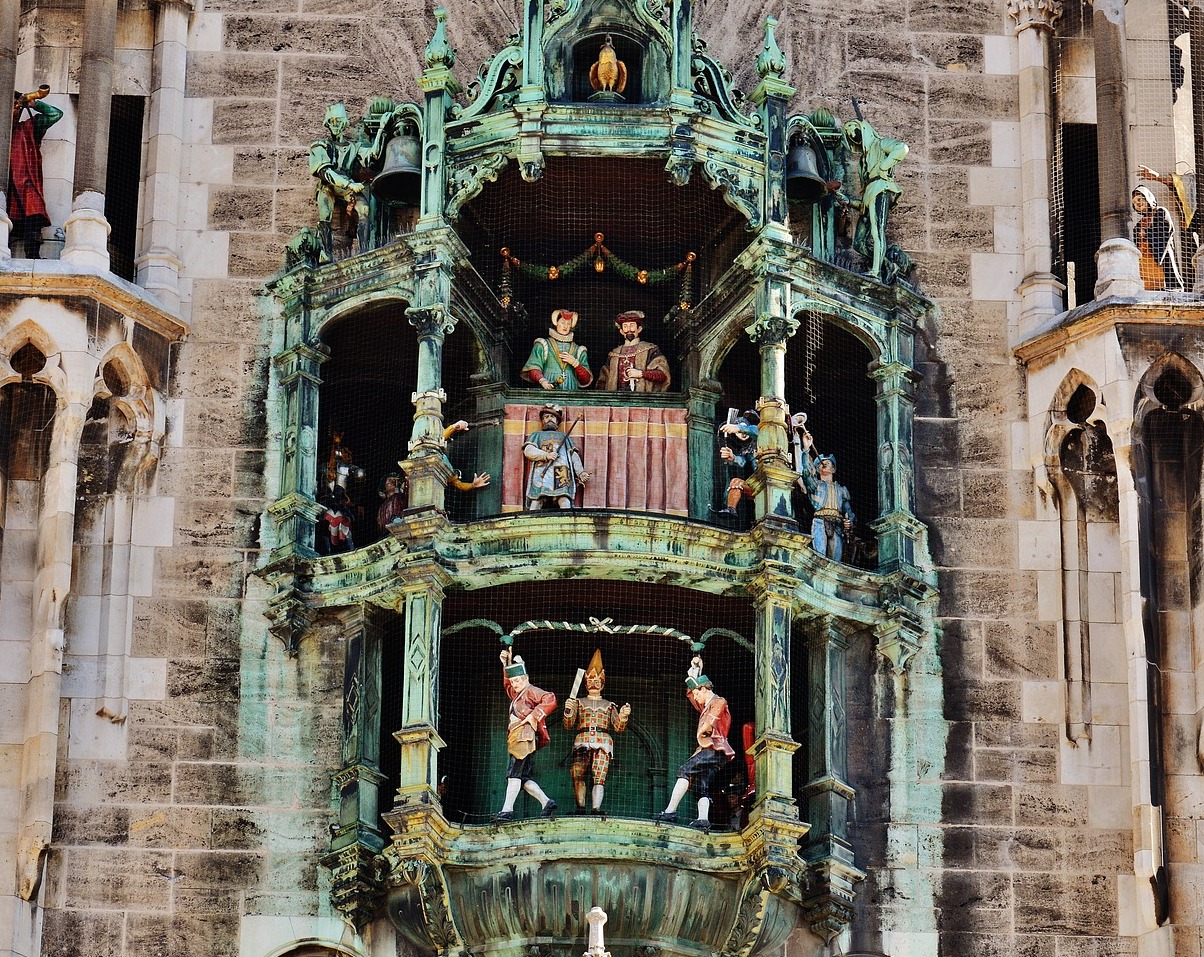
Munich | The Glockenspiel building: the clock that earns its audience
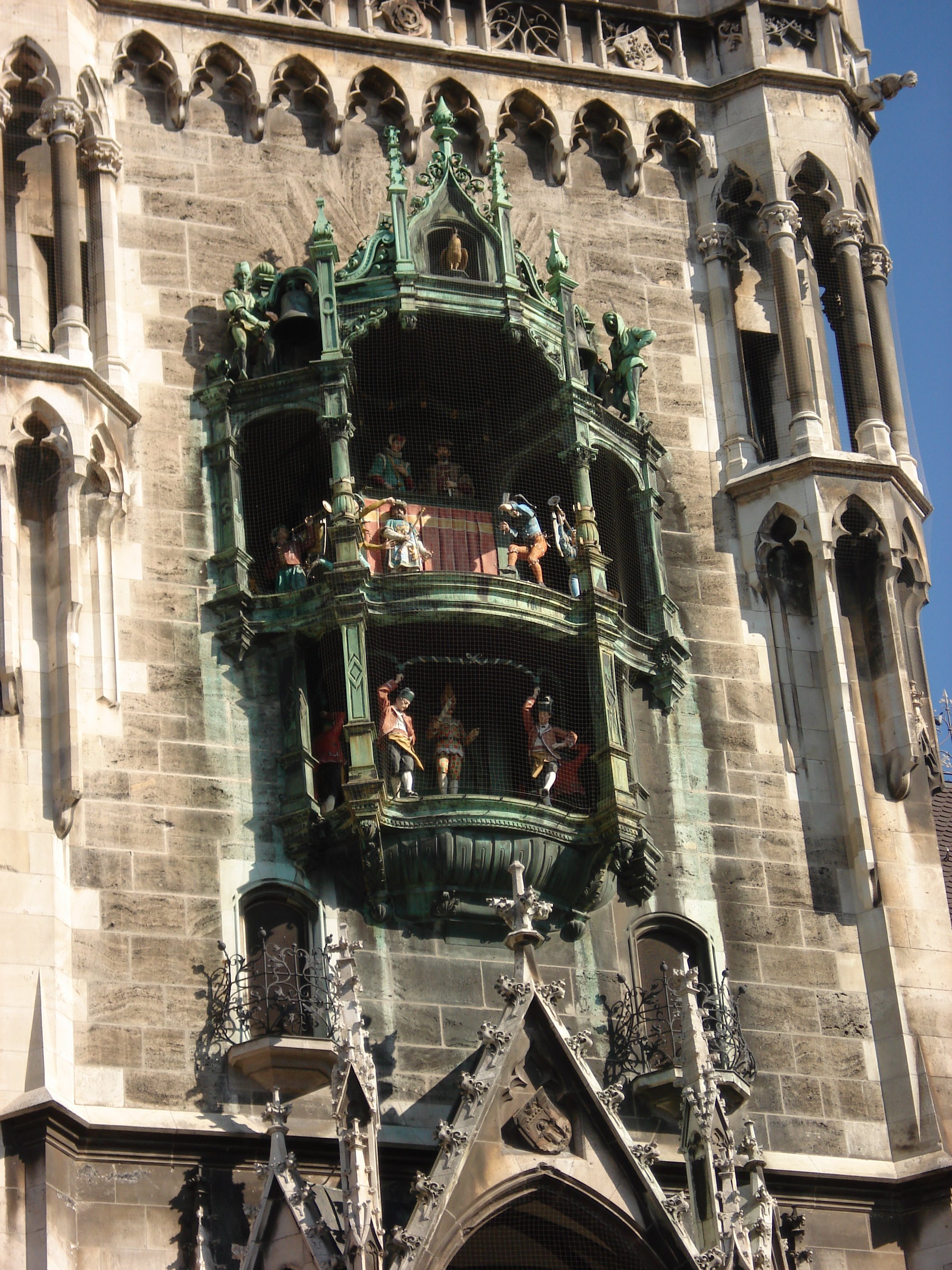
The Glockenspiel — technically part of the Neues Rathaus facade rather than a separate building, though its identity has long since detached itself from its architectural host — is one of those attractions that sophisticated travellers feel obliged to dismiss. It is, after all, a mechanical clock that plays a twelve-minute show three times a day to crowds of people holding up phones. And yet.

Completed around 1908 as part of Georg Hauberrisser's neo-Gothic town hall, the Glockenspiel depicts two episodes from Munich's history: a jousting tournament celebrating a ducal wedding in 1568, and a dance performed by coopers during a plague outbreak. The second story, in particular, has a darkness that the cheerful mechanical figures do not quite convey — which is worth knowing before the show begins.
Il consiglio del team The 5pm performance in the summer months draws significantly smaller crowds than the 11am and noon shows — if you want to watch without being surrounded by tour groups, the late afternoon is the correct choice.
13 Park|Urban Nature|Recreation · 2.3 km

Englischer Garten, one of the largest parks in Europe: bigger than it has any right to be
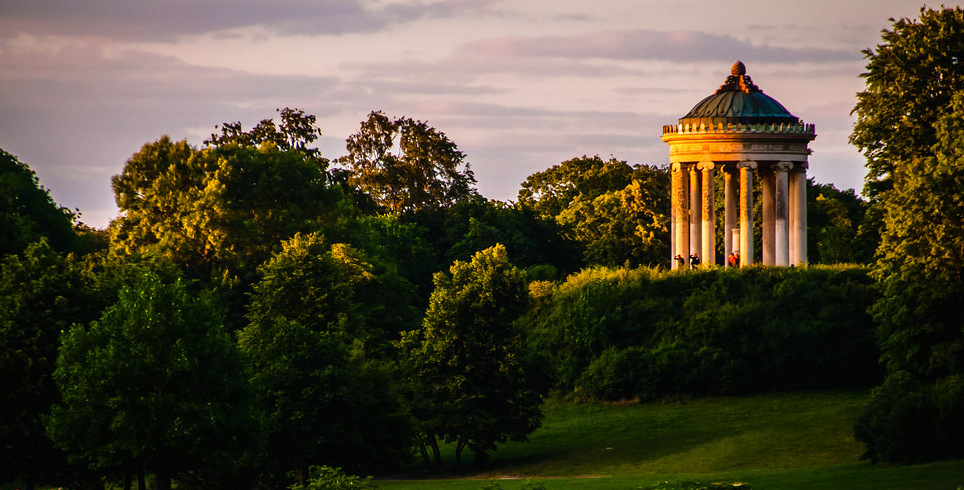
Englischer Garten, one of the largest parks in Europe: bigger than it has any right to be
The English Garden is larger than Central Park, which is a fact that surprises almost everyone who hears it and is somehow never quite absorbed even by people who have spent entire days inside it. Laid out from 1789 onwards under the direction of Benjamin Thompson — an American-born scientist and administrator working for the Bavarian court — it was conceived as a democratic pleasure ground at a moment when such things were genuinely radical.

The park contains a Chinese pagoda, a Japanese tea house, a Greek temple on a hill, and — most famously — a standing river wave near the Eisbach where surfers ride year-round in wetsuits, watched by tourists who cannot quite believe what they are seeing. The wave has been there since the 1970s. It is one of Munich's most distinctive sights and is technically illegal, which is perhaps why it persists.
Il consiglio del team Walk north from the Eisbach wave for forty minutes and the park becomes almost entirely free of tourists — the northern sections, near the Aumeister beer garden, feel genuinely rural despite being within the city limits.
Part four — Around and beyond
14 Park|Garden|Urban Space · 0.0 km

Secret World Rezension 2026 in München: Ein Must-Have: the park that promises more than it reveals
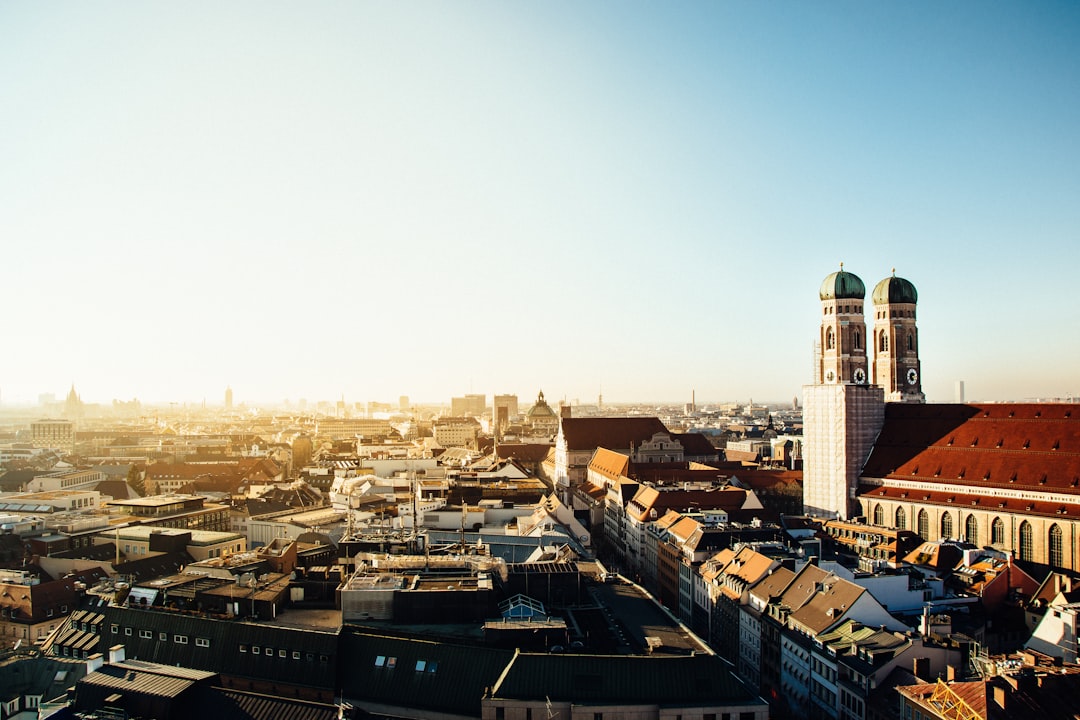
Secret World Rezension 2026 in München: Ein Must-Have: the park that promises more than it reveals
Munich's relationship with its parks and green spaces is one of the more quietly impressive things about the city — a metropolis of well over a million people that has managed, through a combination of historical accident and deliberate planning, to retain extraordinary amounts of green space within its boundaries. This entry gestures toward that broader ecology of parks and gardens: the smaller squares, the riverside paths, the neighbourhood Biergärten tucked beneath chestnut trees that appear on no tourist map but are full of locals every warm evening.

Bavaria's capital is, in this sense, a city that understands the relationship between urban density and the need for relief from it — a lesson that many larger European cities are still learning.
Il consiglio del team The Westpark, in the city's western districts, hosts a permanent collection of Asian garden installations — Japanese, Chinese, Thai, Nepalese — that were created for the 1983 International Garden Exhibition and are now largely forgotten by anyone who didn't live in Munich that year.
15 Film Location|Industrial Heritage|Culture · 8.0 km

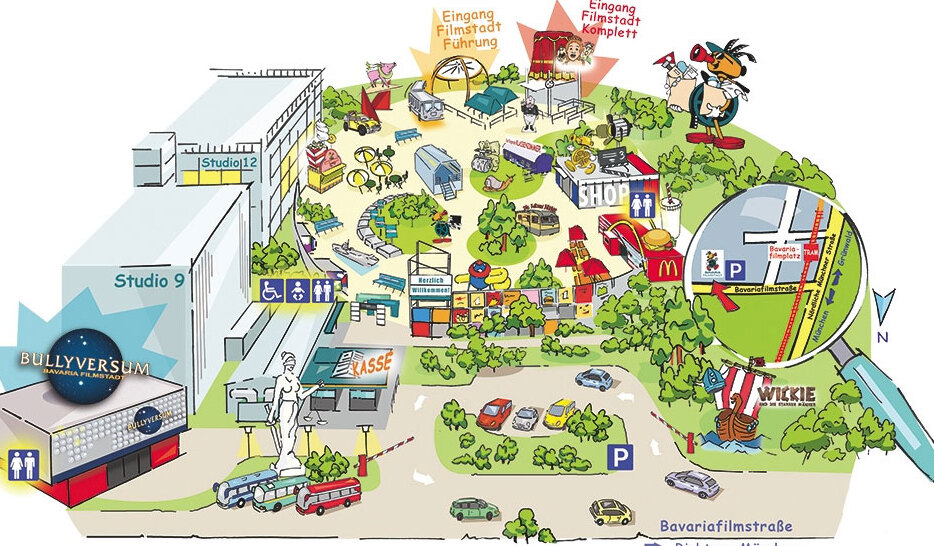
Bavaria Film Studios - Grunwald: where illusions are made and stored
Bavaria Film Studios - Grunwald: where illusions are made and stored
Fourteen kilometres south of the city centre, in the suburb of Grunwald, Bavaria Film Studios has been producing German cinema and television since 1919 — making it one of the oldest continuously operating film studios in the world. The studio tour takes visitors through working sets and backlot constructions, past the props and painted backdrops and forced-perspective tricks that constitute the grammar of visual storytelling. Around 150 hours of film and television are produced here annually, which means that on any given tour day, something is being made somewhere on the lot.

There is a particular pleasure in seeing the machinery of illusion from the outside — the submarine used in Das Boot, the reconstructed streets that have stood in for half of Europe, the facades that are three centimetres thick and held up by scaffolding.
Il consiglio del team The studios are most interesting to visit during the week, when production activity is at its highest — weekend tours tend to encounter quieter, more museum-like conditions rather than the organised chaos of an active shoot.
Munich is a city that has learned to perform itself very well. It knows what visitors want, and it provides it with Bavarian efficiency: the beer, the baroque, the Oktoberfest, the alpine backdrop glimpsed on clear days from the English Garden. None of that is false. But a city that has been performing for long enough develops, alongside its public face, a private one — and it is in that private face that the more interesting conversations happen.

The places in this list are not all obscure. Some of them are, on paper, among the most visited sites in Germany. What distinguishes them is the quality of attention they reward when you approach them with curiosity rather than confirmation — when you are looking for what the place actually is rather than what you were told it would be. Munich will meet you there, if you let it. It has been waiting, with characteristic patience, for someone to look sideways.
★ Guida tascabile

Porta questa guida con te.

Salvala offline, ottieni le indicazioni a piedi e scopri migliaia di luoghi come questi.

Salva offline Percorsi smart Tesori nascosti
App Store Google Play AppGallery

Tutti i luoghi sulla mappa

Dati cartografici © OpenStreetMap contributors.

Domande dei lettori

Le domande più frequenti su questa guida.

When is the best time of year to visit Munich if you want to avoid the largest tourist crowds?

Late April to early June, and again in September before Oktoberfest begins, tend to offer the most favourable balance of good weather and manageable visitor numbers. July and August bring the highest tourist volumes to the city centre, and Oktoberfest (mid-September to early October) transforms the Theresienwiese area entirely. Winter, particularly December during the Christmas market season, is crowded but in a different, more local-feeling way.

Is the Deutsches Museum worth a full day, or can it be done in a few hours?

The Deutsches Museum is genuinely one of the largest science and technology museums in the world, and a comprehensive visit is impossible in a single day. The most practical approach is to identify two or three departments in advance — the mining galleries, the aeronautics hall, and the musical instruments collection are among the most rewarding — and treat each as a destination in itself rather than a stop on a complete tour. A focused three-hour visit will be more satisfying than an exhausted six-hour one.

Can visitors access the Juristische Bibliothek inside the Neues Rathaus, and are there any restrictions?

The Juristische Bibliothek is a functioning public legal library and is generally accessible during standard library opening hours on weekdays. There is no admission fee. Visitors are expected to behave as they would in any working library — quiet voices, no photography that disturbs readers, no food or drink. It is not a tourist attraction in the formal sense, which is precisely what makes it worth visiting. Check current opening hours before you go, as they can vary seasonally.

How far is Bavaria Film Studios from central Munich, and what is the easiest way to get there?

Bavaria Film Studios is located in Grunwald, approximately 14 kilometres south of the city centre. The most straightforward public transport route involves taking the U-Bahn to Grünwald or using the tram network, though the specific connections can require a change. A taxi or rideshare from the centre takes roughly 25 to 35 minutes depending on traffic. The studios are not walkable from central Munich, so factor in travel time when planning your visit.

Is the Englischer Garten safe to walk through alone, including in the northern sections away from the tourist areas?

The Englischer Garten is broadly considered one of the safer large urban parks in Germany, and the northern sections — though quieter and less patrolled — are regularly used by joggers, cyclists, and local families. As with any large urban park, standard common-sense precautions apply, particularly after dark. The park is well-lit in its southern sections near the Eisbach and the Chinese Tower, but the northern reaches are considerably darker at night and are best explored during daylight hours.

★ Leggila quando vuoi

Salvala sul tuo telefono.

Aggiungi questa guida ai preferiti, pianifica il viaggio offline, scopri luoghi come questi.

Preferiti Offline 60+ lingue
App Store Google Play AppGallery