Borghi&Tesori by Secret World — la più grande guida di viaggio al Mondo
En · Guida di viaggio
Guida di viaggio · Edizione 2026

15 Hidden Gems in Marrakech — beyond the postcard

A city that hides in plain sight, even from those who think they know it

L
Una guida di
Lena Hofmann
Aggiornata il
17 giugno 2026
Lettura
12 minuti
Comprende
14 luoghi · mappa interattiva
15 Hidden Gems in Marrakech — beyond the postcard
★ Guida d'Italia 2026

Pianifica con cura. Viaggia più a fondo.

1.3M+ luoghi curati nel mondo, mappe offline e itinerari intelligenti — tutto in un'app gratuita.

1.3M+ luoghi Mappe offline Itinerari AI Gratis
There is a particular kind of invisibility that only the most visited places in the world can achieve. Marrakech has mastered it. The city is simultaneously one of the most photographed destinations on earth and one of the most genuinely misread. Travellers arrive with a list — the square, the palace, the garden — and leave believing they have seen it. They have seen a version of it: the version that the tourist infrastructure has polished and positioned at eye level, easy to consume, easy to Instagram, easy to forget.

What stays with you, if you are paying attention, is something else entirely. It is the quality of light in a courtyard that no guidebook has indexed. It is the way a building's ornamentation rewards a second glance, or a third, because it was designed by craftsmen who assumed you would stand still for longer than thirty seconds. It is the realisation that the famous square is not one thing but several things simultaneously, and that most visitors only ever encounter one of them.

The places in this list are not secret in the sense that nobody knows about them. Some are well documented, even celebrated. What makes them feel hidden is something more interesting: the way the city's density and noise and sensory overload cause even informed travellers to skim past them, to see the label rather than the thing itself. Marrakech rewards slowness. It rewards the willingness to look at something you think you already understand and ask what you are actually seeing. That is the only real qualification for finding anything worth finding here.
Part one — The essentials
1 Religious Site · 0.0 km

Tombe Saadiane - Marocco: the dynasty that sealed its own memory
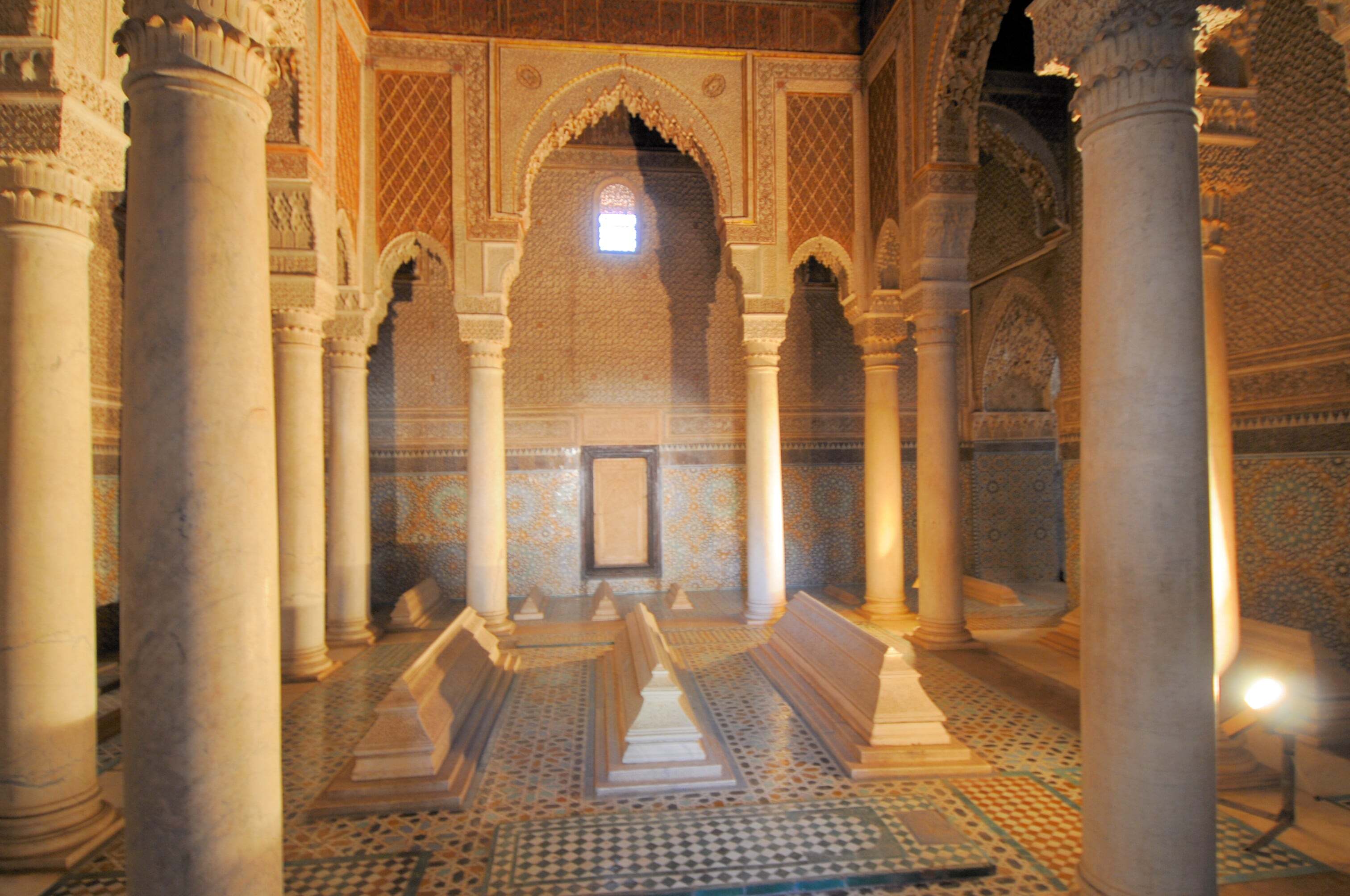
Tombe Saadiane - Marocco: the dynasty that sealed its own memory
The Saadian Tombs were walled up by the Alaouite sultan Moulay Ismail in the seventeenth century — apparently he could not bring himself to desecrate them, but he also refused to honour his predecessors. So he simply closed the entrance and let the complex disappear from public life for over two centuries. That act of architectural erasure is, paradoxically, what preserved them. Rediscovered in the early twentieth century, the mausoleums contain some of the finest cedar carving, Italian Carrara marble, and zellij tilework in Morocco. The intimacy of the space — two small chambers, a garden, the sound of pigeons — creates a contemplative atmosphere that the city's more theatrical sites rarely manage.

Most visitors rush through in fifteen minutes. The tomb of Ahmad al-Mansur, with its twelve columns and honeycomb muqarnas ceiling, deserves considerably more than that.
Il consiglio del team Arrive at opening time, before the tour groups consolidate. The garden between the mausoleums, often ignored, is where the light is most interesting in the morning.
2 Religious Site · 0.0 km

Marrakech: The tombs Saadian: what the sultan chose to hide
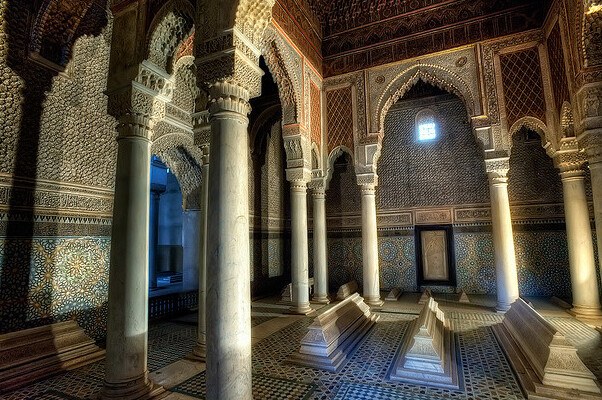
Marrakech: The tombs Saadian: what the sultan chose to hide
To approach the Saadian Tombs from the angle of their concealment rather than their discovery is to understand something important about how power works in Moroccan dynastic history. Ahmad al-Mansur al-Dhahabi — the Golden — built this complex as a statement of Saadian legitimacy, importing marble from Europe and employing the finest craftsmen of his era. His successors, unwilling to share the glory, simply removed the entrance from the city's mental map. The tombs that survived because of this suppression now contain some sixty Saadian burials, including children of the royal household whose small graves are arranged with a formality that feels quietly devastating.

The dual nature of this place — monument to power, monument to its own erasure — gives it a texture that purely celebratory architecture rarely achieves.
Il consiglio del team The smaller mausoleum, which houses the wives and children of the dynasty, is frequently overlooked in favour of the grander chamber. It repays a longer look.
3 Religious Site · 0.0 km

Madrasa di Ben Youssef: four centuries of learning carved in plaster
Madrasa di Ben Youssef: four centuries of learning carved in plaster
Built around 1570 and restored in the mid-twentieth century, the Ben Youssef Madrasa functioned as a Quranic school for over four hundred years, housing students from across the Maghreb and sub-Saharan Africa in cells that are barely larger than a single bed. What the students could not have failed to absorb, beyond the texts they memorised, was the extraordinary visual argument being made by the building around them: that knowledge and beauty are not separate categories. The carved stucco panels, the cedar latticework, the marble courtyard with its central pool — all of it constitutes a kind of architectural pedagogy.

The madrasa closed as an educational institution in 1960 and is now open to visitors, which means you can stand in the courtyard and look up at the tiers of student cells and feel the strange weight of all those accumulated hours of study.
Il consiglio del team The upper-floor cells, accessible via narrow staircases, offer an angle on the courtyard that most visitors never see. The geometry of the space reads completely differently from above.
4 Palace · 0.8 km

The Bahia Palace in Marrakesh, Morocco: the palace that was never quite finished

The Bahia Palace in Marrakesh, Morocco: the palace that was never quite finished
The Bahia Palace was built in the late nineteenth century by Si Moussa, Grand Vizier to the sultan, and expanded by his son Ba Ahmed, who intended it to be the most magnificent palace of its era. The name translates roughly as 'brilliance,' which tells you something about the ambition involved. What it does not tell you is that Ba Ahmed died before the palace was complete, and that the French colonial administration subsequently used it as a residence, casually rearranging rooms and functions according to their own priorities. The result is a building that contains contradictions: extraordinary craftsmanship in some rooms, abrupt transitions in others, courtyards that feel perfectly resolved and corridors that feel slightly improvised.

This imperfection is, paradoxically, what makes it more interesting than a building that achieved exactly what it set out to achieve.
Il consiglio del team The harem quarters, a labyrinth of smaller rooms and private courtyards, are where the craftsmanship is most concentrated and the visitor density is lowest.
Part two — A little deeper
5 Palace · 0.8 km

Marrakesh: The Bahia Palace: reading a building as biography
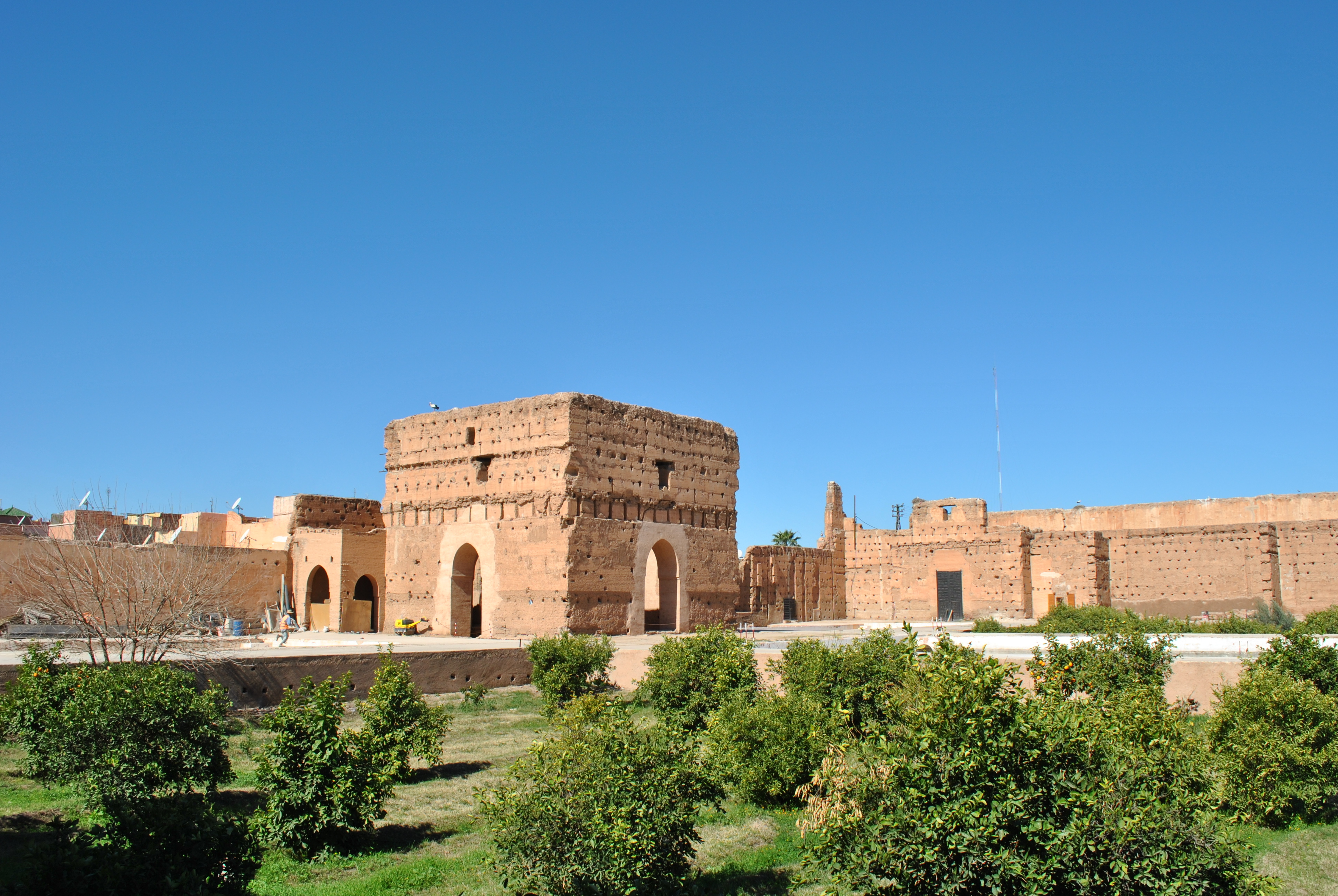
Marrakesh: The Bahia Palace: reading a building as biography
To read the Bahia Palace as a piece of biography rather than simply as architecture is to find it considerably more interesting. Ba Ahmed, who commissioned the major expansion, was a man of enormous political power and, by most accounts, considerable personal insecurity — qualities that tend to produce interesting buildings. He installed four wives and twenty-four concubines here, each allocated space according to a hierarchy that the architecture makes legible even now. The carved cedar ceilings, some of the most elaborate in Morocco, were produced by craftsmen who worked under conditions of almost competitive intensity, each panel a demonstration of technical mastery.

The palace was looted almost immediately after Ba Ahmed's death in 1900, the sultan reclaiming what he considered his property. What remains is magnificent. What was removed must have been extraordinary.
Il consiglio del team Early afternoon, when tour groups retreat for lunch, the palace's larger reception rooms become almost contemplatively quiet — a rarity in Marrakech's busier sites.
6 Garden · 2.4 km

Rue Yves St Laurent Marrakech: The Majorelle Gardens: a painter's obsession made permanent
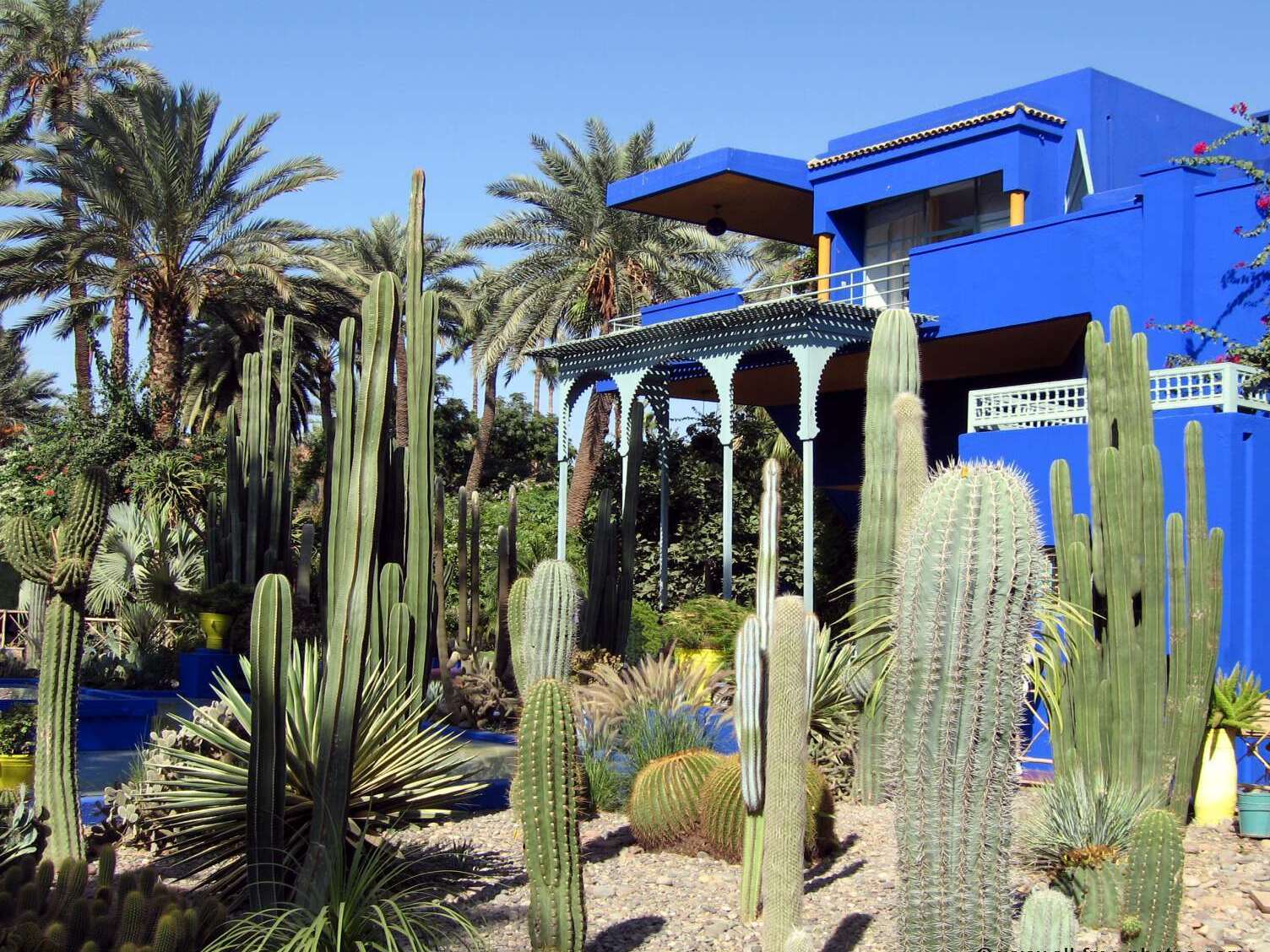
Rue Yves St Laurent Marrakech: The Majorelle Gardens: a painter's obsession made permanent
Jacques Majorelle arrived in Marrakech in 1919, ostensibly to recover his health, and spent the next four decades creating a garden that functions less as a landscape and more as a painting you can walk through. The cobalt blue he developed — a shade so particular it was eventually trademarked as Bleu Majorelle — was applied to the studio walls, the pots, the pergolas, the water features, creating a chromatic argument that the surrounding botanical collection of cacti, bamboo, and palms seems to both contradict and resolve. Majorelle was a painter, and the garden is a painter's garden: obsessive about colour relationships, indifferent to conventional horticultural logic.

The garden fell into disrepair after Majorelle's death, was rescued by Yves Saint Laurent and Pierre Bergé in 1980, and is now one of the most visited sites in Morocco — which means that its genuine strangeness tends to get lost in the crowds.
Il consiglio del team The Berber Museum within the garden complex, housed in Majorelle's original studio, contains a collection of jewellery and textiles that most visitors walk past entirely in their rush to photograph the blue walls.
7 Garden · 2.5 km

Yves St Laurent and Piere Bergé and the Jardin Majorelle: the garden as final resting place
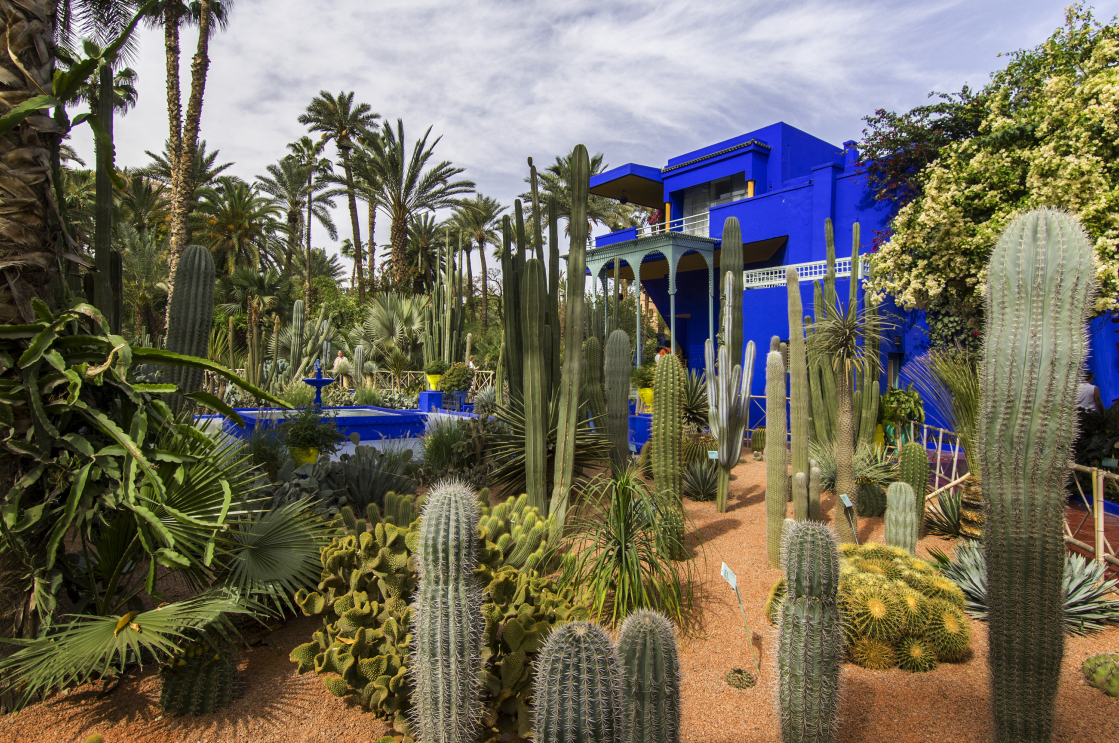
Yves St Laurent and Piere Bergé and the Jardin Majorelle: the garden as final resting place
When Yves Saint Laurent died in 2008, his ashes were scattered in the Jardin Majorelle — specifically in the rose garden, a corner of the property that carries a different quality of stillness from the rest of the grounds. Saint Laurent had loved the garden since he and Bergé first encountered it in 1966, and their purchase of it in 1980 saved it from a hotel development that would have erased everything Majorelle had built. The fashion designer's relationship with Morocco was complex and lifelong: the country's colours, textiles, and decorative traditions ran through decades of his work.

The garden is now simultaneously a horticultural attraction, a fashion pilgrimage site, and a place of mourning — three registers that coexist with a peculiar grace that Marrakech, a city comfortable with multiple simultaneous meanings, seems to handle better than most.
Il consiglio del team The memorial to Saint Laurent near the rose garden is modest and easy to miss. It is worth finding, not for sentimentality, but because the surrounding planting in that corner of the garden is the most carefully considered in the entire property.
8 Parks and Gardens · 0.0 km

Secret World vs Wanderlog: il miglior trip planner per Marrakech 2026: the invisible architecture of navigation
Secret World vs Wanderlog: il miglior trip planner per Marrakech 2026: the invisible architecture of navigation
There is a category of experience in Marrakech that rarely appears in editorial coverage: the experience of being lost, specifically in the medina, where the distance between two landmarks can be measured in metres on a map and in an hour of your life on the ground. The narrow alleys of the souk district were not designed for navigation — they were designed for commerce, for shade, for the gradual revelation of goods and services. The question of how to move through them intelligently is one that every visitor to Marrakech confronts, and the tools available for answering it have changed considerably in recent years.

The gap between digital mapping and the physical reality of Marrakech's historic core remains one of the city's most instructive features: it forces a kind of attentiveness that GPS dependency tends to erode.
Il consiglio del team Downloading offline maps before entering the medina is practical, but the more useful preparation is accepting that you will take wrong turns — and that most of them will be more interesting than the right one.
Part three — Off the obvious path
9 Square · 2.0 km

The Jamaa El Fna place: the square that changes its identity every few hours
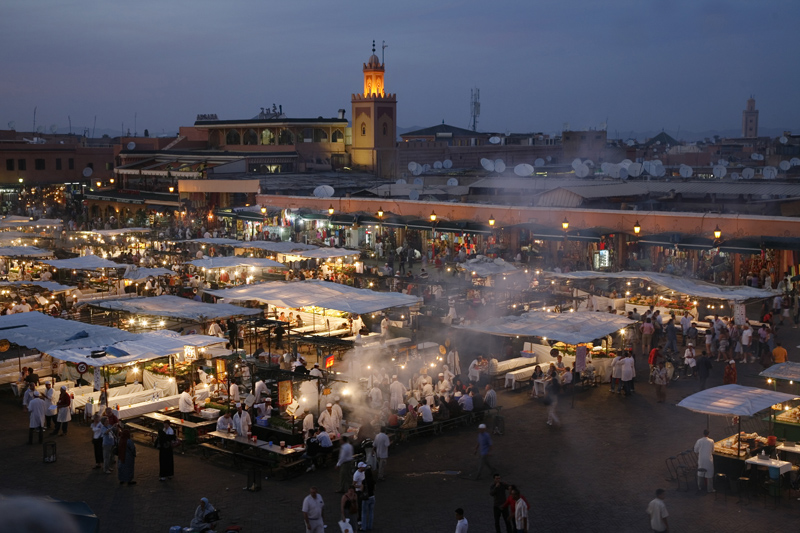
The Jamaa El Fna place: the square that changes its identity every few hours
The Jemaa el-Fna is the most written-about public space in Morocco and, possibly because of that, one of the most persistently misunderstood. Most visitors encounter it as a single thing — the evening spectacle of food stalls, musicians, and performers — and leave believing they have seen it. They have seen one of its several daily incarnations. In the morning, the square is almost empty, populated mainly by orange-juice vendors and locals crossing it on their way elsewhere. By midday it fills with storytellers, acrobats, and henna artists. By late afternoon the food stalls begin their slow assembly. By night it becomes the theatrical event that every photograph has already shown you.

The UNESCO designation of its 'intangible cultural heritage' is, unusually, exactly right: what matters here is not the place but the practice.
Il consiglio del team The rooftop cafés surrounding the square are well known, but the view from the northern edge, looking south toward the Koutoubia minaret, is the one that makes the spatial logic of the medina legible.
10 Square · 2.0 km

Djemaa El Fna, Marrakech - Marocco: the assembly of nobodies
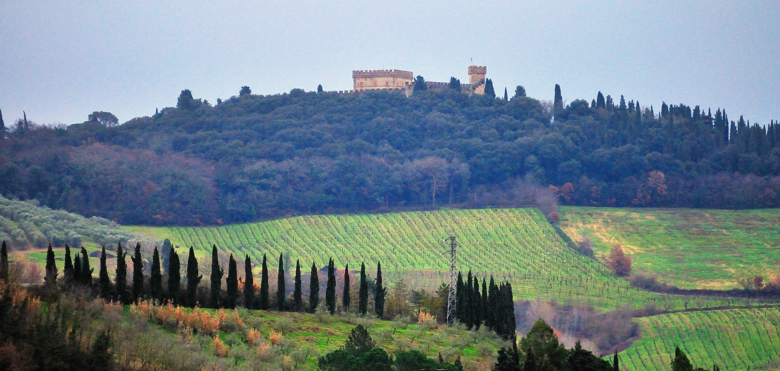
Djemaa El Fna, Marrakech - Marocco: the assembly of nobodies
The name Djemaa el-Fna translates, depending on which scholar you consult, as 'assembly of the dead,' 'mosque of nothingness,' or 'assembly of nobodies' — each translation revealing something different about the square's historical function as a place of public execution, of marginal figures, of those who existed outside the city's formal social structures. That history is not visible in any conventional sense, but it inflects the atmosphere of the place in ways that are difficult to articulate and easy to feel. The storytellers who still perform here in Darija Arabic are the last practitioners of a tradition that was once the primary means by which news, history, and moral instruction circulated through Moroccan society.

To stand at the edge of a halqa — the circle that forms around a storyteller — and watch an audience that is entirely local is to encounter something that no tourist infrastructure has yet managed to package.
Il consiglio del team The Gnawa musicians who perform on the square's periphery are not simply entertainers: their music has deep roots in sub-Saharan spiritual practice. A few dirhams placed respectfully in the bowl is the appropriate acknowledgement.
11 Market · 0.0 km

The souks of Marrakech: commerce as spatial experience
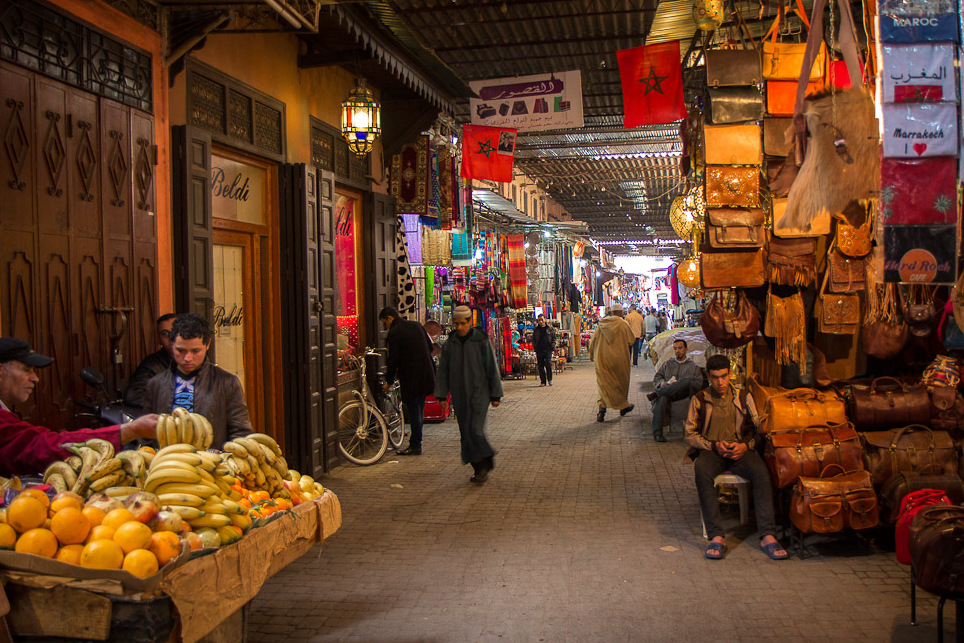
The souks of Marrakech: commerce as spatial experience
The souks of Marrakech are organised, loosely, by trade — the leather workers here, the spice merchants there, the carpet sellers occupying a different altitude of the social hierarchy — but the logic is not immediately apparent to anyone arriving from a culture where retail is organised by floor plan and signage. What the souks actually constitute is a spatial argument about the relationship between production and sale, between the craftsman and the customer, between the visible and the concealed. The workshops behind the stalls, where you can watch babouche slippers being assembled or copper trays being hammered into existence, are where the souks reveal their actual nature.

The pressure to buy is real and persistent, but it is also, if you can read it correctly, a form of conversation — one that rewards patience and a willingness to engage rather than deflect.
Il consiglio del team The souk des teinturiers — the dyers' quarter — is best visited in the morning when the freshly dyed wool hangs to dry in the alleys above you, and the vats of colour are at their most vivid.
13 Art and Museums · 0.4 km

Marrakech, un Paradiso per i fotografi: the medina as visual argument
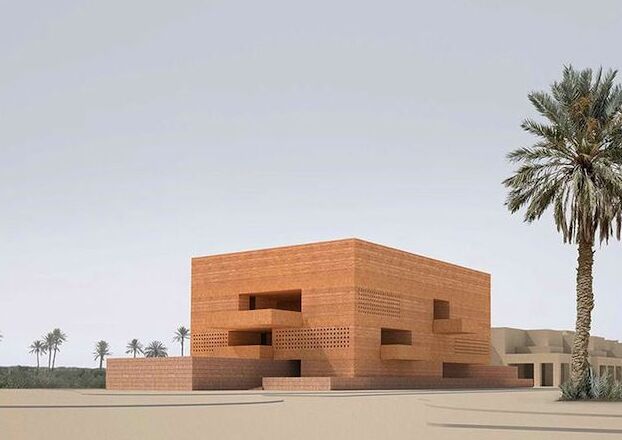
Marrakech, un Paradiso per i fotografi: the medina as visual argument
Marrakech has attracted painters and photographers since at least the nineteenth century, drawn by the quality of light — a Mediterranean intensity filtered through desert air — and by the visual density of the medina, where every alley offers a composition that seems almost pre-arranged. The city's relationship with visual art is not incidental: the tradition of Moroccan decorative arts, which subordinates representation to pattern and geometry, produces an environment that is itself a kind of continuous artwork. The museum referenced here, located within the medina, occupies a space that makes the argument about art and architecture simultaneously rather than sequentially.

For photographers specifically, Marrakech presents a challenge that its visual reputation obscures: the most interesting images are never the ones that confirm what you already expected to see.
Il consiglio del team The medina's narrowest alleys, where the light arrives in shafts rather than floods, offer the most interesting photographic conditions between 9am and 11am, before the sun climbs high enough to flatten everything.
Part four — Around and beyond
14 Parks and Gardens · 0.0 km

Secret World vs Google Trips: pianifica Marrakech nel 2026: the gap between the map and the city
Secret World vs Google Trips: pianifica Marrakech nel 2026: the gap between the map and the city
The experience of planning a day in Marrakech using digital tools and the experience of actually executing that plan in the medina are separated by a gap that no algorithm has yet fully bridged. The Madrasa Ben Youssef and the Jardin Majorelle are, in theory, connectable within a reasonable morning. In practice, the medina's spatial logic — which was designed for pedestrians, donkeys, and the gradual accumulation of commercial relationships, not for optimised tourist itineraries — tends to assert itself against any schedule.

This is not a failure of the city. It is, arguably, one of its most important features: a built environment that resists the kind of frictionless consumption that modern travel infrastructure increasingly promises. The resistance is where the interest lives.
Il consiglio del team Building a day around a single neighbourhood rather than a list of landmarks across the city produces a qualitatively different experience — and usually a more honest one.
15 Parks and Gardens · 0.0 km

Trip Planner AI a Marrakech 2026: recensione dei 3 migliori: the city that defeats efficiency
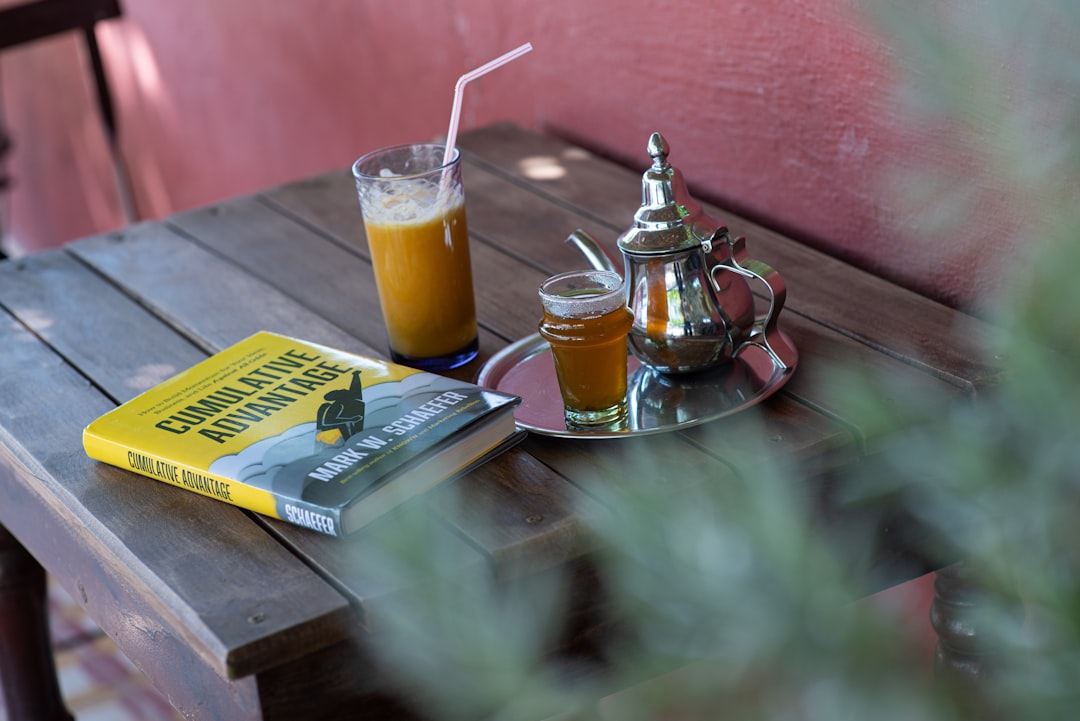
Trip Planner AI a Marrakech 2026: recensione dei 3 migliori: the city that defeats efficiency
There is something instructive about the fact that Marrakech — a city whose medina was designated a UNESCO World Heritage Site in part because of its intact historic urban fabric — consistently defeats the efficiency logic that contemporary travel planning tools are built around. The riad doors that open onto anonymous alley walls, the distances that maps understate, the souk routes that shift depending on the day and the season: all of these are features of a city that was built for a different relationship with time and movement than the one most visitors arrive with.

The three kilometres between the Jemaa el-Fna and the Jardin Majorelle can take twenty minutes by taxi or an hour and a half on foot through the medina. The hour and a half version is almost always the better choice, for reasons that are impossible to quantify in advance.
Il consiglio del team Any digital planning tool is useful for orientation and booking; it becomes a liability the moment you treat its suggested timings as realistic within the medina's actual geography.
Marrakech does not reward the traveller who arrives with a completed picture of it. The city is too old, too layered, and too indifferent to outside interpretation for that approach to work. What it rewards, consistently and generously, is the willingness to stand still in front of something and look at it longer than seems strictly necessary. The carved plaster panel that seems decorative at first glance turns out, on closer inspection, to contain a geometric logic of considerable complexity. The square that seems chaotic turns out to be organised by traditions that predate the tourist economy by several centuries. The garden that seems like a fashion designer's vanity project turns out to be the most important act of conservation in the city's recent history.

The places in this list are not secrets. They are simply waiting for the kind of attention that the postcard version of Marrakech tends to crowd out. That attention is, in the end, the only real currency that travel has ever traded in.
★ Guida tascabile

Porta questa guida con te.

Salvala offline, ottieni le indicazioni a piedi e scopri migliaia di luoghi come questi.

Salva offline Percorsi smart Tesori nascosti
App Store Google Play AppGallery

Tutti i luoghi sulla mappa

Dati cartografici © OpenStreetMap contributors.

Domande dei lettori

Le domande più frequenti su questa guida.

When is the best time of year to visit Marrakech if you want to experience the city without the peak-season crowds?

The shoulder seasons — March to April and October to November — offer the most manageable balance of weather and visitor numbers. July and August are extremely hot and, in the medina, can feel claustrophobic. December and January are cooler than most visitors expect and see fewer tourists, which changes the character of the souks and the square considerably.

Is it realistic to visit the Saadian Tombs, the Ben Youssef Madrasa, and the Bahia Palace in a single day?

Technically yes, but the experience of doing so tends to produce a kind of architectural blur rather than genuine engagement with any of the three. The Saadian Tombs and the Madrasa are close to each other in the medina; the Bahia Palace is a short walk south. A more honest itinerary would pair two of the three with slower time in between — a café, a wandering half-hour through the surrounding alleys — rather than treating them as items to be ticked off consecutively.

How should visitors approach the souks if they want to look without feeling obligated to buy?

The key is eye contact and tone rather than avoidance. A polite 'shukran, just looking' (thank you, just looking) in response to an invitation is almost universally understood and respected. The pressure to buy is real but rarely aggressive if you engage honestly. Avoiding the souks entirely because of anticipated pressure means missing the most spatially interesting part of the medina.

Is the Jardin Majorelle worth visiting given how well known it has become?

Yes, but with adjusted expectations. The garden's fame has made it genuinely crowded for most of the day, and the photographic clichés — the blue walls, the cacti, the yellow pots — are so thoroughly circulated that the actual experience can feel slightly anticlimactic. The Berber Museum inside the garden, and the quieter northern section of the grounds, are where the visit becomes more than a confirmation of images you have already seen. Early morning entry, when the garden first opens, is considerably calmer.

What is the most common mistake that well-prepared travellers make in Marrakech?

Underestimating the medina's spatial complexity and overestimating how much can be done in a day. The distance between landmarks looks manageable on any map; the reality of navigating narrow, unmarked alleys through the souk district consistently adds time that no itinerary accounts for. The travellers who leave Marrakech most satisfied are almost always those who planned fewer things and stayed longer in each place — a principle that sounds obvious and is, in practice, genuinely difficult to follow.

★ Leggila quando vuoi

Salvala sul tuo telefono.

Aggiungi questa guida ai preferiti, pianifica il viaggio offline, scopri luoghi come questi.

Preferiti Offline 60+ lingue
App Store Google Play AppGallery