Borghi&Tesori by Secret World — la più grande guida di viaggio al Mondo
En · Guida di viaggio
Guida di viaggio · Edizione 2026

15 Hidden Gems in Madrid — beyond the postcard

A city that reveals itself slowly, to those patient enough to look sideways

L
Una guida di
Lena Hofmann
Aggiornata il
3 maggio 2026
Lettura
12 minuti
Comprende
14 luoghi · mappa interattiva
15 Hidden Gems in Madrid — beyond the postcard
★ Guida d'Italia 2026

Pianifica con cura. Viaggia più a fondo.

1.3M+ luoghi curati nel mondo, mappe offline e itinerari intelligenti — tutto in un'app gratuita.

1.3M+ luoghi Mappe offline Itinerari AI Gratis
There is a particular kind of invisibility that only the well-known can achieve. Madrid is full of it. The city has been written about so thoroughly, photographed so exhaustively, and recommended so loudly that a strange thing has happened: even its genuinely surprising corners have been buried under the noise of consensus. People arrive with a list — the Prado, the Retiro, the tapas bars of La Latina — and they execute that list with admirable efficiency, returning home satisfied that they have 'done' Madrid. They have not done Madrid. They have grazed its surface and mistaken the graze for depth.

What makes a place feel hidden is rarely obscurity. It is context, or rather the absence of it. A stone slab in the middle of the city's most famous square goes unnoticed because everyone is walking past it toward something else. A garden tucked behind a palace wall stays quiet because there is no queue to validate its existence. A map in a naval museum changes how you understand the entire history of Western exploration, and yet the room is almost always empty.

I have been coming to Madrid for long enough to remember when certain neighbourhoods felt genuinely undiscovered, and I am honest enough to admit that 'undiscovered' is mostly a fantasy we tell ourselves. What I can offer instead is this: fifteen places and things that reward a second look, a slower pace, or simply the willingness to stop walking and actually see what is in front of you. Some are famous. Some are not. All of them, in my experience, tend to be overlooked — even by people who think they know the city well.
Part one — The essentials
1 Church · 0.8 km

Catedral de Santa María la Real de la Almudena: the cathedral that took a century to finish
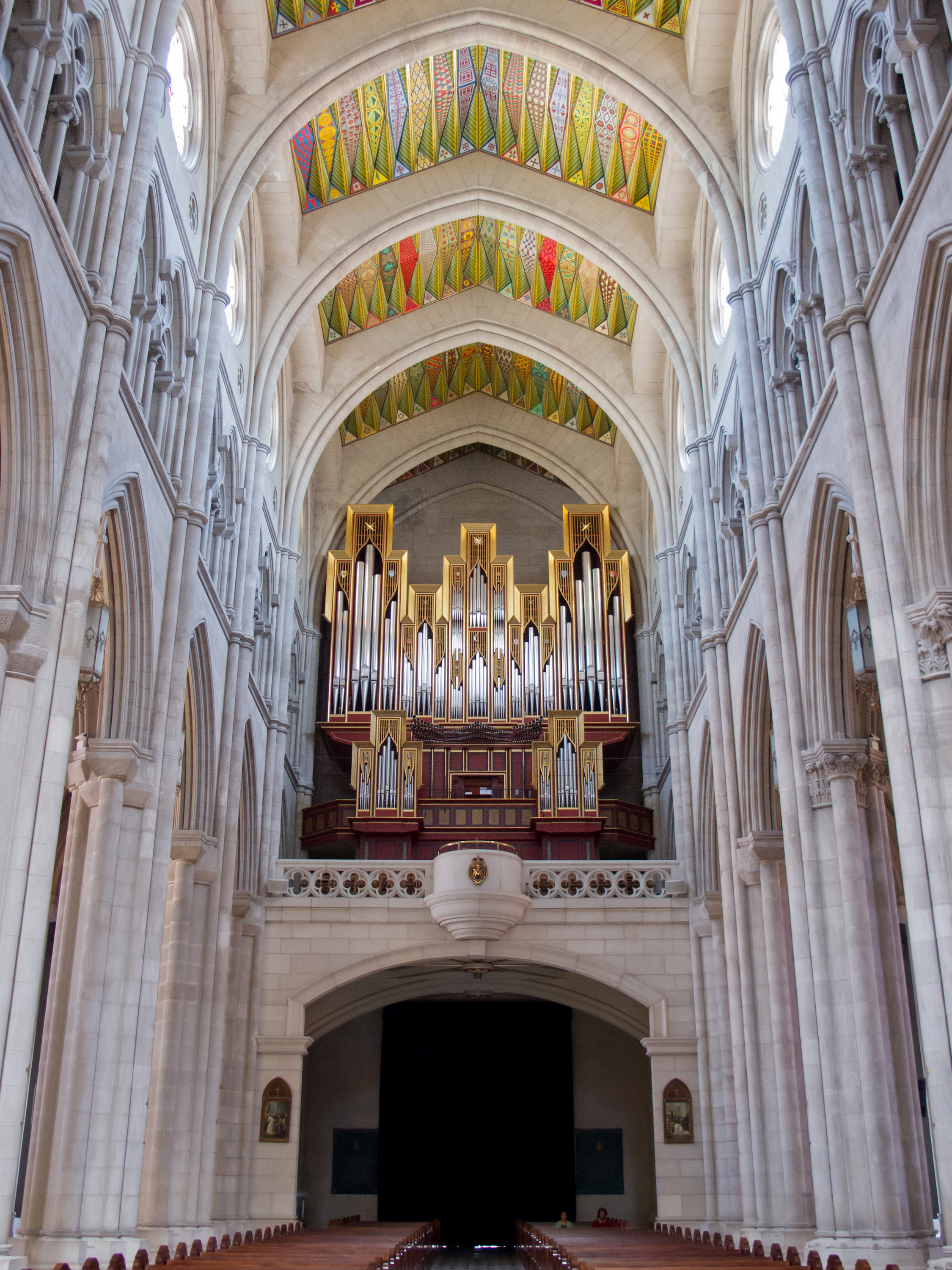
Catedral de Santa María la Real de la Almudena: the cathedral that took a century to finish
Most visitors give the Almudena a polite glance from the outside — it sits beside the Royal Palace, and the Royal Palace tends to win — then move on. This is understandable and also a small mistake. The Catedral de Santa María la Real de la Almudena is a genuinely strange building: construction began in 1883 and was not completed until 1993, which means it absorbed the aesthetic anxieties of several different eras and somehow survived them all. The result is an interior that shifts from neo-Gothic to neo-Romanesque without apparent embarrassment, lit by a set of contemporary stained-glass windows that are far more interesting than the guidebooks suggest.

What the building really offers, though, is a lesson in institutional patience. A century of construction, interrupted by civil war and economic collapse, and the city still finished it. There is something quietly defiant in that.
Il consiglio del team The crypt beneath the main church is free to enter and contains a small museum. It is almost always empty and far more atmospheric than the cathedral above it.
2 Palace · 1.4 km

Madrid's Palacio de Cristal (Crystal Palace): iron and glass in the middle of a park
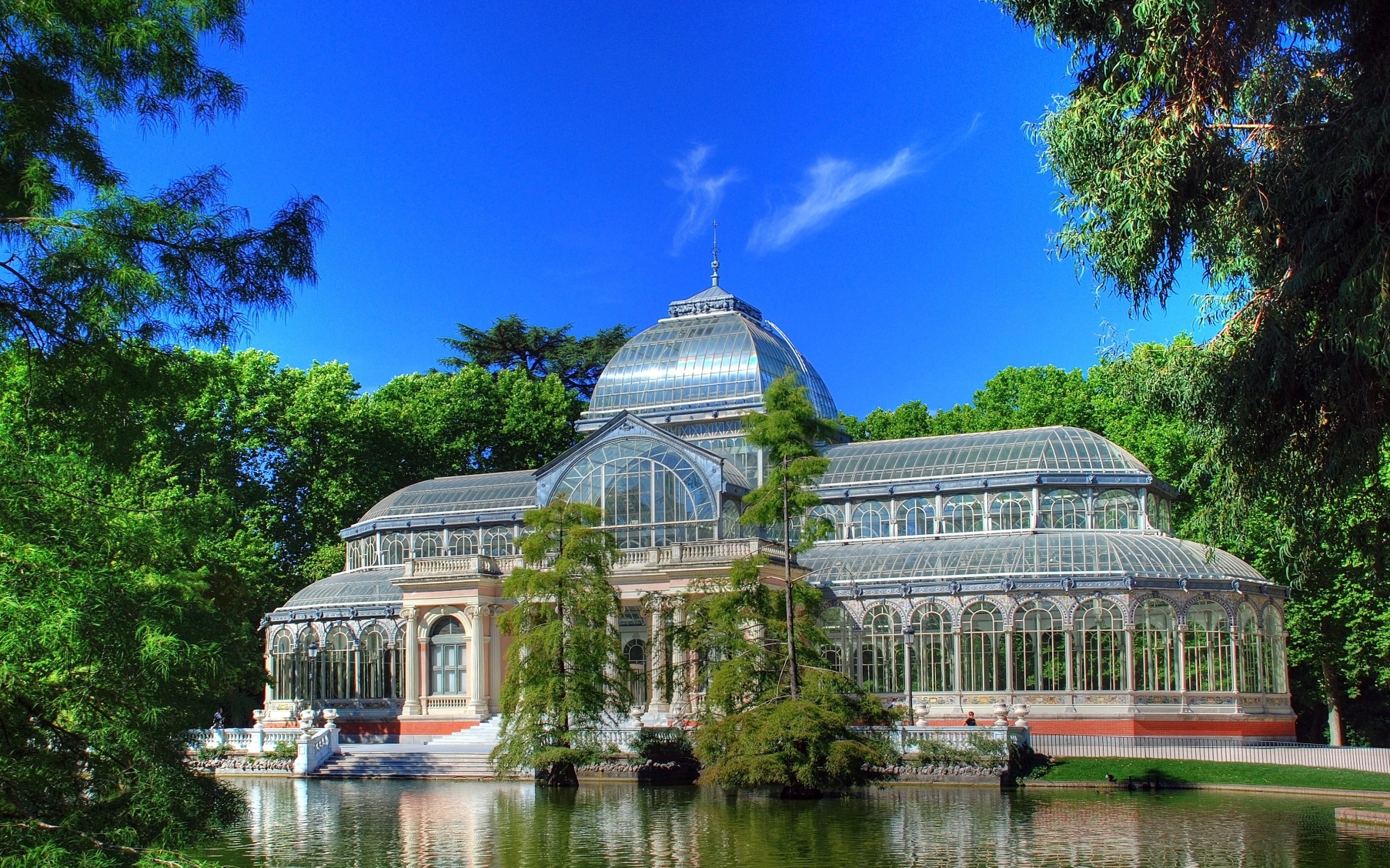
Madrid's Palacio de Cristal (Crystal Palace): iron and glass in the middle of a park
The Palacio de Cristal sits in the Retiro Park like a sentence that ends on a surprising word. Built in 1887 to house exotic plants from the Philippines during a colonial exhibition, it is now an exhibition space managed by the Reina Sofía museum, which means it is free to enter and, depending on the installation, either very crowded or very empty. The structure itself — cast iron, glass, and a tiled base — was designed by Ricardo Velázquez Bosco, and it ages with the particular grace of buildings that were never meant to be permanent but somehow outlasted everything around them.

The light inside changes hour by hour. In the morning, the glass throws pale rectangles across the floor. In the afternoon, the whole thing seems to glow from within. Whatever is on the walls is almost secondary.
Il consiglio del team Visit on a weekday morning in autumn or winter, when the park is quiet and the mist off the nearby lake makes the building look like something from a different century — which, technically, it is.
3 Historical Site · 1.3 km

Puerta de Alcalá: the gate that used to mean something
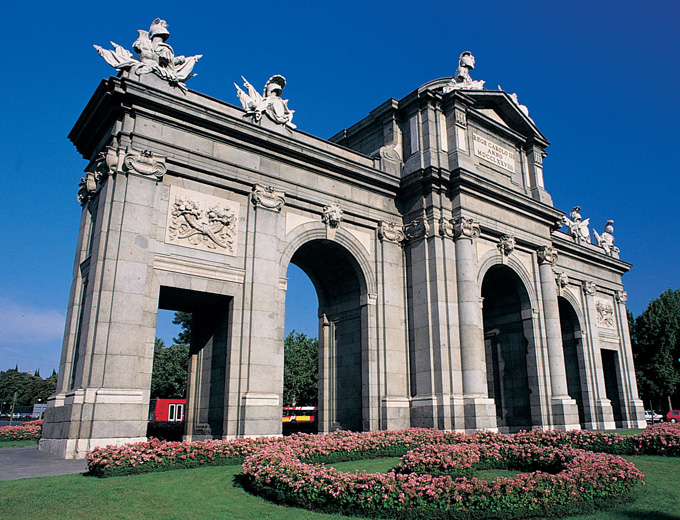
Puerta de Alcalá: the gate that used to mean something
The Puerta de Alcalá stands in the Plaza de la Independencia with the slightly forlorn dignity of a building that has outlived its original purpose. Commissioned by Charles III and completed in 1778, it was once one of five gates into the city — a genuine threshold, a place where travellers arrived and were assessed. Now it stands in the middle of a roundabout, surrounded by traffic, photographed by everyone and understood by almost nobody.

The name comes from the Arabic al-qal'a, meaning fortification or citadel, a linguistic ghost from the centuries when this part of the Iberian Peninsula was shaped by a different civilisation entirely. Stand close enough to read the carved inscriptions and you start to feel the weight of what the gate has witnessed: royal processions, revolutionary crowds, and now, mostly, taxis.
Il consiglio del team The gate looks entirely different depending on which side you approach from. The western face, which most tourists photograph, is the formal one; the eastern face is plainer and almost never photographed.
4 Garden · 0.7 km

Palacio del Príncipe de Anglona Garden - A hidden jewel in Madrid: a walled garden that earns its reputation for quiet
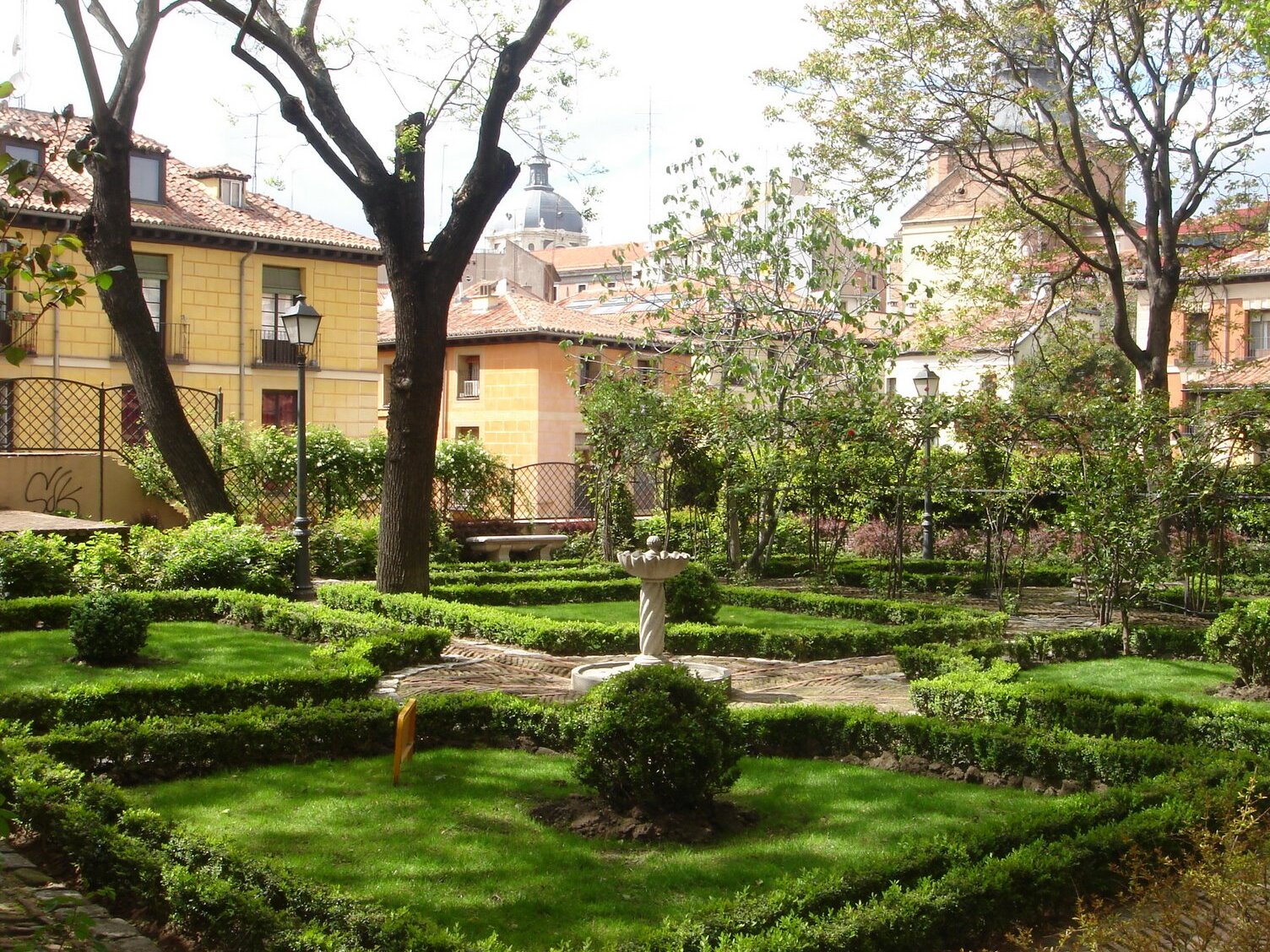
Palacio del Príncipe de Anglona Garden - A hidden jewel in Madrid: a walled garden that earns its reputation for quiet
Behind a wall on the Calle del Príncipe de Anglona, in the middle of one of Madrid's most historically dense neighbourhoods, there is a small formal garden that most people walk past without knowing it exists. The Palacio del Príncipe de Anglona Garden was commissioned by the Marquises of La Romana and designed by Javier de Winthuysen, a landscape architect who understood that a garden's real purpose is to make time feel different. The layout is geometric, the planting restrained, and the whole space has the quality of a room that has been carefully arranged and then left alone.

It is not large. You can walk its perimeter in a few minutes. But the scale is exactly right for what it offers: a pause, a recalibration, a moment of genuine stillness in a city that is constitutionally opposed to stillness.
Il consiglio del team The garden is accessed through a gate on the Calle del Príncipe de Anglona and has limited opening hours that vary by season. Check before you go, and go early if you want it to yourself.
Part two — A little deeper
5 Art & Museums · 0.0 km

Amazing city of Madrid: what it means to be a city that takes art seriously
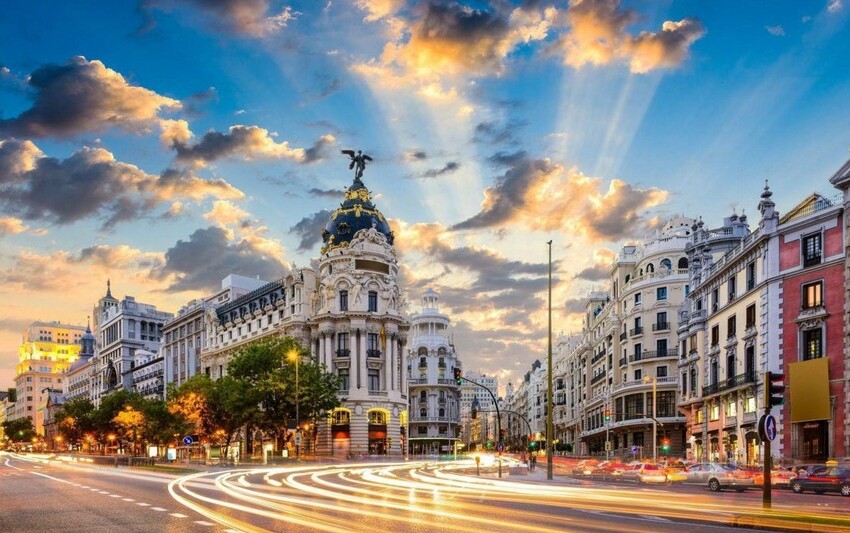
Amazing city of Madrid: what it means to be a city that takes art seriously
There is a version of Madrid that exists only in relation to its art — and it is not a diminished version. For centuries, the Spanish crown directed extraordinary resources toward painters, sculptors, and architects, and the accumulated result sits in a triangle of museums in the city's centre that has no real equivalent anywhere in Europe. The Prado, the Reina Sofía, the Thyssen-Bornemisza: three institutions within walking distance of each other, each world-class, each capable of absorbing an entire day without effort.

But the city's relationship with art is not confined to those three addresses. It runs through the architecture of its public buildings, the tile work in its metro stations, the murals on the walls of its older neighbourhoods. Madrid is a city that has always believed, with some justification, that beauty is a civic responsibility.
Il consiglio del team The Prado offers free entry in the final two hours before closing each day. The crowds thin considerably after 6pm, and the light in the main galleries at dusk is worth planning around.
6 Art & Museums · 1.0 km

Madrid: Juan de la Cosa Map: the earliest known map to show America, in a nearly empty room
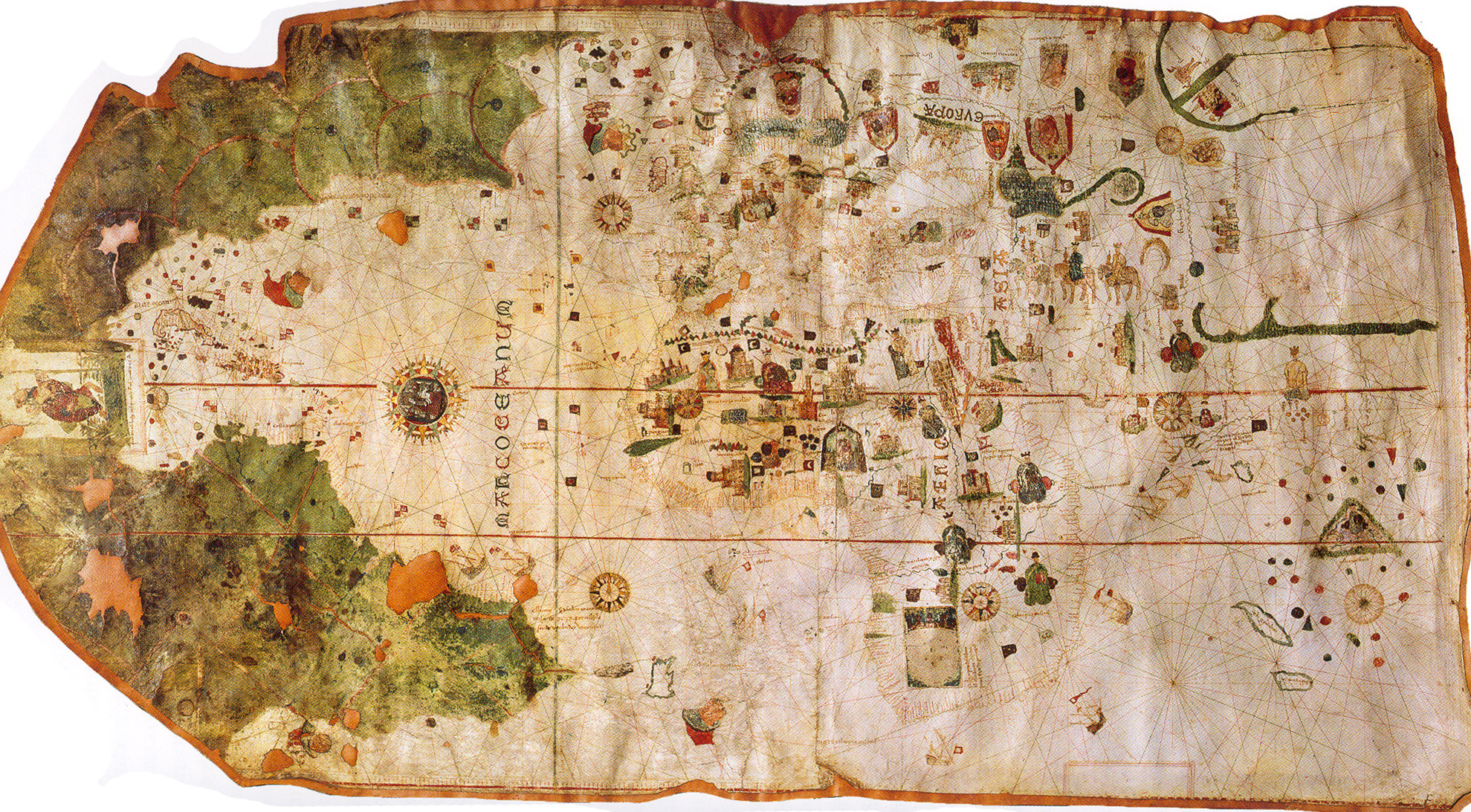
Madrid: Juan de la Cosa Map: the earliest known map to show America, in a nearly empty room
In the Museo Naval, not far from the Paseo del Prado, there is a map that should be far more famous than it is. The Juan de la Cosa Map, drawn around 1500, is the earliest known cartographic representation of the Americas — a document that captures the exact moment when European geographical understanding was being rewritten in real time. Juan de la Cosa was the captain of the Santa María on Columbus's first voyage, which gives the map a biographical weight that most historical documents cannot match.

The map was discovered by accident in a Paris bookshop in the nineteenth century, which is either a story about the fragility of historical memory or a story about luck, depending on your disposition. Either way, it ended up in Madrid, and it sits in a room that is, on most visits, nearly empty.
Il consiglio del team The Museo Naval is free to enter and consistently undervisited. Allow at least two hours — the collection extends well beyond the map and covers several centuries of Spanish maritime history with genuine depth.
7 Art & Museums · 1.1 km

Las Meninas - Le damigelle d'onore: Velázquez's most unsettling painting, and why it still works
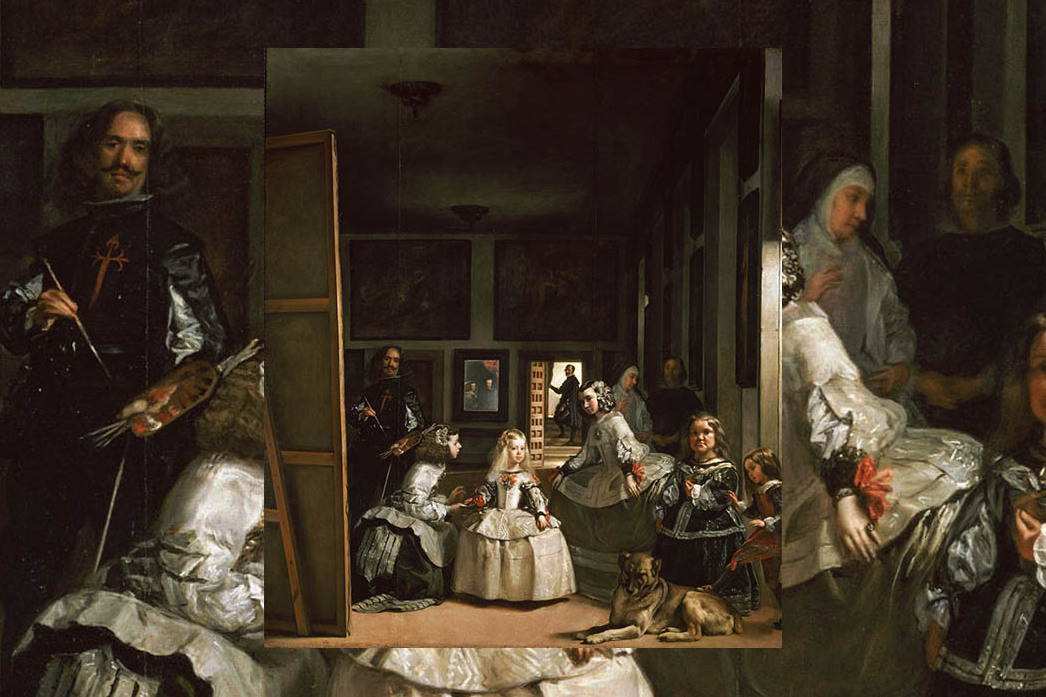
Las Meninas - Le damigelle d'onore: Velázquez's most unsettling painting, and why it still works
Las Meninas hangs in the Prado and is, by most measures, one of the most analysed paintings in Western art. Velázquez completed it around 1656 while serving as court painter under Philip IV, and it depicts — or appears to depict — the Infanta Margarita surrounded by her ladies-in-waiting, a dog, two dwarfs, and, in the background, a mirror reflecting the king and queen. The painter himself appears in the canvas, brush in hand, looking directly at the viewer.

The painting refuses to resolve into a simple subject. It is simultaneously a royal portrait, a meditation on the act of painting, and a philosophical puzzle about observation and representation that has occupied art historians for centuries. Standing in front of it, you understand why. It does not feel like a painting from the seventeenth century. It feels like a painting from no particular time at all.
Il consiglio del team Most visitors stand directly in front of the painting and then move on. Try standing at an angle, at the edge of the room, to see how the spatial relationships between the figures shift depending on your position.
8 Landmark · 0.1 km

KIlometro Zero, a stone that marks the center of Spain: the most walked-over monument in the country
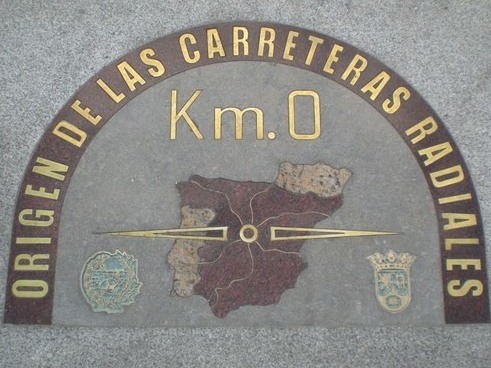
KIlometro Zero, a stone that marks the center of Spain: the most walked-over monument in the country
In the Puerta del Sol, Madrid's central square and one of the busiest pedestrian spaces in Spain, there is a small stone slab set into the pavement on the south side of the Casa de Correos. It marks Kilómetro Cero — the point from which all distances on Spain's national road network are measured. Every road in the country, in a sense, begins here.

Almost nobody stops to look at it. Thousands of people walk over it every day without noticing. It is, in that specific sense, the most walked-over monument in the country — a geographical fact reduced to a brass plate and a few words. But stand on it for a moment and consider what it means: you are, by official reckoning, at the centre of everything. It is a modest kind of power, but it is real.
Il consiglio del team The marker is on the south pavement of the Puerta del Sol, directly in front of the Casa de Correos building. Look for the small crowd of people photographing the ground — they have found it.
Part three — Off the obvious path
9 Square · 0.3 km

Square of Saint Anne in central Madrid: the literary square that functions as a living room
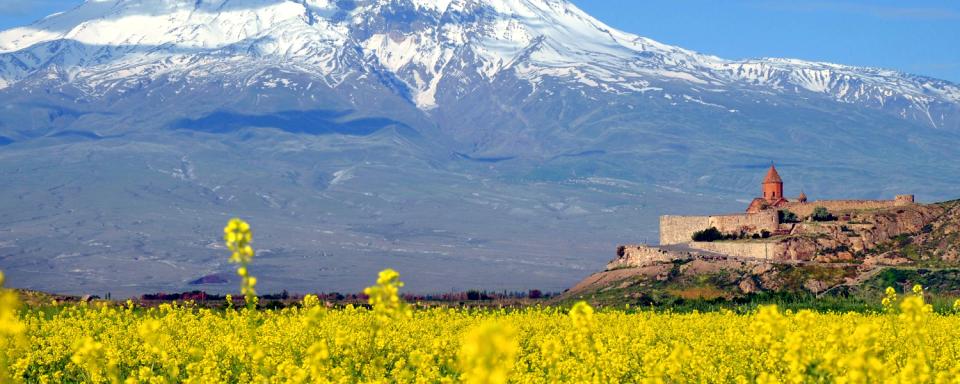
Square of Saint Anne in central Madrid: the literary square that functions as a living room
The Plaza de Santa Ana sits in the Barrio de las Letras — the neighbourhood named for the writers who lived and worked there in Spain's Golden Age — and it has the quality of a space that has been used continuously for centuries without ever quite losing its original character. Lope de Vega lived nearby. Cervantes died a few streets away. The square itself is lined with terraces, anchored by statues of Calderón de la Barca and Federico García Lorca, and functions, at most hours of the day, as an outdoor living room for the neighbourhood.

It is not undiscovered. But it rewards a longer stay than most visitors give it. Sit at one of the terraces in the early evening and watch the square move through its daily rhythms — the families, the after-work groups, the tourists who are also, briefly, part of the neighbourhood.
Il consiglio del team The streets immediately behind the square — particularly the Calle de las Huertas — contain some of Madrid's better independent bookshops. They are easy to miss and worth finding.
10 Curiosity · 0.5 km

La Plaza de la Luna in Madrid: the square where a parallel universe intersects with this one
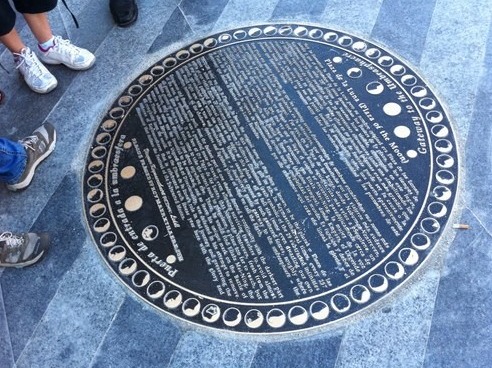
La Plaza de la Luna in Madrid: the square where a parallel universe intersects with this one
The Plaza de la Luna is a small square in the Malasaña neighbourhood, north of the Gran Vía, and it would be unremarkable — a pleasant enough space with a few bars and a central area where people sit — were it not for a plaque that marks it as a location in Kcymaerxthaere, a 'parallel universe that intersects with much of our linear Earth.' The plaque was created by geographer-at-large Eames Demetrios as part of an ongoing global art project that installs markers at real locations to describe events from an entirely invented but internally consistent alternative history.

It is, depending on your tolerance for conceptual art, either charming or baffling. Either way, it is the only place in Madrid where you can stand at the intersection of two realities simultaneously, and that is worth something.
Il consiglio del team The Kcymaerxthaere project has installed markers at dozens of locations worldwide. If the Plaza de la Luna marker appeals to you, the project's website maps all the others — some of them are in genuinely surprising places.
11 Restaurant · 0.5 km

Sobrino de Botín, the oldest restaurant in the World: where the Guinness record meets the roast lamb
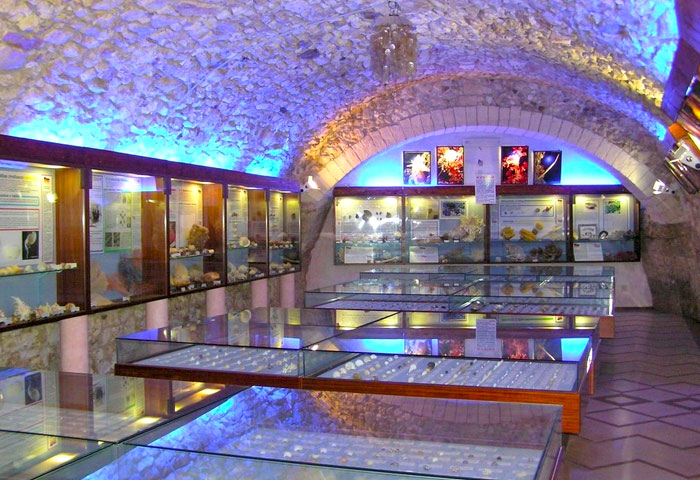
Sobrino de Botín, the oldest restaurant in the World: where the Guinness record meets the roast lamb
Founded in 1725, Sobrino de Botín holds the Guinness World Record for the oldest continuously operating restaurant in the world, which is either a reason to visit or a reason to be suspicious, depending on how you feel about restaurants that advertise their age. The truth is that the building — a seventeenth-century townhouse near the Plaza Mayor, with a wood-fired oven that has been burning for three centuries — is genuinely worth the attention, independent of the record.

Hemingway ate here, which the restaurant mentions with understandable frequency. Goya worked here as a waiter before his career took a different direction. The cochinillo — roast suckling pig from that ancient oven — is the thing to order, and it is very good. The dining rooms, spread across several floors, retain a quality of worn authenticity that is difficult to manufacture.
Il consiglio del team Book well in advance for dinner. If you cannot get a reservation, the bar on the ground floor serves food without one, and the oven-roasted dishes are available there too.
12 Food · 0.0 km

Migas, a legendary Spanish dish: breadcrumbs that became a philosophy
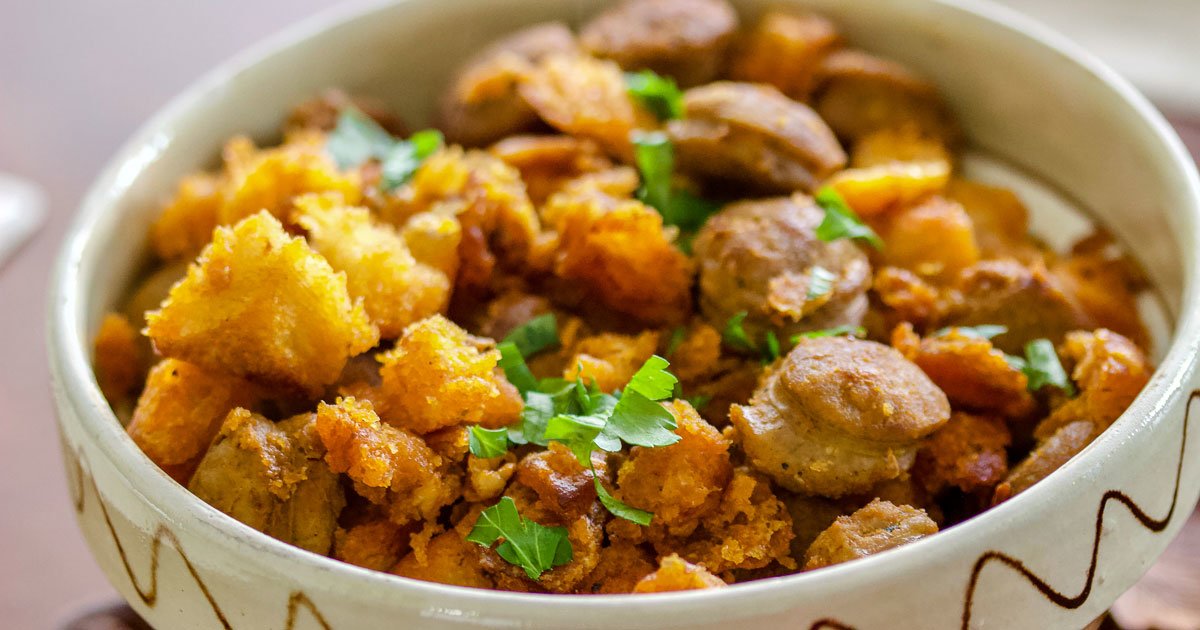
Migas, a legendary Spanish dish: breadcrumbs that became a philosophy
Migas is one of those dishes that reveals everything about a cuisine's origins and nothing about how good it can be until you actually eat it. At its most basic, it is dry breadcrumbs torn up and fried in olive oil with garlic, and often with chorizo, bacon, or peppers added depending on the region. It is peasant food in the most literal sense — a way of making something from almost nothing — and it has survived into the twenty-first century because it is, when made properly, deeply satisfying in the way that only simple things can be.

In Madrid and the surrounding region of Castile, migas appears on menus that range from neighbourhood bars to serious restaurants. It is the kind of dish that Spaniards tend to describe with a particular fondness, the way people talk about food that carries memory as well as flavour.
Il consiglio del team Look for migas on weekend lunch menus in the older neighbourhoods of La Latina and Lavapiés, where traditional Castilian cooking is still taken seriously. It is rarely on dinner menus.
Part four — Around and beyond
14 Travel Tool · 0.0 km

Best AI Trip Planner Madrid 2026: Scopri Secret World: the algorithm as travel companion, for better or worse
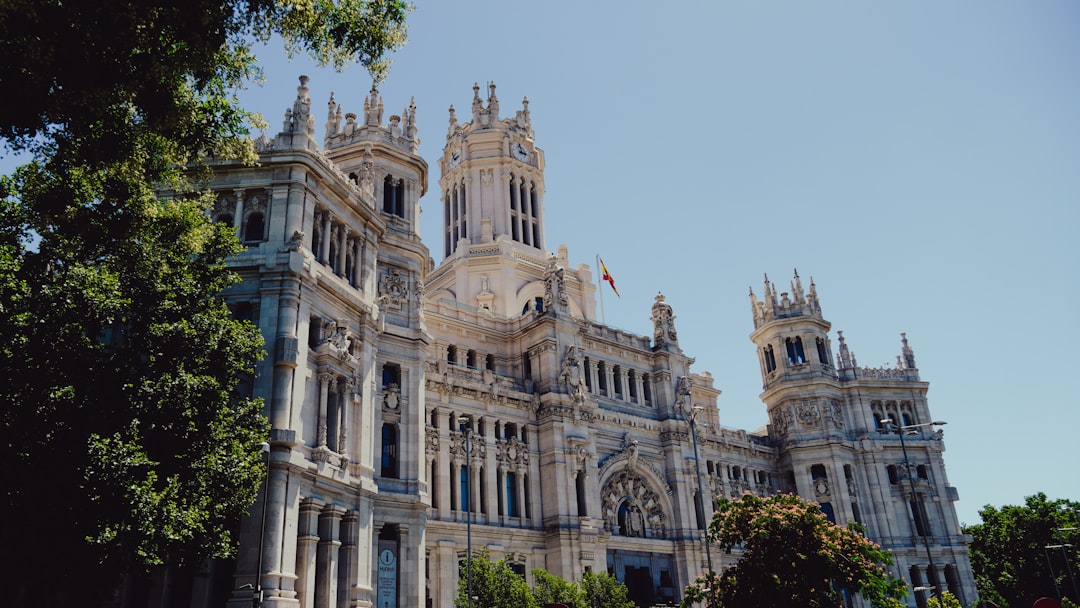
Best AI Trip Planner Madrid 2026: Scopri Secret World: the algorithm as travel companion, for better or worse
There is something mildly ironic about including a digital trip-planning tool in an article about looking past the obvious, but the irony is worth sitting with rather than avoiding. AI-assisted travel planning has become a genuine part of how people approach cities, and Madrid — with its density of history, its complex neighbourhood geography, and its habit of hiding interesting things in plain sight — is exactly the kind of place where a well-designed planning tool can help a curious traveller organise their curiosity into something coherent.

The question is always what the tool is optimising for. A planner that surfaces the same ten landmarks as every other list is not saving you time; it is just automating the ordinary. The more useful version is one that helps you build an itinerary around the kind of places described in articles like this one — specific, contextual, and honest about what you are actually going to find.
Il consiglio del team Use any AI planning tool as a starting framework, then interrogate its suggestions. If it recommends only the Prado, the Retiro, and the Bernabéu, it is not working hard enough. Ask it to go further.
15 Context · 6.5 km

Spagna | Barcellona, regina della movida: a reminder that Spain is not a single city
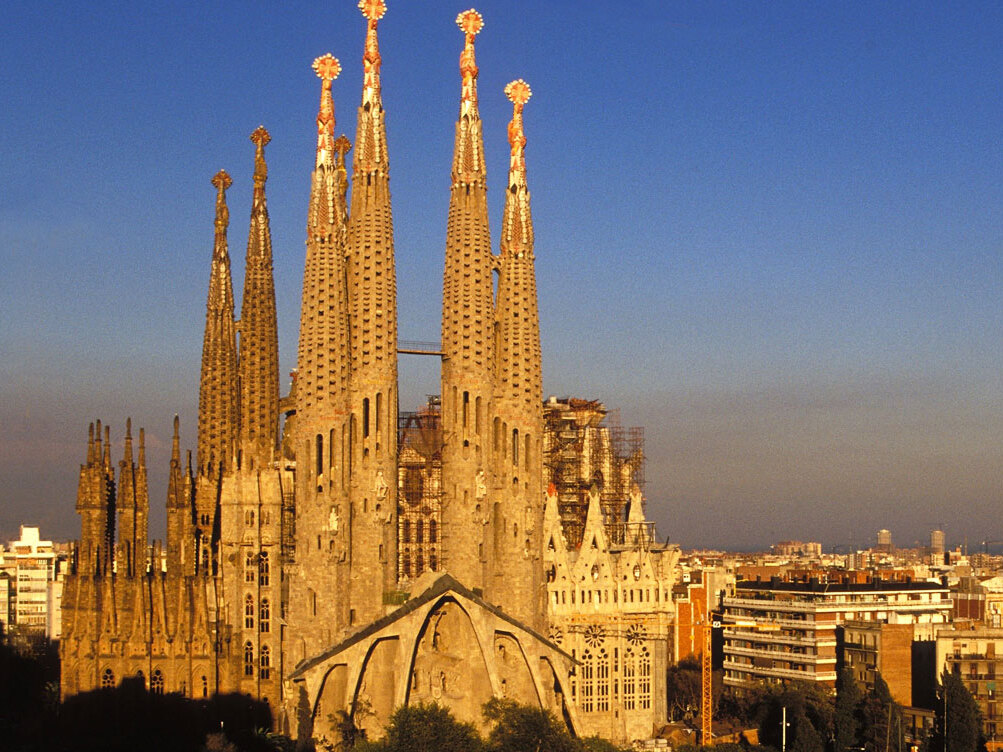
Spagna | Barcellona, regina della movida: a reminder that Spain is not a single city
This entry is, in a sense, an interruption — a reminder that Madrid exists within a country of considerable internal diversity, and that understanding the capital is partly a matter of understanding what it is not. Barcelona, officially known in both Catalan and Spanish, is a city of roughly 1.6 million people and the capital of Catalonia, a region with its own language, its own cultural identity, and its own complicated relationship with the Spanish state. It is not Madrid, and Madrid is not it.

The two cities have a rivalry that is real, often affectionate, and occasionally sharp. Madrileños tend to describe Barcelona as beautiful but cold; Catalans tend to describe Madrid as warm but chaotic. Both descriptions contain enough truth to be useful and enough generalisation to be unreliable. Knowing that the rivalry exists helps you understand both cities more honestly.
Il consiglio del team If your trip to Madrid sparks an interest in Spain more broadly, build in at least one journey outside the capital — to Toledo, to Segovia, or further afield — before drawing any conclusions about the country.
Madrid is a city that punishes impatience and rewards the willingness to slow down, double back, and look at things from an angle that was not suggested by anyone else. The fifteen places and things in this article are not a complete picture of the city — nothing is — but they share a quality that I find more useful than rarity or obscurity: they all ask something of the person encountering them. The Kilómetro Zero asks you to think about geography. Las Meninas asks you to think about seeing. The migas asks you to think about what a cuisine remembers when it is not trying to impress anyone.

The best version of Madrid is not the one on the postcard. It is the one you build slowly, visit by visit, through accumulated attention and the occasional willingness to stand still in a square and wait for the city to show you something it was not advertising. It usually does.
★ Guida tascabile

Porta questa guida con te.

Salvala offline, ottieni le indicazioni a piedi e scopri migliaia di luoghi come questi.

Salva offline Percorsi smart Tesori nascosti
App Store Google Play AppGallery

Tutti i luoghi sulla mappa

Dati cartografici © OpenStreetMap contributors.

Domande dei lettori

Le domande più frequenti su questa guida.

What is the best time of year to visit Madrid?

Spring (April to June) and autumn (September to November) offer the most comfortable temperatures for walking the city. Madrid in July and August is genuinely hot — often above 35°C — and while the city does not empty out the way some European capitals do, the heat can make extended outdoor exploration tiring. Winter is mild by northern European standards and the city's museum culture means there is plenty to do regardless of the weather.

How many days do you need to see Madrid properly?

Four days is a reasonable minimum for a first visit that goes beyond the obvious landmarks. Three days will cover the major museums and a few neighbourhoods; anything less and you are essentially doing a highlights reel. If you want to explore the kind of places described in this article — the naval museum, the walled garden, the Botín cellars — add at least one more day and resist the temptation to over-schedule.

Is Madrid easy to navigate without speaking Spanish?

Largely yes. The metro system is well-signed in Spanish with clear maps available in English, and most central restaurants and hotels have English-speaking staff. That said, making even a basic effort with Spanish — greetings, please, thank you — is noticed and appreciated in neighbourhood bars and markets. Madrid is not a city that requires you to speak Spanish, but it is one that rewards you for trying.

Which neighbourhoods are best for exploring on foot?

La Latina and Lavapiés in the south of the centre are historically dense and walkable, with the oldest streets and some of the best traditional bars. The Barrio de las Letras, around the Plaza de Santa Ana, is compact and literary. Malasaña and Chueca to the north of the Gran Vía have a different character — younger, more independent, with better bookshops and coffee. All four are manageable on foot from the city centre.

Are the major museums in Madrid free to enter?

The Prado, Reina Sofía, and Thyssen-Bornemisza all offer free or reduced-price entry during specific hours — typically the last one to two hours before closing on weekdays, and on certain days for EU residents. The Museo Naval is free. It is worth checking each museum's current policy before visiting, as hours and free-entry arrangements can change. Booking timed entry tickets in advance, even for free slots, is advisable for the Prado during peak season.

★ Leggila quando vuoi

Salvala sul tuo telefono.

Aggiungi questa guida ai preferiti, pianifica il viaggio offline, scopri luoghi come questi.

Preferiti Offline 60+ lingue
App Store Google Play AppGallery