15 Hidden Gems in Los Angeles — beyond the postcard
Where to find the corners that even informed travellers overlook
L
Una guida di
Lena Hofmann
Aggiornata il
20 settembre 2026
Lettura
12 minuti
Comprende
15 luoghi · mappa interattiva
★ Guida d'Italia 2026
Pianifica con cura. Viaggia più a fondo.
1.3M+ luoghi curati nel mondo, mappe offline e itinerari intelligenti — tutto in un'app gratuita.
1.3M+ luoghiMappe offlineItinerari AIGratis
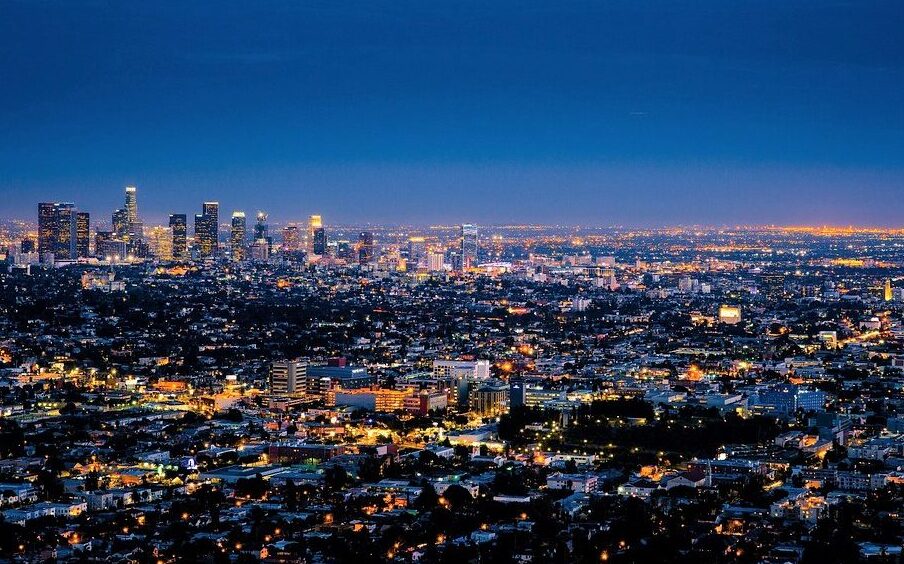
Los Angeles is a city that punishes the literal-minded. You arrive with a list—the sign, the bowl, the walk—and you find yourself standing in a queue, shoulder to shoulder with people holding selfie sticks, wondering if you've actually seen anything at all. The problem isn't that LA lacks substance. It's that the substance is distributed across 1,300 square kilometres of sprawl, hidden not behind velvet ropes but behind the sheer exhaustion of getting anywhere in a car. Most visitors never venture beyond a five-mile radius of Hollywood Boulevard. They miss the fact that LA is a city of quiet architectural revolutions, of bookstores that feel like cathedrals, of parks so large they contain entire ecosystems of solitude. What follows isn't a list of secrets in the sense of undiscovered places—many of these locations are known, even occasionally crowded. Rather, they are destinations that exist in the margins of the typical LA itinerary, places where you'll find yourself alone even when you're not, where the light falls differently, where the city reveals itself to those patient enough to look sideways. This is LA for people who've already been to LA, or who suspect that the postcard version is a fiction.
Step through the Bradbury Building's modest Romanesque exterior and you enter a space that feels less like a commercial structure and more like a Victorian fever dream. Completed in 1893, it remains downtown LA's most disorienting architectural surprise: a skeletal iron framework, exposed brick, and an atrium flooded with natural light that transforms the interior into something between a greenhouse and an Escher drawing. The building's narrow corridors and cast-iron railings create a sense of controlled vertigo. Most visitors to downtown never find it. Those who do often stand in the central courtyard in silence, looking up, trying to reconcile the fact that this exists at all.
Il consiglio del team
Visit mid-morning on a weekday when office workers are settled and the building feels like a living, breathing workplace rather than a museum. The light through the skylights is best then.
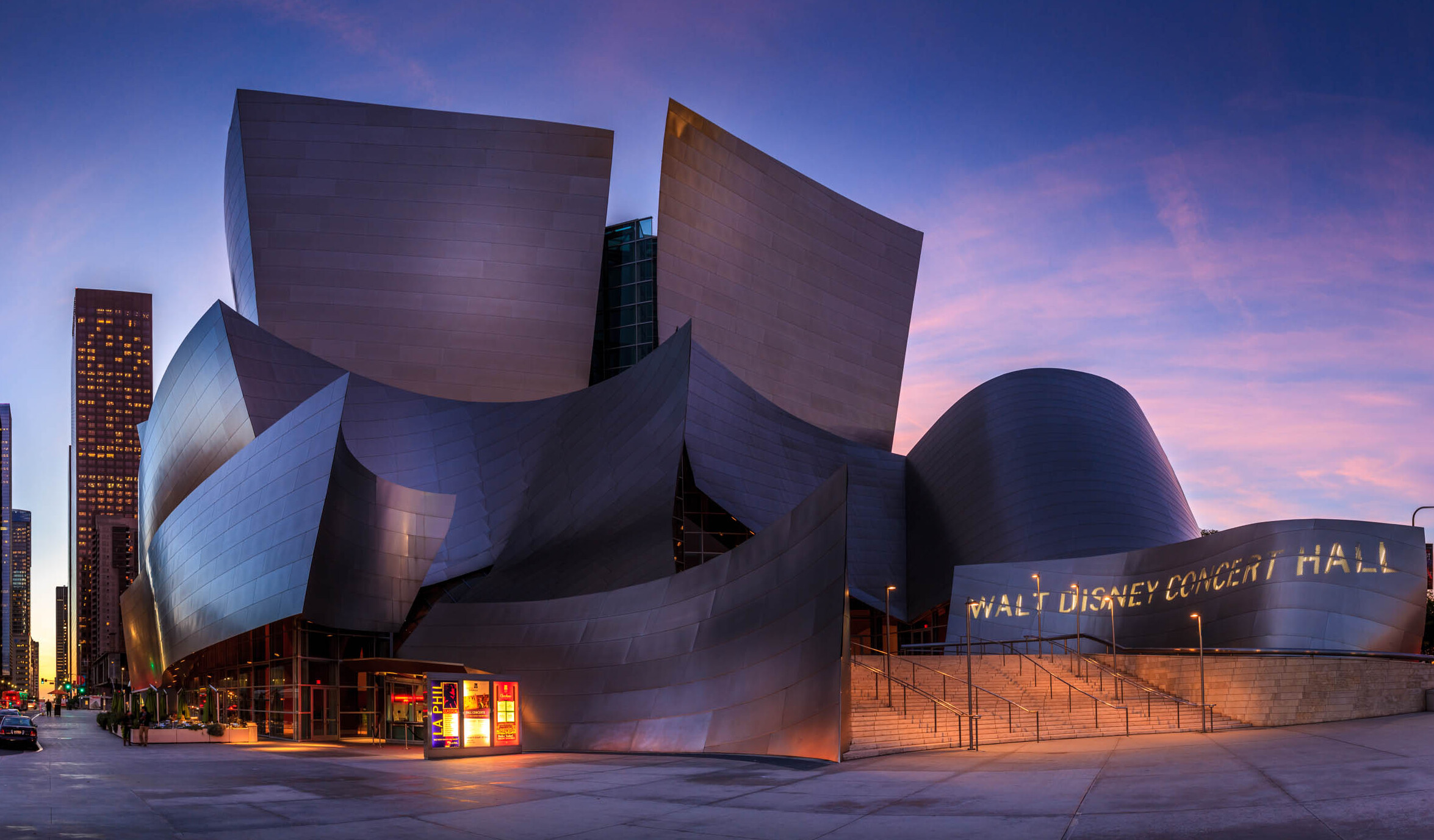
Frank Gehry's Walt Disney Concert Hall is a building that announces itself with the subtlety of a manifesto. The stainless steel exterior curves and folds like something caught mid-motion, and it sits in downtown LA with the confidence of architecture that has already won the argument about what modern should look like. But the real discovery isn't the exterior—it's the interior acoustic experience and the way the building's open platform stage eliminates the barrier between performer and audience. Even if you don't attend a performance, the public plaza and the building's lobby are free to explore. Watch how light moves through the space at different times of day. The building transforms.
Il consiglio del team
Arrive early for an evening performance and spend time in the plaza beforehand. The building's design encourages wandering, and you'll notice details—the way the metal catches light, the proportions of the stairs—that photographs miss entirely.
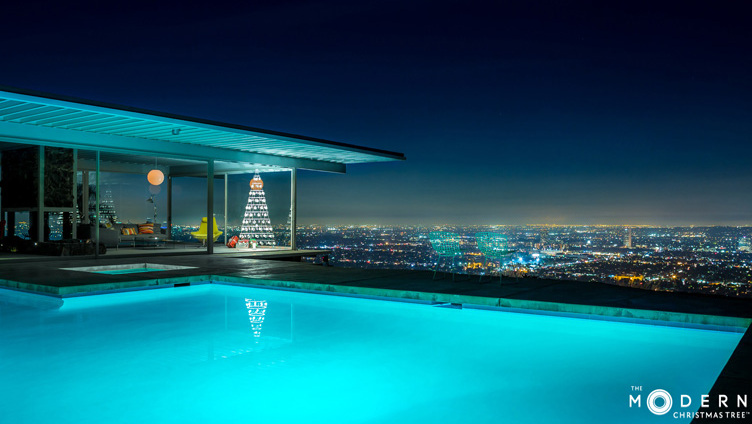
The Stahl House is a modernist manifesto built on a hillside, designed by architect Pierre Koenig in 1960 and suspended above Los Angeles like a ship launching into air. Floor-to-ceiling glass walls dissolve the boundary between interior and landscape, and the cantilevered structure seems to defy gravity with the confidence of an era that believed in progress without qualification. Photographed endlessly in the 1960s, it remains largely unknown to visitors who stick to the usual Hollywood routes. The house is now a museum, and visiting it requires advance booking—which itself is a filter that keeps crowds manageable. Standing on the terrace, looking out at the city sprawling below, you understand why architects became obsessed with this vision of living.
Il consiglio del team
Book a docent-led tour rather than self-guided; the architects' intentions are best understood through the stories of how the house was designed and lived in. Arrive at sunset for the most dramatic light.
Yayoi Kusama's Infinity Mirrored Room is a 45-second experience that people wait hours to enter. You step into a small chamber lined entirely with mirrors and LEDs, and the effect is immediate: you become infinite, suspended in a pulsating field of light that extends in all directions simultaneously. It's disorienting, meditative, and slightly nauseating in the best possible way. The wait is real—hours, often—but the room itself operates as a kind of accidental commentary on desire and delayed gratification. Those who make it inside emerge blinking, slightly changed. It's become a pilgrimage site for a certain type of traveller, which makes it both popular and strangely isolated. You're alone in the infinity, even when you're waiting with two hundred other people.
Il consiglio del team
Check the museum's website the night before for first-entry times and arrive 30 minutes early. The wait time fluctuates wildly; morning hours are generally shorter than afternoons.
The Last Bookstore occupies 22,000 square feet of downtown LA, making it California's largest used and new book and record store. But the scale isn't what matters. What matters is the atmosphere: softly lit corridors that feel less like retail and more like an archive of human thought, with books organized in ways that encourage serendipity rather than efficiency. There's a tunnel of vintage books, a staircase lined with literature, and a sense that every corner holds a discovery. It's a place where people spend hours and emerge surprised by what they've found. The bookstore functions as a genuine third space in a city where such spaces are increasingly rare—somewhere between a library, a museum, and a refuge.
Il consiglio del team
Go on a weekday morning before the crowds arrive. The staff are knowledgeable and willing to talk about the collection; ask them about sections you'd never think to look for.
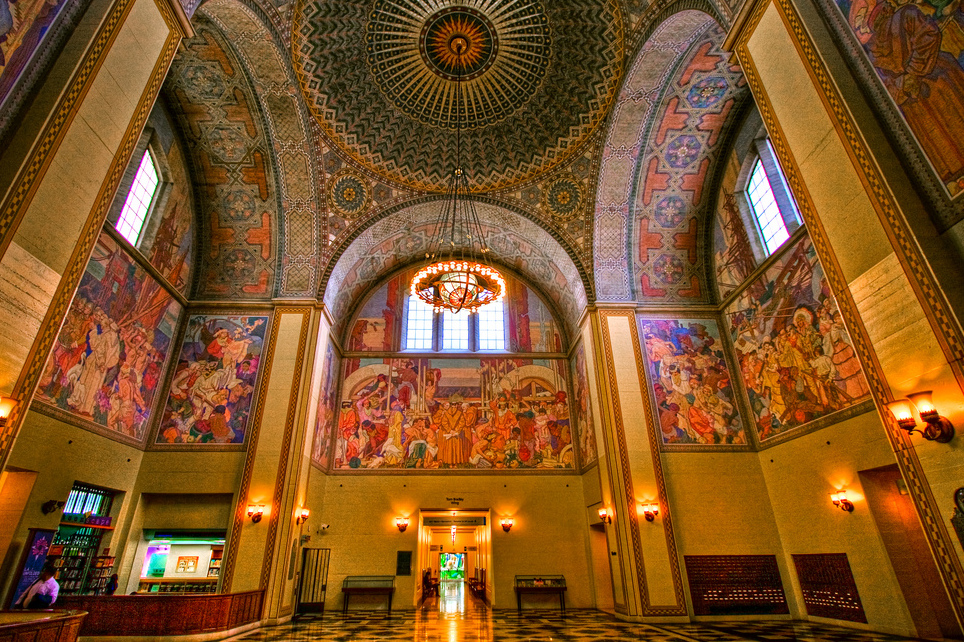
The Los Angeles Public Library is the sixth-largest public library system in the United States, serving 51 of the 88 incorporated cities in LA County. The main branch downtown is a building worth visiting for its architecture alone—a postmodern structure completed in 1926 with a distinctive pyramid-shaped roof and ornamental details that feel slightly out of place in downtown's glass-and-steel landscape. But beyond the building itself is the library's function as a genuine public institution, a place where you can sit for hours without purchasing anything, surrounded by people from every corner of LA's demographic landscape. It's democratic in a way that most of the city isn't. The reading rooms are quiet. The light is good.
Il consiglio del team
Visit the top floor for the city views and the sense of being above the street-level chaos. The library's events calendar includes author talks and exhibitions that rarely make it into mainstream tourism guides.
Los Angeles is one of the most difficult cities in the world to plan, not because it lacks attractions but because it has too many and they're scattered across more than 1,300 square kilometres of urban territory. The city's parks and gardens are distributed in a way that requires intention to discover. They exist as pockets of green in a landscape dominated by asphalt and development, and they function less as tourist destinations and more as places where Angelenos actually live their lives. Finding them requires the kind of curiosity that most visitors don't have time for—but those who do discover that LA contains entire ecosystems of solitude. The parks aren't famous. They're functional. They're where the city breathes.
Il consiglio del team
Use a local parks app or ask at your accommodation for recommendations based on your location. Many of the best green spaces are neighbourhood parks with no signage from major streets.
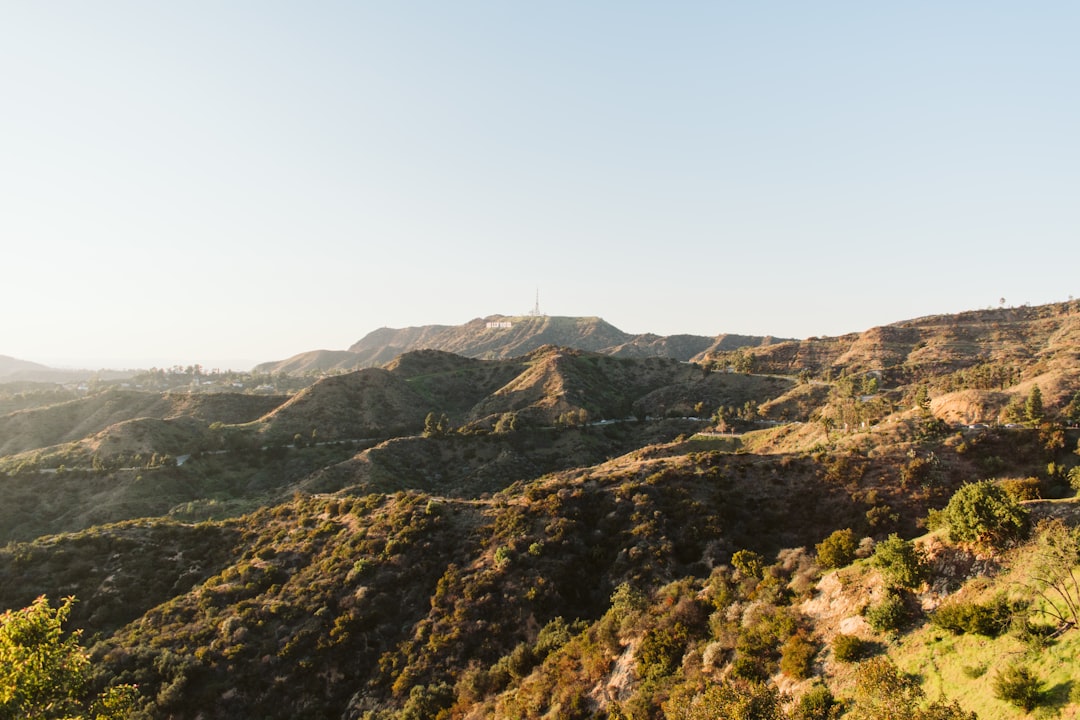
Griffith Park covers 4,310 acres and is one of the largest urban parks in North America, a fact that most visitors to LA never quite register. The park was donated to the city in 1896, and it contains hiking trails, viewpoints, and spaces of genuine wilderness within sight of downtown. Most visitors know it as the location of the Hollywood Sign and the Griffith Observatory, but the park's true character emerges when you venture beyond these landmarks. There are trails that climb into chaparral, ridgelines that offer perspectives on the entire city, and quiet corners where you can sit for an hour without seeing another person. It's a park that rewards exploration and punishes the literal-minded.
Il consiglio del team
Park at one of the smaller trailheads rather than the Observatory. The trails that begin at the park's eastern edge are less crowded and offer equally compelling views with a fraction of the foot traffic.
Los Angeles exists in the collective imagination as a place where the sun always shines, and in fact, the city averages temperatures between 17 and 28 degrees Celsius year-round, with consistent daylight. But what matters isn't the meteorological fact—it's the way the light falls on the city, the way it transforms architecture and landscape at different times of day. The quality of light in LA is distinctive, a function of the city's latitude, its proximity to the ocean, and the way smog and haze interact with the sun. Photographers have been obsessed with this light for decades. What's less discussed is how the light shapes the experience of moving through the city. The same street looks entirely different at 7 AM and 7 PM. The light is the real landscape.
Il consiglio del team
Plan major activities around the light rather than around convenience. Early morning in downtown, late afternoon in the hills—the city reveals different characters depending on the angle of the sun.
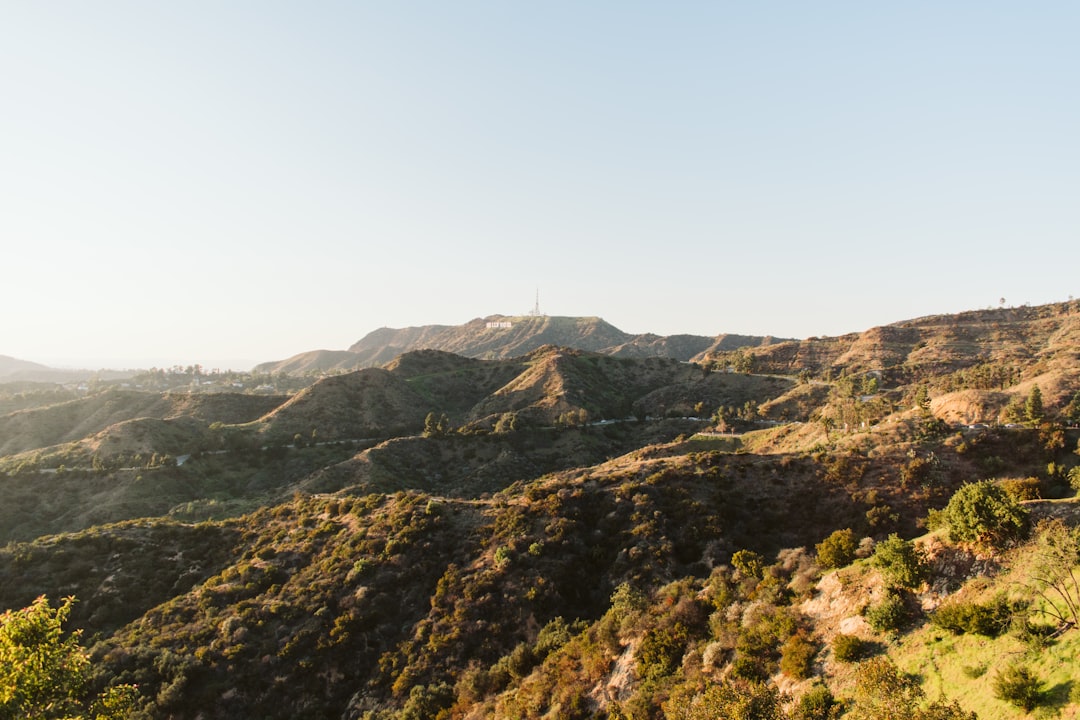
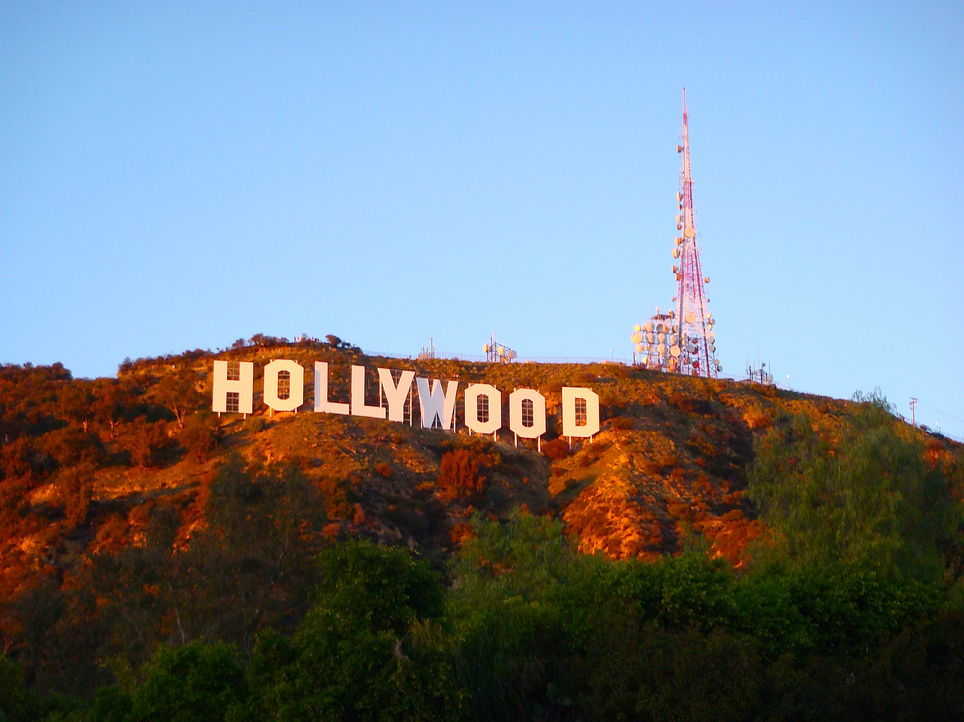
The Hollywood Sign sits on Mount Lee in the Hollywood Hills, overlooking the city from a distance that makes it simultaneously iconic and strangely inaccessible. Originally erected in 1923 as 'Hollywoodland,' it has become perhaps the most recognizable symbol of the city, visible from dozens of vantage points but requiring specific effort to approach directly. The sign functions as a kind of visual anchor for the entire metropolis, a reminder that LA is fundamentally a place built on imagination and commerce. The views from the various hiking trails that approach it are secondary to the experience of seeking it out. The sign itself is less interesting than the landscape around it and the fact that you've made the effort to reach it.
Il consiglio del team
Hike to the sign early in the morning or late in the afternoon to avoid both heat and crowds. The view of the city from the hills is better during these hours anyway.
The Hollywood Bowl is an amphitheater in Hollywood, and it's the largest natural amphitheater in the world. The venue's distinctive band shell—originally a set of concentric arches from 1929 through 2003, now replaced with a more modern structure—has hosted everything from classical orchestras to rock concerts to film screenings with live orchestral accompaniment. The Bowl functions as LA's most democratic performance venue, a place where you can bring a picnic, sit under the stars, and experience live music at a scale that feels both intimate and epic. The acoustic engineering is sophisticated, but what matters more is the experience of being outside, under the Hollywood Hills, with thousands of other people who've made the same choice to be there. It's genuinely communal in a city that often feels atomized.
Il consiglio del team
Arrive early and explore the grounds before the performance. Bring a picnic and wine (allowed). Sit in the upper sections if you're on a budget; the sound quality is excellent throughout, and the view of the city below is better from the back.
Musso & Frank Grill opened in 1919 and remains a steak-and-cocktails establishment that feels less like a restaurant and more like a time machine. The red booths, the wood paneling, the waiters in their formal uniforms—all of it is genuine, not a recreation. The restaurant was favored by Charlie Chaplin and Raymond Chandler, and it carries the weight of that history without performing it. The food is competent, the cocktails are strong, and the experience is of being inside a moment that has somehow persisted. Most tourists never find it, or if they do, they're disappointed by the crowds and the prices. But for those who understand what they're looking at, it's a place where LA's actual history lives, not the sanitized version.
Il consiglio del team
Go for lunch rather than dinner. The restaurant is less crowded, the light is better, and you'll get a sense of the place as it actually functions rather than as a tourist attraction.
The Warner Bros Studios occupy 110 acres in Burbank and represent one of the major film, television, and media production facilities in America. Founded in 1903, the studio was responsible for producing countless films, television shows, and cultural artifacts that shaped the twentieth century. A tour of the lot is a tour through the infrastructure of American entertainment, past soundstages where actual production is happening, through backlots that contain recreated streetscapes, and into the archives of a century of media production. It's not a theme park—it's a working studio that occasionally allows visitors. The experience is of glimpsing behind the curtain, seeing the mechanics of how images are made. For people interested in film and media, it's a pilgrimage site. For others, it's a fascinating look at how labour and capital organize themselves.
Il consiglio del team
Book a tour in advance. The studio offers different tour options; the longer tours that include soundstages are worth the extra cost. Go on a weekday if possible—weekends are crowded with tour groups.
The Hollywood Walk of Fame is a sidewalk embedded with brass stars celebrating entertainment industry figures, and it's worth experiencing at night, at sunset, when the light transforms the street into something slightly more interesting than it is during the day. The Walk itself is essentially a commercial strip, lined with shops and restaurants that cater to tourists. But the experience of walking it at the right time of day, when the light is golden and the crowds are thinning, is different. The stars themselves are curious artifacts—some honour figures you've heard of, others commemorate people entirely forgotten. There's something poignant about that, about the permanence of brass and the impermanence of fame. It's not a destination so much as a moment, a particular alignment of light and time.
Il consiglio del team
Walk the Walk at sunset, moving from east to west so the light is in front of you. Stop for a drink at one of the side streets rather than on the Walk itself; you'll get a better sense of the neighbourhood and better prices.
Los Angeles is a city that rewards planning but punishes rigid itineraries. A perfect weekend in LA isn't about hitting checkpoints; it's about understanding the city's actual rhythms and moving with them. The city offers a unique mix of culture, entertainment, and natural beauty, but these elements are distributed across a vast geography. The secret to experiencing LA isn't finding hidden things—it's understanding how the city actually functions, how locals move through it, where they spend their time when they're not working. This requires flexibility, a willingness to abandon plans based on light and traffic and mood, and a genuine curiosity about the neighbourhoods beyond the tourist corridor. The perfect weekend is different for every visitor, but it always involves some combination of solitude, good food, unexpected architecture, and the recognition that LA is far stranger and more interesting than its reputation suggests.
Il consiglio del team
Spend at least one full day in a single neighbourhood—Los Feliz, Silver Lake, or Long Beach, depending on your interests. Moving slowly through a place reveals more than rushing between landmarks.
Los Angeles resists the kind of tourism that treats cities as collections of checkpoints. The city is too large, too dispersed, too genuinely weird to be summarized in a weekend or captured in a photograph. What these fifteen destinations share is not that they're unknown—many are quite famous—but that they exist outside the gravitational pull of the obvious, in the margins where actual experience happens. They reward the kind of traveller who is willing to get lost, to spend an afternoon in a bookstore, to sit in a park without purpose, to watch light move across a building's facade. Los Angeles contains multitudes, and most of them are invisible from the Hollywood Walk of Fame. The city reveals itself slowly, to people patient enough to look sideways, to notice what's been there all along. That's not a hidden gem—it's just the actual city, waiting for someone curious enough to pay attention.
★ Guida tascabile
Porta questa guida con te.
Salvala offline, ottieni le indicazioni a piedi e scopri migliaia di luoghi come questi.
What's the best time of year to visit Los Angeles?
LA's weather is consistently mild year-round, but late autumn (October–November) and early spring (March–April) offer the most pleasant temperatures and the least crowded conditions. Summer is hot and can be hazy. Winter is mild but occasionally rainy. The light quality is best during the golden hour (early morning and late afternoon) regardless of season.
How do I get around LA without a car?
LA's public transit system (Metro) connects major destinations, but coverage is limited compared to other major cities. Consider renting a car for flexibility, or use ride-sharing services for specific trips. Walking is viable in certain neighbourhoods (downtown, Silver Lake, Los Feliz) but not across the city. Plan your itinerary geographically to minimize travel time.
Which neighbourhoods should I explore beyond Hollywood?
Los Feliz and Silver Lake offer independent restaurants, bookstores, and galleries. Downtown LA has museums, architecture, and cultural institutions. Long Beach provides a coastal alternative. Pasadena offers a different pace and excellent museums. Each neighbourhood has distinct character; spending a full day in one reveals more than rushing between multiple areas.
Do I need to book tickets in advance for museums and attractions?
Yes. Popular attractions like Yayoi Kusama's Infinity Mirrored Room require advance booking and can have wait times of several hours. Warner Bros Studios tours should be booked ahead. The Stahl House requires advance reservation. Check websites the day before your visit to understand current wait times and availability.
What's the dining scene like outside of tourist areas?
LA has exceptional restaurants across all price ranges, concentrated in neighbourhoods like Los Feliz, Silver Lake, and downtown. Avoid eating directly on the Hollywood Walk of Fame; venture one or two blocks away for better quality and value. Ask locals or check neighbourhood-focused food publications for current recommendations. The food scene changes rapidly.
★ Leggila quando vuoi
Salvala sul tuo telefono.
Aggiungi questa guida ai preferiti, pianifica il viaggio offline, scopri luoghi come questi.