Borghi&Tesori by Secret World — la più grande guida di viaggio al Mondo
En · Guida di viaggio
Guida di viaggio · Edizione 2026

15 Hidden Gems in Chicago — beyond the postcard

A city that rewards the curious, punishes the complacent, and keeps its best secrets in plain sight

L
Una guida di
Lena Hofmann
Aggiornata il
27 maggio 2026
Lettura
13 minuti
Comprende
15 luoghi · mappa interattiva
15 Hidden Gems in Chicago — beyond the postcard
★ Guida d'Italia 2026

Pianifica con cura. Viaggia più a fondo.

1.3M+ luoghi curati nel mondo, mappe offline e itinerari intelligenti — tutto in un'app gratuita.

1.3M+ luoghi Mappe offline Itinerari AI Gratis
There is a particular kind of invisibility that only familiarity can produce. Chicago is one of the most written-about cities in the world — its architecture dissected in a thousand graduate theses, its lakefront photographed from every conceivable angle, its pizza the subject of arguments that have outlasted friendships. And yet, standing on the corner of Michigan and Randolph on a Tuesday morning in October, watching the city go about its business with the quiet confidence of a place that has nothing left to prove, I kept noticing things that the guidebooks mentioned but somehow failed to describe. Not secret speakeasies. Not unmarked doors. Just places that exist in a strange middle state: technically famous, practically overlooked.

The problem with Chicago is not that it hides things. It is that it shows you everything at once, and the sheer volume of the offering causes a kind of selective blindness. The Bean gets photographed ten thousand times a day, and three metres away, a fountain is having a conversation with the crowd that almost nobody stops to hear. A painting that changed the entire trajectory of modern art hangs in a room you can walk to in fifteen minutes from the hotel, and most visitors spend that time queuing for an elevator instead.

What follows is not a list of places nobody knows. It is a list of places that deserve more than a glance, a checkbox, or a photograph taken while already thinking about the next stop. Some are iconic. Some are genuinely peripheral. All of them, I would argue, are underexperienced — which is a different thing entirely from being undiscovered. Chicago has earned the right to be taken seriously on its own terms. These fifteen places are a start.
Part one — The essentials
1 Panorama · 0.5 km

Lo Skydeck Chicago offre vedute straordinarie della città: a room with a very long drop

Lo Skydeck Chicago offre vedute straordinarie della città: a room with a very long drop
Everyone knows the Willis Tower exists. Far fewer people think carefully about what it means to stand 412 metres above a city built on a swamp, on glass that extends beyond the building's edge, looking down at a grid so rational it feels like a diagram of ambition itself. The Skydeck's glass-floored Ledge boxes are the obvious draw, but the real experience is subtler: the way Lake Michigan disappears into the horizon without a shoreline in sight, and the way the city's street plan — that relentless, democratic grid — suddenly reveals its logic from above.

The Willis Tower was the world's tallest building for nearly a quarter century after its completion in 1973, a fact that Chicagoans mention with the casual pride of people who have long since moved past needing to prove it.
Il consiglio del team Visit on a weekday morning before 10am and the observation deck is genuinely quiet. On overcast days when the clouds sit below the Ledge, the effect is disorienting in the best possible way.
2 Bridge · 0.9 km

The BP Pedestrian Bridge in Chicago: Gehry's footnote that deserves a chapter
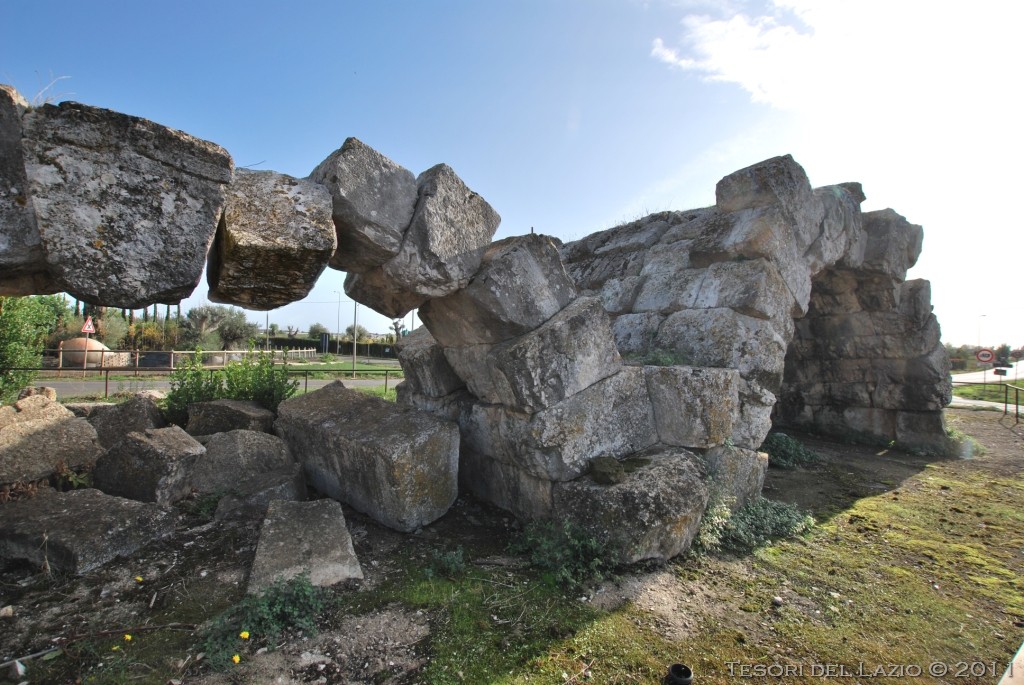
The BP Pedestrian Bridge in Chicago: Gehry's footnote that deserves a chapter
Frank Gehry's Millennium Park bandshell attracts the cameras. The bridge connecting it to Daley Bicentennial Plaza, completed in 2004, is the first bridge Gehry ever designed, and it is quietly extraordinary in a way that its more famous neighbour is not. The sinuous stainless-steel cladding ripples like a sentence that hasn't quite finished, and the structure's gentle S-curve means you never see both ends at once — a rare quality in a city that generally prefers transparency.

What makes the BP Bridge genuinely interesting to the architecturally literate visitor is how it solves a mundane problem — crossing Columbus Drive — with a formal vocabulary that refuses to be mundane. It is infrastructure as argument, and the argument is that even a footbridge deserves to be thought about.
Il consiglio del team Walk it at dusk when the steel catches the last horizontal light and the park below empties out. Most people use it as a thoroughfare and never stop to look at the handrails, which are worth examining closely.
3 Public Art · 0.7 km

Cloud Gate is British artist Anish Kapoor's opera: the sculpture that makes you the subject
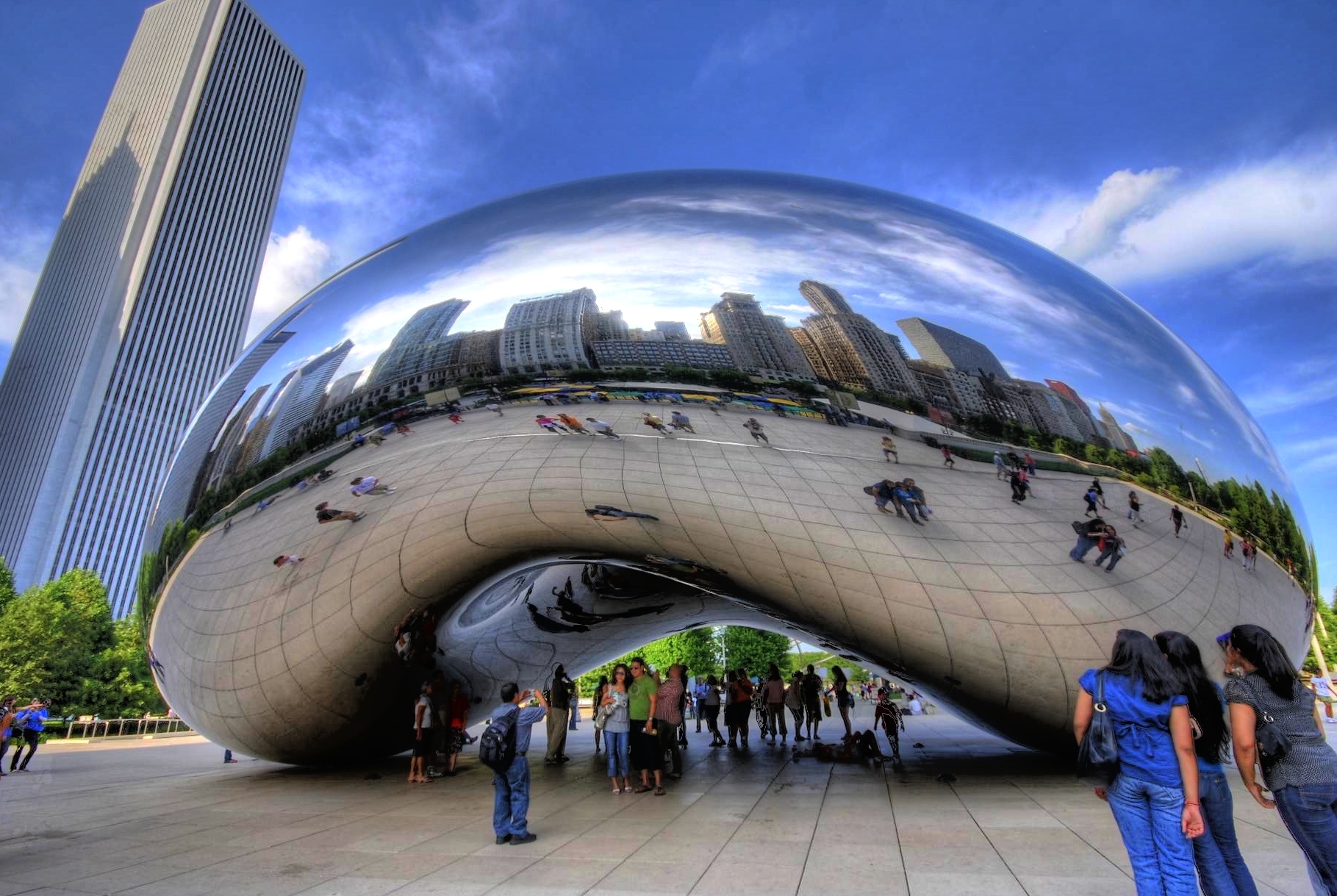
Cloud Gate is British artist Anish Kapoor's opera: the sculpture that makes you the subject
Anish Kapoor's 110-ton elliptical mirror in Millennium Park is, by any measure, one of the most photographed public artworks in the world. It is also, paradoxically, one of the least looked at. Most visitors photograph themselves in its reflection and move on, which means they have experienced the work as a novelty rather than as a proposition. The proposition is this: the city, the sky, and you are all equally distorted, equally curved, equally subject to the same optical logic. There is no privileged vantage point.

Completed in 2006, Cloud Gate — nicknamed 'the Bean' by a public that prefers the affectionate to the philosophical — sits on a granite plaza that amplifies its reflections. Walk beneath the arch at its centre, look directly up, and the city folds in on itself in a way that is genuinely difficult to describe to someone who hasn't done it.
Il consiglio del team The underside of the arch, called the omphalos, produces a convex reflection that collapses the entire skyline into a single image. Go early morning when the plaza is empty and you can stand there without anyone walking through your frame.
4 Museum · 0.5 km

ART INSTITUTE OF CHICAGO: the museum that keeps outrunning its own reputation
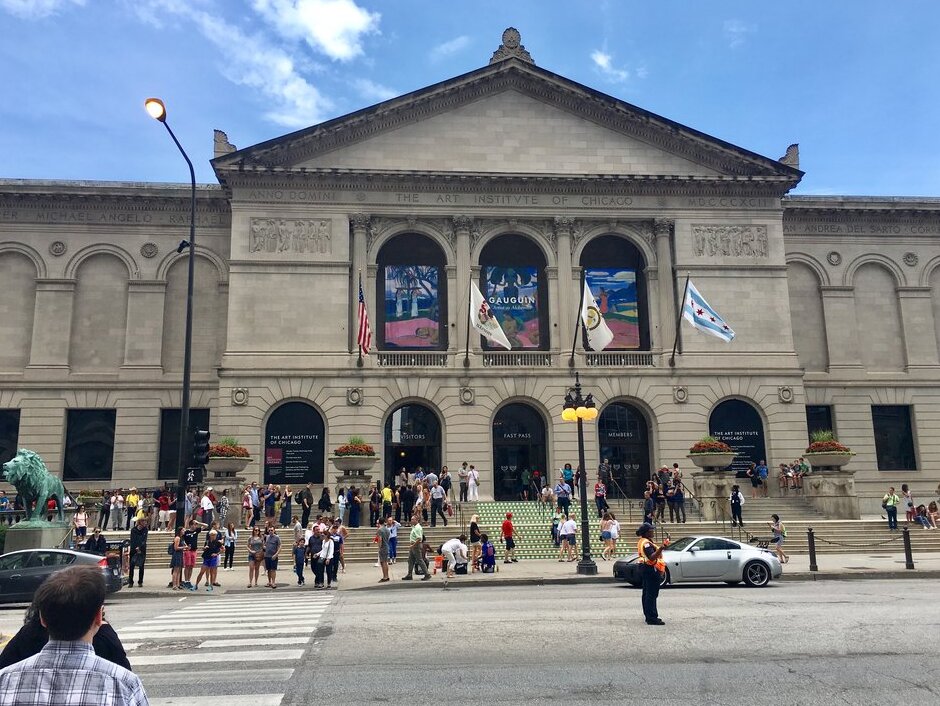
ART INSTITUTE OF CHICAGO: the museum that keeps outrunning its own reputation
Founded in 1879, the Art Institute is one of the oldest and largest art museums in the United States, and it suffers from a peculiar problem: it is so good that people stop being surprised by it. The Impressionist and Post-Impressionist collection — the largest outside of France — gets the crowds and the coffee-table books. But the museum's holdings in medieval armour, Japanese prints, and architectural fragments from demolished Chicago buildings reward the visitor who arrives without a checklist.

The Modern Wing, designed by Renzo Piano and opened in 2009, is connected to Millennium Park by a bridge that feels like an extension of the building's logic — light, calibrated, slightly too good for its surroundings. The Griffin Court at its heart is one of the finest interior spaces in the city, and almost nobody sits in it long enough to notice.
Il consiglio del team The Thorne Miniature Rooms on the lower level — 68 scale models of European and American interiors spanning five centuries — are visited by almost nobody and are among the strangest and most absorbing things in any American museum.
Part two — A little deeper
5 Fine Art · 0.5 km

Wood: American Gothic: the painting that became a punchline and survived it
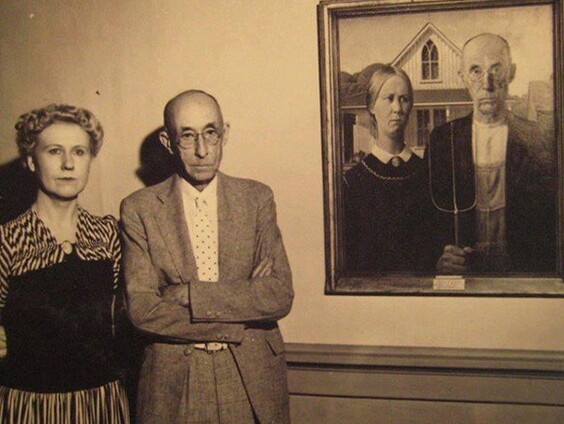
Wood: American Gothic: the painting that became a punchline and survived it
Grant Wood painted American Gothic in 1930 after noticing a small Gothic Revival house in Eldon, Iowa, and deciding to imagine the kind of people who might live there. He used his sister and his dentist as models, not a married couple — a fact that has done nothing to stop a century of interpretations projecting marital tension onto the image. The painting now hangs in the Art Institute of Chicago, and it is smaller than almost everyone expects, which is its first lesson in managing assumptions.

The work's power has survived its own ubiquity, which is a rare achievement. Standing in front of it, stripped of the parody versions and the ironic reprintings, there is something genuinely unsettling about the man's pitchfork and the woman's averted gaze that no reproduction quite captures.
Il consiglio del team The painting is displayed without the protective glass that covers many works of comparable value. The brushwork on the figures' clothing is visible to the naked eye and changes the experience entirely.
6 Fine Art · 0.5 km

Una Domenica Pomeriggio sull'Isola della Grande-Jatte: the painting that invented a technique
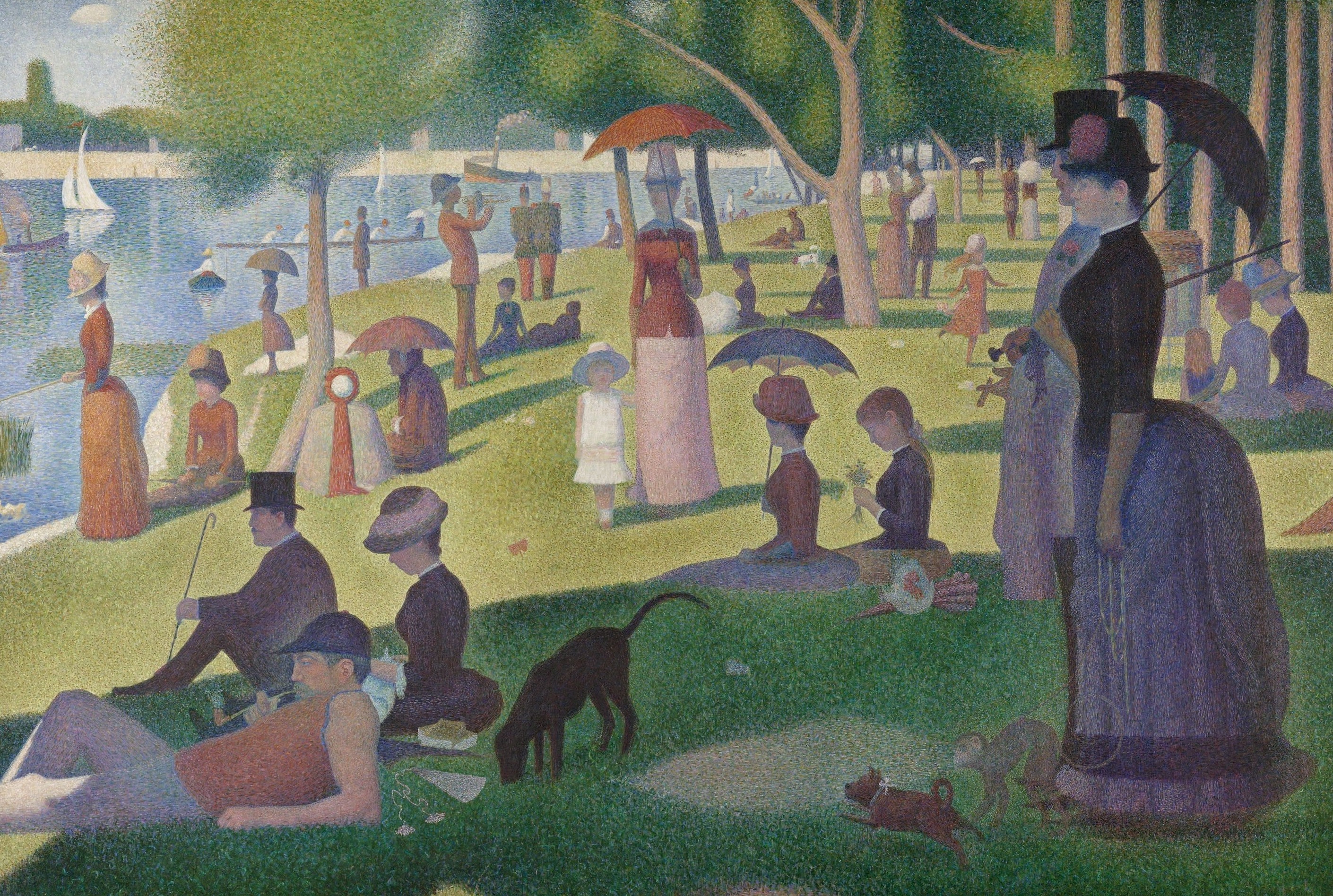
Una Domenica Pomeriggio sull'Isola della Grande-Jatte: the painting that invented a technique
George Seurat's A Sunday on La Grande Jatte — 1884 is one of those works that art history has processed so thoroughly that it can be difficult to see it fresh. It is the founding document of Pointillism, the painting that influenced Monet, Van Gogh, and Signac, and it is approximately three metres wide, which means photographs have always lied to you about its scale. Housed in the Art Institute of Chicago, it is the kind of painting that rewards the visitor who steps back, then steps very close, then steps back again.

The Grande Jatte is an island in the Seine near Paris, and Seurat spent two years on this canvas, making dozens of preparatory studies. The figures are deliberately static, almost frozen — a Sunday afternoon rendered as a kind of sociological inventory of Parisian leisure.
Il consiglio del team Stand approximately four metres back and let your eyes relax rather than focus. The dots resolve into atmosphere rather than pattern, and the painting's peculiar stillness becomes something close to melancholy.
7 Fountain · 0.6 km

Crown Fountain in Chicago: the city's most democratic artwork
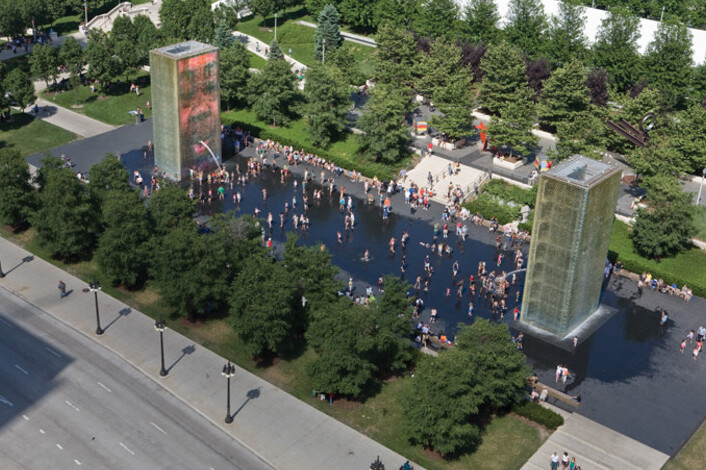
Crown Fountain in Chicago: the city's most democratic artwork
Catalan artist Jaume Plensa designed the Crown Fountain as an interactive video sculpture for Millennium Park, and it remains one of the more genuinely interesting pieces of public art in any American city. Two 15-metre glass brick towers face each other across a shallow reflecting pool, each displaying the faces of Chicago residents — over a thousand of them recorded over several years — in slow, meditative close-up. Periodically, the face on screen puckers its lips and a spout of water jets from the tower's face into the pool below.

Children wade in the pool regardless of the season's permission. Adults stand at the edges and watch faces they don't know with an attention they rarely give to strangers. The work is about the city watching itself, and it is more moving than it has any right to be.
Il consiglio del team The fountain is deactivated in winter but the towers continue to display faces, which changes the experience from playful to contemplative. The winter version is, arguably, the better one.
8 Park · 0.9 km

Grant Park is Chicago's front yard: 300 acres that the city keeps tripping over
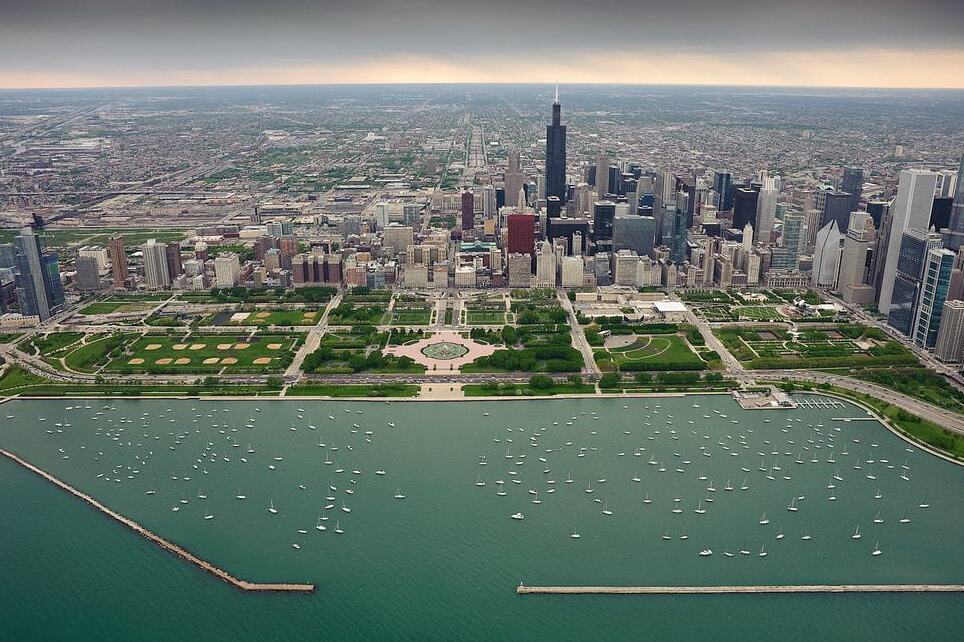
Grant Park is Chicago's front yard: 300 acres that the city keeps tripping over
The phrase 'front yard' undersells Grant Park and oversells it simultaneously. At over 300 acres running between the city's architectural wall and the lakefront, it is too large to be a yard and too civic to be a park in the conventional sense. It is the space where the city negotiates with itself — where free concerts happen alongside formal gardens, where the marathon finishes and the farmers' market sets up on Saturday mornings, where the skyline is best seen from the east looking back.

The park's existence is partly the result of a legal battle: a department store magnate named Aaron Montgomery Ward sued the city four times in the late 19th and early 20th centuries to keep the lakefront free of buildings, and won. The park is, in a very real sense, the product of one man's stubbornness.
Il consiglio del team The south end of the park, near the Peristyle and the formal rose gardens, sees a fraction of the foot traffic of the Millennium Park end. On a weekday afternoon it is possible to have a considerable stretch of it almost entirely to yourself.
Part three — Off the obvious path
9 Park · 5.1 km

Chicago | Lincoln Park: the neighbourhood that forgot it was a cemetery
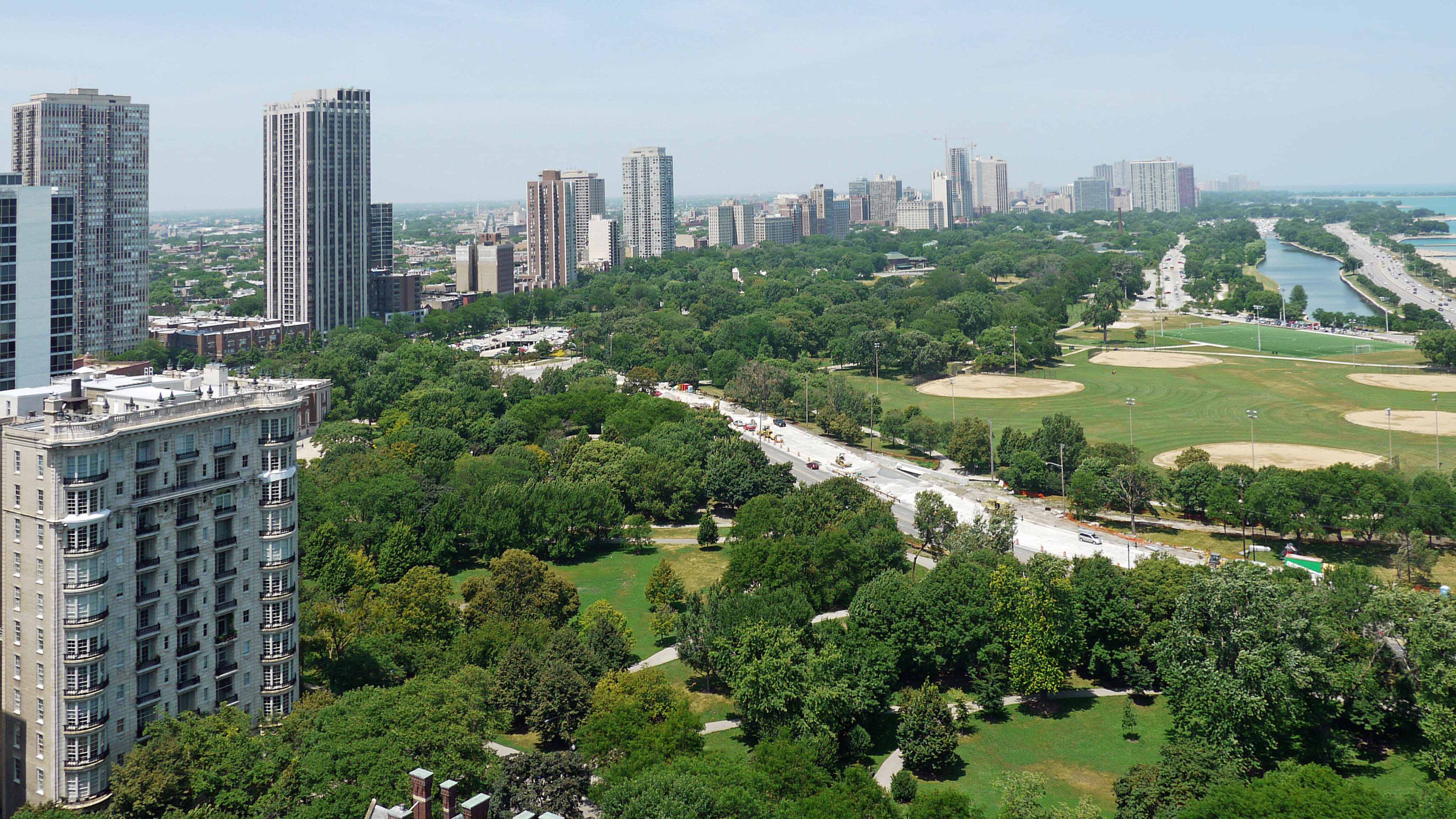
Chicago | Lincoln Park: the neighbourhood that forgot it was a cemetery
Lincoln Park — the green space, not the neighbourhood — runs for miles along the lakefront from Ohio Street Beach northward to Ardmore Avenue in Edgewater, and most visitors who venture this far north do so to reach the free zoo. The park itself, however, is worth the journey on its own terms: the section adjacent to the Lincoln Park neighbourhood contains a conservatory, a formal garden, and a stretch of lakefront that feels genuinely removed from the city's commercial energy.

The land was originally a public cemetery, and a small number of graves remain — a fact that the park's pastoral pleasantness makes easy to overlook. The conservatory, built in 1895, houses one of the largest collections of palms in the country and charges no admission, a generosity that the city offers with characteristic understatement.
Il consiglio del team The Grandmother and Grandfather mounds near the conservatory are the relocated remains of two individuals whose graves could not be moved during the park's conversion. The markers are easy to walk past and worth stopping for.
10 Waterfront · 1.1 km

Lake Michigan and the beautiful lakefront Trail in Chicago: eighteen miles of the city showing off
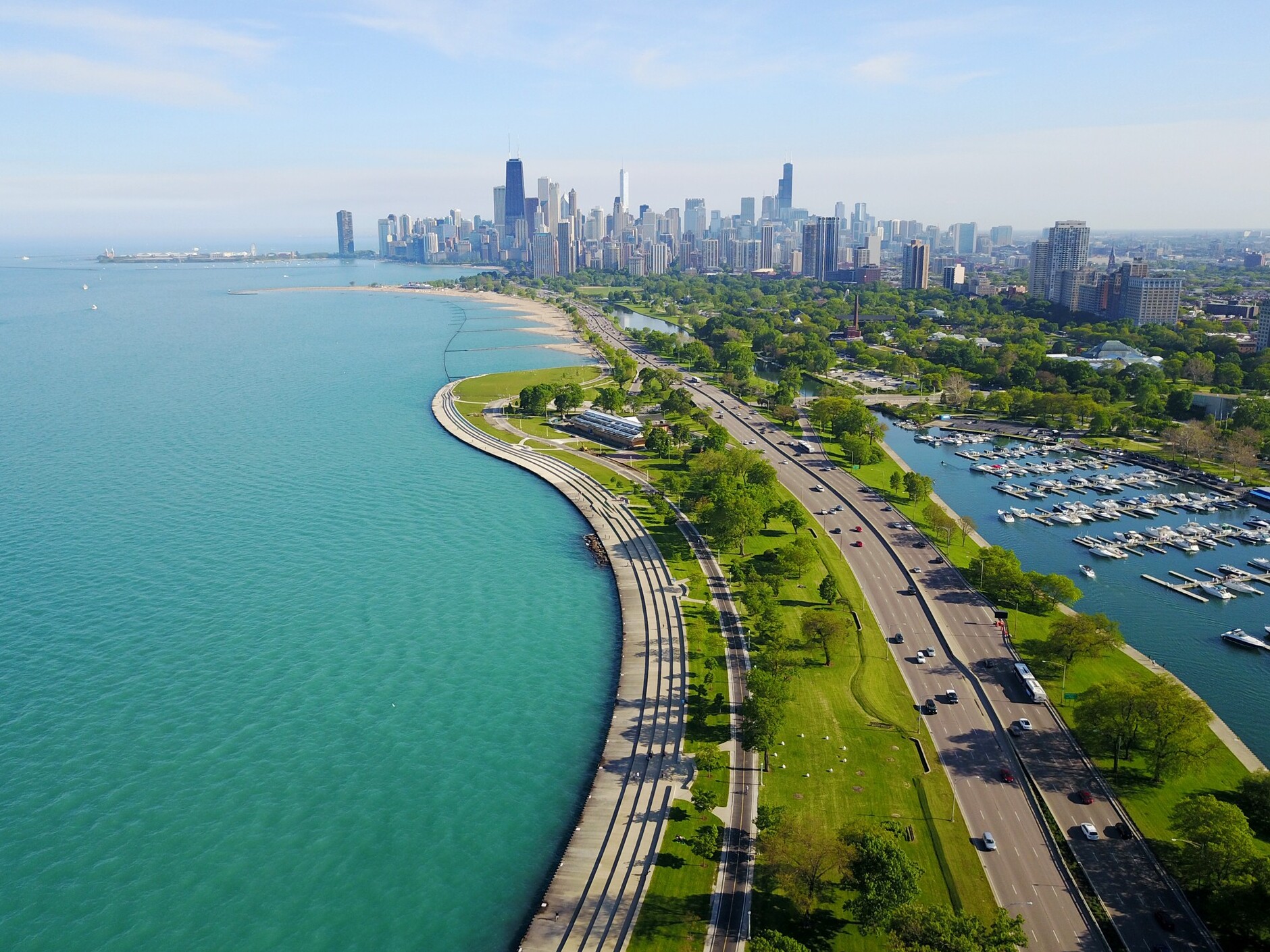
Lake Michigan and the beautiful lakefront Trail in Chicago: eighteen miles of the city showing off
The Lakefront Trail runs for eighteen miles along the western shore of Lake Michigan, connecting neighbourhoods that the rest of the city's geography keeps apart. Cyclists, runners, and walkers share a path that passes through the full social register of Chicago — from the high-rise density of the Gold Coast through the volleyball courts and barbecue pits of the South Side beaches. Lake Michigan itself is the constant, and it behaves like a sea: it has weather, it has moods, it occasionally produces waves that close the trail.

What makes the trail genuinely interesting to the non-athletic visitor is how it reframes the city. From the path, Chicago's skyline is a backdrop rather than a destination, and the lake's scale — it is large enough to produce its own horizon — makes the urban density feel provisional, temporary, a thing built at the water's sufferance.
Il consiglio del team The stretch between Montrose Beach and Foster Beach on the North Side passes through a bird sanctuary and a stretch of natural shoreline that looks nothing like the manicured lakefront further south. It is the trail's least-photographed and most interesting mile.
11 Waterfront · 2.5 km

Chicago lakefront: Navy Pier, a city within the city: the tourist trap that earns its keep
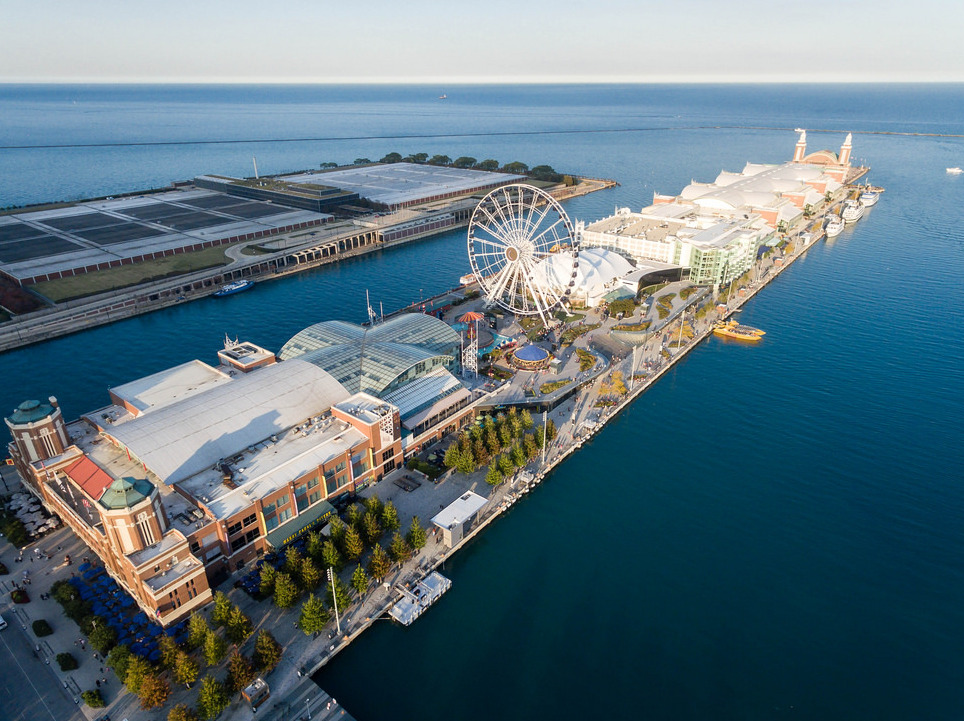
Chicago lakefront: Navy Pier, a city within the city: the tourist trap that earns its keep
Navy Pier is the kind of place that experienced travellers are supposed to dismiss, and the dismissal is understandable — it is crowded, commercial, and designed for the widest possible audience. But covering more than 50 acres of lakefront territory, it contains things that reward a second look. The Chicago Children's Museum is genuinely excellent. The Shakespeare Theatre, resident on the pier since 1999, produces work of a quality that its location does not predict. And the view back toward the skyline from the pier's eastern end is one of the city's great perspectives.

The pier was originally built in 1916 as a commercial shipping and recreation facility, and its industrial bones are still visible if you look past the retail. The long Municipal Wharf building retains its original proportions, and on a grey winter morning, when the tourist infrastructure is quiet, it is possible to imagine the working waterfront it once was.
Il consiglio del team The pier's south dock, away from the main attractions, offers an unobstructed view of the skyline that is less photographed than the standard tourist angles. Walk to the very end on a clear evening and the city arranges itself differently.
12 Shopping District · 1.9 km

The Magnificent Mile is a mecca for tourists: the street that Chicago built to convince itself
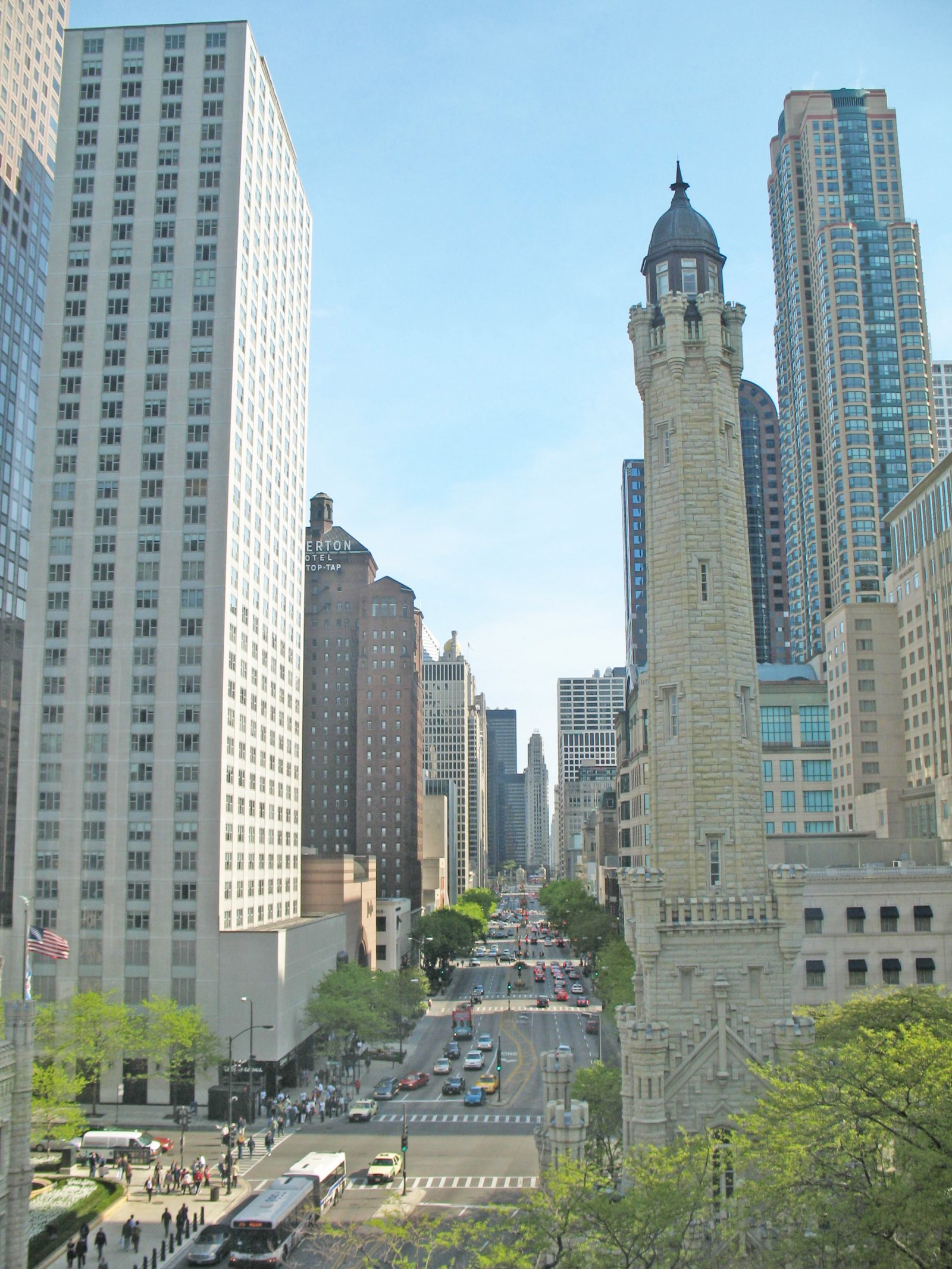
The Magnificent Mile is a mecca for tourists: the street that Chicago built to convince itself
The Magnificent Mile — the stretch of North Michigan Avenue between the Chicago River and Oak Street — is, by most measures, a very successful shopping street. It is also a piece of urban theatre that rewards a kind of double vision: seeing it simultaneously as what it is (a commercial corridor) and what it represents (Chicago's determination to be taken seriously as a world city). The architecture along the strip is genuinely varied and interesting, from the Gothic Revival Tribune Tower to the 1920s Wrigley Building, and the street's width and setbacks give it a civic generosity that purely commercial streets rarely manage.

The name itself — coined in the 1940s as a marketing exercise — has become so embedded in the city's self-image that it no longer feels like marketing. That is either a triumph of branding or a testament to the street's actual quality. Probably both.
Il consiglio del team The lower level of the Tribune Tower contains fragments of famous buildings and monuments embedded in its exterior walls — pieces of the Taj Mahal, the Colosseum, the Berlin Wall — placed there by correspondents over decades. Most people walk past them without noticing.
Part four — Around and beyond
13 Food · 0.0 km

Chicago-Style Deep Dish Pizza: the dish that Chicago argues about more than it eats
Chicago-Style Deep Dish Pizza: the dish that Chicago argues about more than it eats
Deep-dish pizza is the most argued-about food in a city that takes its food arguments seriously. The crust is pressed up the sides of a deep pan, the toppings are layered in reverse — cheese on the bottom, then meat, then vegetables, then a thick layer of crushed tomatoes on top — and the result is something that requires a knife and fork and approximately forty-five minutes to cook. Whether this constitutes pizza in any meaningful sense is a debate that has been running since Ike Sewell and Ric Riccardo opened Pizzeria Uno in 1943.

What is less discussed is how the deep-dish format was partly a practical solution: the deep pan allowed a single pizza to feed more people and stay hot longer, which suited Chicago's cold winters and large immigrant families. The dish is as much a product of urban sociology as of culinary invention.
Il consiglio del team The city's own food culture has increasingly moved toward thin-crust tavern-style pizza, which many Chicagoans prefer for everyday eating. Asking a local which they actually eat at home versus what they recommend to visitors will produce an honest and illuminating answer.
14 Food and Culture · 8.0 km

Kiss the Cook BBQ: Un'Icona d'Amore a Chicago: where barbecue smoke meets public art
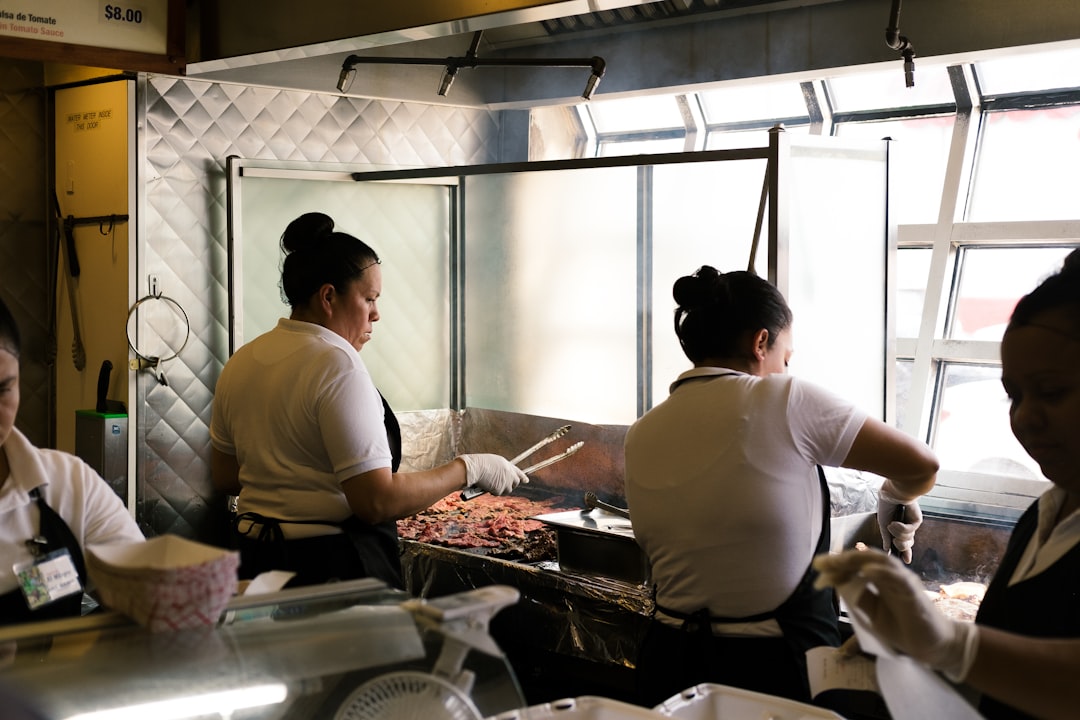
Kiss the Cook BBQ: Un'Icona d'Amore a Chicago: where barbecue smoke meets public art
Located approximately eight kilometres from the city centre, Kiss the Cook BBQ occupies an interesting position in Chicago's cultural geography — far enough from the tourist corridors to feel like a genuine neighbourhood institution, close enough to be reached without commitment. The name itself is an act of personality, and the place operates at the intersection of serious barbecue and the kind of local iconography that accumulates organically rather than by design.

Chicago's barbecue tradition is distinct from the better-publicised styles of Memphis or Texas — it tends toward aquarium-style smokers visible from the street, rib tips and hot links as the default order, and a relationship between the cook and the customer that is less transactional than the city's restaurant culture generally allows. Kiss the Cook fits within this tradition while maintaining its own particular character.
Il consiglio del team Arrive before the lunch rush ends and ask what came off the smoker most recently. The answer will determine what you should order, and the cook will generally tell you the truth.
15 Travel Tool · 0.0 km

AI Trip Planner Chicago 2026: Rivoluziona la tua esperienza: the algorithm at the city gate
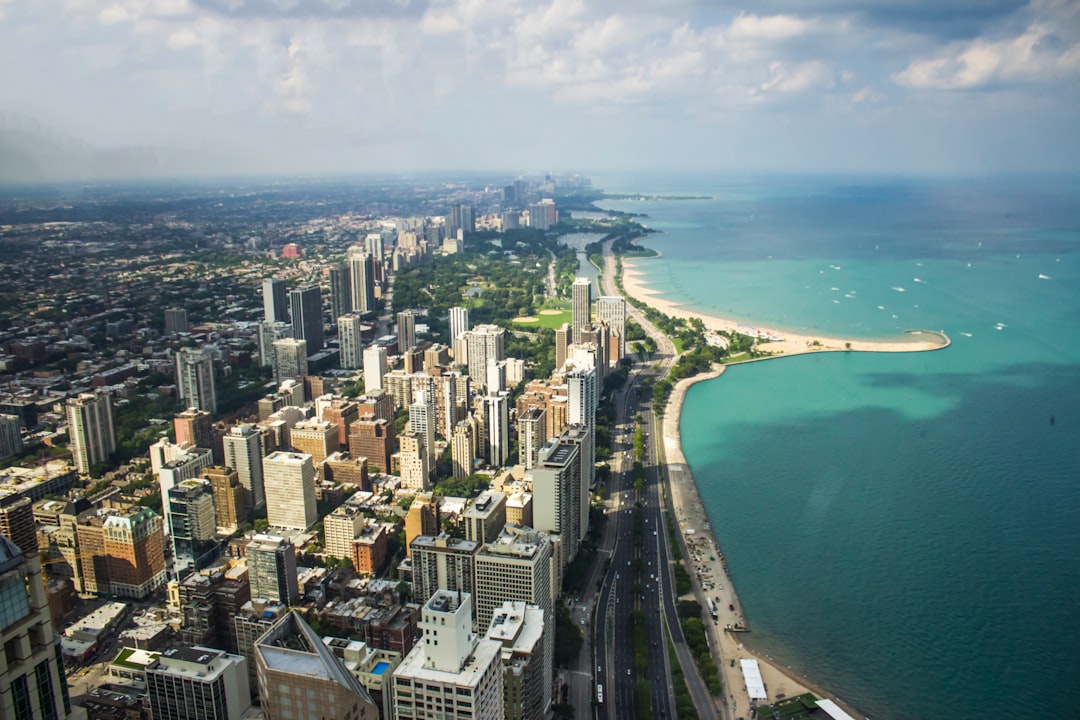
AI Trip Planner Chicago 2026: Rivoluziona la tua esperienza: the algorithm at the city gate
Planning a trip to Chicago in 2026 increasingly involves a negotiation between algorithmic suggestion and personal curiosity, and the tools available to travellers have become sophisticated enough to warrant thinking about critically rather than simply using. AI-assisted trip planning can aggregate opening hours, transit connections, neighbourhood context, and crowd patterns in ways that no single guidebook can match — but it also tends to optimise for the average preference rather than the specific one, which is a meaningful limitation.

The more interesting question is what these tools reveal about how we conceptualise travel: as a logistics problem to be solved, or as an encounter with the genuinely unexpected. Chicago is a city that rewards the second approach. The best use of any planning tool, artificial intelligence included, is probably to handle the logistics so that the traveller's attention is free for everything the algorithm didn't predict.
Il consiglio del team Use AI planning tools to handle transport and opening times, then deliberately leave two or three hours each day unscheduled. Chicago's neighbourhoods — Pilsen, Bridgeport, Andersonville — reveal themselves most honestly when you arrive without an itinerary.
Chicago is not a city that needs defending, and this list is not a defence. It is closer to an argument — that the distance between a place being known and a place being understood is longer than most travel itineraries allow for. Every destination here is, in some technical sense, on the map. The Bean has its own Wikipedia page. The deep-dish pizza has its own cultural wars. The Lakefront Trail is on every running app in the world. None of that makes them less worth your time. It makes them more worth your attention — which is a different thing.

The best version of Chicago is the one you build through accumulation: a painting seen up close, a bridge walked slowly, a barbecue joint found by smell rather than by search. The city has been hosting curious people since the 1870s and has not yet run out of things to show them. It is patient in that way. It will wait.
★ Guida tascabile

Porta questa guida con te.

Salvala offline, ottieni le indicazioni a piedi e scopri migliaia di luoghi come questi.

Salva offline Percorsi smart Tesori nascosti
App Store Google Play AppGallery

Tutti i luoghi sulla mappa

Dati cartografici © OpenStreetMap contributors.

Domande dei lettori

Le domande più frequenti su questa guida.

What is the best time of year to visit Chicago for outdoor destinations like the Lakefront Trail and Grant Park?

Late May through early October offers the most reliable weather for outdoor exploration, with July and August being the warmest months. September is arguably the best single month — the summer crowds have thinned, the lake is still warm enough for swimming, and the light on the water in the late afternoon is genuinely extraordinary. Winter visits are viable and rewarding for those interested in architecture and museums, but the lakefront wind makes outdoor time uncomfortable for extended periods.

Are the major art museums in Chicago expensive to visit?

The Art Institute of Chicago charges general admission, though Chicago residents and children under 14 enter free. The museum offers free admission on certain evenings and participates in programmes that provide free access for Illinois residents on specific dates — check the museum's website before visiting. Lincoln Park Zoo and the Lincoln Park Conservatory, by contrast, are free to all visitors, which makes the northern lakefront a genuinely accessible cultural destination regardless of budget.

How should visitors navigate between the city centre attractions and outlying neighbourhoods like the area around Kiss the Cook BBQ?

Chicago's public transit system — the CTA, comprising the elevated 'L' train and an extensive bus network — connects the city centre to most neighbourhoods reliably and inexpensively. The L's Red Line runs north-south along the lakefront and connects to multiple bus routes heading west. For destinations further from the centre, the combination of the L and a short rideshare journey is usually the most practical approach. The city's street grid also makes cycling straightforward, and the Divvy bike-share scheme has stations throughout the city.

Is it worth visiting the Skydeck Chicago and Navy Pier on the same trip, or do they overlap too much?

They serve genuinely different purposes and complement rather than duplicate each other. The Skydeck offers a vertical perspective — the city as map, as system, as geometry. Navy Pier offers a horizontal one — the city as waterfront, as social space, as the place where the urban grid meets the lake. Both are worth visiting, but if time is limited, the Skydeck is the more singular experience, since the perspective from 412 metres cannot be replicated elsewhere. Navy Pier's best qualities — the view back toward the skyline, the Shakespeare Theatre — can be experienced in an hour without entering any paid attraction.

How much time should be allocated to the Art Institute of Chicago to see the key works mentioned in this article?

The Art Institute is large enough to absorb a full day without exhausting its holdings, but a focused visit of three to four hours can cover the Impressionist galleries (including Seurat's Grande Jatte), the American Gothic room, and the Thorne Miniature Rooms with enough time to sit and look rather than simply pass through. The mistake most visitors make is trying to cover too much ground. Arriving when the museum opens and spending the first hour in the Seurat room alone, before the school groups arrive, is a more rewarding approach than attempting a comprehensive survey.

★ Leggila quando vuoi

Salvala sul tuo telefono.

Aggiungi questa guida ai preferiti, pianifica il viaggio offline, scopri luoghi come questi.

Preferiti Offline 60+ lingue
App Store Google Play AppGallery