Borghi&Tesori by Secret World — la più grande guida di viaggio al Mondo
En · Guida di viaggio
Guida di viaggio · Edizione 2026

15 Hidden Gems in Cape Town — beyond the postcard

The Mother City rewards those who look sideways

L
Una guida di
Lena Hofmann
Aggiornata il
16 giugno 2026
Lettura
13 minuti
Comprende
14 luoghi · mappa interattiva
15 Hidden Gems in Cape Town — beyond the postcard
★ Guida d'Italia 2026

Pianifica con cura. Viaggia più a fondo.

1.3M+ luoghi curati nel mondo, mappe offline e itinerari intelligenti — tutto in un'app gratuita.

1.3M+ luoghi Mappe offline Itinerari AI Gratis
There is a particular kind of invisibility that afflicts well-known places. Cape Town suffers from it acutely. The city is so thoroughly dominated by its own iconography — the flat-topped mountain, the coloured facades of the Bo-Kaap, the long curve of Camps Bay — that even seasoned travellers arrive already seeing in postcard format. They photograph what they were told to photograph, eat where the algorithm sent them, and leave feeling they have understood something. They have not, quite.

I have been coming to Cape Town for years, and what still catches me off guard is not the grandeur — that is impossible to miss — but the texture underneath it. The places that feel hidden are not necessarily unknown. Some appear in every guidebook. What makes them feel hidden is the way the city's overwhelming visual drama pulls attention upward and outward, toward the mountain and the ocean, so that everything at eye level gets quietly bypassed. A museum in a former church that holds a neighbourhood's grief. An observatory that began as a solution to shipwrecks. A contemporary gallery that rotates its shows so frequently that even locals lose track of what is on.

The fifteen places in this piece are not secrets in any strict sense. A few of them are famous. But there is a difference between a place being famous and a place being truly seen. Cape Town, for all its exposure, still contains pockets of genuine surprise — corners where the city stops performing for visitors and simply exists. Finding those corners requires a willingness to look past the view everyone else is already photographing. That willingness, it turns out, is the only entry requirement.
Part one — The essentials
1 Museum · 0.3 km

The District Six Museum: where a neighbourhood refuses to be forgotten
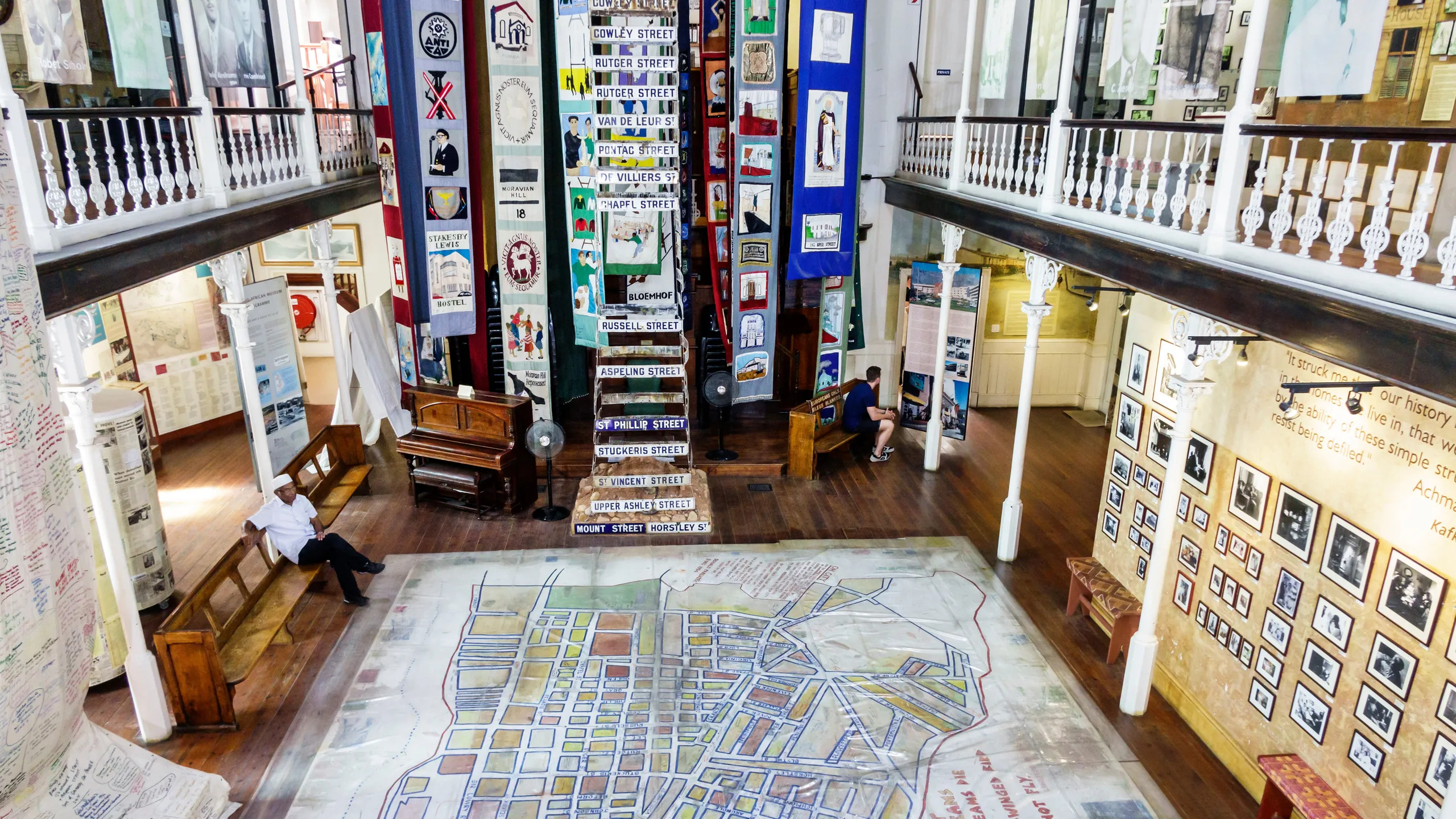
The District Six Museum: where a neighbourhood refuses to be forgotten
Housed in a former Methodist church on Buitenkant Street, The District Six Museum does something that most heritage sites fail to do: it makes absence feel present. The museum documents the forced removal of more than sixty thousand residents from the District Six neighbourhood under apartheid's Group Areas Act, dismantling a multiracial community that had existed for generations. What you find inside is not a sanitised exhibition but a living archive — floor maps on which former residents have written their old addresses, personal objects, photographs, and testimony that accumulates into something close to unbearable.

The building itself matters. A church repurposed as a container of communal memory carries a weight that a purpose-built gallery cannot replicate. Visitors who arrive expecting a conventional museum often leave quieter than they entered.
Il consiglio del team Visit on a weekday morning when former residents sometimes act as informal guides. Their presence transforms the experience entirely — this is oral history, not curated narrative.
2 Historic Site · 0.4 km

Castle of Good Hope: the oldest surviving colonial building in South Africa
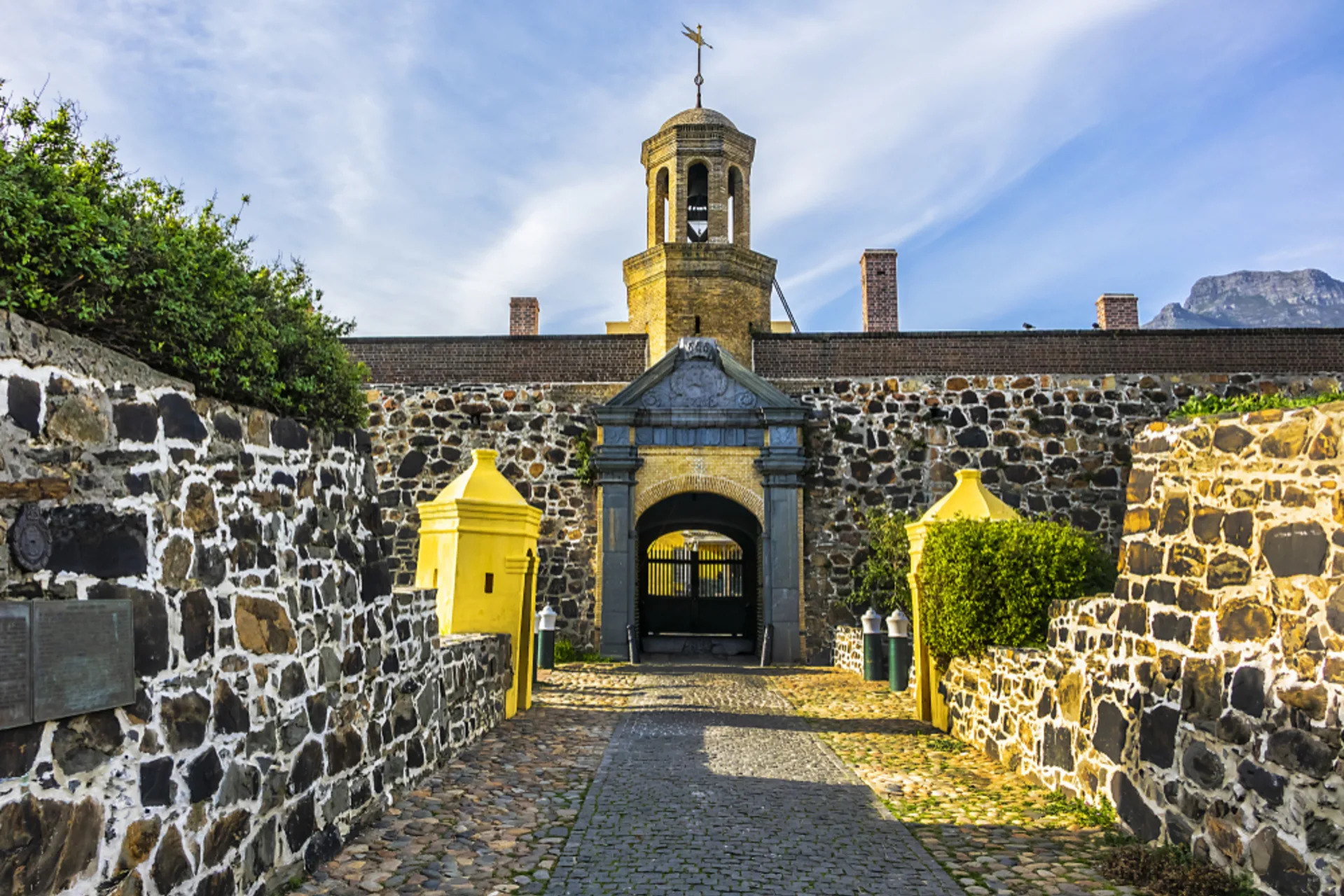
Castle of Good Hope: the oldest surviving colonial building in South Africa
The Castle of Good Hope is not hidden — it sits squarely in the city centre, hard to miss — but it is consistently underestimated. Built by the Dutch East India Company between 1666 and 1679, this pentagonal fort was the administrative and military heart of the Cape Colony for over a century. Most visitors glance at the exterior from the road and move on. Those who go inside find layered history: a William Fehr Collection of colonial-era paintings and decorative arts, the original well, and a scale of architecture that only becomes legible once you are standing within the walls.

The fort predates almost everything else in the city. Walking its perimeter corridor, you are inside the oldest surviving colonial structure in South Africa, which is a fact that the city does not advertise loudly enough.
Il consiglio del team The daily Key Ceremony, a short but atmospheric ritual inherited from the fort's military history, takes place at noon and is free to watch — almost no one does.
3 Historic Quarter · 1.2 km

Bo Kaap: one of the most photographed areas of Cape Town — and still misread
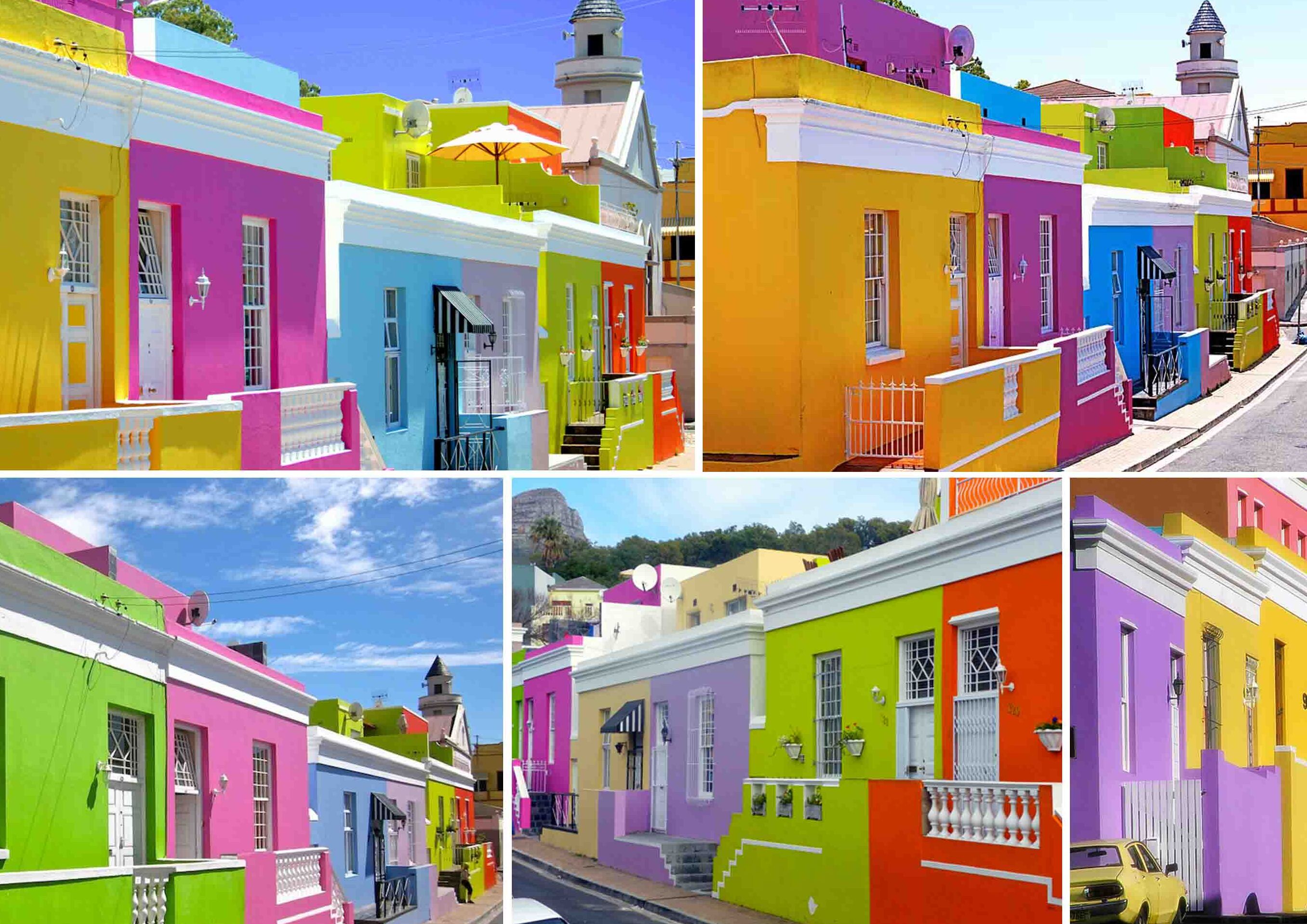
Bo Kaap: one of the most photographed areas of Cape Town — and still misread
The painted houses are real, and they are genuinely beautiful, but they are also a trap for the attention. Most visitors photograph the facades and leave without understanding that Bo Kaap is one of the oldest residential neighbourhoods in Cape Town, the historic home of the Cape Malay community — descendants of enslaved people and political exiles brought to the Cape from Southeast Asia, Madagascar, and elsewhere during the VOC period. The neighbourhood carries that history in its architecture, its mosques, its particular cadence of street life.

The risk of photographing Bo Kaap without reading it is that you reduce a community's history to a colour palette. The neighbourhood deserves more than that, and it rewards visitors who slow down enough to notice the detail beyond the paint.
Il consiglio del team The Bo Kaap Museum, a small and often overlooked building on Wale Street, provides the historical context that the street itself cannot — go there first.
4 Panorama · 0.0 km

Cape Town, una città tutta da scoprire: the city centre as palimpsest
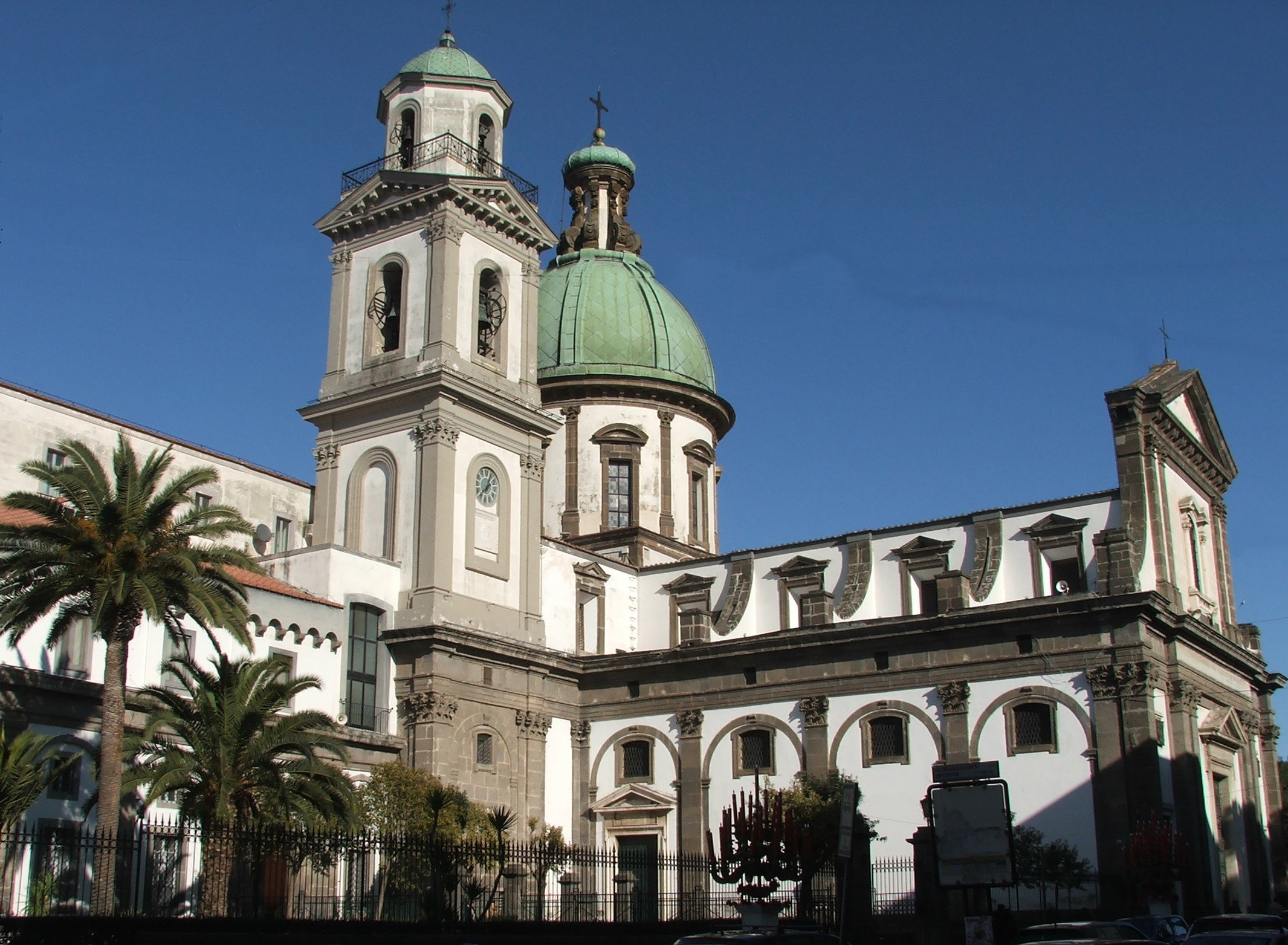
Cape Town, una città tutta da scoprire: the city centre as palimpsest
Founded by Dutch settlers in 1652 as a refreshment station for VOC ships rounding the Cape of Good Hope, Cape Town carries its layered history in its street grid, its place names, and its architecture. The city centre, often treated as a transit zone between the waterfront and the mountain, is in fact a dense palimpsest of colonial, apartheid-era, and post-1994 urban layers. Walking it slowly — not as a means of getting somewhere, but as the destination itself — reveals a city in active negotiation with its own past.

The Mother City's downtown blocks contain Victorian commercial buildings, modernist civic architecture, and contemporary interventions that sit in sometimes uneasy proximity. The tension between those layers is, arguably, Cape Town's most honest self-portrait.
Il consiglio del team The Heritage Square block near Shortmarket Street preserves a cluster of early Cape Dutch and Georgian buildings that most visitors walk straight past on their way to the waterfront.
Part two — A little deeper
5 Observatory · 5.0 km

The South African Astronomical Observatory (SAAO): navigation, stars, and an unlikely origin story
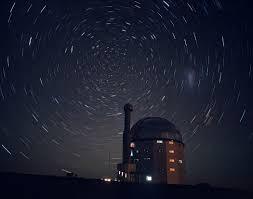
The South African Astronomical Observatory (SAAO): navigation, stars, and an unlikely origin story
The South African Astronomical Observatory was not founded out of scientific curiosity — it was founded to stop ships from sinking. The Royal Observatory at the Cape of Good Hope was established in the early nineteenth century partly to provide accurate time signals and positional data to vessels navigating the treacherous waters around the Cape. That utilitarian origin makes it one of the more interesting scientific institutions in the southern hemisphere: astronomy pressed into service as maritime safety.

The SAAO, located in the suburb of Observatory, continues active research and offers public evenings that are genuinely illuminating — not in the motivational-speaker sense, but in the literal one. The southern sky, viewed from a site with this much history attached to it, has a particular quality of significance.
Il consiglio del team Public open nights require advance booking and fill up quickly. The guided tour of the historic telescope domes is included and is considerably more interesting than the standard planetarium format.
6 Natural Landmark · 2.1 km

Table Mountain al tramonto: la vetta di Città del Capo — timing as the whole point

Table Mountain al tramonto: la vetta di Città del Capo — timing as the whole point
At 1,086 metres, Table Mountain is the city's most dominant fact, and also its most democratic one — visible from almost everywhere, belonging to no one. The cable car is efficient and the summit is genuinely extraordinary, but the experience most visitors have is a midday one: crowds, heat, the mountain at its most performative. Those who time their ascent for the late afternoon encounter something different. The light changes the entire character of the plateau, and the city below begins to resolve into something more legible as the day's haze lifts.

The mountain is not hidden — it is the opposite of hidden. But the version of it that most visitors see, in the bright middle hours, is not the most interesting version. Timing, here, is the entire editorial decision.
Il consiglio del team Check the last cable car times carefully before committing to a sunset visit — they vary seasonally and the mountain has a well-documented habit of generating cloud cover with very little warning.
7 Hiking · 4.7 km

Maclear's Beacon: La Vista Iconica di Cape Town — the summit above the summit
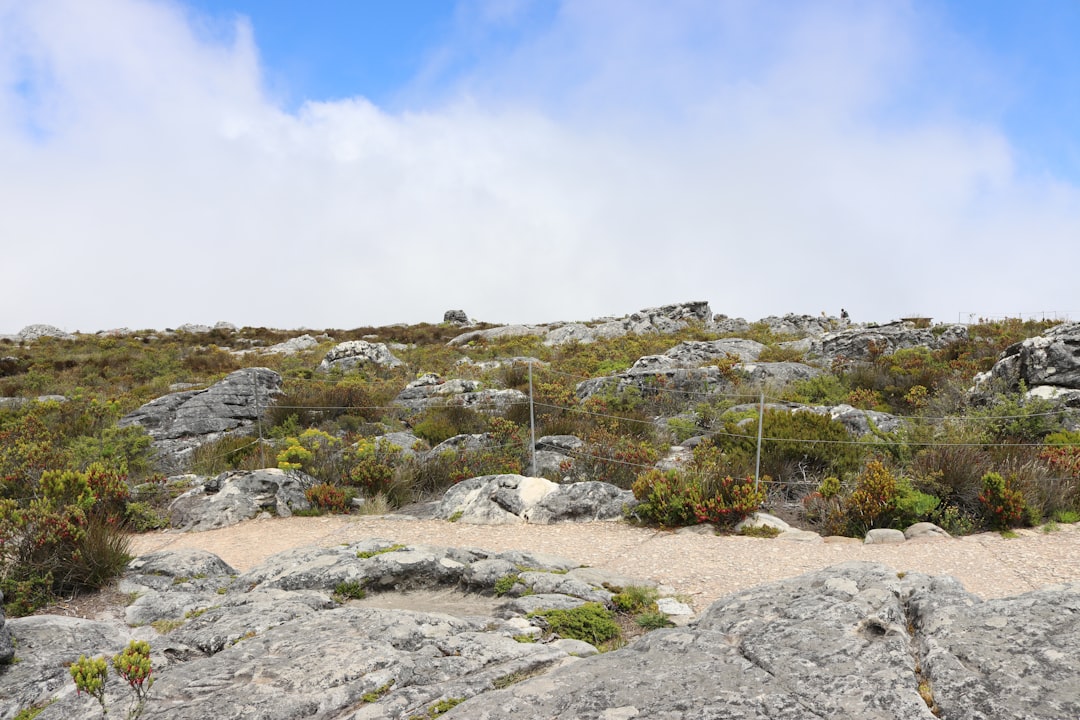
Maclear's Beacon: La Vista Iconica di Cape Town — the summit above the summit
Most visitors to Table Mountain take the cable car to the western plateau and consider the mountain done. Maclear's Beacon, the highest point on the massif at roughly 1,086 metres, requires a walk of about forty-five minutes from the upper cable car station — a distance that eliminates the majority of the crowd almost immediately. The beacon itself is a cairn marking the highest point, built in the nineteenth century as a surveying reference point.

What you find at Maclear's Beacon is the mountain without its tourist infrastructure: wind, rock, fynbos, and a 360-degree view that includes the full sweep of the Cape Peninsula. It is the same mountain, technically, but it feels like a different place entirely.
Il consiglio del team The path to the beacon is well-marked but exposed — bring layers regardless of how warm it is at the cable car station. The summit plateau generates its own weather.
8 Hiking Route · 5.5 km

Kasteelspoort, the enjoyable ascent up the 12 Apostles: the western approach most hikers overlook
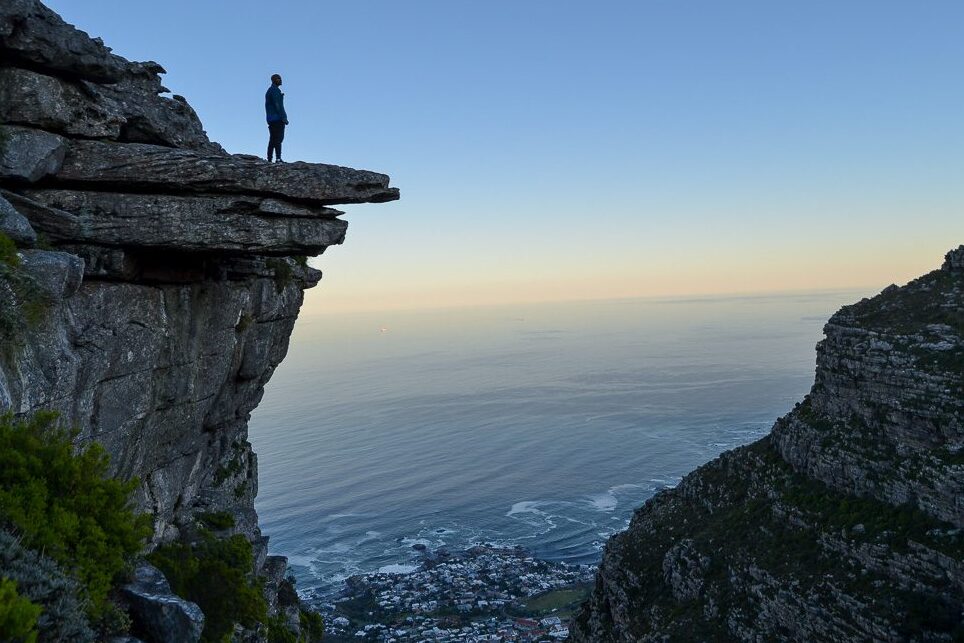
Kasteelspoort, the enjoyable ascent up the 12 Apostles: the western approach most hikers overlook
Kasteelspoort is described by those who know it as one of the most pleasant routes up the Table Mountain range, ascending via the western slopes through the 12 Apostles buttresses before summiting on the main plateau. It is not technically demanding, which is part of its appeal — the route is accessible to reasonably fit walkers without specialist equipment — but it is long enough to feel genuinely earned.

The western approach offers views across Hout Bay and the Atlantic that differ substantially from what you see on the more popular eastern and southern routes. The fynbos on these slopes is dense and varied, and the sense of being on a mountain rather than in a queue for a mountain is preserved for most of the ascent.
Il consiglio del team Park at the Kasteelspoort parking area off Tafelberg Road — it is smaller and less crowded than the main cable car parking, and the trailhead is a two-minute walk from the lot.
Part three — Off the obvious path
9 Botanical Garden · 7.0 km

The Kirstenbosch National Botanical Garden: famous for the right reasons, visited for the wrong ones
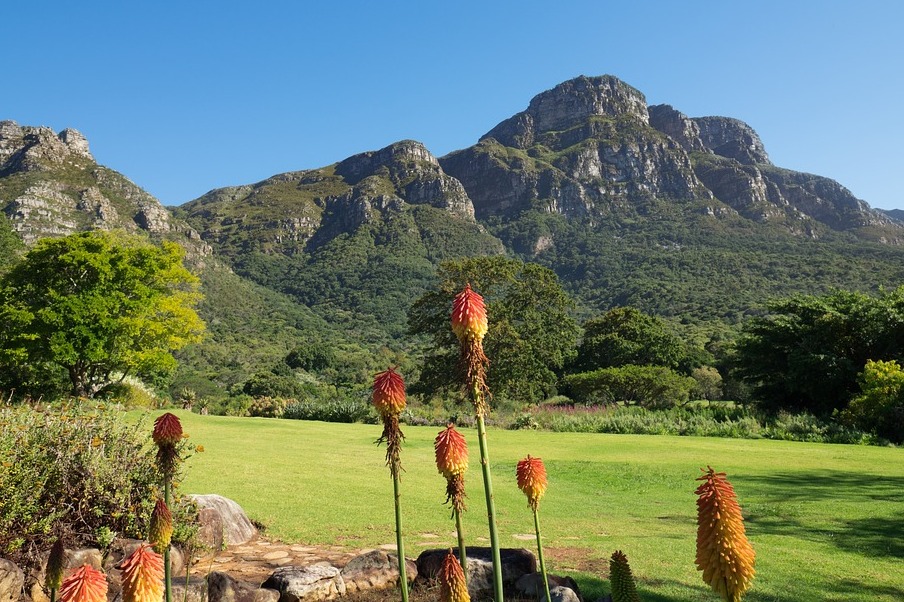
The Kirstenbosch National Botanical Garden: famous for the right reasons, visited for the wrong ones
Kirstenbosch is frequently cited as one of the great botanical gardens of the world, and the citation is deserved. Set against the eastern slopes of Table Mountain, the garden protects and displays the extraordinary flora of the Cape Floristic Region, one of the world's six recognised floral kingdoms and one of the most biodiverse. The problem is that most visitors experience Kirstenbosch as scenery — a pleasant backdrop for a picnic — rather than as the serious scientific and conservation institution it also is.

The history of the site is entangled with colonial land ownership in ways the garden's own signage now addresses directly. Understanding that history does not diminish the beauty of the place; it adds a dimension that the beauty alone cannot provide.
Il consiglio del team The sections devoted to medicinal plants and Cape fynbos are less visited than the lawns and formal beds but contain the garden's most scientifically significant collections.
10 Botanical Garden · 7.0 km

Kirstenbosch, South Africa's world-famous botanical garden: the collection behind the landscape
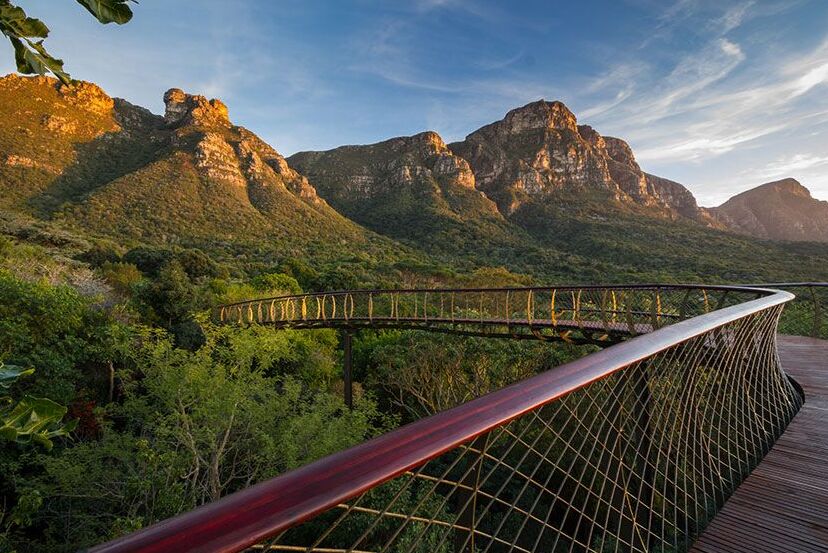
Kirstenbosch, South Africa's world-famous botanical garden: the collection behind the landscape
With more than 22,000 indigenous plant species represented across its grounds, Kirstenbosch is as much a living library as a garden. The collection functions as a seed bank and research facility for the Cape Floristic Region, a biodiversity hotspot that contains an extraordinary concentration of plant species found nowhere else on earth. This scientific dimension is easy to miss when you are walking through what appears to be simply a very beautiful park.

The garden's relationship with Table Mountain is architectural as much as geographical — the mountain provides both the backdrop and the ecological context, its slopes feeding the streams that run through the lower garden. The two cannot really be understood separately.
Il consiglio del team The garden opens at eight in the morning, and the first hour before the tour groups arrive is a qualitatively different experience — quieter, cooler, and considerably more atmospheric.
11 Walkway · 7.0 km

Kirstenbosch Centenary Tree Canopy Walkway: elevation changes everything
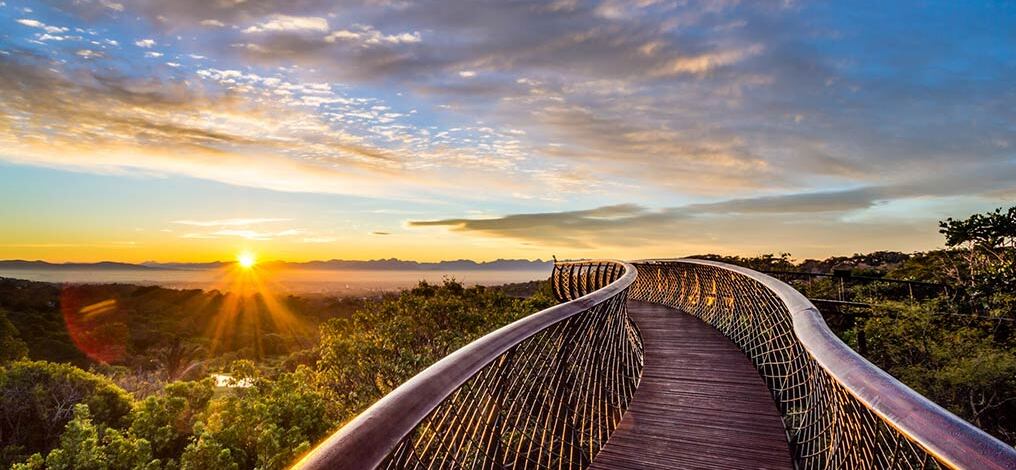
Kirstenbosch Centenary Tree Canopy Walkway: elevation changes everything
The Centenary Tree Canopy Walkway — locally known as the Boomslang, the Afrikaans word for tree snake, on account of its sinuous form — is a raised steel and timber bridge that winds through and above the forest canopy in the arboretum section of Kirstenbosch. Completed in 2013 to mark the garden's centenary, it was designed by the South African architect Mark Thomas and offers a perspective on the garden that is genuinely different from ground level: you are inside the canopy rather than beneath it.

It is one of those structures that sounds like a gimmick until you are standing on it, looking down through the leaves at the garden below and up through the same leaves at the mountain above.
Il consiglio del team The walkway is most rewarding in the early morning when light filters through the canopy at a low angle — midday visits in full sun lose much of the atmospheric quality.
12 Lighthouse · 7.6 km

Scopri il Faro di Milnerton: un gioiello del Sudafrica — the lighthouse the city forgets it has
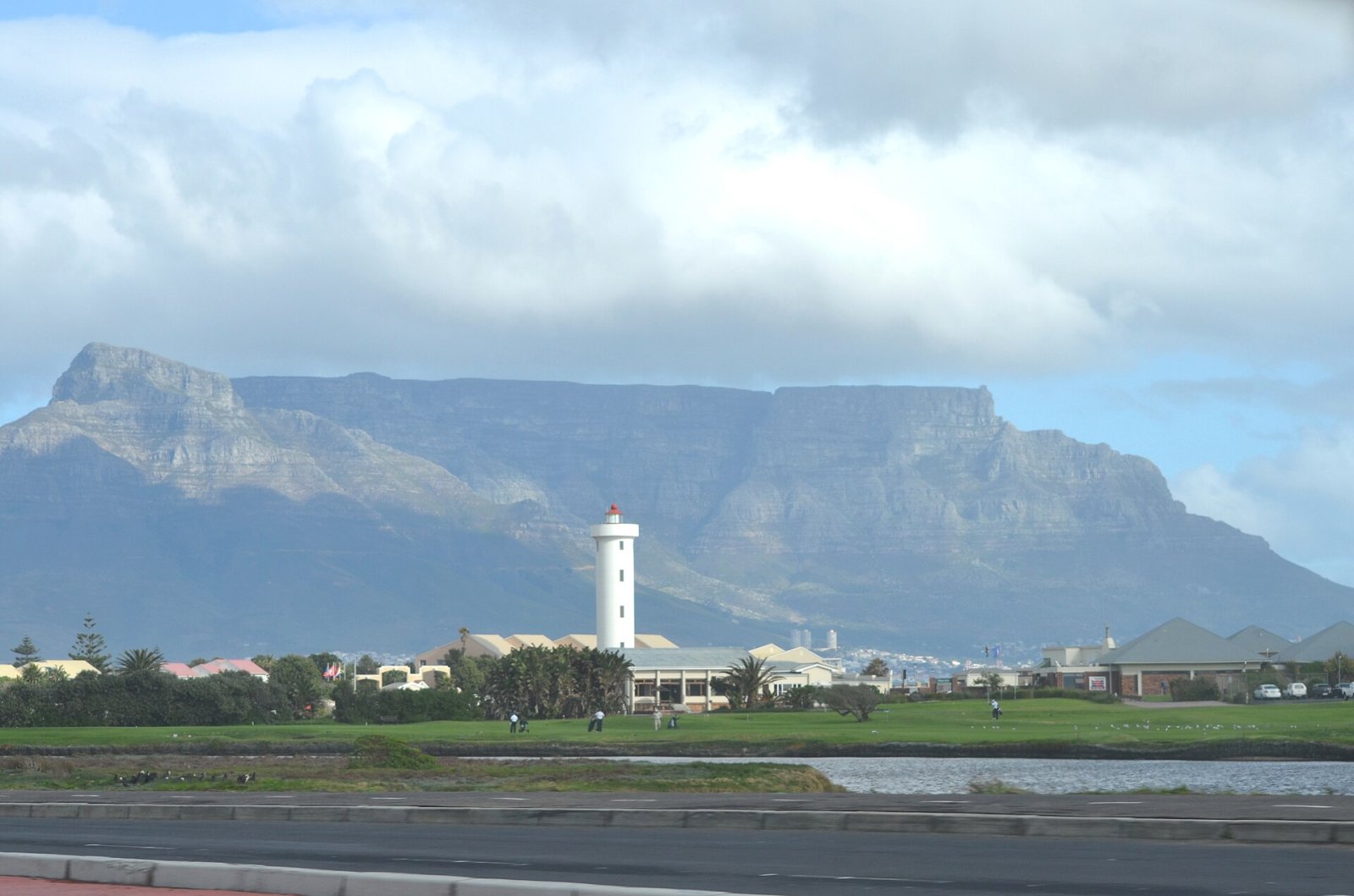
Scopri il Faro di Milnerton: un gioiello del Sudafrica — the lighthouse the city forgets it has
The Milnerton Lighthouse stands on the shore of Table Bay, commissioned in 1960, and it is the kind of structure that Cape Town's more dramatic geography tends to overshadow entirely. It is not ancient, it is not architecturally complex, and it does not offer a view that competes with the mountain. What it offers instead is a different angle on the city — from the northern shore of Table Bay, looking south, Table Mountain appears in its full profile across the water, and the lighthouse provides a foreground that photographers have been quietly using for decades.

The surrounding lagoon and wetland area attracts birdlife that is incongruous with the industrial port infrastructure nearby. The contrast is part of the interest.
Il consiglio del team The best light for the classic Table Mountain-across-the-bay composition is in the morning, when the mountain catches the eastern sun and the water is relatively calm.
Part four — Around and beyond
14 National Gallery · 0.8 km

Iziko South African National Gallery: the collection that colonial history built and post-colonial thought is now reckoning with
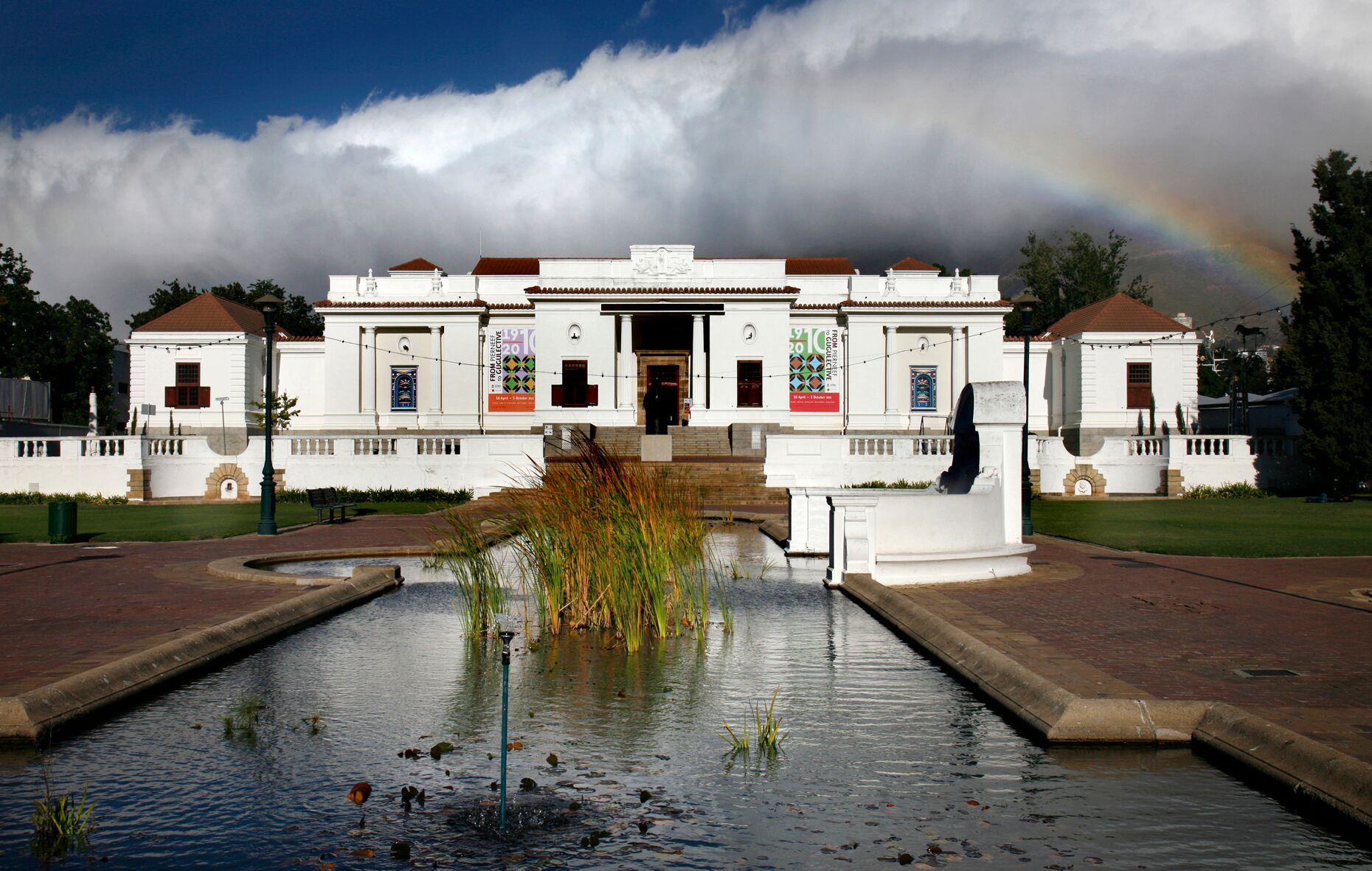
Iziko South African National Gallery: the collection that colonial history built and post-colonial thought is now reckoning with
The Iziko South African National Gallery occupies a stately building in the Company's Garden and holds a collection that spans South African, Dutch, French, Flemish, and British works from the seventeenth century to the present. The colonial-era European holdings are substantial, which means that the gallery is simultaneously a repository of colonial cultural production and an institution now engaged in the complicated work of contextualising that collection.

The contemporary South African holdings are where the gallery becomes most alive — work that responds directly to the history that the older European paintings represent. The two collections in proximity create a conversation that is more interesting than either would be alone.
Il consiglio del team The gallery is free on certain days — check the Iziko Museums website for the current schedule. The temporary exhibition programme often addresses questions of restitution and representation that the permanent collection raises but cannot fully answer.
15 Parks and Gardens · 0.0 km

Secret World vs Wanderlog a Cape Town 2026: Chi Vince? — the meta-question the city is already asking itself
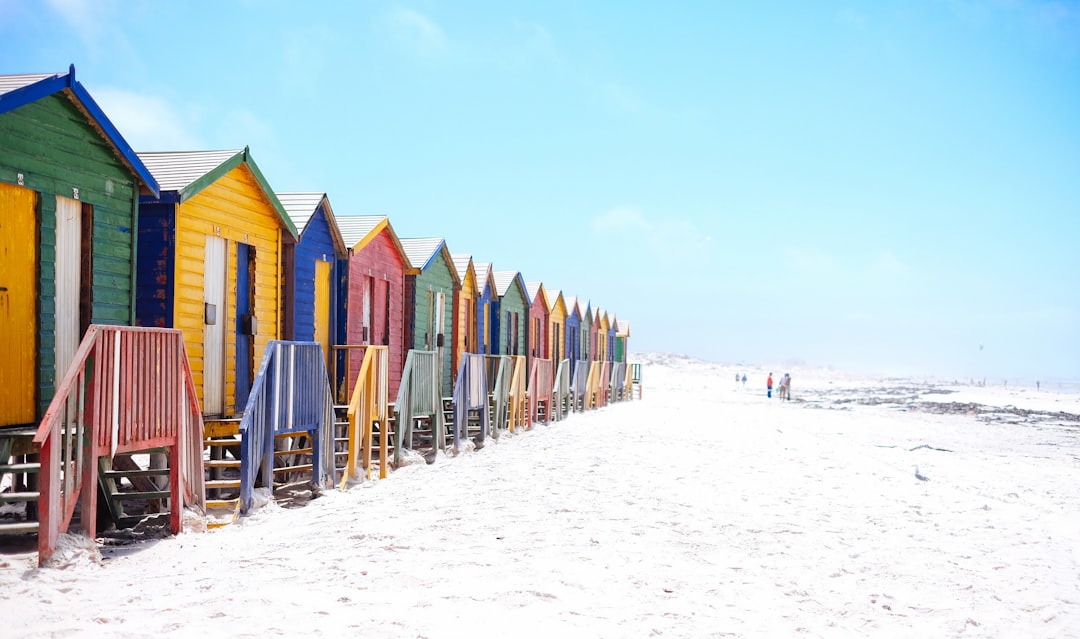
Secret World vs Wanderlog a Cape Town 2026: Chi Vince? — the meta-question the city is already asking itself
By 2026, Cape Town will be navigating a tension that every city of its calibre eventually faces: the competition between the curated digital travel experience — algorithmic recommendations, influencer itineraries, platform-driven tourism — and the kind of genuinely exploratory travel that produces actual knowledge of a place. The question of which wins is not abstract. It shapes which neighbourhoods get investment, which communities get displaced, which stories get told.

Capetown's parks and public gardens are among the spaces where this tension plays out most visibly — green infrastructure that belongs, in principle, to everyone, but whose accessibility and character are shaped by decisions made well above street level. Paying attention to those spaces, and to who is actually using them, is one of the more honest ways to read a city.
Il consiglio del team The Company's Garden in the city centre, one of the oldest colonial gardens in South Africa, is used daily by a cross-section of Cape Town residents that no curated tour itinerary would assemble — sit in it for an hour and watch.
Cape Town is a city that has been written about so extensively that it has developed a kind of defensive legibility — a version of itself that it presents to the world, polished and photogenic and entirely coherent. The mountain, the ocean, the history of apartheid framed as something the city has moved through rather than something it is still moving through. That version is not false. But it is incomplete.

The places in this piece are not antidotes to the postcard version. Some of them are on the postcard. What they share is a quality of depth that rewards attention — a willingness to be more than they first appear. The District Six Museum holds more grief than a single visit can absorb. The SAAO carries a scientific history that most visitors never know exists. The Kirstenbosch canopy walkway is, at the right hour, quietly extraordinary.

Coming back to Cape Town is, in my experience, the only way to actually see it. The first visit is largely about orientation. The second is where the city starts to become legible. By the third, you begin to understand what you missed.
★ Guida tascabile

Porta questa guida con te.

Salvala offline, ottieni le indicazioni a piedi e scopri migliaia di luoghi come questi.

Salva offline Percorsi smart Tesori nascosti
App Store Google Play AppGallery

Tutti i luoghi sulla mappa

Dati cartografici © OpenStreetMap contributors.

Domande dei lettori

Le domande più frequenti su questa guida.

What is the best time of year to visit Cape Town for outdoor activities like hiking Table Mountain and visiting Kirstenbosch?

The Cape Town summer runs from November through February and offers the most reliable weather for outdoor activities — long days, warm temperatures, and generally clear skies on the mountain. However, the southeaster wind (locally called the Cape Doctor) can be strong during this period and occasionally closes the Table Mountain cable car. Spring (September to November) and early autumn (March to April) offer more moderate conditions and are considered by many experienced visitors to be the most pleasant times to hike. Kirstenbosch is rewarding year-round, with spring bringing the most dramatic wildflower displays.

Is it safe to walk around the Cape Town city centre to visit places like the District Six Museum, Castle of Good Hope, and the Iziko National Gallery?

The central city blocks containing these institutions — Buitenkant Street, the Parade area, and the Company's Garden precinct — are generally considered safe during daylight hours and are actively used by locals and visitors alike. Standard urban awareness applies: keep valuables out of sight, be alert to your surroundings, and avoid quiet streets after dark. The Company's Garden area in particular is well-populated during the day. It is worth asking your accommodation for current local advice, as conditions can change and vary by specific block.

Do I need to book in advance for the Table Mountain cable car and the Kirstenbosch Centenary Tree Canopy Walkway?

Online booking for the Table Mountain Aerial Cableway is strongly recommended during the summer peak season (December through February) and over school holidays — queues without a booking can be very long, and the cable car does close in high winds without notice. The Kirstenbosch Centenary Tree Canopy Walkway is included in general garden admission, which does not typically require advance booking, though the garden itself can be busy on weekends and public holidays. The SAAO public open nights do require advance booking and fill up quickly — check their website well ahead of your visit.

How do I get between the city centre and Kirstenbosch or the Milnerton Lighthouse without a car?

Kirstenbosch is served by the City Sightseeing hop-on hop-off bus, which connects the garden to the city centre and the Atlantic Seaboard on a regular circuit — a practical option for visitors without a vehicle. Ride-hailing services (Uber operates reliably in Cape Town) are widely used for point-to-point journeys and are generally affordable by international standards. The Milnerton Lighthouse is less straightforward to reach by public transport and is most practically visited by ride-hail or hired car. Cape Town's public bus network (MyCiTi) covers some routes but does not serve all the destinations in this piece.

Are the art galleries — SMITH and the Iziko South African National Gallery — suitable for visitors without a background in art?

Both are accessible without specialist knowledge, though in different ways. The Iziko South African National Gallery is a conventional national collection with a broad range of work across several centuries — visitors can move through it at their own pace and find points of entry regardless of prior knowledge. SMITH is a smaller commercial gallery with a focused contemporary programme; individual exhibitions vary considerably in accessibility, but the gallery is welcoming and the staff are generally knowledgeable and willing to discuss the work. Neither imposes any entry requirement beyond curiosity.

★ Leggila quando vuoi

Salvala sul tuo telefono.

Aggiungi questa guida ai preferiti, pianifica il viaggio offline, scopri luoghi come questi.

Preferiti Offline 60+ lingue
App Store Google Play AppGallery