Borghi&Tesori by Secret World — la più grande guida di viaggio al Mondo
En · Guida di viaggio
Guida di viaggio · Edizione 2026

15 Hidden Gems in Brussels — beyond the postcard

A city that hides in plain sight, even from the people who live there

L
Una guida di
Lena Hofmann
Aggiornata il
11 maggio 2026
Lettura
13 minuti
Comprende
13 luoghi · mappa interattiva
15 Hidden Gems in Brussels — beyond the postcard
★ Guida d'Italia 2026

Pianifica con cura. Viaggia più a fondo.

1.3M+ luoghi curati nel mondo, mappe offline e itinerari intelligenti — tutto in un'app gratuita.

1.3M+ luoghi Mappe offline Itinerari AI Gratis
Brussels has a peculiar talent for concealment. Not the dramatic kind — no secret passages, no locked gardens — but the quieter art of placing something extraordinary directly in front of you and trusting that the crowd will look elsewhere. You arrive expecting the Grand-Place, the chocolate shops, the bureaucratic geometry of the European Quarter, and you get all of that. But somewhere between the waffle stand and the metro, the city slips you something else entirely. A statue in a dead-end alley that nobody photographs because the light is wrong. A Victorian arcade where the glass ceiling makes the rain feel like a personal gift. A stew that has been simmering, conceptually speaking, for several centuries without ever quite making it onto the international food circuit.

The strange thing about Brussels is that its most interesting places are rarely hidden in the geographic sense. They are hidden in the attentional sense. They exist in the peripheral vision of a city that has been overshadowed by its own reputation — capital of Europe, home of Tintin, the place you pass through on the way to Amsterdam or Paris. That transit-lounge status has, paradoxically, preserved things. When a city is not quite on the top tier of the tourist imagination, it stops performing for visitors and starts existing for itself.

What follows is not a list of secrets. It is a list of places that reward the kind of traveller who slows down, looks sideways, and is willing to feel slightly foolish for having walked past them three times already. Brussels will not apologise for making you work. That, in the end, is part of the deal.
Part one — The essentials
1 Historic Site · 0.0 km

Arch of Cinquantenaire in Bruxelles: the monument that arrived late to its own party
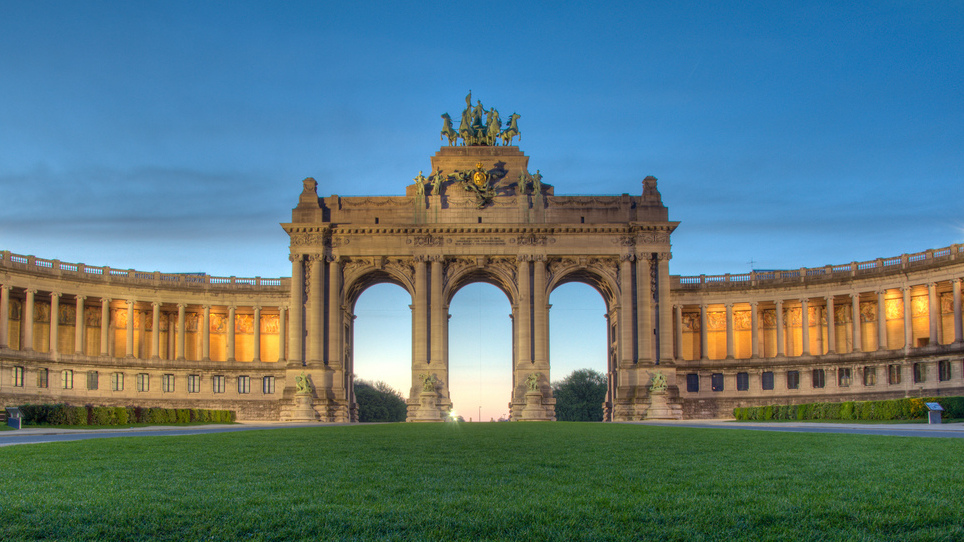
Arch of Cinquantenaire in Bruxelles: the monument that arrived late to its own party
There is something quietly Belgian about the Arch of Cinquantenaire. It was commissioned to celebrate fifty years of Belgian independence in 1880, and it was not finished in time. The arch that now dominates the eastern end of the Cinquantenaire park arrived years after the anniversary it was meant to honour, which gives it a faintly apologetic grandeur — enormous, triumphal, slightly sheepish. Most visitors who see it assume they are looking at something Roman, which is understandable. The scale is imperial, the ambition unmistakable. But this is a Belgian invention, a deliberate act of national self-assertion dressed in the borrowed clothes of antiquity.

What makes it worth pausing for is not the arch itself but the way the park frames it. Come on a weekday morning and you will find civil servants eating sandwiches in its shadow, runners using its colonnades as a turning point, and almost nobody looking up.
Il consiglio del team Walk through the arch rather than around it and look back toward the city centre — the framing of the skyline from this angle is something most visitors never see. The museums built into the wings of the complex are also significantly less crowded than their central Brussels counterparts.
2 Architecture · 0.4 km

The spectacular Galeries Royales: a Victorian arcade that never learned to be modest
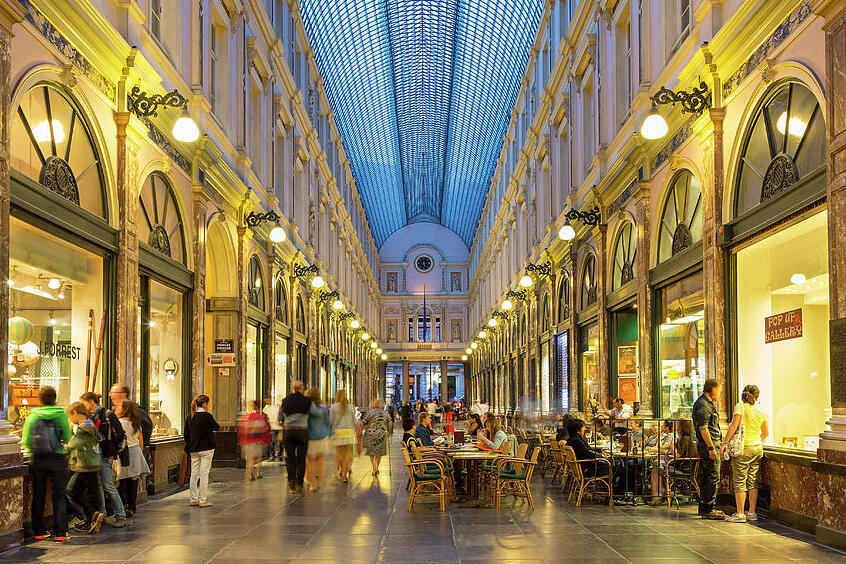
The spectacular Galeries Royales: a Victorian arcade that never learned to be modest
Initiated by the architect Jean-Pierre Cluysenaer in the 1830s and completed in the following decade, the Galeries Royales Saint-Hubert is one of the oldest covered shopping arcades in Europe, and it has never quite decided whether it is a commercial space or a cathedral. The answer, on the evidence, is both. The vaulted glass ceiling floods the interior with a particular quality of northern light that makes even a Tuesday afternoon feel ceremonial. Cluysenaer designed it at a moment when the arcade was a genuinely radical urban idea — the notion that commerce could be sheltered, civilised, made into an experience rather than a transaction.

The galleries today contain chocolate shops, a theatre, a cinema, and the kind of quiet that you do not expect to find forty metres from the Grand-Place. Most tourists walk through it quickly, on the way to somewhere else. The correct approach is to stop, look up, and order a coffee.
Il consiglio del team The Galerie du Roi, the central passage, has the best acoustics of the three sections — street musicians know this, and you will sometimes catch performances here that feel almost accidental in their beauty. Visit in the early evening when the light through the glass turns amber.
3 Park · 2.9 km

Parc du Cinquantenaire or Jubelpark: thirty hectares that the European Quarter forgot to colonise
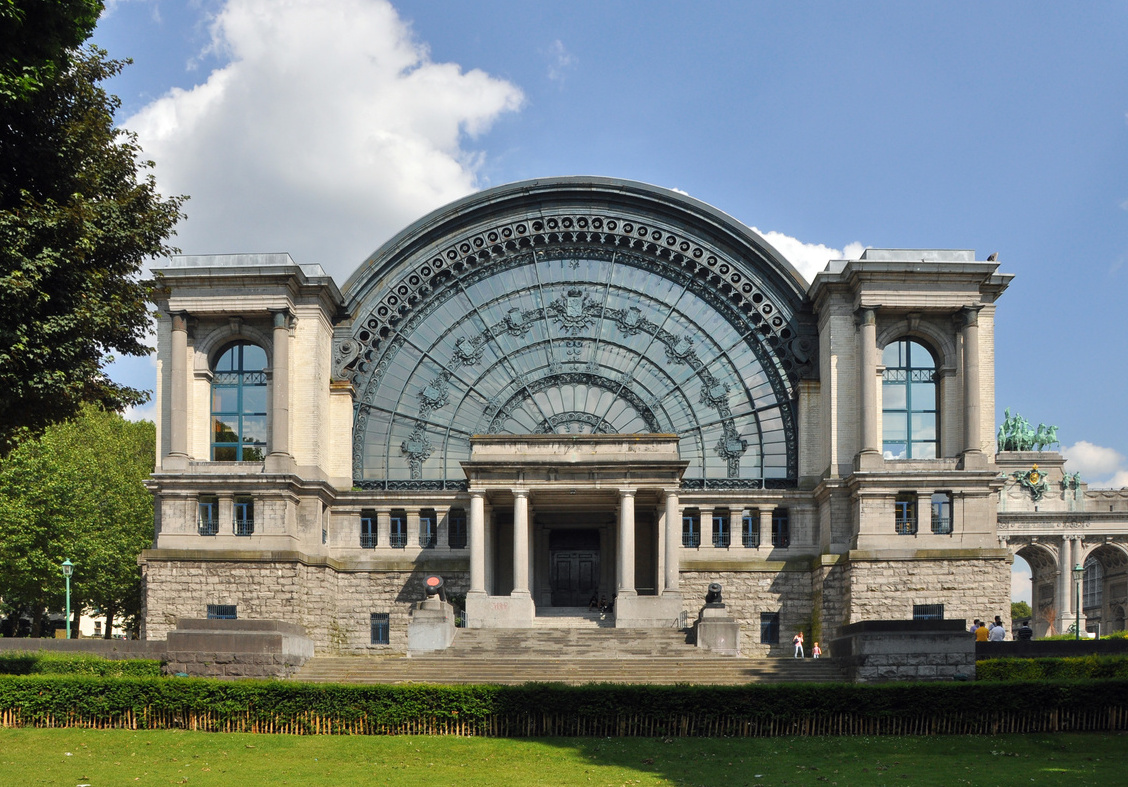
Parc du Cinquantenaire or Jubelpark: thirty hectares that the European Quarter forgot to colonise
The Cinquantenaire park sits in the easternmost reach of the European Quarter, surrounded by the glass towers and institutional architecture of Brussels-as-capital. Thirty hectares of green space, framed by the U-shaped complex of museums and crowned by that late-arriving arch, it is the kind of park that a city builds when it is trying to prove something to itself. In the 1880s, Belgium was a young country with money from the Congo and ambitions that outpaced its size. The park is the physical residue of that ambition — generous, slightly overscaled, and now largely reclaimed by dog-walkers and lunch-break cyclists.

The museums within the complex — covering military history, art and history, and automotive heritage — are consistently underattended relative to their collections. The park itself, on a weekend afternoon, offers one of the more honest portraits of Brussels: multilingual, relaxed, and entirely uninterested in being photographed.
Il consiglio del team The Autoworld museum, housed in one of the complex's grand halls, contains one of Europe's most significant collections of historic vehicles and is rarely crowded even in peak season. The park's eastern paths, away from the main axis, are where you will find the quietest benches in the European Quarter.
5 Landmark · 5.0 km

Atomium di Bruxelles: guida alla visita completa — nine steel spheres and a question about what the future looked like
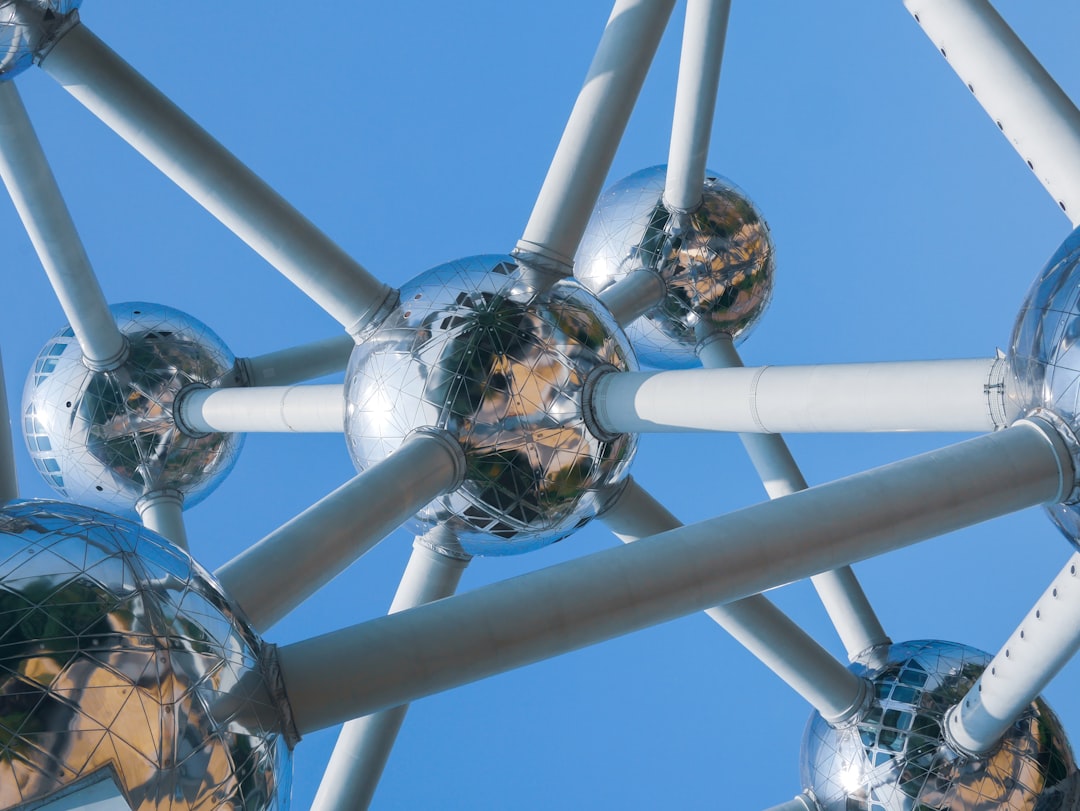
Atomium di Bruxelles: guida alla visita completa — nine steel spheres and a question about what the future looked like
Nine steel spheres suspended above the Laeken district, connected by tubes that climb at angles no conventional building would attempt — the Atomium is a representation of an iron crystal magnified 165 billion times, built for the 1958 World's Fair and somehow still standing, still strange, still refusing to be categorised. It was never meant to be permanent. Like many of the best things in Brussels, it survived by accident and stubbornness.

What makes it genuinely interesting, rather than merely photogenic, is what it says about 1958's idea of the future: atomic, optimistic, geometrically pure. Standing inside one of the spheres and looking out over Brussels, you get the peculiar sensation of being inside someone else's dream of modernity. The exhibitions within rotate, but the building itself is the real exhibit — a piece of mid-century futurism that has aged into something approaching poetry.
Il consiglio del team Book tickets in advance, especially for the upper sphere, which offers a panoramic view over the city and the Laeken park. The surrounding Mini-Europe park is easy to dismiss as a tourist trap, but the juxtaposition of the Atomium with scale models of European monuments is, if you are in the right mood, genuinely surreal.
Part two — A little deeper
6 Religious Site · 0.7 km

Saint Michel Cathedral in Brussels: the patron saints of a country that almost wasn't

Saint Michel Cathedral in Brussels: the patron saints of a country that almost wasn't
The Cathedral of Saints Michael and Gudula sits on a hill above the lower town, close enough to the centre to be visible from several key intersections, and yet consistently overlooked in favour of the Grand-Place a few hundred metres away. This is partly a function of Brussels' topography — the city splits between upper and lower town, and the cathedral occupies an ambiguous middle ground — and partly a function of how tourists move through space, which is to say: quickly, and toward what they already know.

The building is the main Catholic church in Belgium, dedicated to the country's patron saints, and it has been in various stages of construction for several centuries. The Gothic nave is the kind of space that makes you aware of your own scale in a way that is more philosophical than religious. The stained glass deserves considerably more attention than it typically receives.
Il consiglio del team The treasury, located within the cathedral, contains a collection of religious artefacts and textiles that is genuinely significant and almost never crowded. Visit on a weekday morning when the light through the nave windows is at its most particular.
7 Square · 1.0 km

Notre-Dame du Sablon in Brussel: the square that got smarter than its church
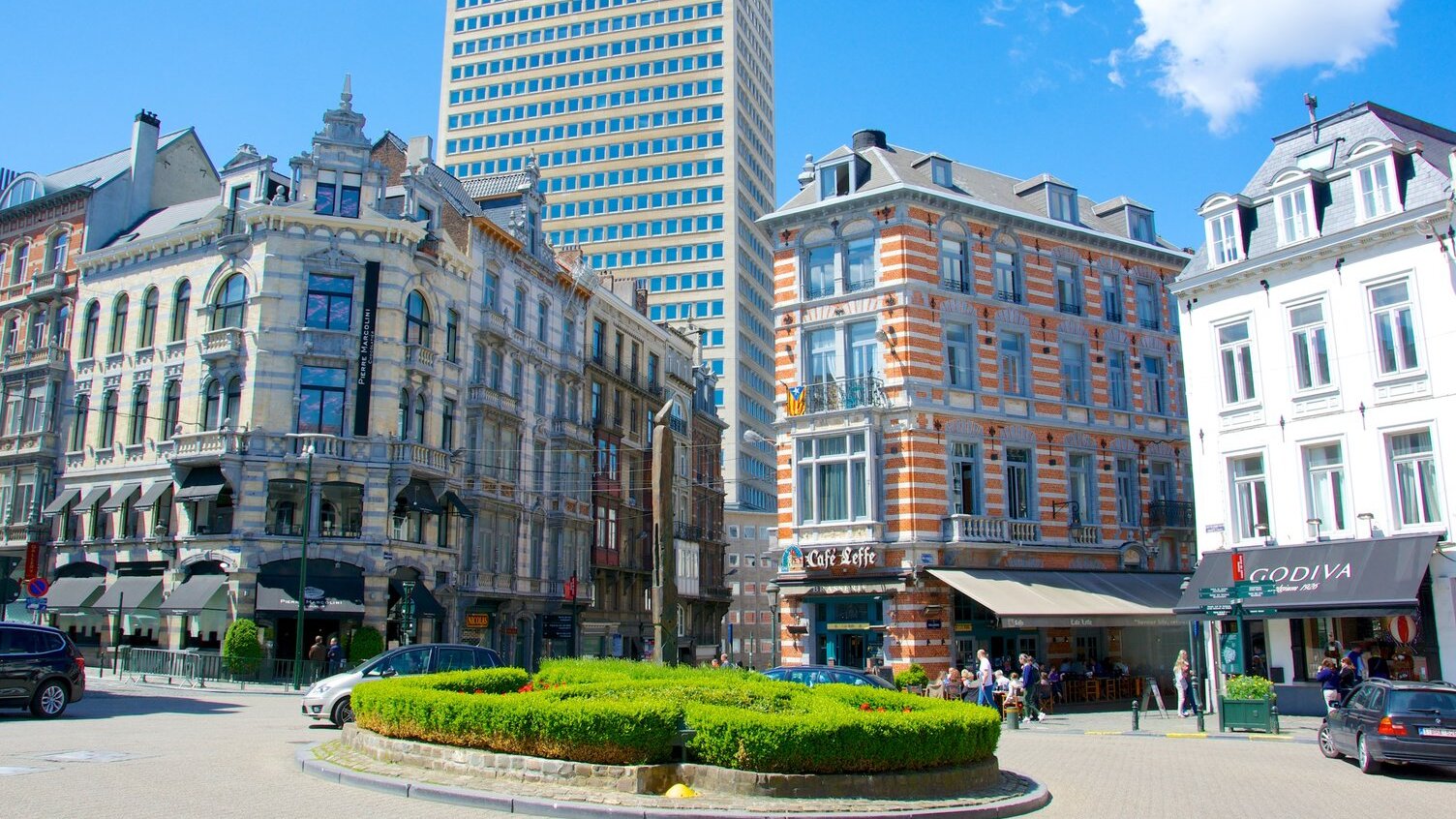
Notre-Dame du Sablon in Brussel: the square that got smarter than its church
The Place du Grand-Sablon is the kind of square that knows it has made it. Antique dealers, high-end chocolatiers, weekend market stalls selling things that cost more than they should — the Sablon neighbourhood has become Brussels' answer to the question of where the affluent go to spend a Saturday. Notre-Dame du Sablon, the Gothic church that dominates the square, began as something considerably humbler: a chapel for the guild of archers. The arrival of a statue of Mary from Antwerp in 1348 changed its trajectory entirely, and the building that grew around that moment of medieval devotion is now one of the finer Gothic structures in the Low Countries.

The square itself is worth the visit for the atmosphere alone — a weekly antiques market runs on weekends — but the church tends to be treated as backdrop rather than destination.
Il consiglio del team The Place du Petit-Sablon, just across the road, contains a small formal garden ringed by forty-eight bronze statuettes representing the medieval guilds of Brussels. It is one of the more peaceful spots in the neighbourhood and is frequently empty even when the Grand-Sablon is busy.
8 Religious Site · 1.1 km

The church of Notre Dame du Sablon (Our Lady of Sablon): Gothic architecture in a neighbourhood that prefers its chocolates
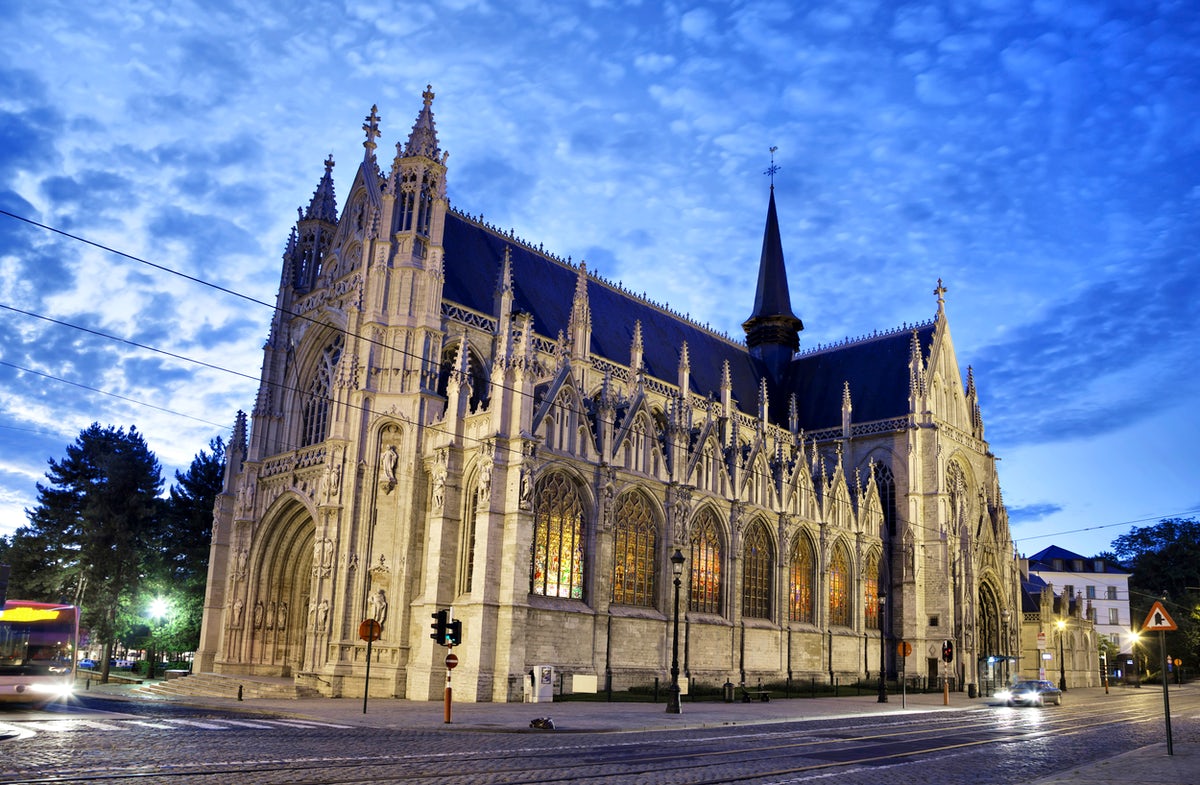
The church of Notre Dame du Sablon (Our Lady of Sablon): Gothic architecture in a neighbourhood that prefers its chocolates
To enter the church of Notre Dame du Sablon is to step into one of the finest surviving examples of Brabantine Gothic in Belgium, which is saying something in a country that takes its Gothic architecture seriously. The interior is elaborate without being cluttered — the tracery of the windows, the proportions of the nave, the quality of light that the builders somehow calibrated across several centuries of construction. It is an outstanding Gothic church, and the Sablon neighbourhood that surrounds it has evolved into something that the original guild of archers would find entirely unrecognisable.

The neighbourhood's elegance — the antique shops, the praline counters, the carefully restored facades — creates an interesting tension with the church's origins as a place of popular devotion. The building has outlasted every economic and social transformation of its surroundings, which is its own kind of achievement.
Il consiglio del team The church hosts regular classical music concerts, often in the evening, that make use of the acoustics in ways that a daytime visit cannot replicate. Check local listings before you arrive — tickets are typically modest in price and the experience is significantly different from a standard tourist visit.
9 Food · 0.0 km

Waterzooi, the classic stew of Flanders: a dish that moved city and forgot to tell anyone

Waterzooi, the classic stew of Flanders: a dish that moved city and forgot to tell anyone
Waterzooi is one of those dishes that has been absorbed so thoroughly into Belgian culinary identity that it has almost become invisible. The name is Dutch — 'zooien' meaning 'to boil' — and the stew is sometimes called Gentse Waterzooi, a reference to its origins in Ghent. The original form was made with fish from the rivers around that city, though as those rivers became less hospitable to fish, chicken became the more common base. The result is a broth-heavy, vegetable-rich stew that is simultaneously simple and deeply satisfying.

In Brussels, finding a genuinely good Waterzooi requires some navigation past the tourist-facing brasseries near the Grand-Place, which tend to produce versions that are competent but cautious. The dish rewards the kind of restaurant that is not trying to explain Belgium to foreigners.
Il consiglio del team Ask specifically for the fish version if it is available — it is closer to the original Ghent preparation and less commonly offered. The stew should arrive in a deep bowl with the broth still moving; if it has been sitting, it will tell you immediately.
Part three — Off the obvious path
10 Museum · 0.4 km

Musée du Cacao et du Chocolat (Museum of Cocoa and Chocolate): a 17th-century house with a very Belgian obsession

Musée du Cacao et du Chocolat (Museum of Cocoa and Chocolate): a 17th-century house with a very Belgian obsession
Located in a 17th-century house on a corner of the Grand-Place, the Musée du Cacao et du Chocolat is a small museum that pays homage to one of Belgium's most commercially successful cultural exports. It is easy to be cynical about a chocolate museum in a city where chocolate shops outnumber pharmacies, but the building itself — a magnificent example of the domestic architecture that surrounds the Grand-Place — provides a context that elevates the experience above the purely confectionary.

The museum traces the history of cocoa from its origins through to the development of Belgian praline and the industrial processes that made Belgian chocolate a global category. The demonstrations of chocolate-making are genuinely informative rather than merely theatrical, and the staff tend to be enthusiasts rather than performers.
Il consiglio del team The museum is small enough to visit thoroughly in under two hours, which makes it a sensible option on a rainy afternoon when the Grand-Place itself becomes difficult to appreciate. The tasting sessions at the end of the tour are included in the entry price.
11 Square · 0.4 km

Grand-Place in Brussel: the square that is hiding in front of everyone
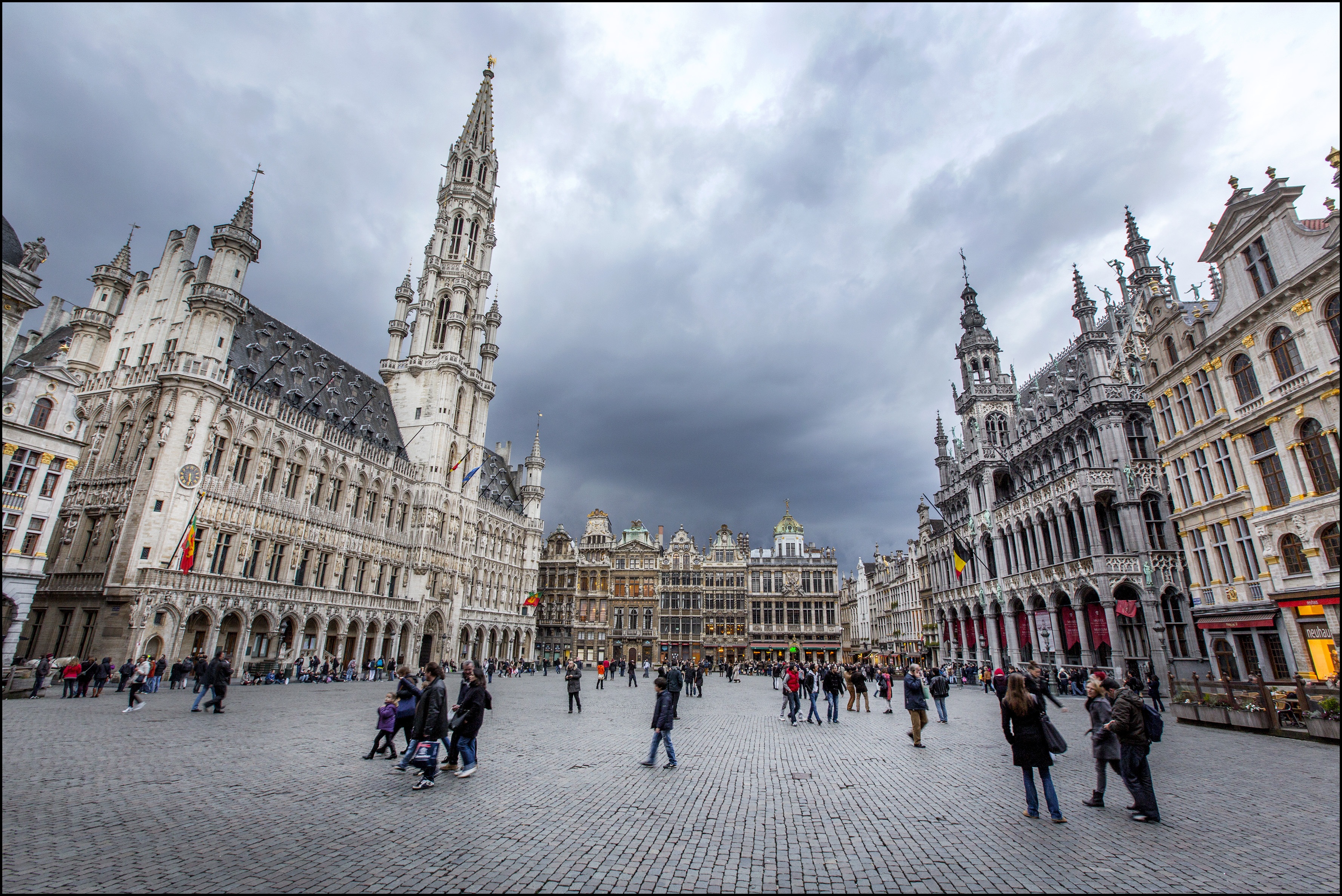
Grand-Place in Brussel: the square that is hiding in front of everyone
The Grand-Place is, by any reasonable measure, one of the most architecturally coherent medieval squares in Europe. The asymmetrical Hôtel de Ville, built in the 15th century with its 96-metre spire topped by a gilded statue of the Archangel Michael, anchors a space ringed by guild houses that were rebuilt after French bombardment in 1695 with a speed and ambition that still feels slightly improbable. The square is not hidden. It is the opposite of hidden. And yet it appears on this list because most people who visit it do so in a way that misses the point entirely.

The Grand-Place at 7am, before the tourist infrastructure has assembled itself, is a different place from the Grand-Place at noon. The cobblestones, the proportions of the buildings, the quality of the morning light on the guild house facades — these are things that the midday crowd, selfie stick in hand, tends to obscure rather than reveal.
Il consiglio del team The square is illuminated after dark in a way that the daytime visit does not prepare you for — the guild houses glow with a warmth that makes the baroque ornamentation legible in a new way. A late evening visit, after the dinner crowds thin, offers a version of the Grand-Place that feels genuinely private.
12 Historic Site · 0.4 km

Grand Place, Brussels Town Hall.: the building everyone photographs and nobody enters
Grand Place, Brussels Town Hall.: the building everyone photographs and nobody enters
The Hôtel de Ville — Brussels Town Hall — is frequently described as the centrepiece of the Grand-Place, which is accurate, and one of the most significant Gothic civic buildings in Belgium, which is also accurate. What is less frequently noted is that most visitors to the Grand-Place photograph its exterior extensively and then walk away without going inside. The interior, accessible through guided tours, contains a series of rooms that document the civic and ceremonial history of Brussels in ways that the facade only hints at.

The building's famous asymmetry — the tower is not centred on the facade — is the result of the building being extended after the tower was already constructed, a piece of medieval pragmatism that has been generating architectural debate for centuries. The spire, at 96 metres, was an act of civic ambition that the city has never quite repeated.
Il consiglio del team Guided tours of the interior run on specific days and must be booked in advance. The council chambers contain tapestries and painted ceilings that are significant works of applied art and are seen by a small fraction of the people who photograph the building's exterior every day.
13 Curiosity · 0.3 km

La statua della bambina che fa la pipì (Jeanneke Pis): the one that everyone forgets to find
La statua della bambina che fa la pipì (Jeanneke Pis): the one that everyone forgets to find
Hidden behind an iron grille in a dead-end alley of the Ilôt Sacré neighbourhood, the Jeanneke Pis is the female counterpart to the city's famous Manneken Pis — a small bronze girl, squatting, doing what the title suggests. Created in 1987 by artist Denis-Adrien Debouvrie, she is younger than her male counterpart by several centuries and considerably harder to find, which is perhaps the point. The alley that leads to her is easy to miss, the grille gives the whole encounter an air of mild transgression, and the statue itself is small enough to walk past if you are not specifically looking.

Brussels has a long tradition of irreverent public sculpture, and the Jeanneke Pis fits neatly into that tradition — simultaneously a joke about the Manneken Pis's fame and a genuine addition to the city's vocabulary of public space.
Il consiglio del team The alley is called the Impasse de la Fidélité, off the Rue des Bouchers. The statue collects small offerings from visitors — coins, miniature decorations — that accumulate behind the grille and give the site an unexpectedly devotional atmosphere.
Part four — Around and beyond
14 Curiosity · 0.5 km

Zinneke Pis - il cane che fa la pipì (Zinneke Pis): the most recent member of Brussels' incontinence trilogy
Zinneke Pis - il cane che fa la pipì (Zinneke Pis): the most recent member of Brussels' incontinence trilogy
The Zinneke Pis completes Brussels' unlikely trilogy of urinating statues — after the Manneken Pis (a boy) and the Jeanneke Pis (a girl), the city added a dog with its leg raised against a bollard. Created by Tom Frantzen and installed in 1998, the Zinneke is the most recent of the three and, in some ways, the most self-aware: it is a city explicitly commenting on its own reputation for this particular brand of civic humour. The word 'zinneke' is Brussels dialect for a mongrel dog — specifically one born of parents from different communes — which gives the statue an additional layer of meaning about the city's mixed identity.

It sits on the Rue des Chartreux, and most people who walk past it are locals who have stopped noticing it entirely, which is its own kind of camouflage.
Il consiglio del team The Rue des Chartreux is in the Saint-Géry neighbourhood, one of the more interesting areas of Brussels for bars and independent shops. The Zinneke Pis makes a reasonable anchor point for an afternoon spent exploring streets that the standard tourist route does not reach.
Brussels will not make it easy for you. That is not a criticism — it is, in fact, the most interesting thing about the city. A place that performs relentlessly for its visitors eventually becomes a version of itself, a theme park of its own history. Brussels has never quite managed that kind of coherence, partly because it is too busy being the capital of several different things simultaneously, and partly because its character is fundamentally ambivalent about being observed.

The fifteen places in this list share a quality that is difficult to name precisely. They are not secret. They are not remote. They are simply things that the city has placed in plain sight and trusted you to notice on your own terms. Some of them are grand; some are small enough to miss entirely. All of them reward the traveller who arrives with the particular kind of patience that Brussels seems to require — the willingness to look sideways, to walk an extra block, to sit still long enough for the city to reveal itself. It will, eventually. It always does.
★ Guida tascabile

Porta questa guida con te.

Salvala offline, ottieni le indicazioni a piedi e scopri migliaia di luoghi come questi.

Salva offline Percorsi smart Tesori nascosti
App Store Google Play AppGallery

Tutti i luoghi sulla mappa

Dati cartografici © OpenStreetMap contributors.

Domande dei lettori

Le domande più frequenti su questa guida.

What is the best way to get between the central Brussels attractions and the more distant ones like the Atomium and De Viron Castle?

Brussels has an integrated public transport network of metro, tram, and bus lines. The Atomium is accessible by tram from the city centre (line 7 runs from the centre toward Laeken). De Viron Castle in Dilbeek is further out and is best reached by tram line 82 or by car. A 24-hour or 48-hour STIB/MIVB transport pass is good value if you plan to use public transport extensively.

Are the museums mentioned — the Musée du Cacao et du Chocolat and the museums at the Cinquantenaire — suitable for children?

The Musée du Cacao et du Chocolat is generally well-suited to children, particularly the chocolate-making demonstrations and tastings. The Cinquantenaire complex houses several distinct museums including Autoworld, which tends to engage younger visitors, and the Art and History Museum, which has more variable appeal depending on age. All are significantly less crowded than the central city attractions, which makes the experience more manageable with children.

Is there a logical walking route that connects the Jeanneke Pis, the Zinneke Pis, and the Manneken Pis?

Yes. The Manneken Pis is on the Rue de l'Étuve, a short walk from the Grand-Place. The Jeanneke Pis is in the Impasse de la Fidélité, off the Rue des Bouchers, also close to the Grand-Place. The Zinneke Pis on the Rue des Chartreux is a fifteen to twenty minute walk northwest. A logical route would visit the Jeanneke Pis first, then the Manneken Pis, then walk to the Zinneke Pis through the Saint-Géry neighbourhood, which is worth exploring in its own right.

When is the best time of year to visit Brussels to avoid the largest tourist crowds?

Late autumn and early spring — roughly October through November and March through April — offer the most manageable crowds in the central areas around the Grand-Place and the Galeries Royales. The weather is cooler and occasionally wet, but the city's indoor attractions (the galleries, the museums, the churches) are at their least crowded during these periods. Summer brings significant visitor numbers, though the Cinquantenaire park and the Atomium area remain relatively spacious even in peak season.

Where is the best place to try Waterzooi in Brussels, given that it originates in Ghent?

Waterzooi is available in many Brussels brasseries, but quality varies considerably. The restaurants in the streets immediately adjacent to the Grand-Place tend toward tourist-facing versions. Better options are generally found in the Saint-Géry neighbourhood or the Ixelles commune, in restaurants that have a broader Flemish or Belgian menu rather than a specifically tourist-oriented one. Asking locally for a recommendation is more reliable than following any fixed list, as restaurant quality in Brussels shifts frequently.

★ Leggila quando vuoi

Salvala sul tuo telefono.

Aggiungi questa guida ai preferiti, pianifica il viaggio offline, scopri luoghi come questi.

Preferiti Offline 60+ lingue
App Store Google Play AppGallery