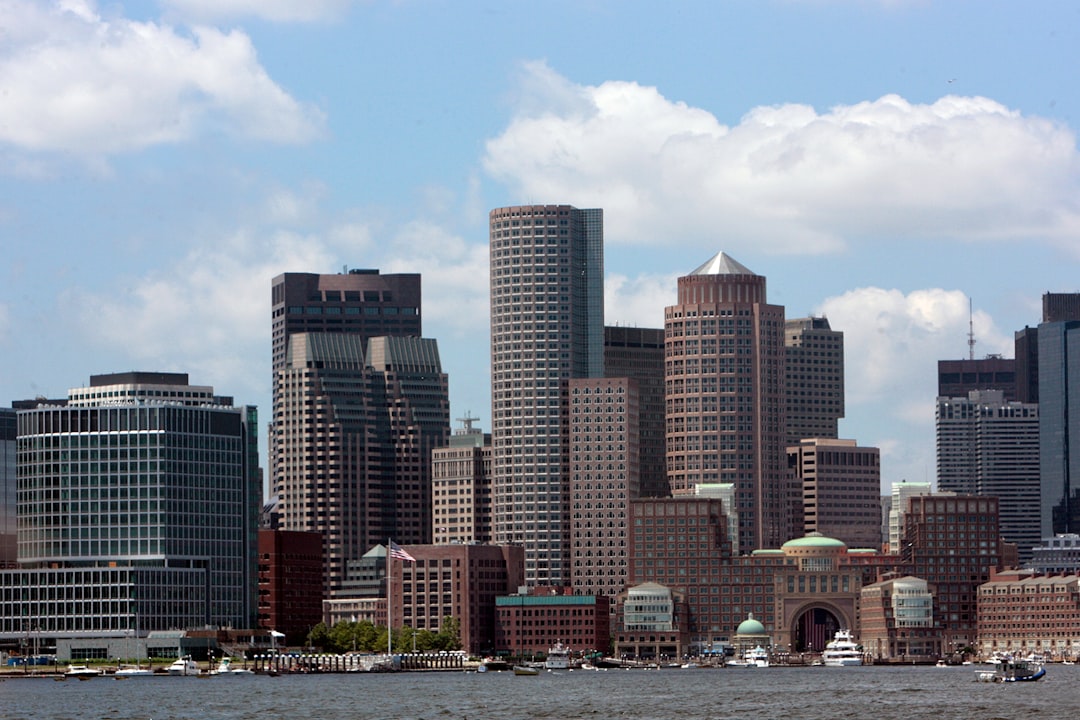
A city that wears its history loudly still manages to keep its best secrets in plain sight
L
Una guida di
Lena Hofmann
Aggiornata il
14 ottobre 2026
Lettura
12 minuti
Comprende
11 luoghi · mappa interattiva
★ Guida d'Italia 2026
Pianifica con cura. Viaggia più a fondo.
1.3M+ luoghi curati nel mondo, mappe offline e itinerari intelligenti — tutto in un'app gratuita.
1.3M+ luoghiMappe offlineItinerari AIGratis
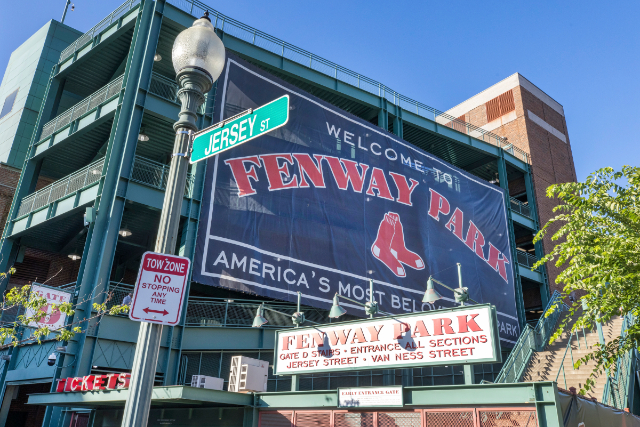
There is a particular kind of invisibility that comes with fame. Boston understands this better than almost any American city. It has a 2.5-mile walking trail painted in red brick literally telling you where to look, a baseball park that has been standing since 1912, a cream-filled cake named after the whole metropolitan area. The city's landmarks are so thoroughly catalogued, so reliably photographed and hashtagged and reviewed, that most visitors arrive already knowing what they are about to see — which means they stop actually seeing it. The paradox of a well-documented city is that familiarity breeds a kind of selective blindness. You follow the red line, you eat the chowder, you photograph the same angle of the same building that ten thousand people photographed yesterday, and you leave feeling you have experienced something. Sometimes you have. Often, though, the more interesting experience was happening three streets over, or inside a building you assumed was closed to the public, or on an island in the harbor you didn't know existed. I've spent years returning to Boston, each time with the deliberate intention of looking slightly to the left of wherever the crowd is facing. What follows is not a list of secrets in the dramatic sense — most of these places are documented, open, and free or cheap to enter. What makes them feel hidden is something subtler: the way attention flows past them, the way even well-travelled visitors tend to save them for 'next time.' Next time is now.
At 44 Hull Street in the North End, sandwiched between two much larger buildings as though inserted as an afterthought — or a provocation — stands the Skinny House, also known locally as the Spite House. The story behind it is almost too satisfying to be true: local legend holds that it was built by a returning soldier to block light and air from a sibling who had taken more than their fair share of an inherited plot. Whether or not the origin story is accurate in every detail, the result is a four-storey residential building that measures just over nine feet at its widest point. It is still a private residence. You cannot go inside. But standing in front of it on a quiet morning, watching people do a double-take as they pass, is a small, reliable pleasure that the North End's more celebrated cannoli shops can't quite replicate.
Il consiglio del team
Walk Hull Street from the waterfront side rather than from Hanover Street — the approach gives you a longer sight line and makes the building's proportions even more disorienting when it finally comes into view.
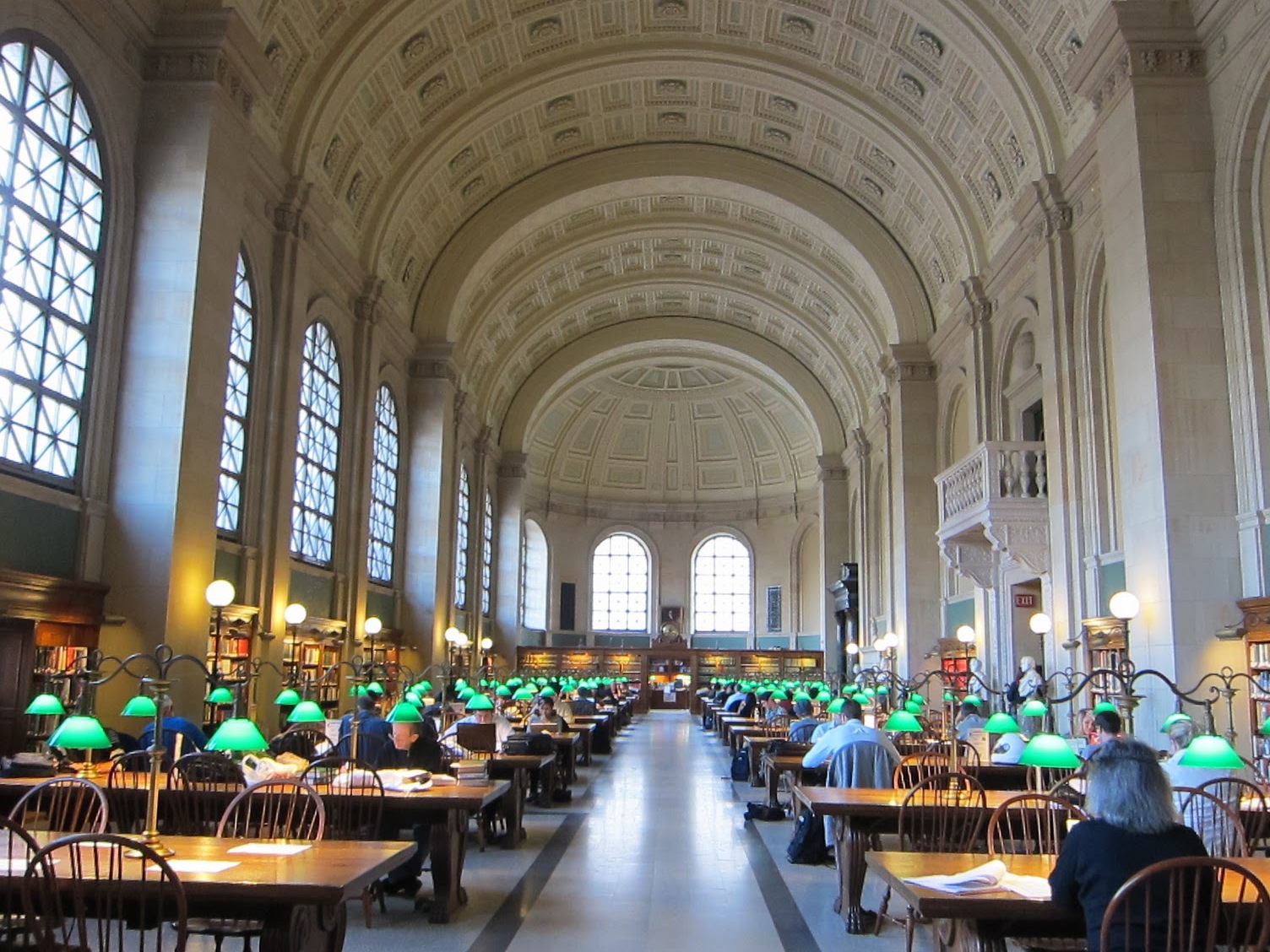
Listed on the National Register of Historic Places and designated a National Historic Landmark, the Boston Public Library on Copley Square is the second-largest library system in the United States. Its McKim Building, the older of the two main structures, contains one of the most extraordinary interior spaces in any American city — a barrel-vaulted reading room with long oak tables, tall windows, and the particular silence of a place that has been taken seriously for well over a century. The building also houses murals by John Singer Sargent and a courtyard modelled loosely on Italian Renaissance design. Most visitors walk through the entrance hall and consider themselves done. The ones who find the third-floor Bates Hall, settle into a chair, and simply sit for twenty minutes are the ones who understand what the building is actually for.
Il consiglio del team
The library's inner courtyard is free to enter and open to the public. It has a small café and is one of the few genuinely quiet outdoor spaces in Back Bay — most tourists walk past the entrance without realising it exists.
Faneuil Hall Marketplace has operated as both a commercial space and a civic meeting hall since 1742, which makes it one of the oldest continuously functioning public gathering places in the United States. Samuel Adams spoke here. So did abolitionists, suffragists, and generations of local politicians. The problem, for the contemporary visitor, is that the building is now surrounded by a festival marketplace complex that sells clam chowder in sourdough bowls and Red Sox merchandise at prices that would have startled even the most optimistic colonial merchant. The result is that the actual hall — the upstairs meeting room with its painted murals and its genuine historical weight — is almost entirely missed by the crowds circulating below it. Walk up the stairs. The contrast between the commercial noise outside and the quiet of the hall itself is the most instructive five minutes you can spend in this part of the city.
Il consiglio del team
The upstairs Great Hall hosts free talks, civic events, and occasional exhibitions. Check the posted schedule on arrival — it is frequently more interesting than anything happening at street level.
Boston cream pie is not a pie. This is the first thing to understand, and it is more interesting than it sounds. It is a yellow butter cake layered with vanilla custard and finished with a chocolate glaze — the name survives from an era when bakers used the same round pans for both cakes and pies, making the distinction largely semantic. It was developed at the Omni Parker House hotel in the nineteenth century, and it remains the official dessert of the Commonwealth of Massachusetts. What makes it worth seeking out beyond the tourist-facing hotel versions is the way it appears, in quietly excellent form, in neighbourhood bakeries across the city — places where the custard is made fresh and the glaze has actual depth. It is a dessert that rewards the person willing to eat it somewhere unglamorous.
Il consiglio del team
Skip the hotel lobby versions, which are competent but performative. Look instead for Italian-American bakeries in the North End that carry their own interpretation — the custard tends to be richer and the portions considerably more honest.
Founded in 1795 by Jimmy Wilson — a town crier who had spent decades literally announcing the news of a new nation in the streets of Boston — the Bell in Hand Tavern on Union Street carries a founding story that is both specific and evocative. Wilson's bell, which he rang to draw crowds before delivering public announcements, gave the tavern its name and its logo. The building has been a drinking establishment for longer than most countries have existed in their current form. Today it operates as a bar with live music, which means the atmosphere skews younger and louder than the historical context might suggest. But the bones of the place are genuine, and the street it sits on — a narrow colonial-era lane — gives the surrounding block a texture that the more polished parts of downtown have largely lost.
Il consiglio del team
Visit on a weekday afternoon before the evening crowd arrives. The bar staff are generally happy to talk about the building's history during quiet hours, and the street outside is worth photographing without the weekend foot traffic.
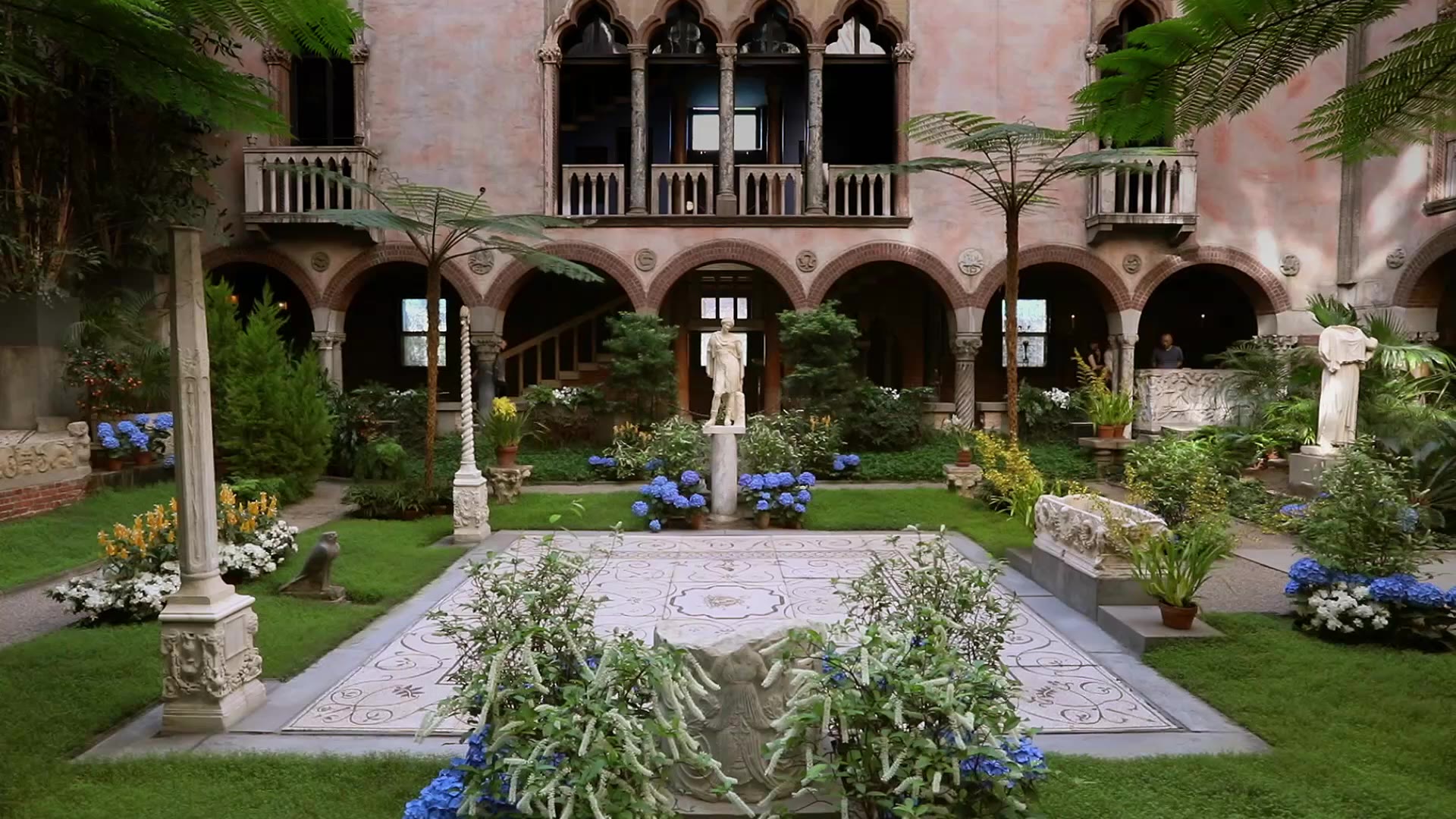
Modelled after a Venetian palazzo and built around a central courtyard that blooms with fresh flowers year-round regardless of the Boston winter outside, the Isabella Stewart Gardner Museum is one of those institutions that makes you question your assumptions about what a city can contain. Gardner assembled the collection herself, with a connoisseur's eye and a wealthy eccentric's disregard for conventional curatorial logic — Rembrandts hang near Flemish tapestries hang near Matisse sketches, arranged according to Gardner's personal aesthetic rather than any academic taxonomy. The museum is also the site of the largest unsolved art theft in history, which took place in 1990. The empty frames where the stolen works once hung remain on the walls, exactly where Gardner's deed of gift stipulates they must stay. It is one of the most quietly devastating things you will see in any American museum.
Il consiglio del team
The museum offers free admission to anyone named Isabella on any day of the year — a policy that is both charming and entirely in keeping with Gardner's personality. The courtyard café is genuinely good and significantly less crowded than the main galleries.
Rembrandt's only painted seascape, dated 1633 and made in the early years of his Amsterdam period, is considered one of the most dramatically composed narrative paintings in American collections — or rather, it was, until the night of March 18, 1990, when it was cut from its frame at the Isabella Stewart Gardner Museum and has not been seen in public since. The painting depicts Christ calming the storm, with thirteen figures in the boat rather than the biblical twelve — one of them widely believed to be a self-portrait of the young Rembrandt, gripping a rope and looking directly out at the viewer. Its absence is now as much a part of its story as its presence ever was. The empty frame in the Dutch Room at the Gardner is, in its way, a more affecting encounter with the painting than many people have with works that are actually hanging.
Il consiglio del team
The Gardner Museum's curatorial team has published detailed documentation on the theft and the ongoing investigation. Ask at the front desk for the printed guide to the stolen works — it transforms the empty frames from absences into arguments.
Located near the Christian Science Plaza in Boston's Back Bay neighbourhood, the Mary Baker Eddy Library and Museum is dedicated to the life and work of the founder of Christian Science — which is either a reason to visit or a reason to walk past, depending on your priors. Set those priors aside. The library houses a remarkable collection of documents, artefacts, and historical materials related to one of the few major religious movements founded by an American woman in the nineteenth century. The building also contains the Mapparium, a three-storey stained-glass globe that visitors walk through on a glass bridge — a room that has not been updated since 1935 and therefore represents the world's political geography at that precise moment. It is one of the strangest and most beautiful rooms in Boston, and a significant proportion of the city's residents have never been inside it.
Il consiglio del team
The Mapparium has unusual acoustic properties — a whisper at one end of the glass bridge can be heard clearly at the other end. This is not a rumour; it is physics. Try it quietly, without disturbing other visitors.
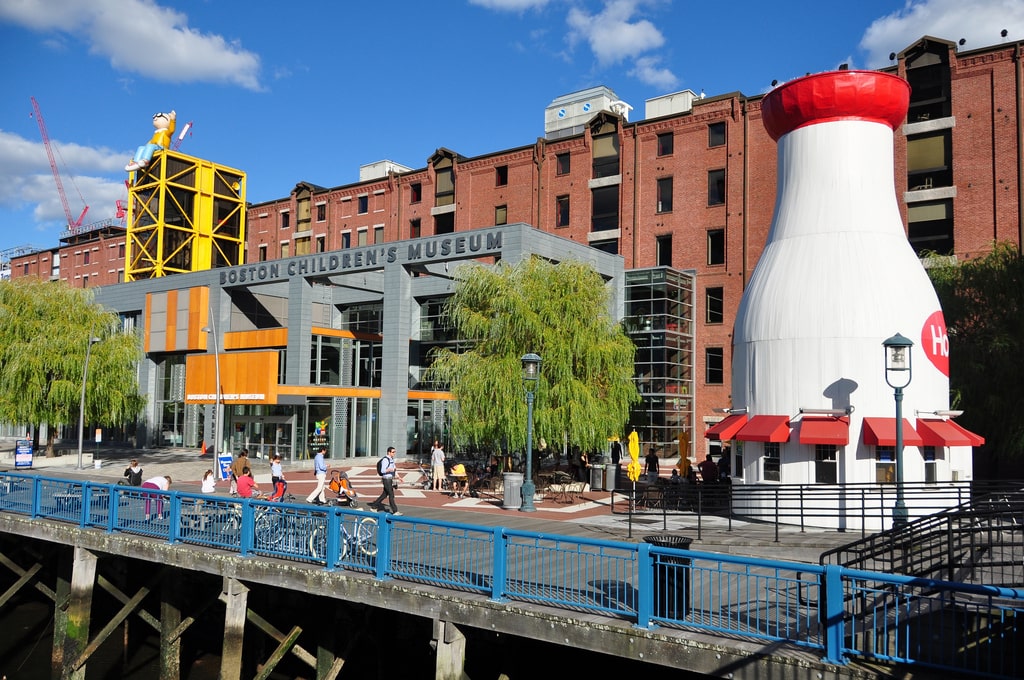
One of the oldest children's museums in the United States, the Boston Children's Museum recently passed its centennial — a milestone that prompts reflection on what it means to have spent a century designing spaces where children are encouraged to touch, climb, question, and experiment. The museum sits on the Fort Point Channel waterfront, in a building marked by a giant Hood Milk Bottle sculpture outside — a Boston landmark that is simultaneously absurd and completely endearing. The exhibitions inside range from hands-on science installations to cultural displays that reflect the city's diverse immigrant communities. It is not a place most adult travellers without children would think to visit, which is precisely what makes it worth noting: the museum's permanent collection of Japanese house architecture, installed inside the building, is quietly extraordinary.
Il consiglio del team
The Japanese house exhibit — a nineteenth-century merchant's home relocated from Kyoto — is tucked into the upper floors and easily missed. It is one of the most unexpected architectural encounters in the city, and it is free with museum admission.
Thirty-four islands are scattered across Boston Harbor, the wide estuary that opens into Massachusetts Bay — and the majority of visitors to Boston spend their entire trip without knowing they exist. The Boston Harbor Islands State and National Park encompasses this archipelago, offering everything from Civil War-era fortifications to glacially formed drumlins, salt marshes, hiking trails, and some of the best birdwatching on the New England coast. Georges Island, the most accessible, is home to Fort Warren, a nineteenth-century fortification with a genuine ghost story attached. Spectacle Island, closer to the city, has a beach and panoramic views of the downtown skyline that no rooftop bar in Boston can quite match. Ferries run seasonally from Long Wharf, and the round-trip journey is itself a recalibration of your sense of what the city is and where it ends.
Il consiglio del team
The ferry ticket to Georges Island also allows inter-island water taxi connections to several smaller islands. Pack a lunch and plan for a full day — the smaller islands have no food vendors, which is part of their considerable appeal.
Boston in 2026 is positioning itself at the intersection of its deep historical identity and a forward-facing investment in artificial intelligence as a tool for navigating urban experience. The city's technology sector — anchored by the research institutions of Cambridge and the innovation corridors of the Seaport District — has begun producing AI-assisted travel planning tools specifically designed to surface the kind of contextual, layered itinerary that a knowledgeable local friend might suggest rather than an algorithm optimised for volume. The premise is worth taking seriously: a city this densely layered with history, neighbourhood character, and cultural specificity is genuinely difficult to navigate well from the outside. Tools that can parse real-time local knowledge, seasonal rhythms, and personal preference represent a meaningful shift in how visitors might encounter a city like Boston — not as a checklist of verified sites, but as a living place with depth proportional to the attention you bring.
Il consiglio del team
When using any AI planning tool for Boston, push it toward neighbourhood-level specificity rather than landmark-level recommendations — ask it to suggest a single street, a single hour, a single sensory experience. The more specific the question, the more useful the answer.
The honest thing to say about Boston is that it makes the work of paying attention unusually rewarding — and unusually easy to avoid. The city has built so many comfortable paths through its own history that you can spend a long weekend here feeling thoroughly informed while having missed almost everything that would have surprised you. The places in this list are not secrets in any dramatic sense. They are simply things that require a slightly different quality of attention than the city's more celebrated attractions demand. A willingness to walk up a staircase that isn't on the tour. To sit at a counter rather than a table. To take a ferry to an island that isn't on the main map. Boston rewards this kind of attention generously, and without fanfare — which is, in the end, exactly the quality you want in a city you intend to return to.
★ Guida tascabile
Porta questa guida con te.
Salvala offline, ottieni le indicazioni a piedi e scopri migliaia di luoghi come questi.
What is the best time of year to visit Boston Harbor Islands?
The islands are accessible by ferry from late spring through early autumn, with the season typically running from May to October. Late June through August offers the most ferry connections and the longest days, but September is often the most pleasant month — the summer crowds have thinned, the weather remains mild, and the light on the water in early autumn is particularly good. Some islands close earlier in the season than others, so check the National Park Service schedule before planning inter-island connections.
Is the Isabella Stewart Gardner Museum suitable for visitors who are not particularly interested in art history?
Yes, and arguably more so than many conventional art museums. The building itself — a Venetian palazzo with a year-round flowering courtyard — is the primary experience, and the story of the 1990 theft gives the collection a narrative dimension that engages visitors who might otherwise find the paintings less immediately accessible. The empty frames alone make the visit worthwhile. Plan for at least two hours, and consider the audio guide, which provides context without being prescriptive about how to move through the galleries.
How long does it take to walk the Freedom Trail properly?
The standard guided tour takes approximately ninety minutes and covers the trail at a pace that prioritises movement over engagement. Walking it independently, with time to enter the sites that are open to the public — including the Old South Meeting House, the Paul Revere House, and the USS Constitution at the Charlestown end — takes between three and five hours depending on your pace. Starting early in the morning avoids the worst of the midday crowds and makes the older burial grounds considerably more atmospheric.
Is the Mapparium at the Mary Baker Eddy Library worth visiting for non-religious visitors?
Entirely. The Mapparium is a secular architectural experience that happens to be housed in a religious institution. The three-storey stained-glass globe, depicting the world as it was politically configured in 1935, is a genuinely unusual room — visually striking, historically specific, and acoustically bizarre in ways that are difficult to describe and easy to experience. Admission to the library is modest, and the Mapparium alone justifies the visit. The surrounding exhibitions about Mary Baker Eddy's life and work are well-produced and informative regardless of one's relationship to Christian Science.
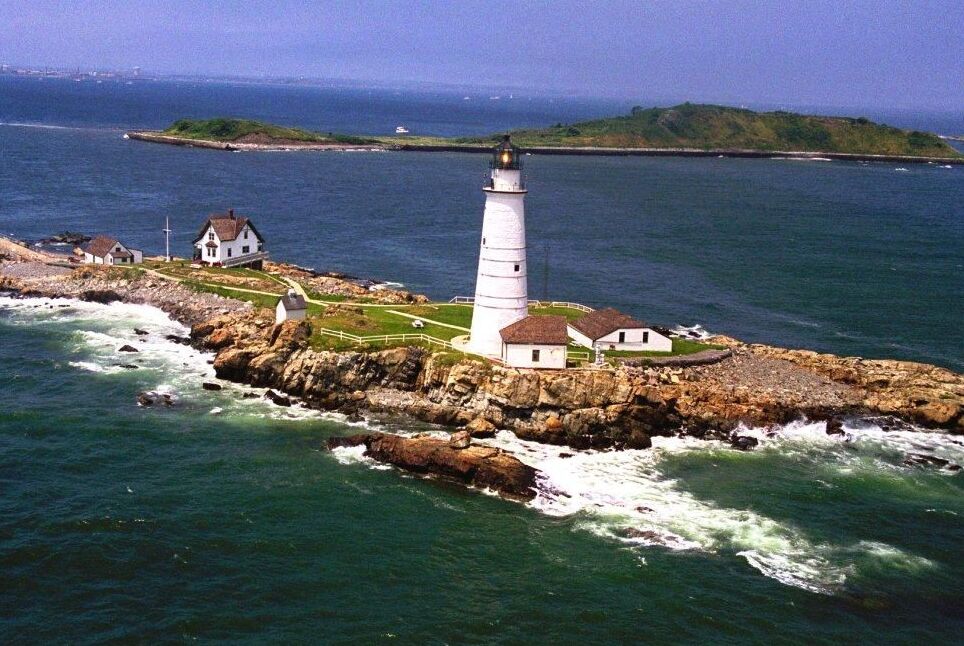
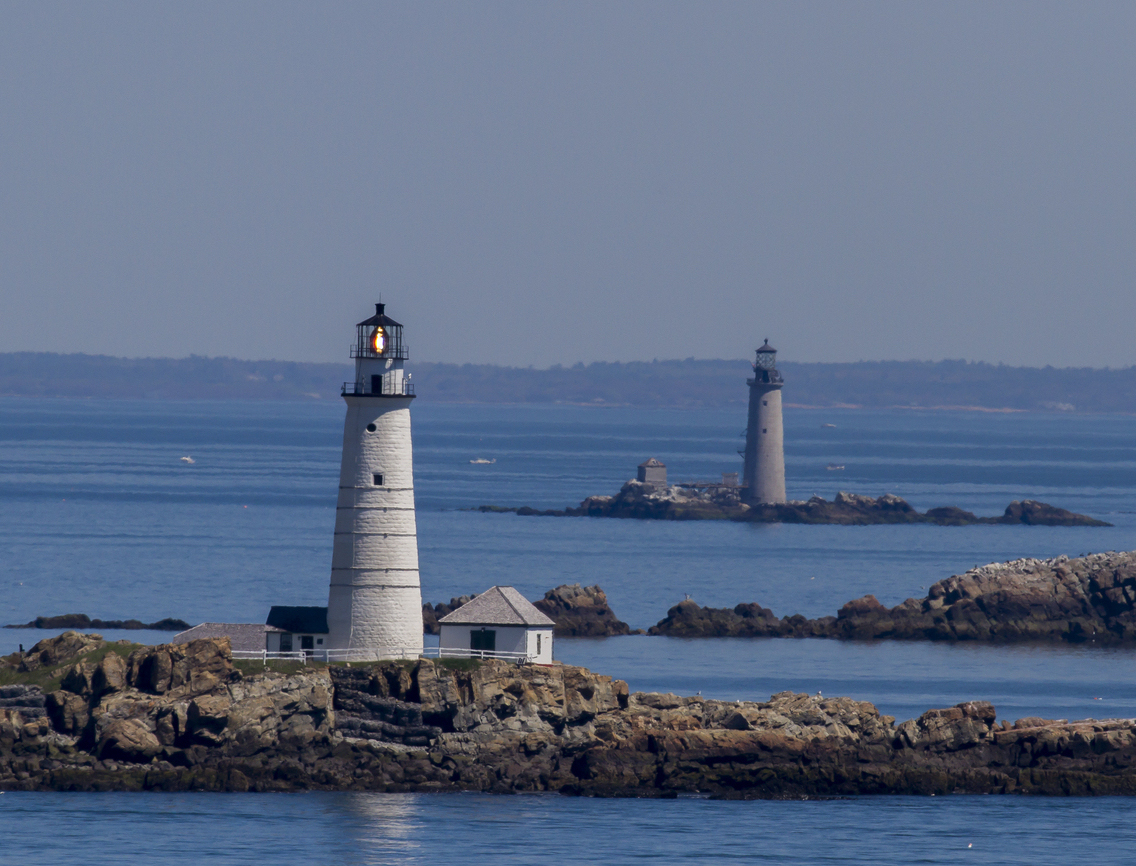
Can you visit Boston Light without a boat tour?
No — Little Brewster Island, where Boston Light stands, is only accessible by boat, and independent access is not permitted. Seasonal tours are operated by the Friends of the Boston Harbor Islands and depart from Fan Pier in the Seaport District. The tours are guided, include access to the lighthouse tower, and have limited capacity, so advance booking is strongly recommended. The journey itself, passing through the outer harbour and approaching the island from the water, is a significant part of the experience.
★ Leggila quando vuoi
Salvala sul tuo telefono.
Aggiungi questa guida ai preferiti, pianifica il viaggio offline, scopri luoghi come questi.