


What makes a good day trip? I have a short list of requirements built from years of doing this badly and then, eventually, doing it better. First: the journey should not cost you more time than the destination is worth. Anything over ninety minutes one way starts to feel punishing unless the payoff is exceptional. Second: you need a clear reason to go — not just 'it's pretty,' but a specific thing to do, see, or walk. Third: the logistics should be solvable without a PhD in Austrian rail timetables or a rental car that costs more than your hotel room.
The ten destinations in this guide range from 33 to 67 kilometres from Vienna's centre. They span Roman archaeology, Baroque church architecture, a steppe lake the size of a small sea, a Slovak capital that most people still underestimate, and a river valley that has been drawing travelers since the Habsburgs were still in business. I have done all of them by multiple means of transport — train, car, and on the Danube itself — and I will tell you, plainly, which way works best and when to leave.
Villa Bruckneudorf: Rome's eastern frontier, still underfoot
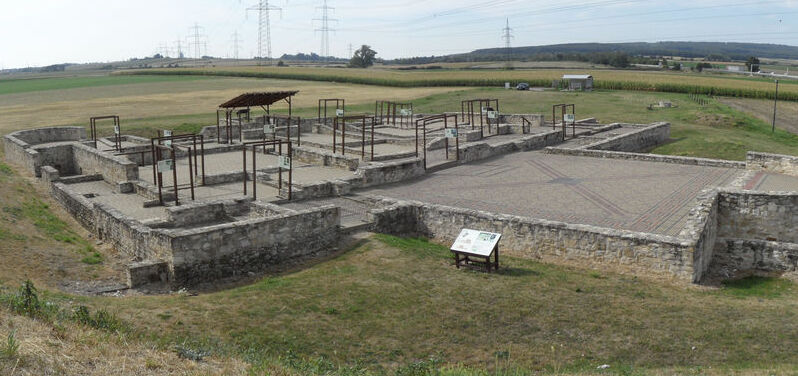
By car from Vienna, you are looking at roughly 35 to 40 minutes via the A4 motorway — straightforward, almost no traffic outside of Friday afternoons. By train, take the S-Bahn or regional service toward Neusiedl am See and factor in a short taxi or bike ride from the station. On arrival: walk the excavated perimeter to understand the villa's scale; look closely at any preserved mosaic or hypocaust flooring on display; pick up the site's printed plan and try to reconstruct the room sequence; and allow time for the small interpretive panels, which are genuinely informative rather than decorative.
Il consiglio del team
Arrive before 10am on weekends. This site draws serious archaeology visitors but not large tour groups, so it stays manageable — but parking fills faster than you'd expect on sunny Saturdays when everyone is also heading to the lake.
Mestke Muzeum (Old Town Hall Museum): Bratislava's architectural palimpsest
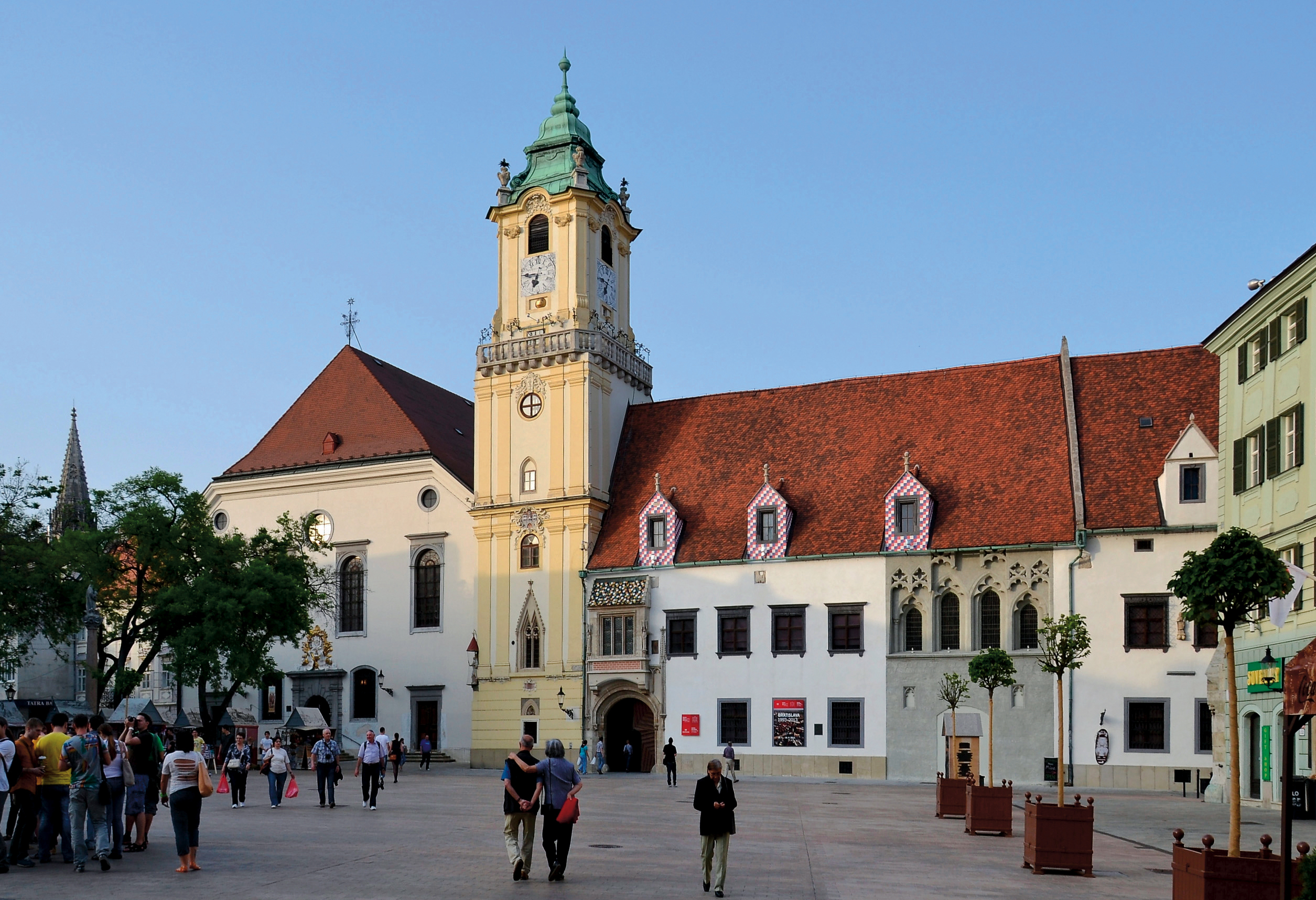
From Vienna, Bratislava is 55 kilometres away and served by direct trains from Wien Hauptbahnhof that take around one hour. The journey is almost absurdly easy — buy a ticket, sit down, arrive. From Bratislava's main station, the Old Town is a 15-minute walk or a short tram ride. At the museum: spend time in the Renaissance courtyard before going inside; work through the medieval city history section on the ground floor; climb the tower for an orientation view of the Old Town's layout; and check the temporary exhibition schedule, which often features archival material not on permanent display.
Il consiglio del team
Tuesday mornings are the quietest time I have found. The museum opens at 10am; if you are on the 8:09 train from Wien Hauptbahnhof, you can be at the door for opening. Avoid Saturday afternoons — the courtyard fills with private events.
The Bergkirche in Eisenstadt: a Baroque commission on a hillside
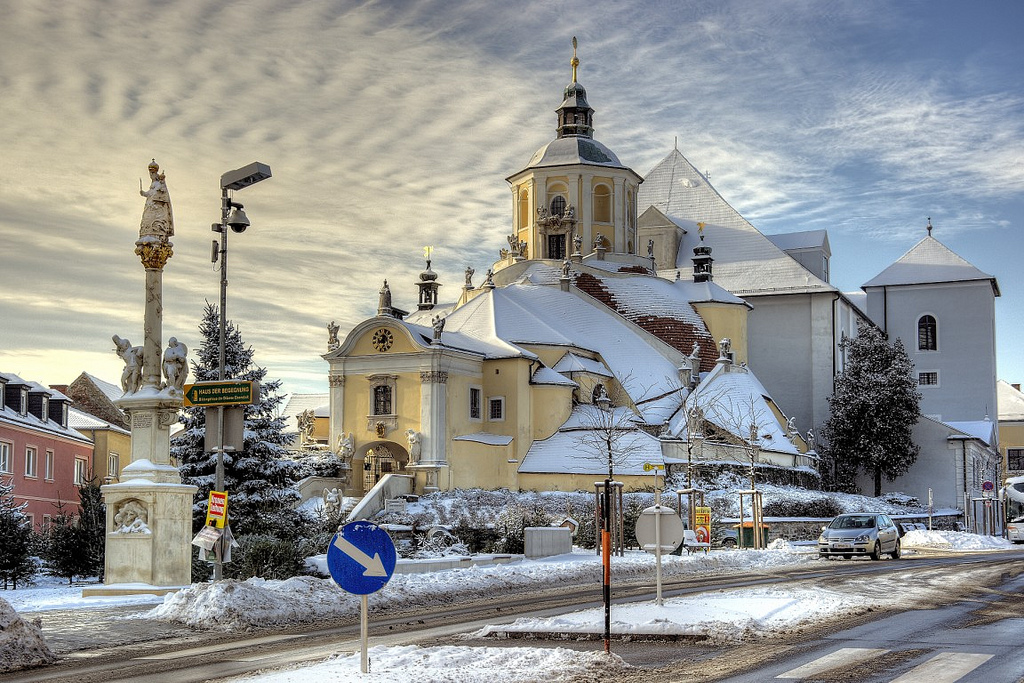
Eisenstadt is 42 kilometres from Vienna and served by direct regional trains from Wien Meidling, with a journey time of roughly 50 to 60 minutes. The station is a manageable walk from the church. On arrival: take the Calvary route slowly — it is designed to be walked, not rushed; examine the exterior of the church from the hillside path for the best sense of its siting; step inside the main nave for the ceiling frescoes; and walk the short distance east to Schloss Esterházy afterward, since you are already here.
Il consiglio del team
Check train times carefully — Eisenstadt has less frequent service than you might expect, with gaps of up to two hours on some afternoon slots. Plan your return train before you leave Vienna, not when you are standing at the station.
Schloss Esterházy: the palace that employed Haydn
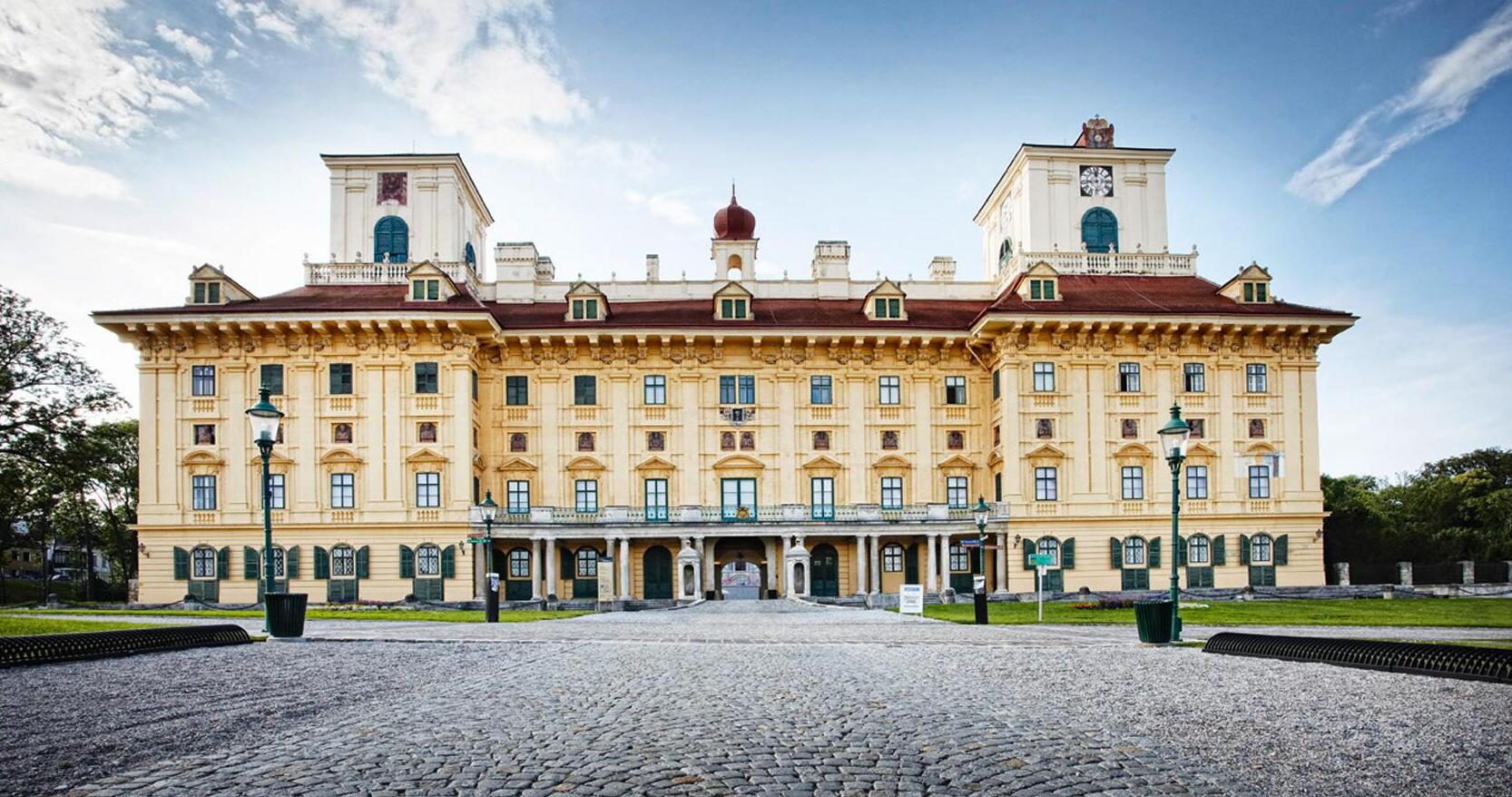
The logistics are identical to the Bergkirche trip: train from Wien Meidling to Eisenstadt, roughly an hour, then a short walk from the station. The palace and the church are close enough to combine into a single half-day without feeling rushed. At the palace: take the guided tour of the state rooms, which is the only way to access the Haydnsaal; look at the ceiling painting in the main hall carefully — the perspective tricks are deliberate; check whether a concert is scheduled during your visit; and allow time for the palace gardens on the south side.
Il consiglio del team
Guided tours run at fixed times and cannot be joined mid-way. Check the schedule on the palace website before you travel — the first tour of the morning is usually the least crowded, and the tour itself takes about 45 minutes.
Bratislava | Hlavné námestie (literally "Main Square"): the centre that holds
The square is five minutes' walk from the Old Town Hall Museum, so these two entries combine naturally into a single Bratislava day. From Wien Hauptbahnhof, the direct train to Bratislava Hlavná stanica takes about an hour; from the station, the square is reachable on foot in 15 to 20 minutes or by tram. What to do: sit at the square long enough to understand its geometry before moving on; identify the Old Town Hall tower and use it as a landmark; walk the perimeter to find the side streets leading off it, which are where the less-visited parts of the Old Town begin; and note the contrast between the medieval scale of the square and the communist-era bridge visible from its western edge.
Il consiglio del team
The square is pedestrianised and genuinely pleasant in the morning before tour groups arrive around 11am. If you are on the early train from Vienna, you have a window of relative quiet that closes quickly.
Bratislava: Il Ponte Nuovo e lo spettacolare Ufo: the bridge that divides opinion
This is a ten-minute walk from Hlavné námestie, making it a natural addition to any Bratislava day trip. From the observation deck: orient yourself to the river's direction and the relationship between the Old Town and Petržalka; look north toward the castle hill; look south toward the flat expanse of Petržalka, one of the largest prefabricated housing estates in Europe; and take the lift rather than the stairs — the staircase is not for the faint of heart.
Il consiglio del team
The UFO observation deck charges a separate admission fee. If you plan to eat at the restaurant, the admission is often included or discounted — worth checking in advance. Weekday lunchtimes are significantly quieter than weekend afternoons.
Lake Neusiedl in Central Europe: a steppe lake with no outlet
A car is the right tool here. The lake's perimeter is long, the best viewpoints are spread out, and the cycling infrastructure — while good — requires more time than most day-trippers have. From Vienna, the A4 motorway gets you to the lake's northern shore in about 45 minutes. On arrival: rent a bike from one of the lakeside towns for at least two hours; find a viewpoint over the reed belt, which is ecologically significant and visually unlike anything else in Austria; walk to the water's edge at a public access point; and if the weather is right, take a boat tour of the reed channels.
Il consiglio del team
The lake gets extremely crowded in July and August, particularly around Neusiedl town and Rust. If you are going in peak summer, arrive by 9am or accept that parking will be a problem. Shoulder season — May or September — is when the light is better and the crowds are thinner.
Devin: the first recognized Slovak white wine grape

The practical approach: drive to the Small Carpathian wine route, which runs through a series of Slovak villages north of Bratislava. The distance from Vienna is roughly 45 kilometres, and the border crossing is seamless within the Schengen area. What to do in the region: seek out a winery that specifically offers Devin tastings, since not all producers work with it; compare the grape's aromatic profile against a local Welschriesling to understand what the crossing achieved; ask the winemaker about the vintage conditions, which vary considerably in this continental climate; and buy a bottle or two to take back, since Slovak wine is still underpriced relative to its quality.
Il consiglio del team
Many Slovak wineries in this region do not have walk-in tasting rooms — they operate by appointment. Contact producers at least a few days before your visit. The village of Pezinok is a reliable base for this kind of spontaneous wine exploration.
Scopri la Valle di Wachau: un gioiello dell'Austria: the Danube valley between Melk and Krems
By boat from Vienna's Reichsbrücke pier, the journey to Krems takes the better part of a day — this is a full-day commitment, not a half-day. By car, you can drive to Melk in 75 minutes and work eastward. On arrival in the valley: walk the riverside path between any two villages to understand the landscape's scale; visit Melk Abbey if you are starting from the western end; find a viewpoint above the vineyards in the afternoon light; and take the time to simply sit by the river, which moves faster than it looks.
Il consiglio del team
The boat schedule is seasonal and runs primarily from April to October. Check the DDSG timetable before you plan — the service does not run daily in shoulder season, and missing the last boat means an unplanned train journey home.
Vogelbergsteig dürnstein: the trail above the river that Richard the Lionheart knew
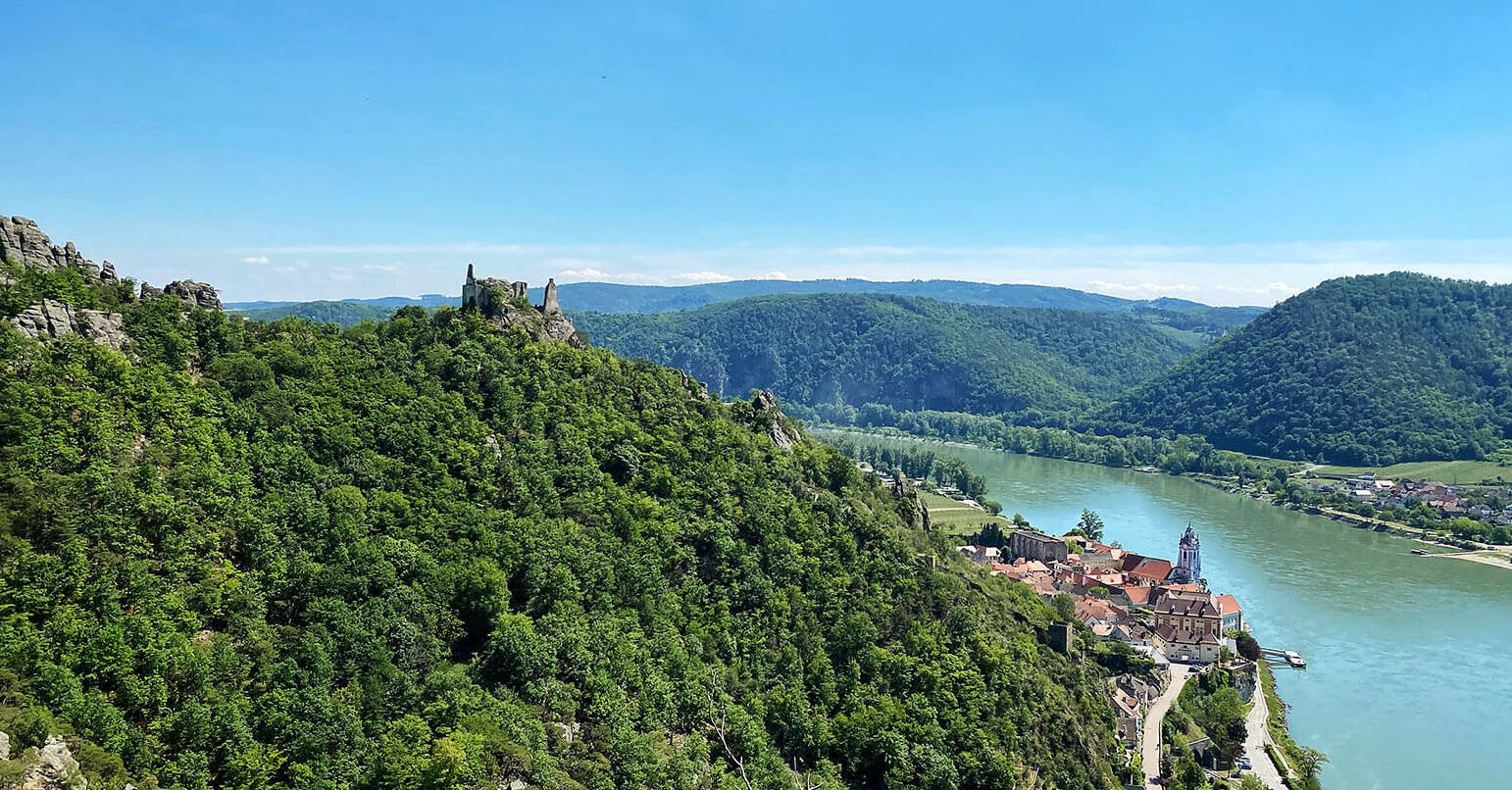
Dürnstein is 67 kilometres from Vienna. By car, the drive is about 75 minutes via the A22 and then the riverside road — the riverside road is slower but far more informative about the landscape you are about to walk through. By train, take the Westbahn to Krems and then a local connection or taxi to Dürnstein. The trail: the ascent takes 30 to 45 minutes at a moderate pace; the castle ruins reward a slow circuit; the descent can be varied to include the lower vineyard paths; and the village of Dürnstein itself, with its blue-towered Augustinian monastery, is worth 30 minutes at the end.
Il consiglio del team
The trail is rocky and exposed in sections — proper footwear is not optional. Start by 9am in summer to avoid the midday heat on the south-facing slope. The village parking fills completely by 10:30am on summer weekends; the car park at the eastern edge of the village fills last.
The ten destinations in this guide form a rough circle around Vienna — east into Burgenland and Slovakia, west into the Wachau, north along the Danube. What they share is proximity: none of them requires an overnight stay, and all of them can be reached without a car if you are willing to work with the train schedules rather than against them.
The honest advice, after years of doing these trips, is this: pick one destination and do it properly rather than combining three and doing none of them well. The Wachau alone can absorb a full day if you let it. Bratislava can absorb two. Even Bruckneudorf, which most people would budget an hour for, has a way of holding you longer than expected once you start trying to reconstruct what the villa actually looked like.
Vienna will be there when you get back. It always is.
The honest advice, after years of doing these trips, is this: pick one destination and do it properly rather than combining three and doing none of them well. The Wachau alone can absorb a full day if you let it. Bratislava can absorb two. Even Bruckneudorf, which most people would budget an hour for, has a way of holding you longer than expected once you start trying to reconstruct what the villa actually looked like.
Vienna will be there when you get back. It always is.