Borghi&Tesori by Secret World — la più grande guida di viaggio al Mondo
En · Guida di viaggio
Guida di viaggio · Edizione 2026

10 Best Day Trips from Stockholm — by train, car, and boat

Where to go, how to get there, and what nobody tells you before you leave

L
Una guida di
Lena Hofmann
Aggiornata il
13 maggio 2026
Lettura
12 minuti
Comprende
9 luoghi · mappa interattiva
10 Best Day Trips from Stockholm — by train, car, and boat
★ Guida d'Italia 2026

Pianifica con cura. Viaggia più a fondo.

1.3M+ luoghi curati nel mondo, mappe offline e itinerari intelligenti — tutto in un'app gratuita.

1.3M+ luoghi Mappe offline Itinerari AI Gratis
Stockholm has a problem that most cities would envy: it is surrounded, in every direction, by things worth seeing. Water, forest, medieval stone, royal excess — all of it within reach of a single day. The trouble is that most visitors spend their entire trip inside the city limits and leave wondering why they felt vaguely cheated. I've done this circuit more times than I can count, in every season, by every means available, and I'll tell you straight: the day trips from Stockholm are not optional extras. They are, in several cases, the point.

What makes a good day trip? Three things, in my experience. First, it has to be genuinely different from where you started — not just a suburb with a prettier name. Second, the logistics have to be honest. If the train only runs twice a day and the last one back leaves at 4pm, you need to know that before you pack a picnic. Third, there has to be enough there to fill a day without feeling like you're padding the itinerary. A nice view and a closed café does not constitute a day trip.

The destinations in this piece range from a lakeside castle you can reach in under an hour to a medieval island that requires an overnight ferry if you're not careful about your return. I've grouped them by how you actually get there, because the mode of transport shapes the experience as much as the destination itself. A castle seen from a boat deck is a different castle than one seen from a car park. Keep that in mind, and plan accordingly.
1 Lake | Castle · 48.9 km

Lake Mälaren and the Gripsholm Castle: the view that earns its reputation
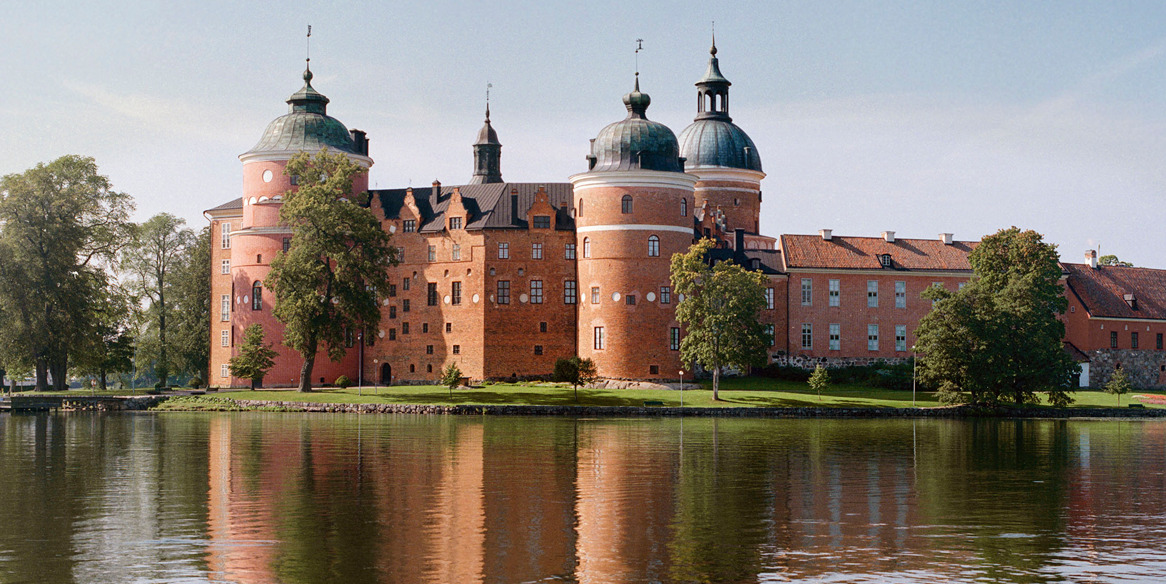
Lake Mälaren and the Gripsholm Castle: the view that earns its reputation
The train from Stockholm Central to Läggesta or Mariefred takes roughly an hour, and on a clear morning the light over Lake Mälaren through the carriage window is reason enough to make the journey. Gripsholm Castle, which sits on the banks of Lake Mälaren, was built in 1537 and maintains all of its old-world charm and royal weight. It is not a ruin. It is not a reconstruction. It is a working museum with a genuine accumulation of centuries inside it, including one of the largest portrait collections in the world.

On arrival, walk the lakeside path first — before the tour groups find their bearings. Then go inside and take the round towers seriously; the acoustics and the scale of the rooms are disorienting in the best way. After the castle, the small town of Mariefred is worth an hour on foot. Grab a coffee at one of the waterfront spots, take the narrow-gauge steam railway if it's running, and resist the urge to leave before 3pm — the afternoon light on the water is better than the morning.
Il consiglio del team The direct train to Läggesta connects with a local service to Mariefred, but check the timetable before you go — the connection is not guaranteed and a missed link costs you 40 minutes standing on a platform. Weekends in July see the castle at its busiest; Tuesday and Wednesday mornings in June are noticeably quieter.
2 Castle | Renaissance architecture · 49.3 km

Gripsholm Castle on the shores of lake Mälaren: what the second visit reveals
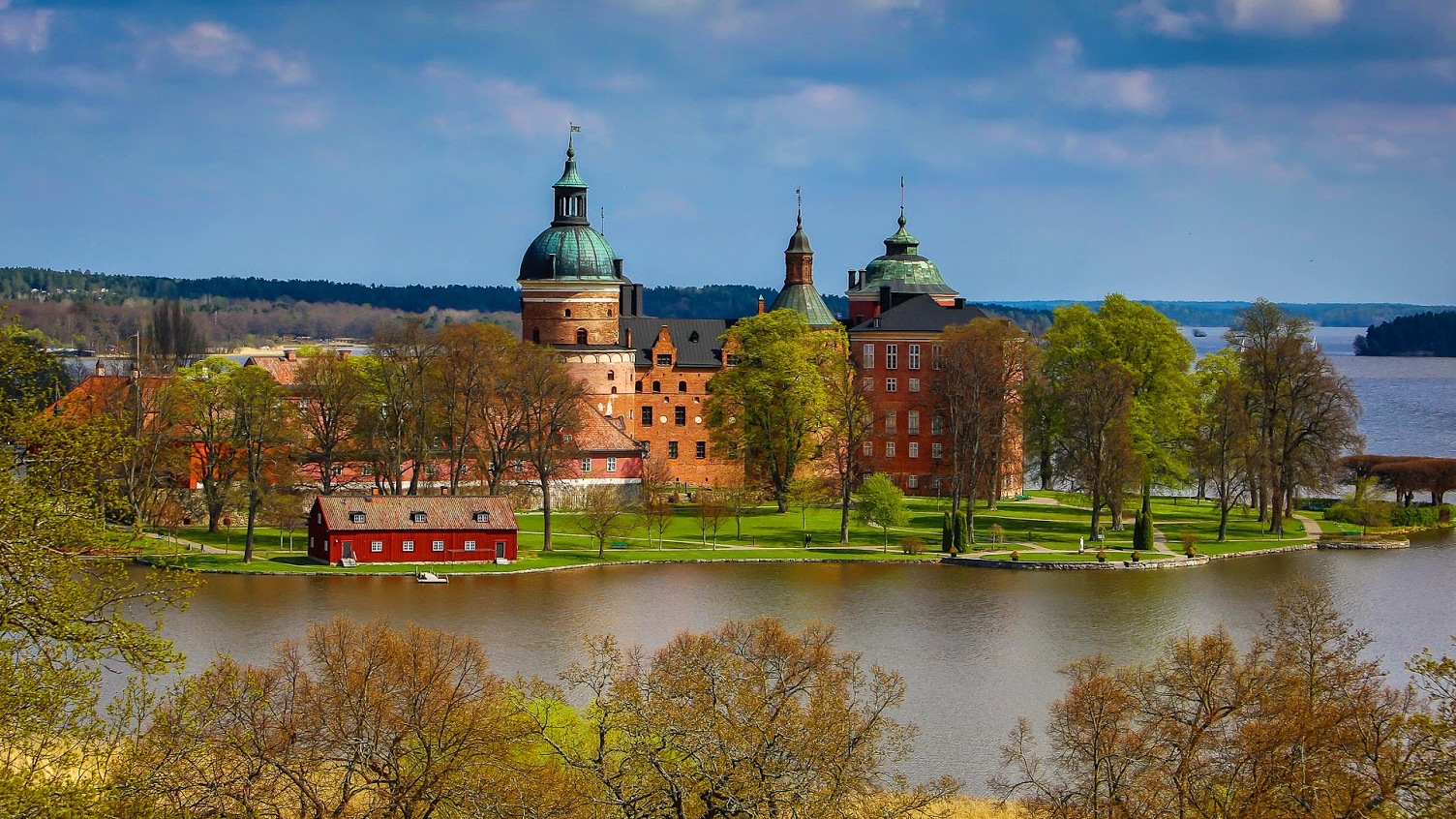
Gripsholm Castle on the shores of lake Mälaren: what the second visit reveals
If the previous entry is about the landscape around the castle, this one is about the building itself. Gripsholm Castle on the shores of lake Mälaren gained its Renaissance profile during the reign of Gustav Vasa in the mid-1500s, and the architectural layers added by subsequent monarchs make it a more complex structure than it first appears. The round towers are medieval in origin; the interior arrangements reflect the tastes of at least four different eras of Swedish royal life.

Come here specifically to walk the interior rooms slowly. The portrait gallery alone — containing thousands of images spanning several centuries of Swedish and European history — rewards a deliberate pace. The theatre inside the castle is a separate, remarkable space. Outside, the grounds between the castle and the lake are modest but well-kept, and the view back toward the water from the main entrance gives you the composition that ends up on every postcard. Do not skip the bookshop; it stocks serious material on Swedish royal history that you will not find easily elsewhere.
Il consiglio del team Parking near the castle in Mariefred is limited and fills by 10am on summer weekends. If you're driving, arrive before 9:30am or accept a 15-minute walk from the overflow area on the edge of town. By train, this problem disappears entirely.
3 Theatre | Cultural heritage · 48.9 km

Teatrino del Castello di Mariefred: the court theatre that time forgot
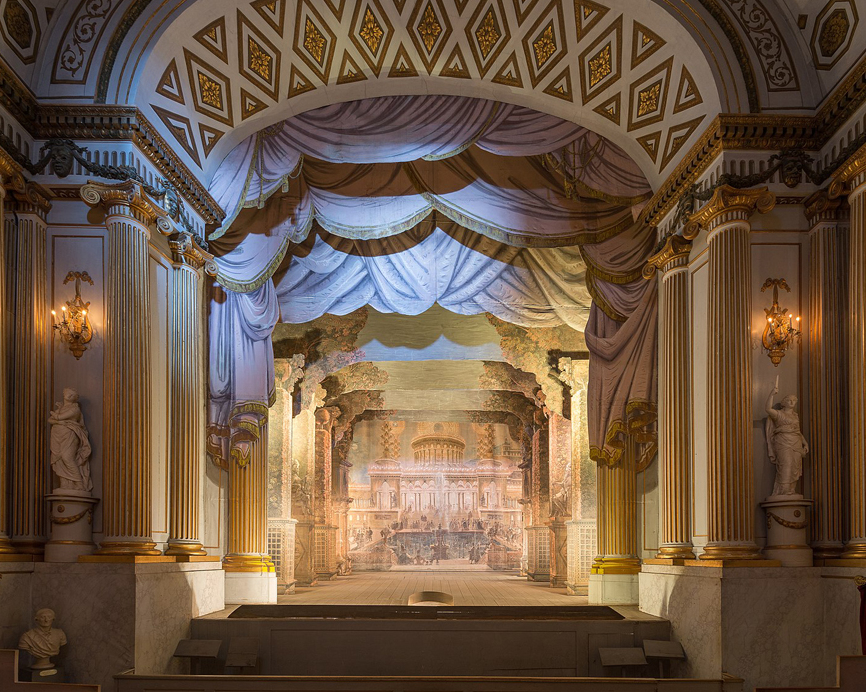
Teatrino del Castello di Mariefred: the court theatre that time forgot
Located inside one of the four towers of Gripsholm Castle, the Teatrino del Castello di Mariefred is one of those spaces that stops you mid-step. The court theatre was built by King Gustav III, an 18th-century Swedish monarch whose enthusiasm for theatre bordered on obsession — he wrote plays, he performed in them, and he built spaces to house them. This small theatre is one of the surviving results of that passion, and it has an intimacy that larger court theatres in Europe tend to lose.

Getting here is the same journey as the castle itself — train to Läggesta, connection to Mariefred — but this specific space deserves its own entry because most visitors walk past it without understanding what they're looking at. Check in advance whether performances or guided tours of the theatre are scheduled during your visit; the experience of the space during a live event is categorically different from seeing it empty. Even empty, though, the painted scenery and the scale of the room against the thickness of the tower walls is worth the detour.
Il consiglio del team Performance schedules for the Teatrino are not always prominently advertised in English. Check the castle's official website directly, and do it at least a week before your visit — popular summer performances sell out fast and there is no large-capacity overflow.
4 Food heritage | Industrial history · 94.5 km

La Svezia e la Findus: an industrial origin story in the Swedish countryside

La Svezia e la Findus: an industrial origin story in the Swedish countryside
This one requires some explanation. The Findus brand was born in Sweden in the early twentieth century, and its origins are tied to a specific corner of Swedish food production history that most visitors — and many Swedes — know nothing about. At roughly 94 kilometres from Stockholm, this is a car trip rather than a train excursion, and the journey through the Swedish agricultural landscape is itself part of the context. You are driving through the kind of countryside that made industrial food processing both possible and, eventually, necessary.

This is not a conventional tourist attraction. It is a piece of economic and cultural history embedded in a landscape. If you are interested in how modern food systems developed in Scandinavia, the area around the original Findus production sites rewards a curious mind and a willingness to look at ordinary-seeming buildings with some historical imagination. Pair the drive with a stop at a local farm shop, a walk through a nearby village, and a proper Swedish lunch — the kind that has nothing to do with frozen peas.
Il consiglio del team This trip works best if you treat the drive itself as the destination. Take the smaller roads rather than the E4; the extra 20 minutes are worth it for the agricultural landscape. There is no formal visitor centre for the Findus history, so do your reading before you leave Stockholm.
5 Medieval fortification | Archaeological site · 187.9 km

La Mura di Visby: Un Tuffo nel Medioevo Svedese — the wall that defines the island
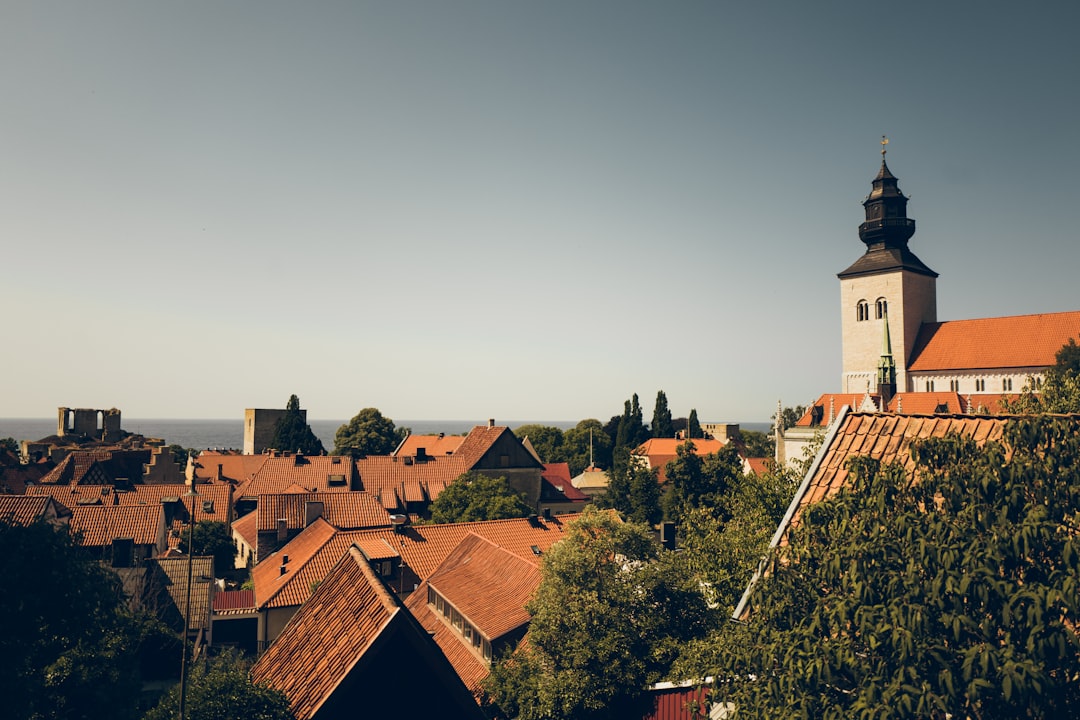
La Mura di Visby: Un Tuffo nel Medioevo Svedese — the wall that defines the island
At nearly 188 kilometres from Stockholm, Visby is not a casual day trip by car — and that's before you factor in the ferry crossing to Gotland, which the car must also make. But if you are committed to driving, the combination of the ferry from Nynäshamn or Oskarshamn and the road across Gotland to the walled town is an experience with a particular rhythm that public transport cannot replicate. The medieval walls of Visby are among the best-preserved in northern Europe, running for roughly 3.6 kilometres around the old town and punctuated by towers that have been standing since the 13th century.

The walls are walkable — partly — and the views from certain sections over the Baltic give you an immediate sense of why this position mattered strategically. Walk the perimeter first, then go inside the walls to the old town. The ruins of medieval churches scattered through the streets are not decorative; they are genuine remnants of a prosperous Hanseatic trading city.
Il consiglio del team If you are driving to Visby, book the ferry well in advance — Destination Gotland operates the crossing and summer sailings fill up weeks ahead. The crossing takes roughly three hours. For a day trip by car, the early morning departure from Nynäshamn and the evening return is tight but achievable in summer.
6 Medieval town | UNESCO World Heritage · 188.9 km

Visby Old Town: inside the walls, on foot
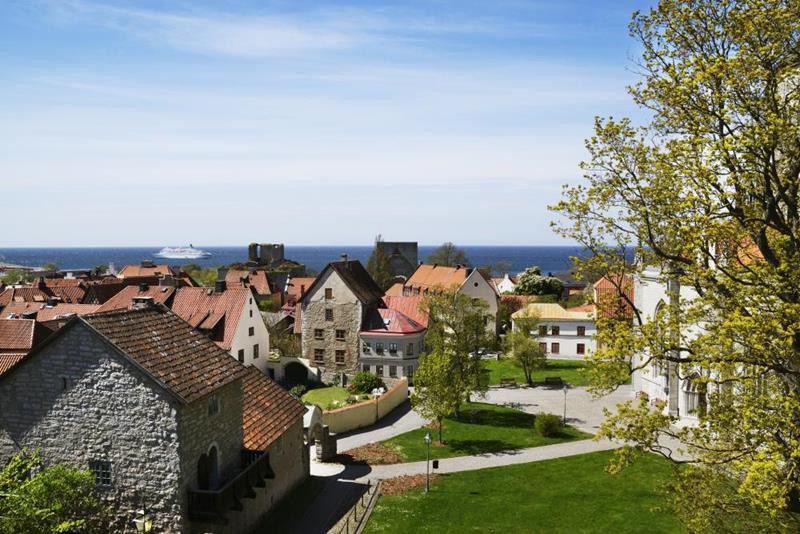
Visby Old Town: inside the walls, on foot
Visby Old Town is a UNESCO World Heritage Site, and unlike some places that carry that designation, the designation here is not the main reason to go. The main reason is that the town is genuinely, structurally medieval in a way that is rare in a functioning, inhabited place. The cobbled streets are not a recreation. The stone buildings are original. The roses growing over the ruins of churches are not planted for tourism — they have been there long enough to become part of the architecture.

On arrival, resist the temptation to follow the main tourist route immediately. Instead, walk into the residential streets in the northern part of the old town, where the scale of daily life inside the walls becomes clear. Then work your way back through the market square, past the cathedral, and down toward the harbour. The ruins of St. Karin's Church are worth sitting in for ten minutes, not because of any specific feature but because of the quality of silence inside a roofless medieval building on a calm afternoon.
Il consiglio del team Visby Old Town gets genuinely crowded in the last week of July and the first week of August — this is Medieval Week, when the town fills with costumed participants and the streets become nearly impassable by midday. Either time your visit specifically for that event or avoid those dates entirely.
7 Medieval town | Ferry destination · 188.9 km

Visby : The Scandinavia's best-preserved medieval Town — arriving by sea
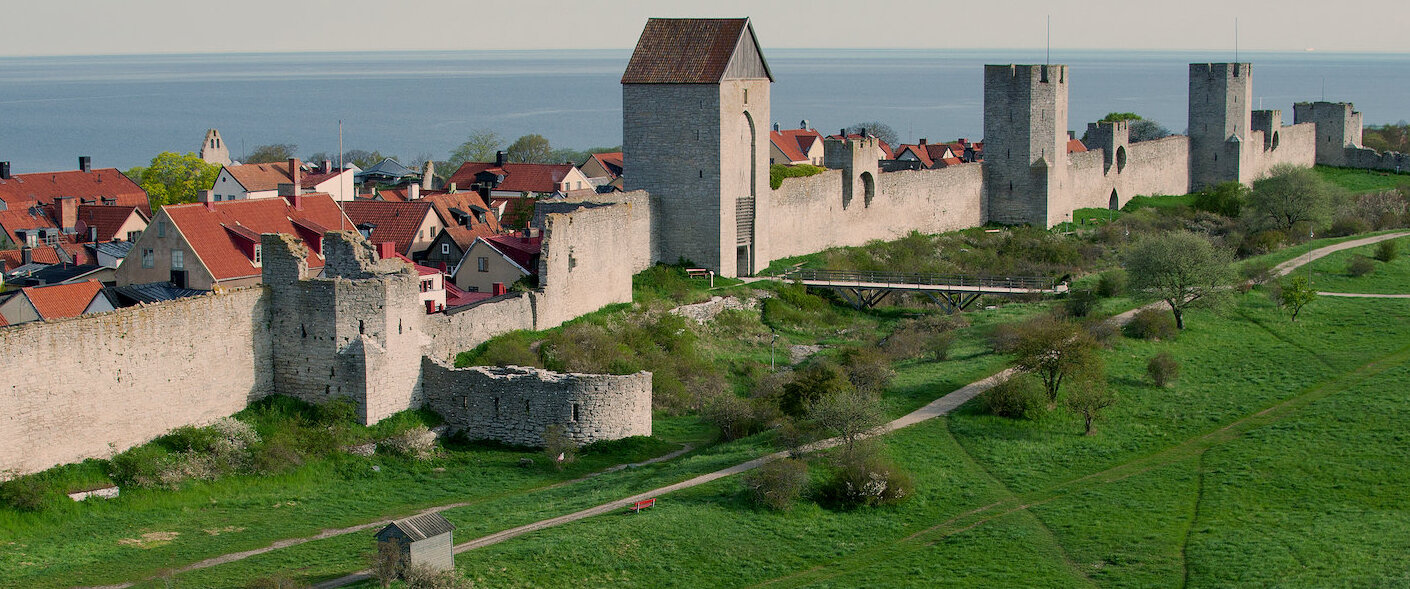
Visby : The Scandinavia's best-preserved medieval Town — arriving by sea
There is a specific reason to arrive in Visby by boat rather than any other means: the approach from the sea is the approach that the Hanseatic merchants, the crusaders, and the Baltic traders all made, and the walls of the city seen from the water explain immediately why this place accumulated the wealth and the defences that it did. Visby is Scandinavia's best-preserved medieval town, and arriving by ferry from the Swedish mainland gives you the full visual argument for that claim before you've even docked.

The overnight ferry from Stockholm's Stadsgårdskajen terminal, operated by Destination Gotland via connecting services, is the most atmospheric option — you wake up in Visby harbour. The daytime crossing from Nynäshamn is more practical for a long day trip. On arrival, the harbour area gives you immediate access to the southern gate of the walls. Walk north through the town, visit the Gotland Museum for context on the island's Viking and medieval history, and climb to the upper sections of the wall before the afternoon light fades.
Il consiglio del team The ferry from Nynäshamn is reached by commuter train from Stockholm Central — about an hour. This combination of train and ferry is cheaper and less stressful than driving to the port and loading a car. Book the ferry seat-only ticket rather than a cabin for a day trip; it's significantly less expensive.
8 Medieval town | Coastal · 188.9 km

Visby a little wonder on the Baltic Sea: rose gardens and medieval ruins
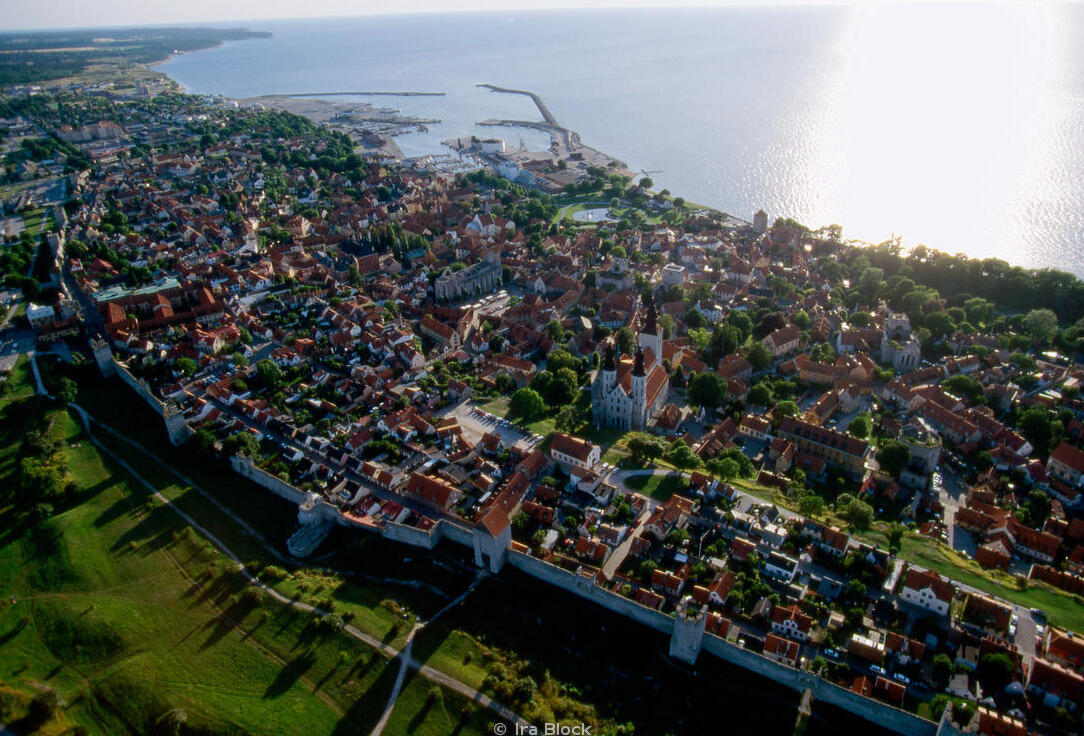
Visby a little wonder on the Baltic Sea: rose gardens and medieval ruins
Visby is located on the west coast of Gotland, facing the Swedish mainland across the Baltic, and the combination of medieval ruins, rose gardens growing wild through the old town, and the open sea beyond the harbour walls gives the place a layered quality that takes a full day to absorb properly. The roses are not incidental — they are a genuine feature of Visby's character, growing in and around the ruins in a way that feels less like landscaping and more like nature making a quiet argument.

For this particular version of a Visby day trip, focus on the smaller details: the carved stonework on the surviving church facades, the way the light changes on the harbour in the late afternoon, the scale of the Hanseatic warehouses near the waterfront. Take the boat from Stockholm or Nynäshamn, arrive with enough time to walk the walls and the old town at a real pace, and eat at one of the restaurants inside the walls rather than near the ferry terminal — the quality difference is significant.
Il consiglio del team The rose gardens are at their peak in late June. If that is your reason for coming, time the trip accordingly. By mid-August the roses are largely finished, though the town itself is no less worth visiting.
10 Island | Archipelago · 193.0 km

Utö: l'isola abitata più a sud della Finlandia — Sweden's southern archipelago island
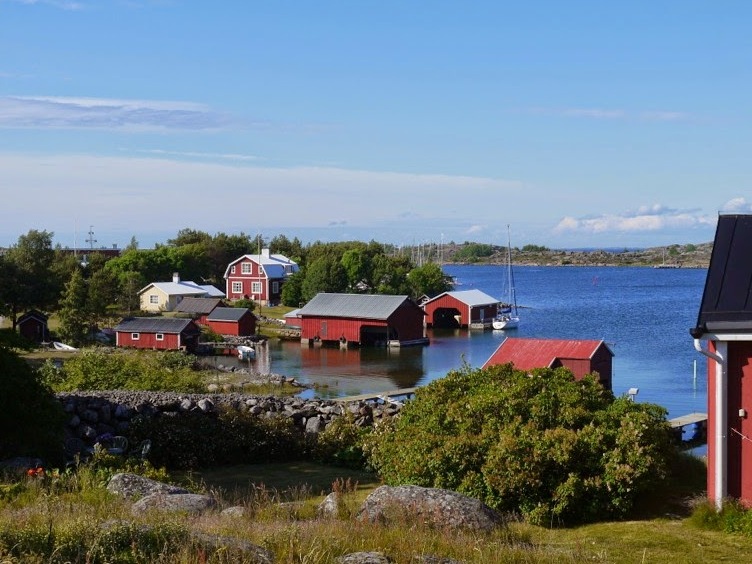
Utö:  l'isola abitata più a sud della Finlandia — Sweden's southern archipelago island
A note on the source description: Utö in this context refers to the Swedish island in the Stockholm archipelago, not the Finnish island of the same name — the source note appears to conflate the two, but the distance from Stockholm (193 kilometres by water route) and the ferry access point are consistent with the Swedish Utö, which is the southernmost inhabited island in the Stockholm archipelago. The journey itself is the experience: the boat from Årstaberg or via Nynäshamn threads through the outer archipelago, and the landscape changes progressively as the islands become smaller and more exposed.

On the island, rent a bicycle from the harbour and ride to the lighthouse at the southern tip — it is one of the older lighthouses in Sweden and the view from the surrounding rocks over the open Baltic is as far from central Stockholm as you can get in a single day. The island has a small museum related to its mining history, a handful of places to eat, and walking paths through the pine forest. It is quiet in a way that requires the boat journey to earn.
Il consiglio del team The ferry crossing to Utö takes several hours depending on the route, which makes this the most time-sensitive trip on this list. The first boat out is not optional — take it. Check Waxholmsbolaget's timetable in advance and note that winter and summer schedules differ substantially. This is a long day; pack accordingly.
Day trips from Stockholm have a way of reframing the city you left behind. You return with a clearer sense of what Stockholm is and isn't — a capital that exists within a much larger, older, stranger landscape. The medieval walls of Visby make the clean lines of Södermalm look recent. The lake around Gripsholm Castle puts the city's waterways in a different register. Even the industrial food history out toward the Swedish countryside reminds you that this is a country with a practical, unsentimental relationship to its own land.

None of these trips require heroic logistics. They require, mostly, the decision to leave. Stockholm will be there when you get back, and it will look slightly different when you do — which is, in the end, the only real argument for leaving in the first place. Book the ferry. Check the train time. Go.
★ Guida tascabile

Porta questa guida con te.

Salvala offline, ottieni le indicazioni a piedi e scopri migliaia di luoghi come questi.

Salva offline Percorsi smart Tesori nascosti
App Store Google Play AppGallery

Tutti i luoghi sulla mappa

Dati cartografici © OpenStreetMap contributors.

Domande dei lettori

Le domande più frequenti su questa guida.

What is the best time of year to do day trips from Stockholm?

Late May through early September gives you the longest daylight hours, the most frequent ferry and train services, and the best weather for walking and cycling. June is particularly good — crowds have not yet peaked, daylight extends past 10pm, and the archipelago is at its most navigable. July is busiest, especially for Visby and the archipelago islands. September is underrated: quieter, cooler, and the light has a quality that summer doesn't.

Is a Eurail or Interrail pass useful for these trips?

For the train-based trips — particularly to Mariefred and the Gripsholm area — a Swedish rail pass or an Interrail pass covering Sweden is useful, but check the fine print. Regional trains on the Mälaren line are covered, but some high-speed services require a seat reservation fee on top of the pass. For Visby, the ferry crossing is not covered by rail passes; you'll need to book and pay for the Destination Gotland ferry separately regardless of what rail pass you hold.

Is it practical to drive from Stockholm to Visby in a single day?

Technically possible, but only barely comfortable. You would drive to Nynäshamn (about an hour from central Stockholm), take the roughly three-hour ferry crossing, spend time in Visby, and return on the evening sailing. The total travel time is around eight hours, leaving perhaps four to five hours on the island. It works better as an overnight trip. If you insist on a day trip to Visby, go by train to Nynäshamn and take the ferry as a foot passenger — it's faster to get to the port, cheaper, and you won't spend the day managing a car on an island where the old town is entirely pedestrianised anyway.

How far in advance should I book ferries for the archipelago and Gotland?

For Gotland (Visby) in July and early August, book at least three to four weeks in advance — cabins sell out first, but even deck seats on popular sailings go quickly. For the Stockholm archipelago ferries to outer islands like Utö, booking a week ahead is usually sufficient outside peak summer, but the first sailing of the day on weekends in July fills up. Destination Gotland and Waxholmsbolaget both have online booking; use it.

Are there any of these trips that work well in winter?

Gripsholm Castle and Mariefred are open year-round and are genuinely worthwhile in winter — the castle is less crowded, the lake may be frozen, and the town has a quieter character that summer obscures. Visby in winter is a different proposition: ferry frequency drops significantly, some restaurants and attractions close, and the medieval atmosphere takes on a genuinely austere quality that some travellers find compelling and others find bleak. The archipelago islands, including Utö, have reduced winter ferry services and limited facilities, but the landscape in snow is remarkable if you are prepared for it.

★ Leggila quando vuoi

Salvala sul tuo telefono.

Aggiungi questa guida ai preferiti, pianifica il viaggio offline, scopri luoghi come questi.

Preferiti Offline 60+ lingue
App Store Google Play AppGallery