10 Best Day Trips from San Francisco — by train, car, and boat
Where to go, how to get there, and what no one tells you before you leave
L
Una guida di
Lena Hofmann
Aggiornata il
20 settembre 2026
Lettura
12 minuti
Comprende
10 luoghi · mappa interattiva
★ Guida d'Italia 2026
Pianifica con cura. Viaggia più a fondo.
1.3M+ luoghi curati nel mondo, mappe offline e itinerari intelligenti — tutto in un'app gratuita.
1.3M+ luoghiMappe offlineItinerari AIGratis
San Francisco is a city that makes you feel guilty for staying in it too long. Not because it isn't worth your time — it absolutely is — but because it sits at the geographic center of one of the most varied day-trip networks in North America, and the pull of what's just beyond the Bay is constant and legitimate. Within two hours in almost any direction, you can be standing in a vineyard, on a lighthouse cliff, inside a cathedral of redwoods, or at the desk where the personal computer was born. That range is not accidental. The Bay Area's geography — the water, the valleys, the coastal ridgelines — naturally segments the landscape into distinct worlds, and the infrastructure, for once, more or less keeps up. Caltrain runs south. Ferries cross the Bay. Highway 1 hugs the coast. A good day trip from San Francisco earns its keep in a specific way: it has to be reachable without a full day of travel in each direction, it has to offer something you cannot get inside the city itself, and it has to leave you with enough time to actually absorb it rather than just photograph it from the parking lot. The trips in this list meet all three criteria. I've done each of them — some by car, some by train, some by ferry — at different times of year, in different weather, with different levels of patience. What follows is what I actually learned, not what the tourism board wants you to think.
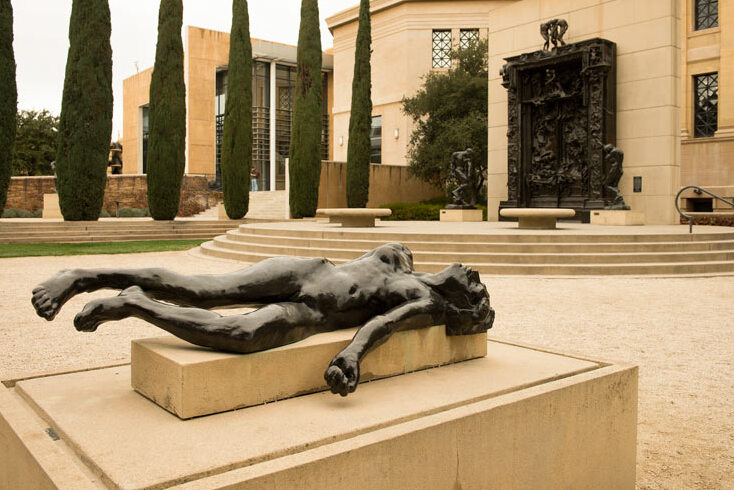
Most people don't realize that one of the most significant castings of Rodin's monumental bronze portal — the work he spent the last four decades of his life obsessing over, the one that gave us The Thinker and The Three Shades as standalone figures — sits outdoors at the Cantor Arts Center on the Stanford University campus, roughly 35 miles south of San Francisco. The Gates of Hell is an epic achievement: nearly 200 individual figures writhing across a massive portal to Hades, inspired by Dante's Inferno and never quite finished to Rodin's satisfaction before he died. You can take Caltrain from 4th and King Street in San Francisco to the Palo Alto station in about 55 minutes on a Baby Bullet service, then grab a free Marguerite shuttle to the campus. The Cantor Center is free and worth at least two hours. Stand close to the doors, then stand far back — the sculpture changes completely with distance. Combine this with a walk through the Main Quad and a look at the Memorial Church's mosaics. The scale of the campus on foot is genuinely disorienting in the best way.
Il consiglio del team
Caltrain runs less frequently on weekends — check the timetable before you leave and build your return around a confirmed departure. The Baby Bullet stops at Palo Alto; the local trains do not always. Arrive at 4th and King at least 10 minutes early; the platform fills faster than you'd expect on Saturday mornings.
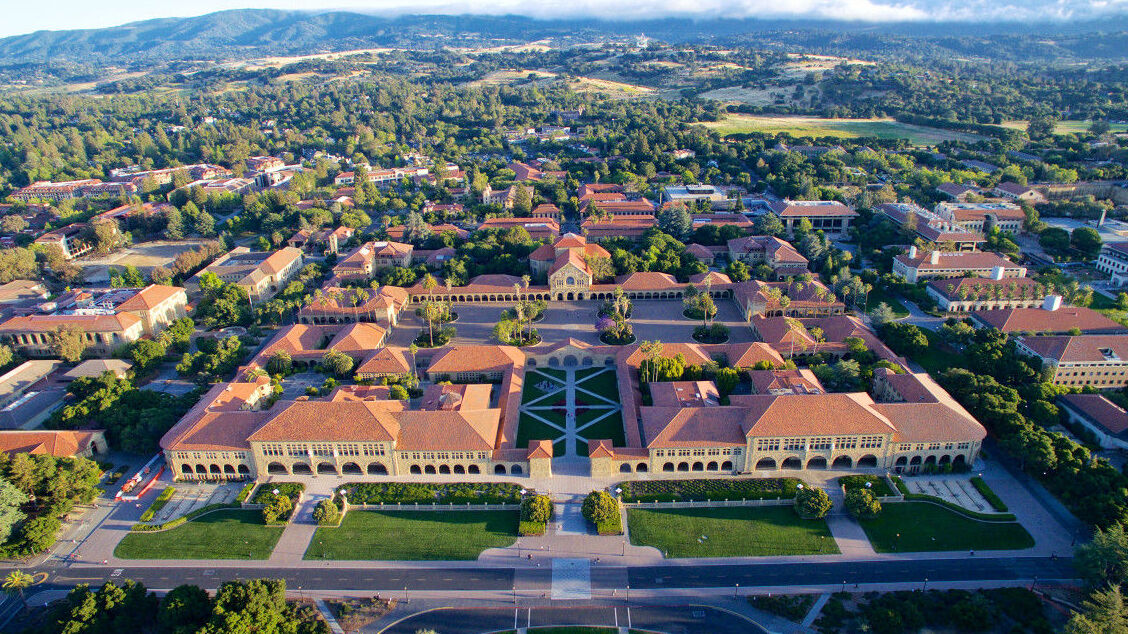
Separated here from the Rodin entry because Stanford's campus deserves its own attention — the university is regularly cited as one of the most prestigious in the world, but its physical architecture is the underappreciated story. The Romanesque sandstone buildings, the long axial views down Palm Drive, and what the university calls its architectural crown jewel — the Memorial Church, with its gold mosaic facade — make this a legitimate architectural day trip, not just a backdrop for a museum visit. The same Caltrain route applies: 4th and King to Palo Alto, then the Marguerite shuttle. Budget three to four hours to walk the main campus properly. The Hoover Tower observation deck gives you a rare elevated view of the Bay plain stretching toward the water. The Stanford Bookstore is one of the better academic bookstores on the West Coast if you want something to read on the train back. On weekdays during the academic year, free student-led tours leave from the Visitor Center — worth joining for 70 minutes if your timing allows.
Il consiglio del team
Parking on campus costs money and requires navigation of a confusing permit system. The train-plus-shuttle combination is genuinely faster and less stressful than driving from the city during weekday commute hours. If you drive, arrive before 9am or after 2pm to avoid the worst of the 101 congestion through San Mateo.
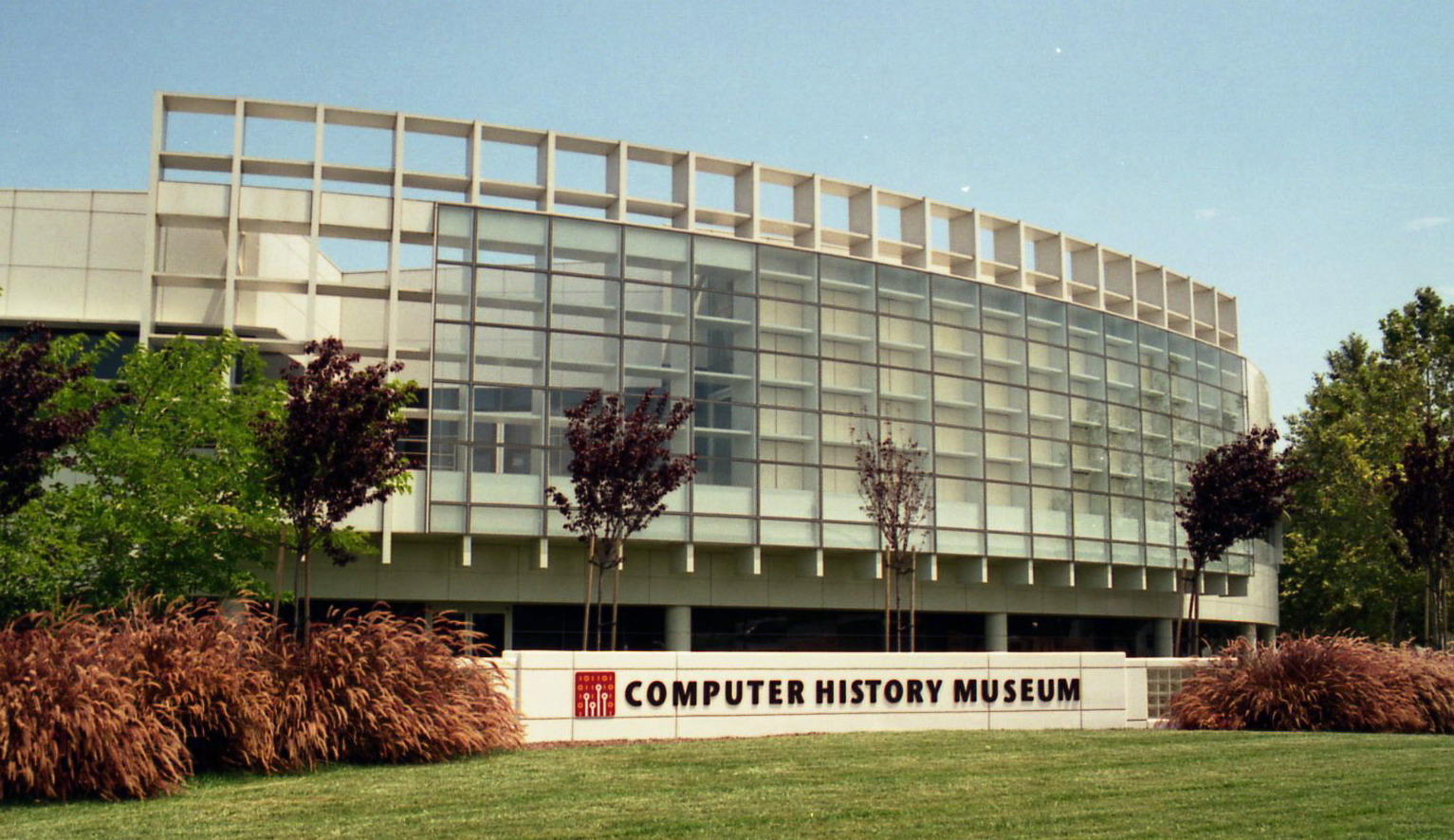
The Computer History Museum in Mountain View is a remarkable hub that showcases the history of computers and continues to chronicle new advances in technology. Its origins stretch back decades, and the permanent collection — called Revolution: The First 2000 Years of Computing — is one of the most carefully curated technology exhibitions anywhere. You'll find Babbage's Difference Engine No. 2 (a working reconstruction), early mainframes the size of living rooms, the actual PDP-1 that Spacewar! ran on, and a timeline that makes the pace of change in the last 70 years feel genuinely vertiginous. From San Francisco, take Caltrain to Mountain View station — about 65 minutes on a Baby Bullet — and walk or take a rideshare the half mile to the museum. Admission is around $20 for adults. Plan for three hours minimum; the Revolution gallery alone takes 90 minutes if you read the labels. The museum also runs rotating special exhibitions and a theater program — check the website before you go.
Il consiglio del team
Tuesday is closed. Wednesday through Friday the museum is significantly less crowded than weekends, when school groups and tech-industry families arrive in force. The gift shop has legitimately good books on computing history that you won't find in a general bookstore.
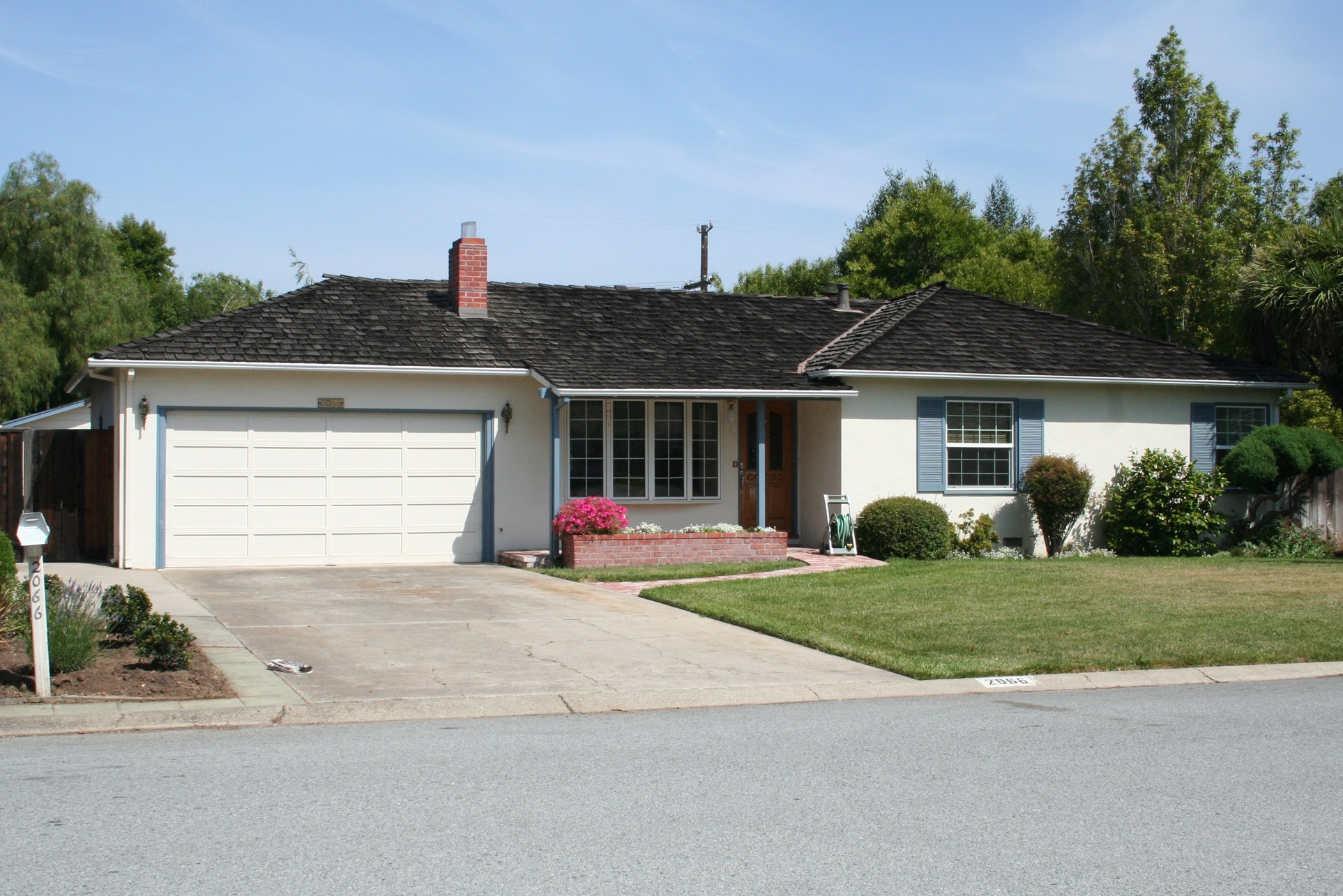
Steve Jobs' journey with Apple began in the iconic setting of a garage in Los Altos, California. In 1976, alongside Steve Wozniak and Ronald Wayne, Jobs co-founded Apple in the garage of his childhood home. The address is 2066 Crist Drive, Los Altos — a quiet residential street that looks exactly like every other quiet residential street in the South Bay. The house is privately owned and not open to the public. What you get is the exterior, a sidewalk, and the weight of the idea that something consequential happened here in a very ordinary-looking place. It's worth doing if you're already in the area — pair it with the Computer History Museum, which is 10 minutes away by car — but don't drive an hour from the city just for this. The neighborhood is calm and the garage door is closed. That's the point, in a way: the ordinariness of where outsized things begin. Drive south on 101 or 280 (280 is faster and less congested on weekends), exit at El Monte Avenue, and you're there in about 50 minutes from the city.
Il consiglio del team
Please do not knock on the door or block the driveway. The current residents are private citizens. A brief stop, a photograph of the exterior, and moving on is the appropriate rhythm here. Pair this with the Computer History Museum to make the drive worthwhile.
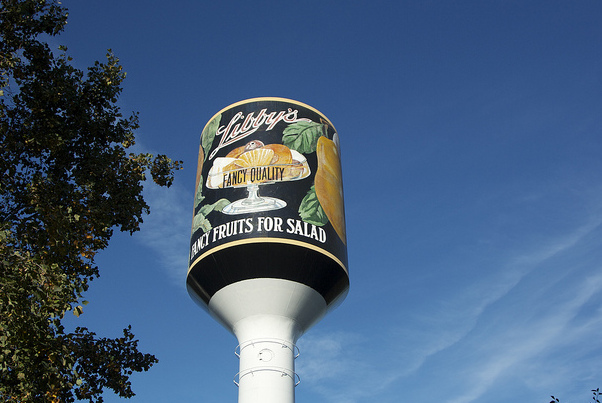
A giant can of fruit cocktail is all that remains of what was once the world's largest cannery. In 1906, Libby, McNeil & Libby — a Chicago-based meat-packing company — opened its first West Coast operation in Sunnyvale, and at its peak the facility processed enormous quantities of fruit from the surrounding Santa Clara Valley orchards. The valley was once called the Valley of Heart's Delight for its orchards; now it's Silicon Valley, and the only physical trace of that agricultural past in this particular spot is the Libby's Water Tower, a painted cylindrical landmark that reads as a giant fruit cocktail can and has become an accidental monument to an erased economy. It's a roadside curiosity rather than a formal attraction, but it's worth a stop if you're driving through the South Bay — it sits near the intersection of Mathilda and Caribbean in Sunnyvale. Combine it with the Computer History Museum and the Jobs garage for a coherent South Bay day trip covering three very different chapters of California's economic history.
Il consiglio del team
There's no formal parking lot or visitor infrastructure — it's a water tower in a light-industrial area. Pull over safely, take your photos, absorb the historical irony, and move on. The surrounding neighborhood has changed dramatically; the tower's incongruity is the whole point.
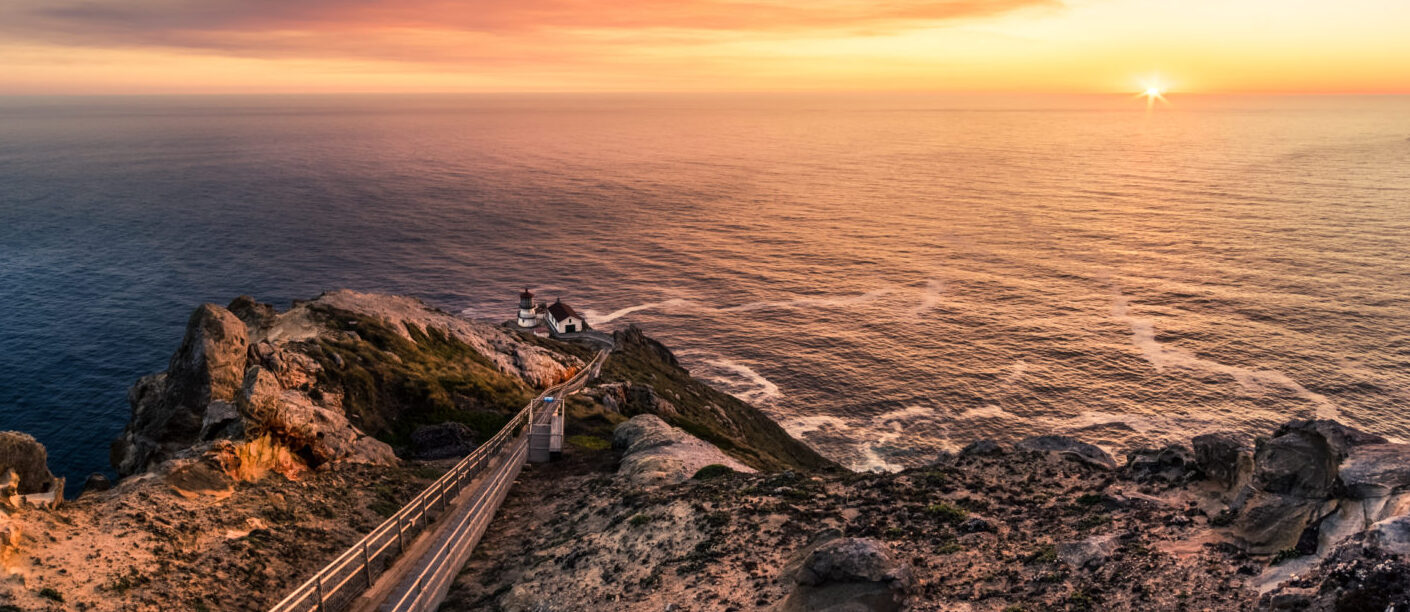
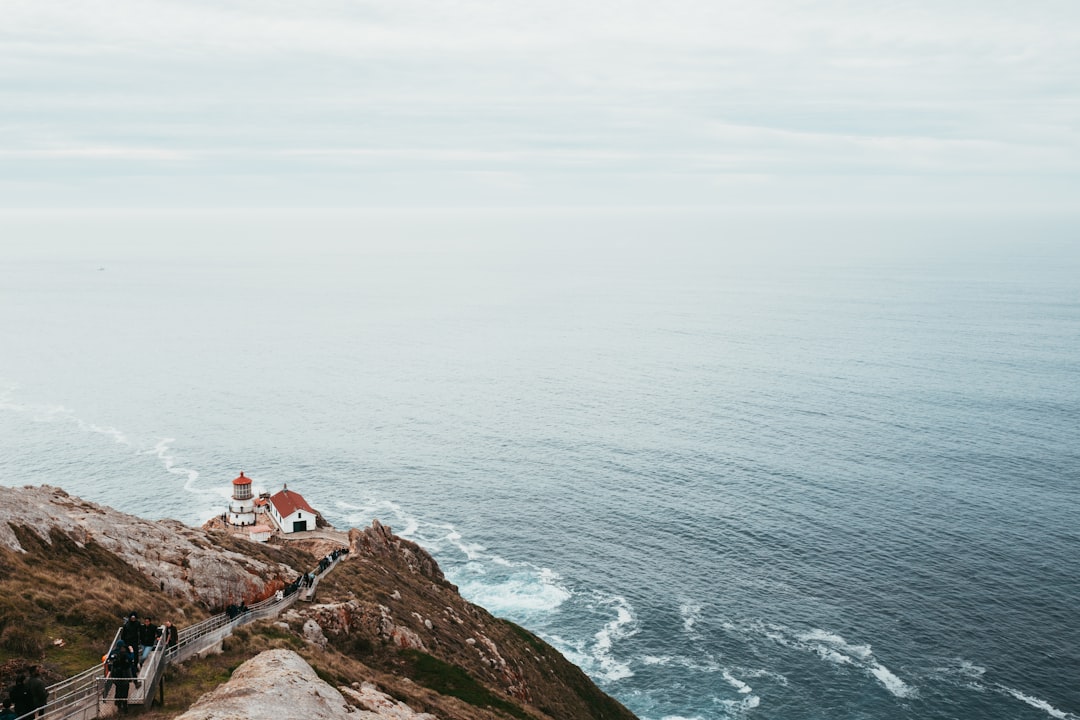
Point Reyes Lighthouse is located inside Point Reyes National Seashore Park, about two hours' drive from San Francisco, and it is one of the few places in the Bay Area where the Pacific feels genuinely undomesticated. The lighthouse sits at the tip of the Point Reyes headland — one of the foggiest and windiest spots on the entire North American coast — and reaching it involves descending 308 steps down a steep staircase to the light station itself. The views from the top of the stairs, before you descend, are already worth the drive: the Pacific opens up in every direction, and from December through April, gray whales pass close enough to the headland that the lighthouse was historically used as a whale-watching platform. The drive out Sir Francis Drake Boulevard from Olema is beautiful in its own right — rolling pastoral land, dairy farms, elk grazing in open fields. Budget the full day: two hours each way plus two to three hours on the headland. There is no train service to Point Reyes; a car is the only practical option unless you're an experienced cyclist.
Il consiglio del team
On winter weekends during whale migration season, the road to the lighthouse is closed to private vehicles and a shuttle bus runs from the Bear Valley Visitor Center. Check the National Park Service website before you drive out — arriving to find the road closed with no shuttle information is a genuinely frustrating experience.
This entry exists as a distinct experience from the lighthouse itself: the approach to Point Reyes through the National Seashore's trail network, the coastal bluffs, and the broader landscape that frames the lighthouse from a distance. Point Reyes National Seashore encompasses roughly 71,000 acres of coastal wilderness — tule elk reserves, Bishop pine forests, miles of undeveloped beach — and the lighthouse is only one anchor point within it. Coming from the north via Highway 1 through Stinson Beach and Bolinas rather than the inland Sir Francis Drake route gives you a dramatically different approach: coastal cliffs, the Bolinas Lagoon, and a slower, more atmospheric entry into the park. The Palomarin trailhead, accessible from the Bolinas side, opens onto some of the most isolated coastal walking in the Bay Area. Plan for a full day regardless of which route you take. The park's visitor center at Bear Valley has excellent natural history exhibits and ranger talks that provide genuine context for what you're looking at on the headland.
Il consiglio del team
Highway 1 north of Stinson Beach is narrow, winding, and not suitable for large vehicles or nervous drivers. If you're comfortable with coastal mountain driving, it's worth it. If you're not, take Sir Francis Drake Boulevard from Fairfax — it's faster and less technically demanding.
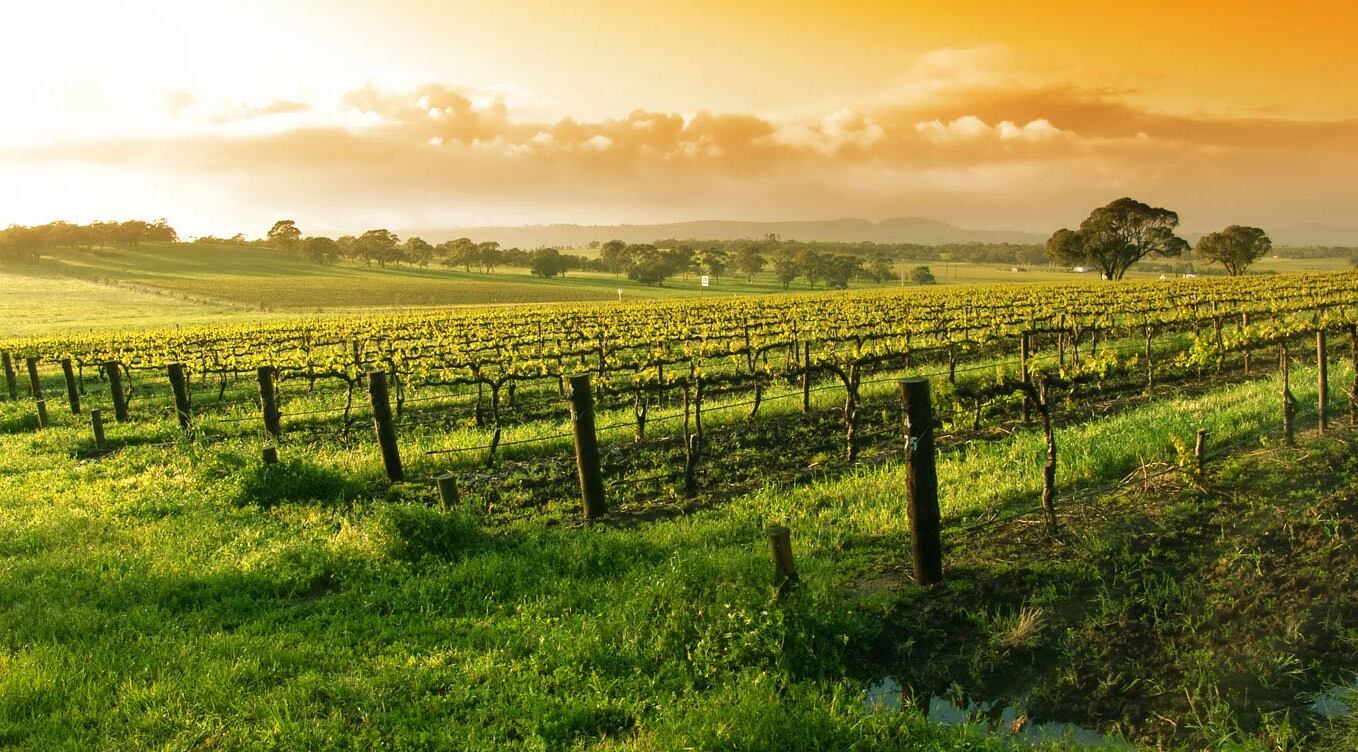
Napa Valley reigns as the land of grand estates, luxurious tasting rooms, and elegant lodges, many of which line the celebrated Silverado Trail. It's roughly an hour's drive north of San Francisco on a good traffic day — which is to say, not a Friday afternoon or a Sunday morning during harvest season. The valley is genuinely beautiful in the way that intensively cultivated agricultural land can be beautiful: orderly, prosperous, and purpose-built. The Cabernet Sauvignon that comes out of the valley's benchland vineyards has a global reputation that is not exaggerated. A realistic day trip means two or three tasting appointments — most require reservations now, which is actually better than the walk-in chaos of a decade ago — and lunch in Yountville or St. Helena. Drive Highway 29 north through Napa town to the valley floor, or take the Silverado Trail on the eastern side for less traffic and better views of the Vaca Mountains. Designate a driver or use a car service from the city.
Il consiglio del team
Tasting fees have risen sharply at the prestige estates — budget $50 to $150 per person per tasting at many properties. Book appointments at least a week in advance for weekend visits during harvest (September–November). The valley is significantly quieter and more pleasant to visit on a Tuesday or Wednesday in January.
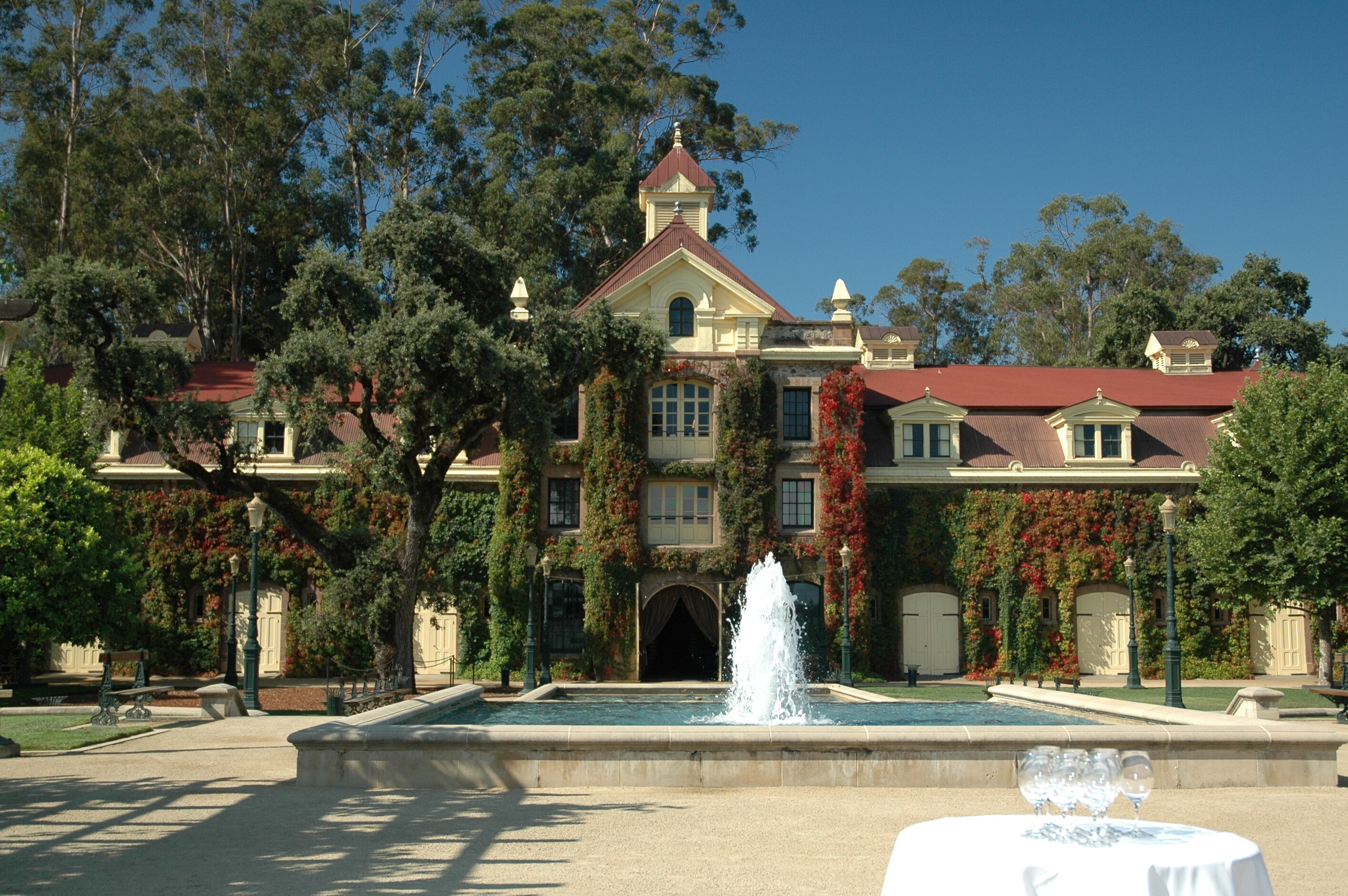
Founded by Swedish sea captain Gustav Niebaum, Inglenook has been a staple of Napa Valley since its first harvest in 1882. The winery changed hands multiple times over the decades and is currently owned by Francis Ford Coppola, who acquired it in stages and restored the Niebaum estate to something close to its original vision. The château itself — a stone building of considerable gravity sitting at the base of the Mayacamas Mountains in Rutherford — is one of the more architecturally serious structures in the valley. Inglenook produces Rubicon, a Cabernet Sauvignon-based blend from the estate that has been one of Napa's benchmark wines since the early 1980s. A visit here is different from a standard tasting room experience: the property has a museum component, a cave system used for barrel aging, and a level of historical narrative that most Napa wineries don't attempt. It's about 75 miles from San Francisco — plan for 90 minutes of driving each way on a weekend. Reservations are essential.
Il consiglio del team
Inglenook is in Rutherford, which puts it roughly in the middle of the valley — use this as an anchor and build your day around properties within a few miles rather than driving the full length of the valley and back. The Silverado Trail runs parallel to Highway 29 on the east side and is consistently less congested.
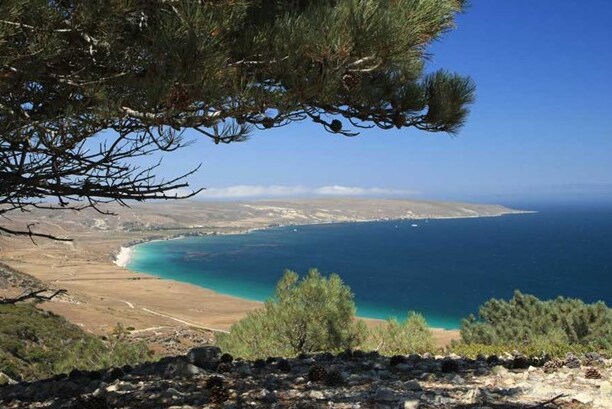
Santa Rosa Island, located 40 nautical miles from the Channel Islands National Park visitor center in Ventura, is the second largest island in California at approximately 53,000 acres. Getting there from San Francisco requires a commitment: drive or take a train to Ventura (roughly six hours by car, or take the Coast Starlight Amtrak train), then board Island Packers' ferry for a 2.5-hour crossing to the island. This is not a casual day trip from the city — it's a day trip that requires either an overnight in Ventura or a very early start. But it earns its place on this list because the experience is categorically different from anything accessible from the Bay Area: ancient Torrey pines, Chumash archaeological sites, miles of undeveloped beach, and a silence that the mainland California coast no longer offers. The island has a campground and a landing cove with ranger facilities. Day visitors should bring everything they need — there are no services on the island. The ferry schedule dictates your entire day; miss the return boat and you're camping whether you planned to or not.
Il consiglio del team
Island Packers runs ferries to Santa Rosa on a limited schedule — typically a few days per week, seasonally. Book the ferry well in advance, particularly for summer and fall visits. Check the National Park Service website for current schedules and any weather-related cancellations, which are common in winter. The crossing can be rough; seasickness medication is not a sign of weakness.
The best thing about day trips from San Francisco is also the most humbling thing: the city's surroundings are varied enough that no single trip covers the territory. You can spend a focused day inside the history of computing in Mountain View and come back with a completely different relationship to the device in your pocket. You can stand at Point Reyes in January fog and feel the Pacific in a way that no amount of Ocean Beach walking quite replicates. You can sit in a Napa tasting room and understand, in a sensory rather than intellectual way, why people argue about terroir. None of these trips require you to be a certain kind of traveler or to have unlimited time. They require a train ticket, a tank of gas, or a ferry reservation — and the decision to actually go. San Francisco will be here when you get back. It always is. The question is what you bring back with you.
★ Guida tascabile
Porta questa guida con te.
Salvala offline, ottieni le indicazioni a piedi e scopri migliaia di luoghi come questi.
What is the best time of year for day trips from San Francisco?
September and October are the most reliably good months across the board — the summer fog has typically lifted, crowds thin after Labor Day, and the light in the valleys and on the coast is at its best. For whale watching at Point Reyes, January through March is the window for gray whale migration. For Napa, avoid harvest weekends in September and October unless you've booked everything well in advance; January and February offer the quietest and often most atmospheric visits.
Is a rail pass useful for these day trips?
Caltrain does not accept Amtrak passes — it's a separate commuter rail system with its own ticketing. Buy Caltrain tickets through the Caltrain app or at station vending machines. A Clipper card (the Bay Area's transit card) works on Caltrain and is worth loading if you're making multiple trips south. For the Channel Islands, Amtrak's Coast Starlight to Ventura is a legitimate option and Amtrak USA Rail Passes do apply, but check the schedule carefully — the Starlight runs once daily in each direction.
What are the realistic driving times from San Francisco, accounting for traffic?
Add 30 to 45 minutes to any quoted driving time if you're leaving the city between 7am and 9:30am on a weekday, or between 10am and 1pm on a weekend. The Bay Bridge and Highway 101 through the South Bay are the worst bottlenecks. Highway 280 to the South Bay is consistently faster than 101 and more pleasant to drive. For Napa, the Sonoma Highway (Highway 12) approach through Sonoma town is slower but less congested than Highway 29 on weekends. For Point Reyes, leave the city by 8am on a weekend to reach the lighthouse before the parking situation becomes difficult.
Do I need to book anything in advance, or can I show up?
For the Channel Islands ferry, advance booking is essential — Island Packers fills up, and the schedule is limited. For Napa and Inglenook, tasting appointments are now standard practice and many estates won't accept walk-ins, particularly on weekends. The Computer History Museum benefits from online ticket purchase (it can sell out on busy weekends). Point Reyes requires no booking for general park access, but the winter shuttle from Bear Valley requires checking the NPS schedule. The Cantor Arts Center and Stanford campus are free and open access.
Which of these trips works best for someone with only half a day?
The Stanford campus and Cantor Arts Center combination is the most efficient half-day trip: 55 minutes on Caltrain each way, two to three hours on the ground, and you're back in the city by early afternoon. The Computer History Museum in Mountain View works similarly on the same train line. The Jobs garage in Los Altos is a 20-minute detour if you're already in the South Bay by car. None of the coastal or wine country trips are realistic half-day propositions from the city — the driving time alone consumes too much of the available hours.
★ Leggila quando vuoi
Salvala sul tuo telefono.
Aggiungi questa guida ai preferiti, pianifica il viaggio offline, scopri luoghi come questi.