10 Best Day Trips from Rome — by train, car, and boat
Practical routes, real timing, and the places worth leaving the city for
L
Una guida di
Lena Hofmann
Aggiornata il
29 aprile 2026
Lettura
13 minuti
Comprende
20 luoghi · mappa interattiva
★ Guida d'Italia 2026
Pianifica con cura. Viaggia più a fondo.
1.3M+ luoghi curati nel mondo, mappe offline e itinerari intelligenti — tutto in un'app gratuita.
1.3M+ luoghiMappe offlineItinerari AIGratis
Rome has a way of convincing you that leaving is a mistake. Every time I've packed a bag for a day trip, I've stood at the door of my apartment near Trastevere and thought: why bother? The Pantheon is ten minutes away. The Borghese is free on the first Sunday. There's a trattoria on Via della Lungaretta that does a cacio e pepe I haven't finished thinking about yet.
And then I go anyway, and I'm always glad I did.
The city earns its reputation, but it also exhausts you in ways you don't notice until you're somewhere quieter — somewhere where the tufa rock smells like rain and nobody is selling a selfie stick. The area within roughly 45 kilometres of Rome is one of the most geographically varied, historically layered, and undervisited stretches of central Italy. Volcanic lakes. Etruscan necropoli carved into hillsides. Romanesque basilicas sitting in valleys so still you can hear the water moving. Botanical gardens that took a count a decade to build. Waterfalls that look borrowed from a different country entirely.
A good day trip from Rome needs to clear a few bars. It should be reachable in under 90 minutes by some form of transport. It should offer something Rome itself cannot — space, silence, a different geological era, a specific food, a specific view. And it should be manageable: you need to get back in time for dinner, because dinner in Rome is non-negotiable.
What follows are ten trips I've done repeatedly, by different means. I'll tell you how I got there, what I did, what I'd skip, and — most importantly — when to go and when not to bother.
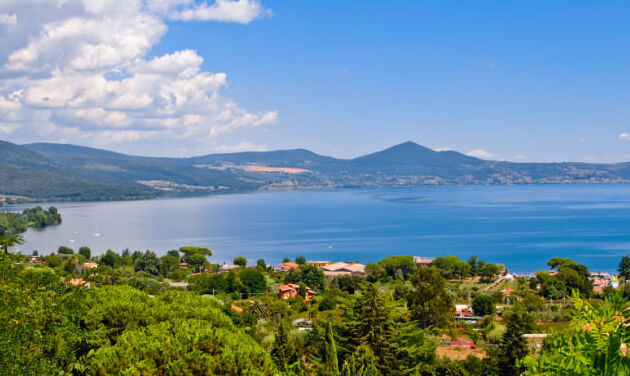
Thirty-one kilometres north of Rome, Lake Bracciano fills a volcanic caldera that has been doing so since the Pleistocene. The water is clean, the medieval town above the shore is compact and walkable, and the Castello Orsini-Odescalchi — one of the best-preserved Renaissance fortresses in Lazio — sits at the top of the hill like it's been waiting for you to notice it.
By car from the GRA, you're at the lakeside in 40 to 50 minutes depending on traffic leaving Rome. There's a regional train from Roma San Pietro that takes about an hour, which I've used on Sundays when parking near the lake becomes a contact sport. Once there: walk the castle interior (book ahead in summer), swim off the rocks at Lungolago Argenti, eat at one of the fish restaurants on the waterfront — coregone, the local whitefish, is the thing to order — and take the short path up to the old town before you leave. Don't rush the castle; the views from the ramparts over the water are the whole point.
Il consiglio del team
Arrive before 10am in July and August or you will spend 45 minutes finding parking and arrive irritable. Midweek in June is the sweet spot: the water is warm enough, the crowds are thin, and the restaurants are actually relaxed.
Bracciano sits about 32 kilometres north of Rome, a 40-minute drive on the Via Claudia or, if you prefer, roughly an hour on the FL3 regional train from Roma Ostiense — though the train deposits you at the top of the hill above the lake, not at the water. The car wins here, because you can park near the waterfront at Anguilara Sabazia or Trevignano Romano and walk straight onto the shore.
The lake itself fills a volcanic caldera, and the water is famously clear — it has historically supplied drinking water to parts of Rome. On arrival, walk the lakefront promenade at Trevignano, climb up to the Castello Orsini-Odescalchi in the town of Bracciano (a serious 15th-century fortress, not a ruin), eat lake fish — coregone or eel — at one of the trattorias on the waterfront, and if the season is right, swim. The light on the water in the late afternoon is worth staying for.
Il consiglio del team
Arrive before 10am on summer weekends or you will spend 45 minutes looking for parking. Trevignano Romano is quieter than Bracciano town and has better lunch options for the price. The castle in Bracciano town charges admission and is worth it — allow 90 minutes.
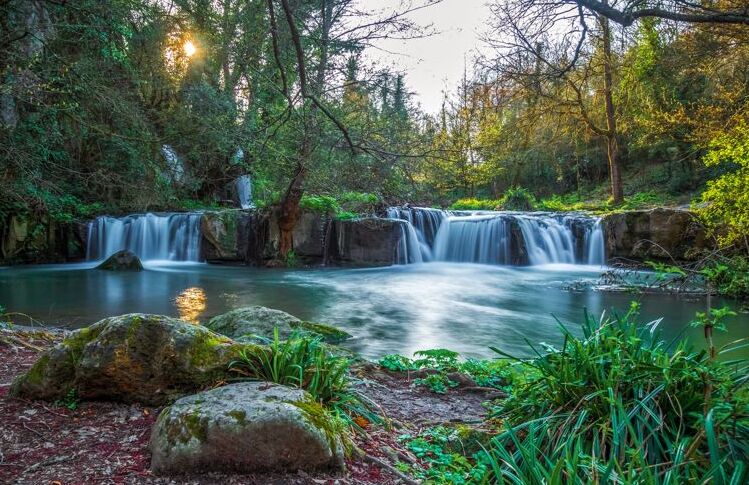
About 33 kilometres from central Rome, the Cascate di Monte Gelato sit inside the Parco Valle del Treja, where the Treja river drops over a series of tufa ledges into green pools. The falls themselves are modest by alpine standards, but the setting — Roman-era mill ruins, overhanging vegetation, the particular quality of light through the canopy — makes this feel like a place that has been kept a secret, even though it hasn't been for years.
This is a car-only trip in any practical sense. The nearest train station is at Morlupo, and from there you'd need a taxi or a long walk on a road with no pavement. Drive the Via Cassia north, turn off at Mazzano Romano, and follow the signs into the park. Allow 50 minutes from Rome. On arrival: walk the trail along the river to the upper falls, wade in the lower pool (bring sandals for the rocks), look for the remains of the medieval mill, and eat a packed lunch — there's a small refreshment point but I wouldn't rely on it. The whole loop takes about two hours at a comfortable pace.
Il consiglio del team
The pools fill with Roman families on summer weekends from about 11am. Come on a weekday, or arrive at 9am when the park opens. Spring is genuinely the best time — the water level is higher and the vegetation is at its most theatrical.
About 33 kilometres north of Rome, inside the Parco Valle del Treja, the Cascate di Monte Gelato are a series of small but genuinely beautiful waterfalls on the Treja river. The name — 'frozen mountain' — refers to the white foam of the water, not to temperature. This is not a dramatic alpine cascade; it's a gentle, layered fall over tufa rock, surrounded by ferns and old mill ruins, and it feels entirely removed from the city.
You cannot get here without a car or a taxi. Drive the Via Cassia north, then follow signs toward Mazzano Romano; the park entrance is a short walk from the small car park. Once inside, walk down to the falls (15 minutes on a clear path), wade in the shallow pools if the season allows, explore the ruins of the medieval mill and the Roman fish ponds nearby, and take the longer loop trail along the river. Budget three hours minimum. There is a small bar at the entrance — use it before you descend.
Il consiglio del team
Go on a weekday in May or early June. By July the pools are crowded with families and the path is noisy. In autumn the foliage around the tufa cliffs turns amber and the falls run fuller — arguably the best time of year for this particular spot.
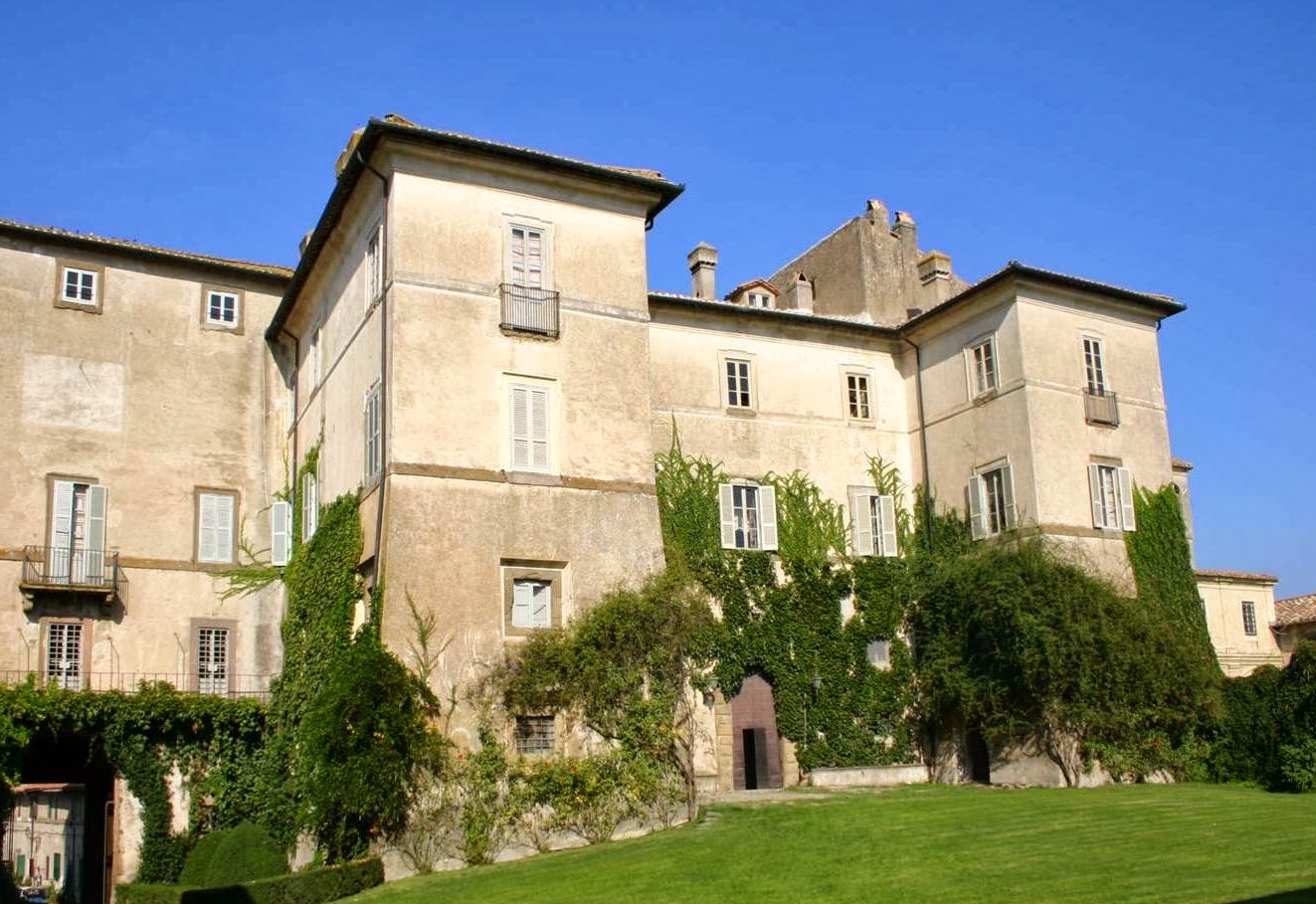
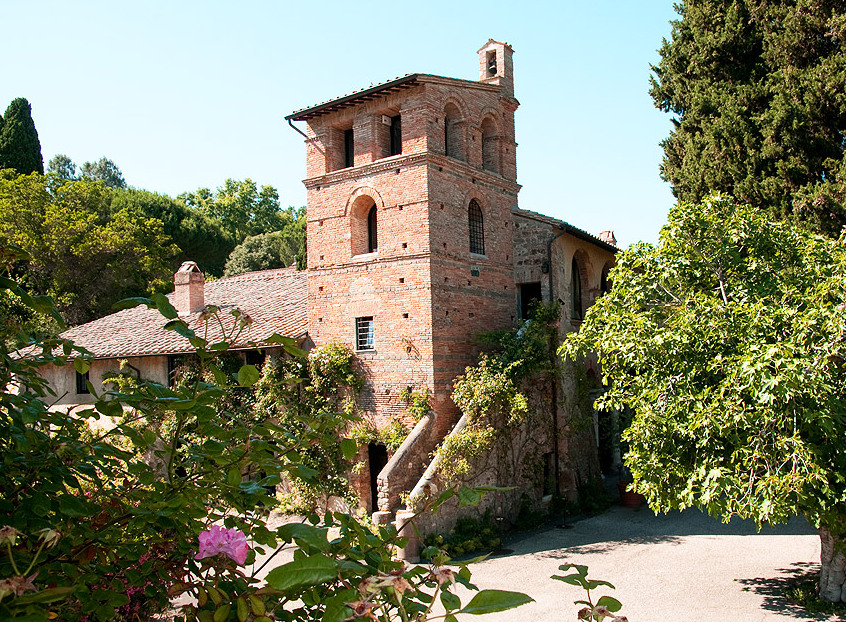
A few kilometres from Lake Bracciano, at the foot of the Tolfa mountains, the estate of Castel Giuliano occupies land that was settled by Etruscans and Romans long before the Odescalchi family took it over in the sixteenth century. The estate has been in continuous private ownership and the grounds — a century-old park of stone pines, holm oaks, and Mediterranean scrub — are open for visits on specific days. This is not a manicured garden; it's a working agricultural estate with a historic tower and the particular atmosphere of somewhere that hasn't been curated for tourism.
You need a car. Combine it with a morning at Lake Bracciano — they're close enough to do together without feeling rushed. On arrival: walk the perimeter of the park, look at the medieval tower, and take time with the views toward the Tolfa hills, which are some of the least-visited uplands in Lazio. Check opening days before you go; this is not a place with daily public access and turning up on the wrong day is a wasted detour.
Il consiglio del team
Call or check the estate's current access arrangements before building your day around it. Combining this with the lake and a lakeside lunch makes for a genuinely full and varied day without driving more than 15 kilometres total.
About 34 kilometres from Rome, between Bracciano and the Tolfa hills, the estate of Castel Giuliano occupies land with roots going back to Etruscan and Roman settlement. Since 1546 it has been associated with the Patrizi family, and the property today sits within a century-old park that has been carefully maintained. This is not a museum in the conventional sense — it's a private estate that opens to visitors in specific contexts, which is exactly what makes it interesting.
The setting is the draw: the parkland, the working agricultural character of the estate, and the layered history visible in the architecture. Come here if you're combining it with a morning at Bracciano lake, since the two are close. Walk the perimeter of the park, look for the traces of the earlier Etruscan and Roman occupation in the landscape, and if visiting during an open period, take time with the main building's exterior details. The Tolfa hills behind give the whole area a quality of light quite different from the Roman plain.
Il consiglio del team
Check access conditions before you drive out — this is a private estate and opening arrangements can vary by season and event. Pairing it with the Bracciano lake visit on the same day makes the drive worthwhile and prevents a wasted trip.
Civitella San Paolo is a small hilltop village about 34 kilometres north of Rome, above the Tiber valley, and it is the kind of place that appears on no tourist itinerary and is better for it. The village is known locally for the Cacione, a traditional Christmas sweet made with figs, nuts, and spices — a dense, ancient confection that tastes like the landscape it comes from. Outside the Christmas period you may need to ask around to find it, but local bakeries and some families still produce it year-round.
By car from Rome via the Via Flaminia, allow 55 minutes. The village is small enough to walk entirely in 30 minutes, but that's not the point. Walk the old streets, find the church, look at the Tiber valley below, buy whatever the local alimentari has on the shelf, and ask someone about the Cacione. Then drive the scenic road along the Tiber toward Fiano Romano on the way back — the river views are worth the extra 20 minutes.
Il consiglio del team
If you're visiting in December, the Cacione is made fresh and sold at the village Christmas market. At other times of year, phone ahead to a local bakery — the tourist information in Fiano Romano can sometimes help with contacts.
Civitella San Paolo is a small hilltop commune about 34 kilometres north of Rome in the Sabina foothills, and the cacione is its signature: a traditional sweet prepared for the Christmas season, made with local ingredients and shaped according to recipes that have been passed through families rather than written down for cookbooks. This is not a destination you visit for monuments — you come here for the specific pleasure of eating something that exists almost nowhere else and is made by people who have no particular interest in marketing it to tourists.
By car, take the Via Flaminia north and branch east toward Civitella. The village itself is compact and walkable in an hour. Buy the cacione from a local bakery or pasticceria when in season (the Christmas period is the traditional time, though some bakers produce versions year-round), walk the old centre, and look out over the Tiber valley from the village edge. Combine with the Sant'Elia basilica, which is nearby.
Il consiglio del team
If you're travelling outside the Christmas season, call ahead to a local bakery to confirm availability of the cacione before making the drive specifically for it. The village is best combined with another stop in the area — it doesn't fill a full day on its own.
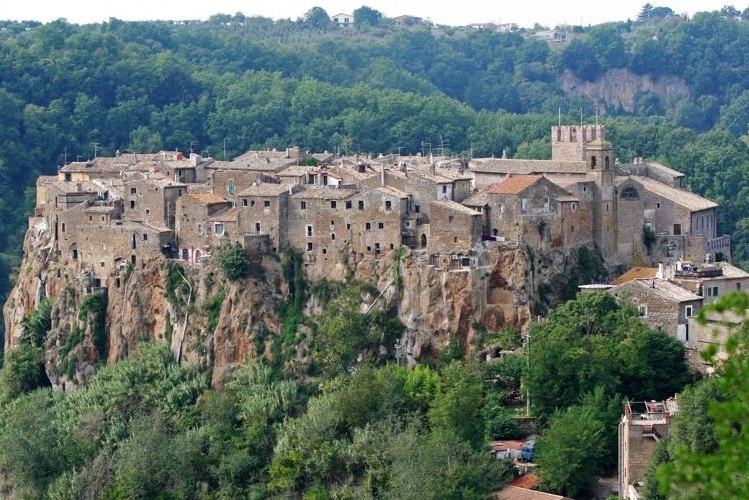
Calcata is built on a vertical plug of tufa rock above the Valle del Treja, and from a distance it looks like the village and the rock are the same material — which, in a sense, they are. The medieval houses grow directly from the cliff face, and the whole settlement was officially declared uninhabitable by the Italian government in the 1930s. The residents refused to leave. Artists, craftspeople, and a certain category of Roman intellectual began moving in during the 1960s and 70s, and the village has had that quality ever since: slightly defiant, genuinely creative, and unlike anywhere else within 40 kilometres of the capital.
By car, it's about an hour from central Rome. Park in the lower lot — the road into the village itself is narrow and the village is pedestrian-only. On arrival: walk every alley (it takes 20 minutes), visit the small galleries and craft shops, eat at one of the two or three restaurants (the wild boar pasta is reliable), and stand at the belvedere over the valley. The valley walk below the village, through the Treja park, adds an excellent hour if you have the time.
Il consiglio del team
Sunday afternoons bring Romans out from the city in numbers. Saturday morning or any weekday is noticeably calmer. The village is tiny — you don't need more than half a day here, so pair it with the Cascate di Monte Gelato, which is nearby.
Calcata is 36 kilometres north of Rome and is one of the more unusual places in the Lazio countryside. The old village sits on a column of tufa rock above the Treja valley, its dark stone houses appearing to grow directly out of the cliff face. It was largely abandoned in the mid-20th century after the old buildings were declared unsafe, but instead of being demolished it was gradually repopulated by artists, craftspeople, and people who wanted to live somewhere that didn't look like anywhere else. It still has that character.
Drive the Via Cassia north, then follow signs toward Calcata Vecchia — there's a car park at the top before you descend into the village on foot. Walk the single main street, visit the small galleries and craft workshops, look out over the valley from the cliff edges, and eat lunch at one of the handful of small restaurants. The surrounding Parco Valle del Treja is excellent for a walk before or after. The village takes about two hours; the park can fill the rest of the day.
Il consiglio del team
Calcata draws day-trippers from Rome on Sunday afternoons and the village — which is genuinely tiny — can feel overcrowded. Go on a Saturday morning or a weekday. The car park fills fast; arrive before 10am.
On the eastern shore of Lake Bracciano, the Parco Botanico di San Liberato is a private botanical garden created by Count Donato Sanminiatelli over the course of a decade — a project that involved moving earth, planting thousands of specimens, and thinking very carefully about how a garden should feel rather than just look. The result is a layered landscape of Mediterranean plants, water features, and views over the lake that rewards slow walking rather than quick touring. There is also a small Romanesque church on the property, San Liberato, which dates to the early medieval period.
By car from Rome, allow 50 to 60 minutes. The garden requires advance booking — this is not a drop-in attraction, and that's partly what makes it worth the effort. On arrival: take the guided or self-guided path through the full garden, spend time at the lake-view terrace, visit the church, and give yourself at least two hours. This is a place for people who actually like plants, or who want to understand what a serious private garden looks like.
Il consiglio del team
Book well in advance, especially for spring visits when the garden is at its most active. The combination with Lake Bracciano — which is minutes away — makes this the most rewarding single day I know in the Bracciano area.
On the northern shore of Lake Bracciano, about 37 kilometres from Rome, the Parco Botanico di San Liberato is a privately created botanical garden developed over decades by Count Donato Sanminiatelli. The garden surrounds a Romanesque church of considerable age and occupies land that slopes down toward the lake. It is not a grand formal garden in the Italian villa tradition — it's something more personal and more interesting than that: a collection of trees, plants, and landscape interventions that reflect a long engagement with the site.
Access requires checking current opening arrangements, as this is a private property. When open, walk the full circuit of the garden, spend time at the Romanesque church of San Liberato (which predates the garden by many centuries), and find a position on the slope with a view over the lake. The combination of water, old stone, and planted landscape is genuinely restful. Allow two hours. This pairs naturally with a morning at Trevignano Romano on the same lake shore.
Il consiglio del team
Confirm opening hours and any reservation requirements directly before visiting — private botanical gardens in Italy operate on their own schedules and these can shift seasonally. The drive from Rome via the Via Cassia and then west toward Trevignano is straightforward and takes under an hour.
Nepi is 40 kilometres north of Rome on the Via Cassia, a medieval town built on a tufa plateau above three river valleys. Its history is disproportionately dramatic: the Rocca Borgia, built on the orders of Pope Alexander VI and designed in part by Antonio da Sangallo the Elder, still dominates the town. Lucrezia Borgia lived here for a period. The town also sits on a natural spring system that produces notably good water — there's a bottling plant, but more usefully, there are public fountains where you can fill a bottle for free.
By car, it's 50 to 60 minutes from Rome. The town is compact: walk the Rocca exterior (interior access varies), visit the Romanesque cathedral, walk the perimeter road above the valleys, and stop at one of the small bars near the main piazza. Nepi's local salame is worth finding — the town has a long tradition of cured pork production and you can buy it from the alimentari near the centre.
Il consiglio del team
Nepi is quiet on weekdays to the point of feeling empty, which is either appealing or alarming depending on your temperament. The Wednesday morning market adds life. Pair it with the Basilica di Sant'Elia, which is only a few kilometres away.
Nepi is 40 kilometres north of Rome on the Via Cassia, a small town that punches above its size in historical terms. The Rocca Borgia — built on the orders of Pope Alexander VI and attributed to Antonio da Sangallo the Elder — dominates the town, and the fact that Lucrezia Borgia lived here for a period gives the place a biographical weight that most small Lazio towns can't match. Beyond the Borgia connection, Nepi sits above a valley fed by natural springs, and the water here has been bottled commercially for years.
Park outside the old walls and walk in through the main gate. Spend time with the exterior of the Rocca Borgia, walk the main corso, visit the Romanesque cathedral, and look for the old aqueduct that once carried spring water across the valley. Lunch in Nepi is straightforward — local trattorias serve simple Lazio cooking without tourist pricing. The whole town can be covered in three hours, making this an easy half-day that you can combine with Castel Sant'Elia, which is just a few kilometres away.
Il consiglio del team
The Rocca Borgia is not always open to the interior — check locally when you arrive. The real pleasure of Nepi is the walk around the walls and the view over the valley, which costs nothing and takes 45 minutes.
The Basilica di Sant'Elia at Castel Sant'Elia sits at the bottom of the Valle Suppentonia, a narrow valley that has been a place of Christian retreat since the earliest centuries of the faith. The basilica itself is Romanesque — built in the eleventh and twelfth centuries on earlier foundations — and the frescoes in the interior are among the best-preserved examples of medieval painting in Lazio. The valley around it is green, quiet, and largely unchanged. Hermit caves are cut into the tufa walls above the river.
By car from Rome, allow 55 minutes. The descent into the valley is steep and the road is narrow; drive carefully and park at the top if you're uncertain. On arrival: walk down to the basilica, take your time with the frescoes (bring a torch — the interior lighting is minimal), walk along the valley floor to see the cave hermitages, and climb back up slowly. This is a place that asks for quiet. It rewards it.
Il consiglio del team
The basilica is sometimes closed for restoration or private ceremonies. Check current opening hours before making it the centrepiece of your day. Combining it with Nepi — 10 minutes by car — makes a coherent and unhurried afternoon.
The Basilica of Sant'Elia at Castel Sant'Elia sits at the bottom of the Valle Suppentonia, a wooded ravine about 40 kilometres north of Rome that has been a place of Christian retreat since the early centuries of the faith. The basilica itself is Romanesque — built in the 11th and 12th centuries on earlier foundations — and it stands beside cave hermitages carved into the tufa cliff face, which were used by anchorites and later by Benedictine monks. It is one of the most atmospheric Romanesque buildings in Lazio and almost no one outside the region knows it exists.
From the village of Castel Sant'Elia above, a path descends through the woods to the valley floor — about 20 minutes on foot. Walk the path, spend time inside the basilica examining the medieval frescoes, explore the cave chapels cut into the cliff, and sit for a while in the valley before the climb back up. There is almost no infrastructure here: no café, no gift shop. Bring water. Allow three hours for the round trip.
Il consiglio del team
The basilica is occasionally closed for restoration or religious ceremonies — a quick call to the comune of Castel Sant'Elia before you drive out is worth the two minutes it takes. The descent path can be slippery after rain; wear shoes with grip.
Sutri is 42 kilometres from Rome on the Via Cassia, and it is one of the most archaeologically layered small towns in central Italy. The Grotta di Orlando is one of several cavities cut into the tufa cliffs around the town — used by the Etruscans as tombs, later adapted for other purposes, and eventually attached to the legend of Orlando (Roland), the Carolingian paladin, as his supposed birthplace. The legend is almost certainly apocryphal, but it's a good story and the cave itself is genuinely ancient.
The broader Sutri complex is the real draw: the Etruscan necropolis carved into the tufa hillside, the Roman amphitheatre cut from the same rock (one of the few in Italy carved entirely from living tufa), and the Mithraeum converted into a church. By car, allow 60 minutes from Rome. On arrival: walk the necropolis, visit the amphitheatre, find the Grotta di Orlando, and allow time for the town itself, which has a good main street and a couple of decent places to eat.
Il consiglio del team
The amphitheatre and necropolis are managed by the municipality and have modest entry fees. Early morning visits in summer mean you have the tufa cliffs largely to yourself — the quality of light on the rock face before 9am is something the afternoon cannot replicate.
Sutri is about 42 kilometres north of Rome on the Via Cassia, and it contains one of the more concentrated assemblages of ancient remains in the region. The town sits on a tufa ridge and has been continuously inhabited since Etruscan times. The Grotta di Orlando is one of several tufa cavities in the area — originally an Etruscan tomb, later associated in local legend with Roland, the Carolingian paladin of the chansons de geste. Whether Orlando was born here, as the legend claims, is not the point; the tufa landscape that generated the story is real and worth exploring.
The main archaeological park outside the town walls contains a Roman amphitheatre cut directly into the tufa rock — small, intact, and genuinely impressive — along with a Mithraic temple that was later converted into a Christian church. Walk the park, spend time at the amphitheatre, explore the cave church, and then walk up into the old town for lunch. The combination of Etruscan, Roman, and medieval layers in a compact space is what makes Sutri worth the drive.
Il consiglio del team
The archaeological park has a small admission fee and keeps standard Italian museum hours — it closes at lunchtime and reopens in the afternoon. Plan your arrival for the morning, eat in the town during the midday closure, and return to the park in the afternoon if you want more time.
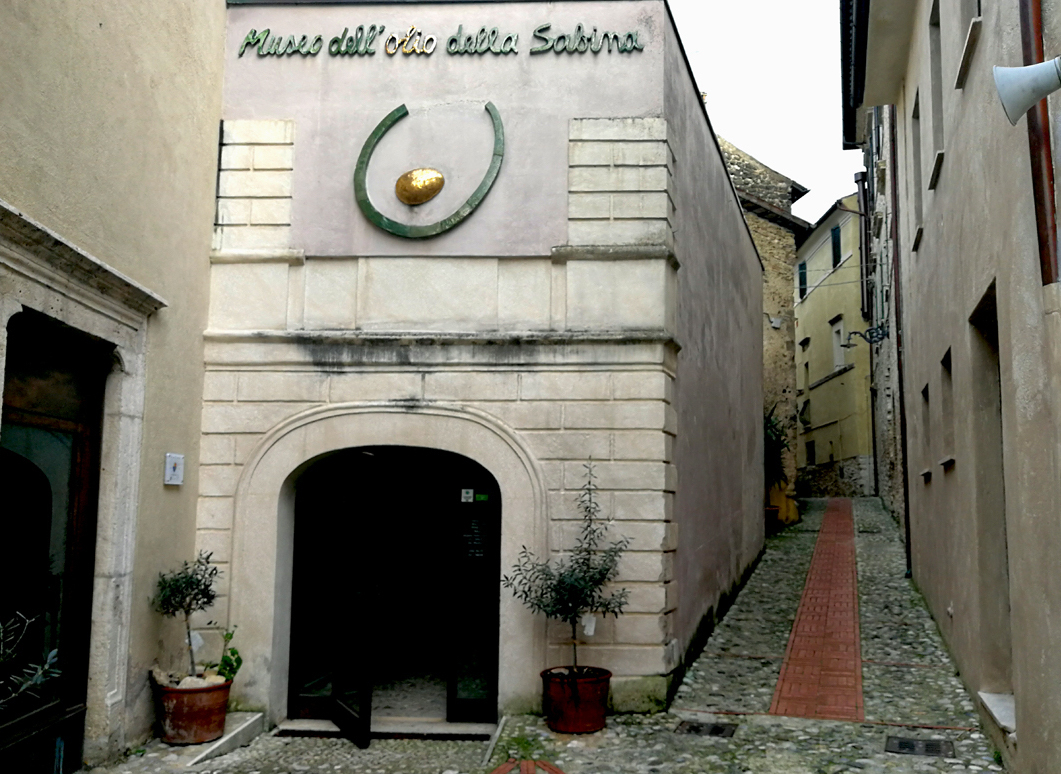
The Museo dell'Olio della Sabina, about 43 kilometres from Rome in the Sabina hills, is dedicated to the olive oil of the Sabina DOP — a production area that the ancient physician Galen praised as the finest in the Roman world. The museum covers the full history and process of Sabine oil production, from Roman pressing techniques to the role of the nearby Abbazia di Farfa, which was one of the few institutions in medieval Europe that maintained continuous agricultural knowledge through the early medieval period.
By car from Rome, the drive northeast takes about 70 minutes through the Sabina hills — a landscape of olive groves, medieval villages, and ridgelines that most visitors to Rome never see. On arrival: take the full museum tour, taste the oils (this is not optional), visit the abbey at Farfa if time allows — it's a major Benedictine foundation with a significant library history — and buy a bottle of Sabina DOP oil to take home. It will outlast any souvenir you find in Rome.
Il consiglio del team
The Sabina hills are best in late October and November when the olive harvest is underway. If you can time a visit to coincide with the harvest period, the landscape and the oil are both at their most vivid. Check the museum's current hours — smaller regional museums in Italy sometimes keep irregular schedules.
About 43 kilometres northeast of Rome in the Sabina hills, the Museo dell'Olio della Sabina is dedicated to the olive oil of the Sabina region — the same oil that the physician Galen described in the 2nd century AD as the finest in the ancient world. The nearby Abbazia di Farfa, a Benedictine abbey of considerable historical importance, was one of the few centres to maintain olive cultivation and oil production through the medieval period, and the museum draws on that long continuity.
This is a destination for people who are genuinely interested in agricultural history and Italian food culture — not a tourist attraction dressed up as a museum. The collection covers the tools, techniques, and economics of olive oil production from Roman times to the present. After the museum, drive or walk to the Abbazia di Farfa itself, which is a few kilometres away and merits an hour of your time for its architecture and its still-functioning monastic community. Buy oil from the abbey shop before you leave — it is not a souvenir, it is the actual product.
Il consiglio del team
The museum and the abbey are best combined in a single afternoon. Check the abbey's visiting hours in advance, as the monastic schedule affects access to certain areas. The drive from Rome via the Via Salaria takes about an hour — allow more time if you stop in the Sabina hill towns along the way.
I've done all of these trips in a single calendar year, and what strikes me looking back is how different Rome feels when you return to it. The city doesn't diminish when you leave — if anything it clarifies. You come back through the GRA in the early evening, the umbrella pines catching the last light on the Via Aurelia or the Flaminia, and Rome reassembles itself from the periphery inward, layer by layer: the suburbs, the aqueducts, the dome of San Pietro materialising above the roofline. You've been somewhere older, or quieter, or stranger. You've eaten something that doesn't exist in any restaurant in the centro storico. You've stood in a valley where hermits lived in tufa caves and the water still runs the same way it did then.
None of these trips will replace Rome. But they will, I think, help you understand it — the landscape it grew from, the people who were here before it, the territory it has always been embedded in. That seems worth a day.
★ Guida tascabile
Porta questa guida con te.
Salvala offline, ottieni le indicazioni a piedi e scopri migliaia di luoghi come questi.
What is the best time of year for day trips from Rome?
April, May, and early June are the most reliable months: the weather is warm but not oppressive, the vegetation is at its best, and the summer crowds haven't arrived. September and October are nearly as good and have the advantage of the olive harvest in the Sabina hills. July and August are manageable for lake and waterfall trips if you leave Rome before 8am, but the heat makes archaeological sites and hilltop walks genuinely uncomfortable by midday. Winter is underrated for the Etruscan sites and the medieval towns — fewer people, lower light, and the landscapes have a different quality entirely.
Do I need a car for most of these trips, or can I manage by train?
Honestly, a car opens up about eight of these ten destinations properly. Lake Bracciano is reachable by regional train from Roma San Pietro (the FL3 line), and that works well for a straightforward lake day. But destinations like the Cascate di Monte Gelato, Calcata, Castel Giuliano, Civitella San Paolo, and the Museo dell'Olio della Sabina are either impossible or very difficult without a car. If you don't drive, focus on Bracciano town and lake for a train day, and consider hiring a driver for a longer multi-stop itinerary — several Rome-based guides offer exactly this.
Is a Eurail or Trenitalia pass useful for these trips?
For the specific destinations in this article, not particularly. The only train-accessible destination here is Lake Bracciano, and a single regional ticket from Rome on the FL3 line is inexpensive — around three to four euros each way as of recent pricing. Regional trains in Lazio are covered by the integrated Metrebus ticketing system, which is cheap enough that a pass adds no meaningful saving. Passes are more useful if you're combining these day trips with longer journeys to Florence, Naples, or Bologna.
What are the practical realities of driving out of Rome for a day trip?
The GRA (Grande Raccordo Anulare, Rome's ring road) is the main obstacle. Leaving Rome on a Friday afternoon or Saturday morning between 8am and 10am can add 30 to 45 minutes to any journey north. The Via Cassia and Via Flaminia — the two main routes for most of these destinations — both feed through congested northern suburbs before they clear. My consistent advice: leave before 8am or after 10am. Returning, the GRA is worst between 5pm and 7pm on weekdays. Parking at the destinations themselves is generally straightforward and free or very cheap — this is not the south of France.
How do I handle the fact that many of these smaller sites have irregular or limited opening hours?
Check before you go, every time, without exception. Smaller museums, private gardens, and religious sites in rural Lazio operate on schedules that don't always match what's published online, and they change seasonally or for local festivals without much notice. The Parco Botanico di San Liberato requires advance booking. The Basilica di Sant'Elia has variable access. The Museo dell'Olio della Sabina keeps regional museum hours that may include a long midday closure. My approach: call ahead the day before, or email a week in advance. Italian tourist offices (Pro Loco) in each town are usually helpful and often speak enough English to confirm hours. Building a backup destination into your day — Nepi and Sant'Elia are close enough to substitute for each other, as are Bracciano and San Liberato — means a closed door doesn't ruin the trip.
★ Leggila quando vuoi
Salvala sul tuo telefono.
Aggiungi questa guida ai preferiti, pianifica il viaggio offline, scopri luoghi come questi.