


A good day trip from Madrid satisfies three conditions. First, it has to be doable without a car if you want it to be — the Cercanías commuter rail and the high-speed AVE cover an extraordinary range of territory, and driving in and out of Madrid on a Friday afternoon is a form of suffering I would not recommend to anyone. Second, there has to be enough on arrival to fill four to six hours without padding. A single monument does not justify a round trip. Third, and this is the one most travel writing ignores, it has to work logistically on the day you are actually going — which means understanding when the first train leaves, where the parking fills up, and what time the crowds from the tourist buses arrive.
I have done every trip on this list multiple times, in different seasons, by different means. Some I have done alone at six in the morning; some I have done with children who needed feeding every ninety minutes. What follows is not a ranked list of the prettiest places. It is a working guide to ten day trips that hold up under real conditions. Use it accordingly.
San Lorenzo de El Escorial | The Escorial: the building that took a king's lifetime to finish
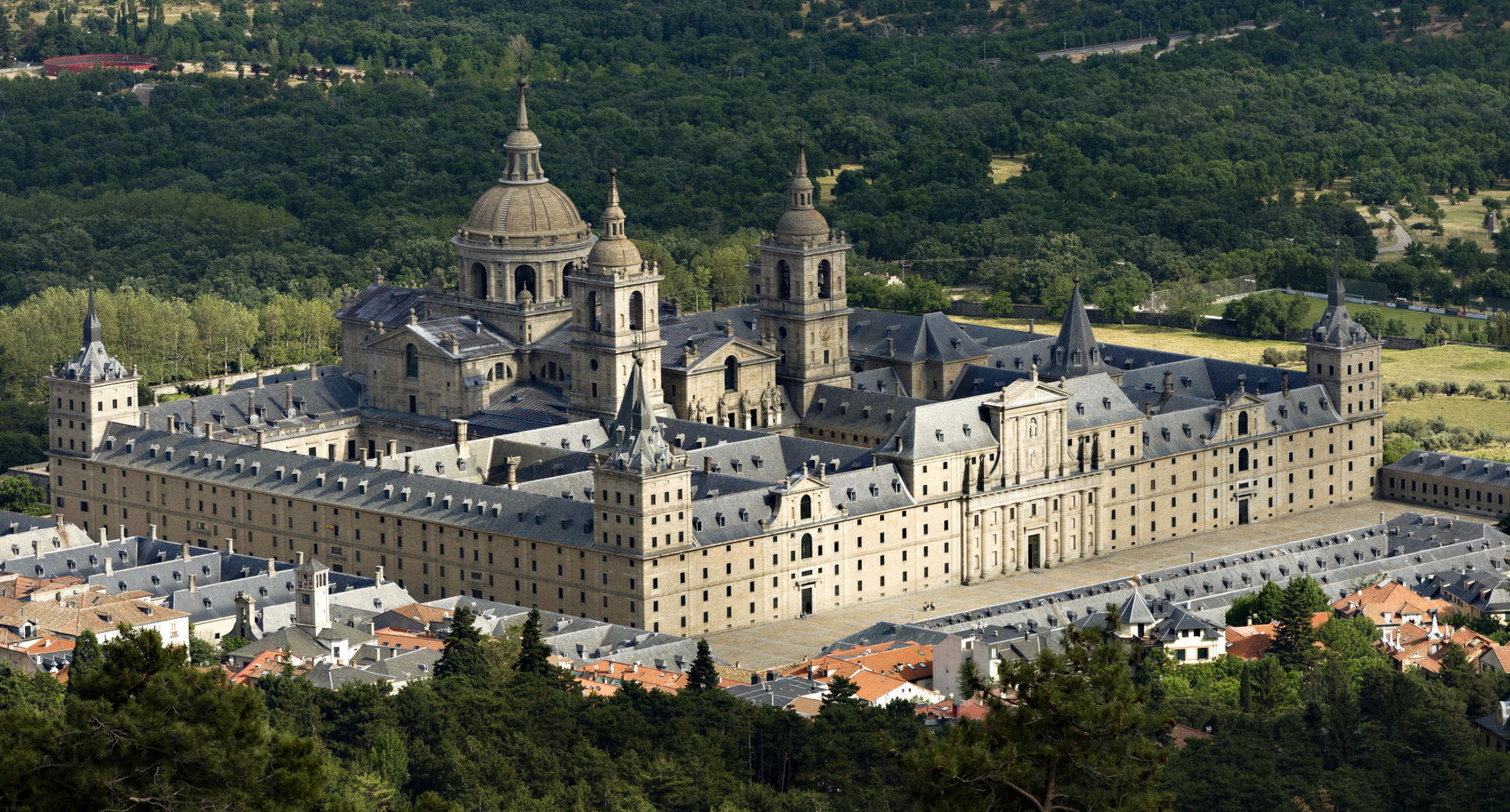
The Escorial is the most important architectural monument of the Spanish Renaissance, and it earns that description without any exaggeration. Philip II commissioned it in 1563, and the scale — palace, monastery, basilica, library, royal pantheon all under one roof — is genuinely disorienting. Spend time in the library on the upper floor, whose ceiling frescoes represent the seven liberal arts. Walk the lower royal apartments, which are notably austere given who lived in them. The royal pantheon beneath the basilica requires a separate ticket but is worth it. Allow at least three hours inside the complex.
Il consiglio del team
The first train from Atocha leaves before 7am on weekdays. Arrive at the complex when it opens at 10am and you will have the inner courtyards almost to yourself for the first forty minutes. By noon the tour coaches have arrived and the basilica queue is long. Do not leave without walking up to the Silla de Felipe II — the granite seat on the hillside above town where the king allegedly watched construction progress. It takes twenty minutes on foot and the view over the complex is the best you will get.
Palazzo di Aranjuez: where the Spanish court came to breathe
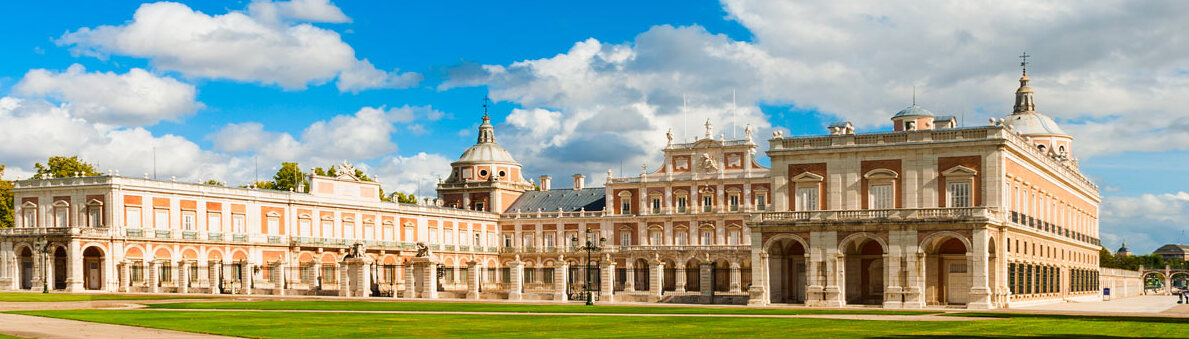
For centuries the Spanish kings spent their spring months at the Palazzo di Aranjuez, drawn by its position in the fertile meadow formed where the Jarama flows into the Tagus. The palace itself — rebuilt and expanded across several reigns — is a formal baroque structure, but what distinguishes Aranjuez from other royal sites is the relationship between the building and its landscape. The gardens are the point here as much as the architecture. Walk through the Jardín del Príncipe along the riverbank, which stretches for nearly two kilometers under old plane trees. The Casa del Labrador at the far end of the garden is a small neoclassical pavilion built for Carlos IV that contains one of the most lavishly decorated interiors in Spain — entirely out of proportion with its modest exterior, which is part of what makes it interesting.
Il consiglio del team
The palace interior gets crowded fast on weekends from April onward. If you are going on a Saturday, take the earliest train and go straight to the palace before 10:30am. The gardens stay manageable even when the palace is busy. On weekdays in autumn the whole site is noticeably quieter and the light on the river is better.
La Estación de Toledo: the arrival that sets the tone for the whole city
From the station, the old city is uphill — there are buses and taxis, but the walk along the river road and up through the old gate is the right way to arrive if you have the energy for it. It takes about twenty minutes and gives you a proper sense of the city's topography. Toledo sits on a granite promontory almost entirely surrounded by the Tagus, which is why it was defensible for so long and why it looks the way it does from any distance.
Il consiglio del team
Book both the outward and return AVE tickets before you leave Madrid. Seats on the Toledo service sell out on weekend mornings, and the next available train can be two hours later. The earliest departure from Atocha is usually around 6:55am, which sounds extreme but means you arrive before the day-trip crowds from Madrid and before the tour buses from further afield.
Unesco| Toledo è una delle città più belle della Spagna: three religions, one hill
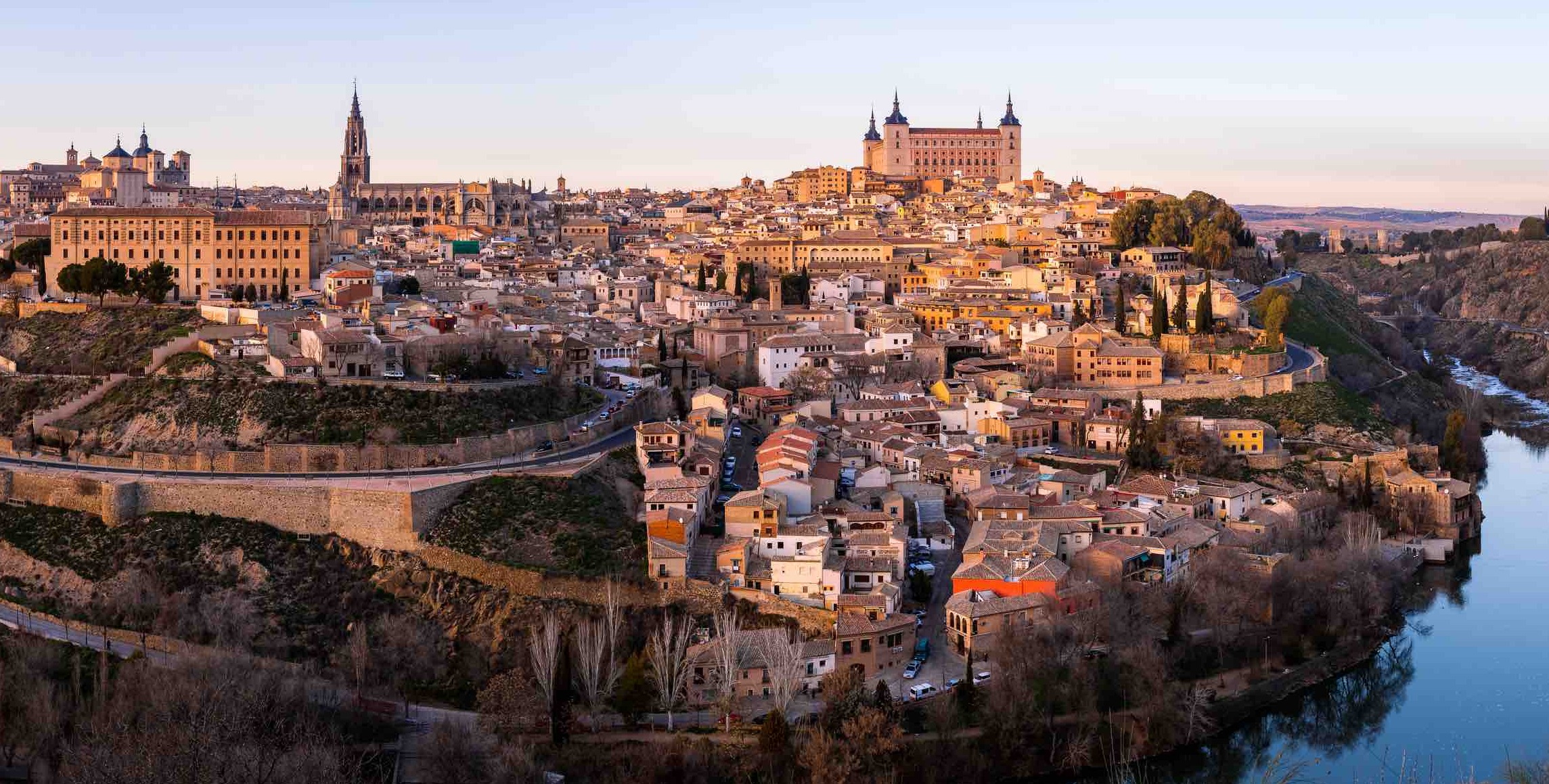
Inside the walls, the cathedral is the obvious anchor — it is one of the great Gothic buildings in Spain, and the sacristy alone, with its paintings by El Greco and others, takes forty-five minutes to see properly. But Toledo rewards wandering more than most cities. The streets between the cathedral and the old Jewish quarter are narrow enough that you can get genuinely lost, and the views from the northern edge of the promontory over the river gorge are some of the best urban viewpoints in central Spain. Budget a full day rather than a half day if you can.
Il consiglio del team
The tourist pressure on Toledo is real and concentrated. The main streets from the Bisagra gate to the cathedral are at their worst between 11am and 3pm on weekends. Arrive on the first train, go directly to the cathedral when it opens, then move to the quieter eastern part of the city as the crowds build. The streets around the Monastery of San Juan de los Reyes, near the river on the western side, stay calmer throughout the day.
Ambite: Monumento a Los Ojos: the mausoleum that isn't one
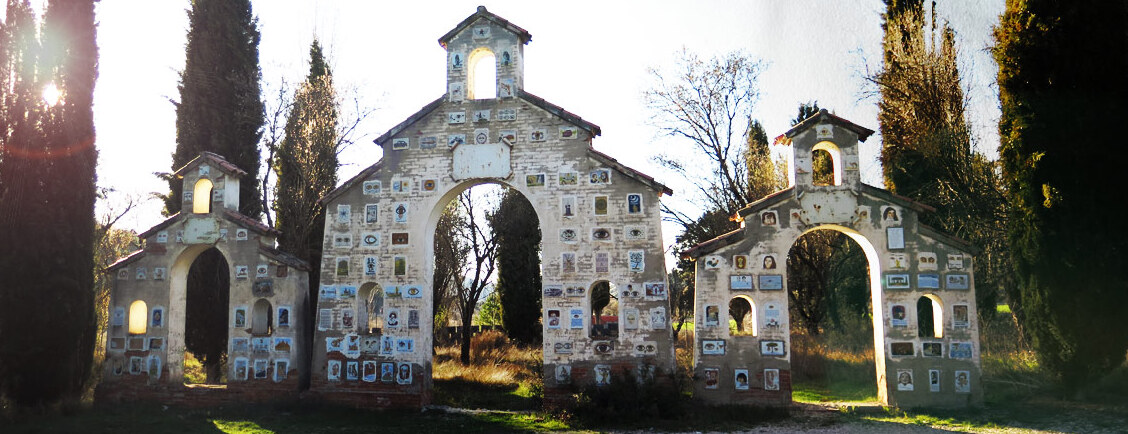
This is the kind of place that does not appear in standard guidebooks, and that is precisely why it is worth making the effort. The surrounding landscape — the low hills east of Madrid, the dry river valleys, the particular quality of the light in the late afternoon — is the context the monument was designed for. Combine it with a walk through Ambite itself, a village that has the unhurried quality of places that have never been on the tourist circuit. The church and the main square are modest but genuinely old.
Il consiglio del team
There is no dedicated parking infrastructure here — you park on the road verge near the monument, which is fine because almost nobody else is doing the same thing on any given day. Go on a weekday if possible. The light is best in the two hours before sunset, which in summer means arriving around 7pm. In winter the same effect happens around 4pm. Do not rely on mobile signal for navigation once you leave the main road — download the offline map.
Spain:Santa María la Blanca:one of the oldest synagogue: a building that outlasted its congregation
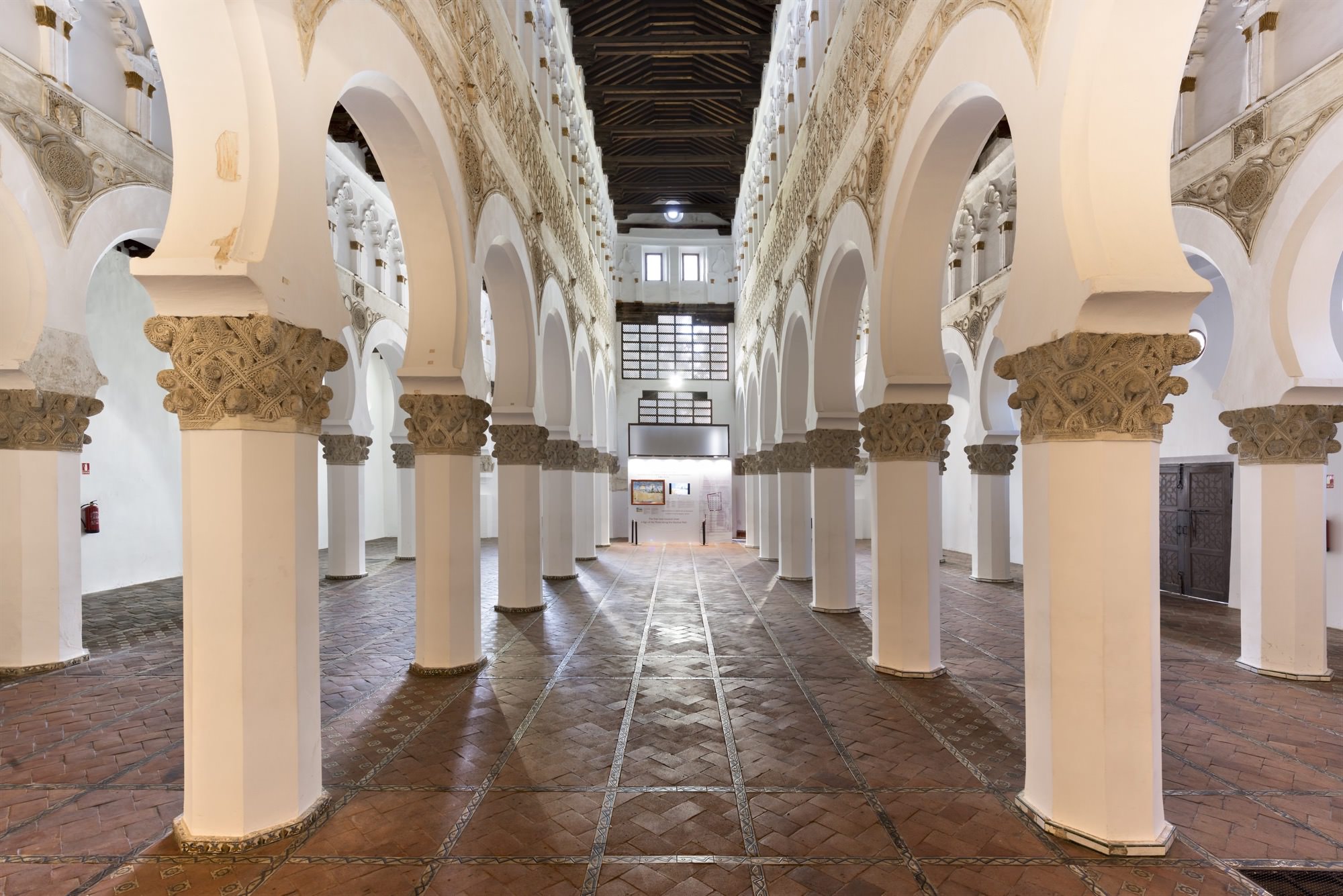
Santa María la Blanca is in Toledo, which you can reach by AVE train, but it is included here in the car section because driving to Toledo allows you to approach from the south, across the Tagus bridge, and to park near the Jewish quarter — which puts you immediately adjacent to this building and the other monuments in that part of the city. The walk from the train station to the Jewish quarter is long and uphill; by car you can position yourself more efficiently.
Il consiglio del team
The building is small and the interior fills up quickly when tour groups arrive. Get there when it opens in the morning. The admission fee is modest. Combine it with the nearby Sinagoga del Tránsito, which is a different architectural tradition but equally significant, and you have two hours of genuinely absorbing history within a five-minute walk.
Day trips from Madrid have a way of recalibrating your sense of the country. You leave a city that feels entirely of the present — its noise, its pace, its relentless urban energy — and within an hour you are standing inside a building from the twelfth century, or looking at a river valley that has been farmed the same way for five hundred years, or eating a bean that tastes like the altitude it was grown at. That is not a small thing.
The practical reality is that most people who visit Madrid for a week do one or two day trips and wish they had done more. The infrastructure is there: the trains are fast, the roads are reasonable outside rush hours, and the distances are forgiving. The only thing that stops people is the planning friction — not knowing which train to take, not knowing where to park, not knowing whether the thing they came to see will be open.
That is what this list is for. Use it, adjust it for your own pace, and do not try to do too much in a single day. One place done properly is worth three places rushed.
The practical reality is that most people who visit Madrid for a week do one or two day trips and wish they had done more. The infrastructure is there: the trains are fast, the roads are reasonable outside rush hours, and the distances are forgiving. The only thing that stops people is the planning friction — not knowing which train to take, not knowing where to park, not knowing whether the thing they came to see will be open.
That is what this list is for. Use it, adjust it for your own pace, and do not try to do too much in a single day. One place done properly is worth three places rushed.