


After fifteen years, I've learned that New York rewards the specific over the spectacular. The tourists who spend three hours waiting in line for the Statue of Liberty often miss the African Burial Ground two blocks away—a site where 15,000 people were interred between 1690 and 1794, their graves erased and paved over for two centuries until an excavation in the 1990s forced the city to reckon with its own amnesia. That's the New York that stays with you: not the view from the top of a building, but the weight of the ground beneath your feet.
The city has always been a work in progress, and 2026 is no exception. The new JFK Terminal 6, which opened in 2025, arrives with its Art Déco-inspired design as a small signal that even our points of entry are being reimagined. But the real New York—the one worth your time—doesn't require new infrastructure. It requires attention. It requires the willingness to walk past the obvious and sit with the complicated. What follows is not a list of the best things to do in New York. It's a list of things worth doing if you want to understand what this city actually is.
The New York African Burial Ground: archaeology as moral reckoning
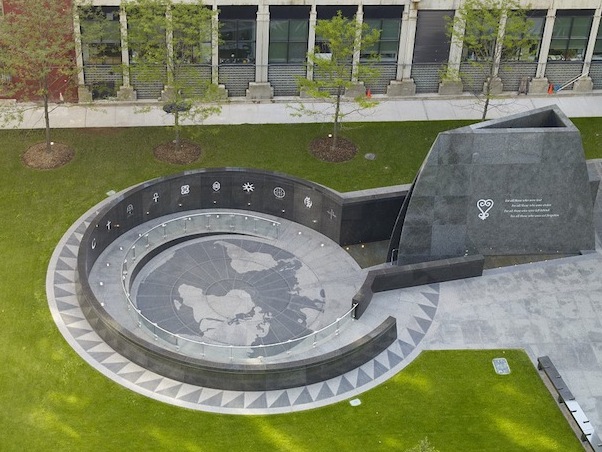
The memorial and museum that now occupy the site are deliberately modest—a granite wall, a small interpretive space. There are no crowds here, no velvet ropes, no gift shop. What you find instead is the possibility of actual encounter with history, the kind that doesn't resolve itself into narrative comfort. The names of the deceased are listed. The circumstances of their lives—most were enslaved, some were free—are documented. You stand in a place where the ground itself has been forced to tell the truth.
Il consiglio del team
Visit on a weekday morning. The site closes at 4 p.m., and the interpretive center requires time to absorb.
St. Paul's Chapel: the building that survived everything
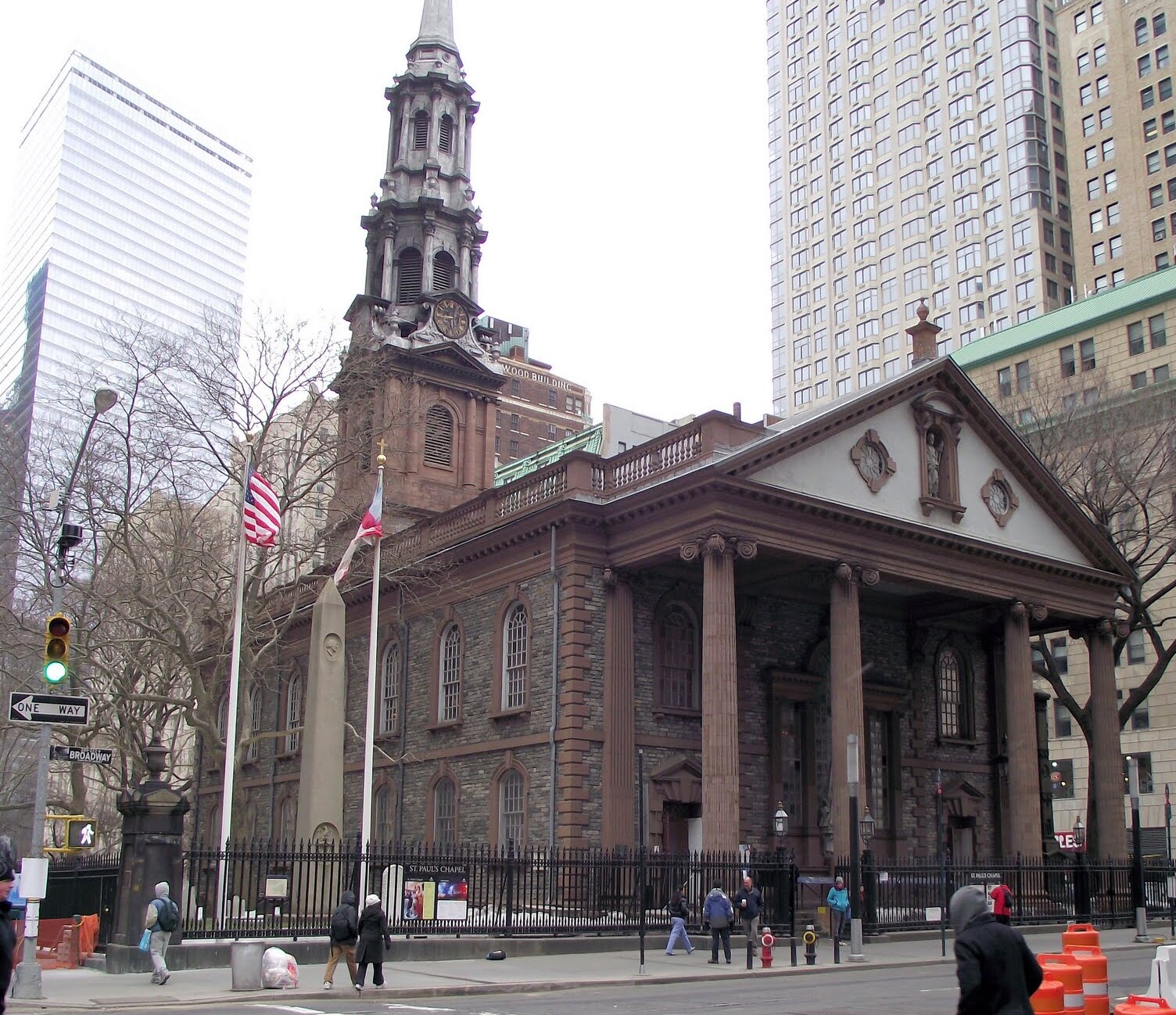
The chapel is small, intimate, built in the Georgian style with a simplicity that feels almost austere by contemporary standards. George Washington worshipped here. After 9/11, when the site was still smoking, the chapel became a refuge for rescue workers—a quiet space where people could sit without being asked to feel anything in particular. That capacity for shelter, for providing a room where you can simply exist, is what the building offers now. The interior is spare. The light comes through tall windows. You can sit in a pew for as long as you need.
Il consiglio del team
The chapel hosts a small museum documenting its role in the post-9/11 recovery. The gift shop is mercifully understated.
Wall Street: the financial heart of America, stripped of mythology
What's worth seeing here is not the street as symbol but as fact—the way a financial system announces itself through architecture, through the sheer density of institutional power made visible in stone and glass. The Federal Hall, where George Washington took his oath of office, sits here too, now a museum that few people visit. The real lesson of Wall Street is that mythology and money operate in the same space, and they're not the same thing.
Il consiglio del team
Go on a Saturday afternoon when the crowds have dispersed. The quiet is instructive.
Fraunces Tavern: the oldest restaurant in New York, and what that means
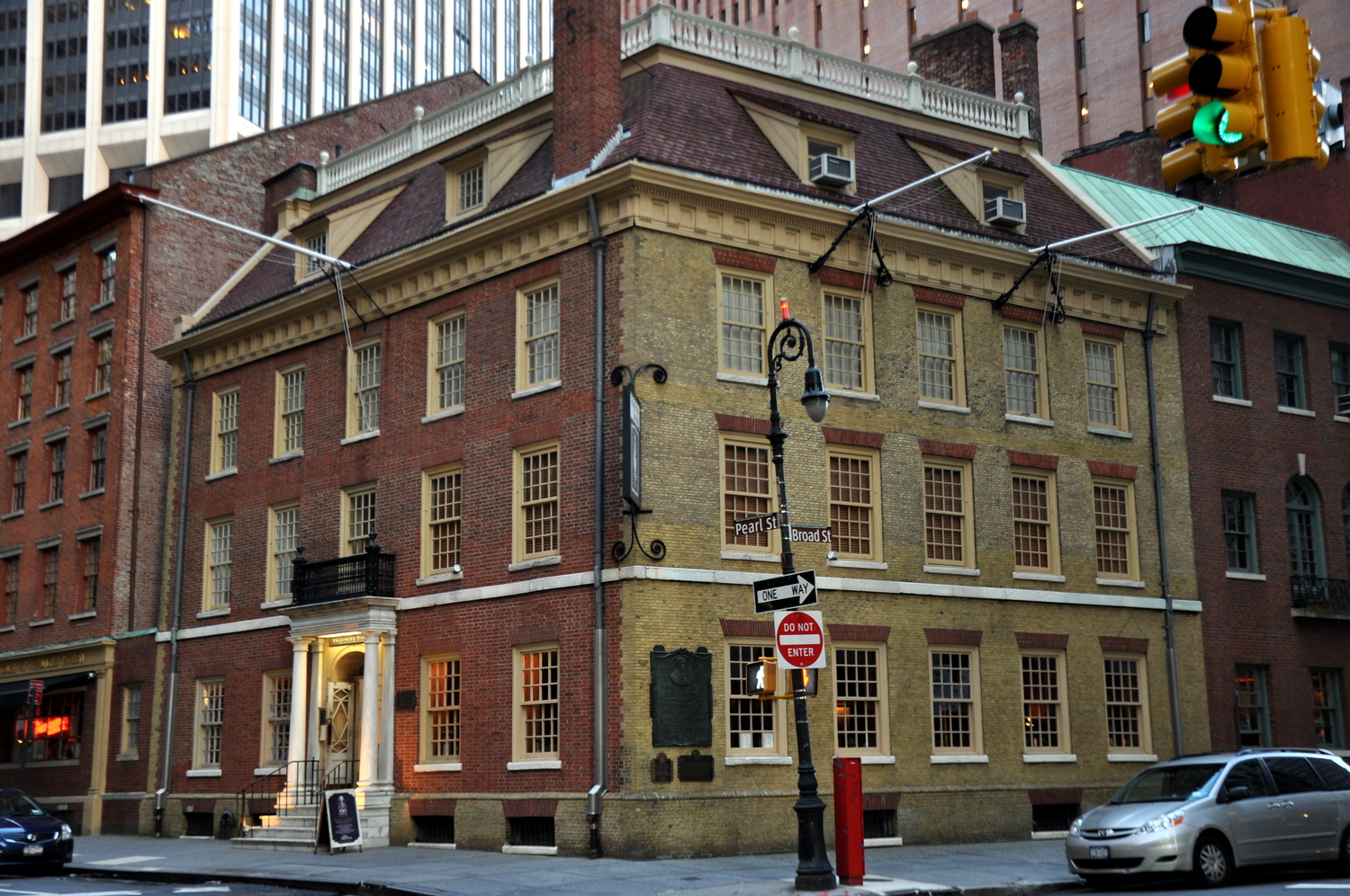
The food is competent colonial-era fare, neither revelatory nor embarrassing. The bar is crowded with tourists and financial district workers. What you're paying for is not culinary innovation but the experience of sitting in a room where people have been sitting for more than 250 years. That's a different kind of value. The tavern reminds you that New York's real texture comes from accumulation, from the weight of time layered onto the same physical spaces.
Il consiglio del team
The upstairs dining rooms are less crowded than the ground floor. The Colonial-era cocktails are historically researched but taste like what they are: historical research.
The Thanksgiving Day and the famous turkey: a holiday stripped of its mythology

The holiday reveals something essential about American culture: the capacity to commemorate an event while remaining almost entirely ignorant of what actually happened. New York doesn't hide this contradiction. It simply enacts it, year after year, with the same earnestness and the same historical amnesia. If you want to understand the city, watch how it celebrates Thanksgiving.
Il consiglio del team
The Macy's parade is a massive crowd experience. Better to watch it on television from a restaurant with friends who aren't your family.
Little Italy and the Feast of San Gennaro: faith and commerce in collision
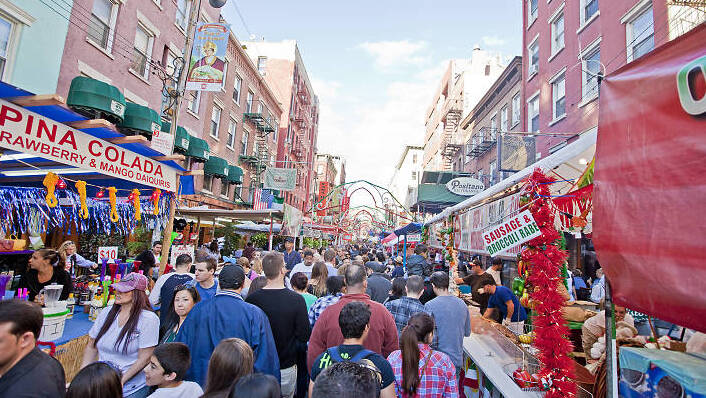
This collision between faith and commerce is not a corruption of the original festival but its logical continuation. The feast has always been both: a moment of genuine spiritual devotion and a community gathering organized around food and money. Little Italy itself has become more touristic than Italian, but the feast retains a certain authenticity precisely because it's so openly commercial. There's no pretense that this is a purely spiritual event. Everyone knows why they're here.
Il consiglio del team
The feast runs for ten days in September. The first few days are less crowded. The zeppole at any vendor are essentially identical.
Cosa vedere a New York nel 2026: guida AI ai luoghi imperdibili — parks and gardens in the age of algorithmic travel
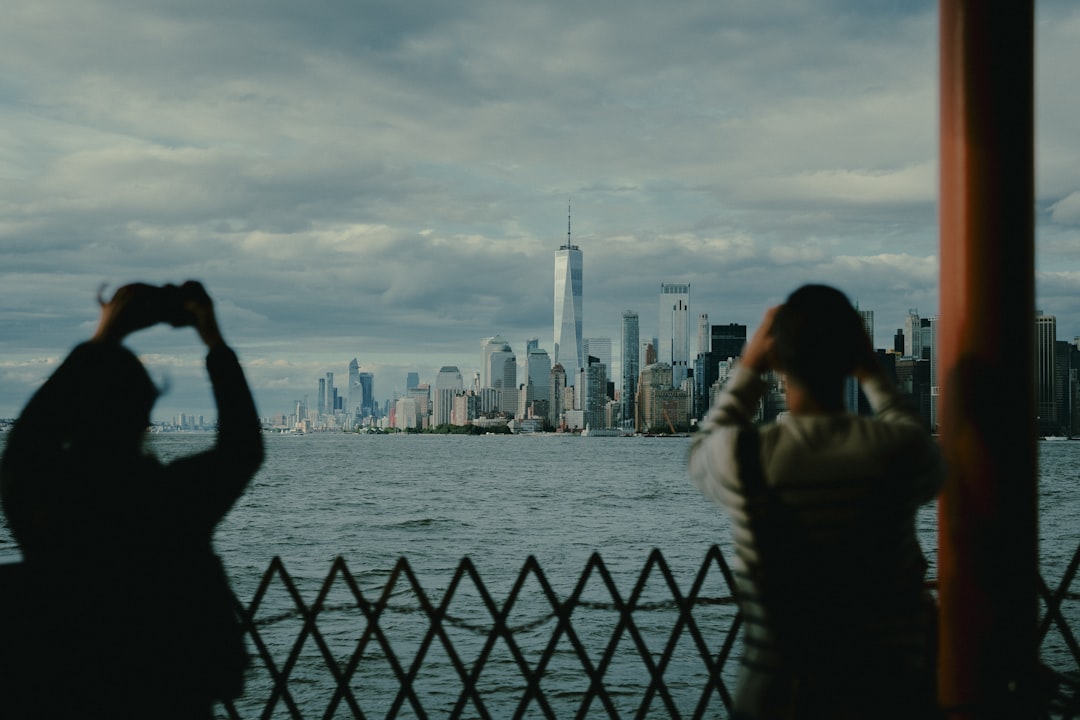
Central Park is the obvious answer, and it's worth visiting, but the smaller parks—Tompkins Square, Sara D. Roosevelt Park, the High Line—offer something different: the experience of the city at a human scale, where trees grow and people gather without the apparatus of tourism. The parks are free. They require no planning. They're where New York becomes a place to live rather than a place to see.
Il consiglio del team
The new AI travel guides can optimize your park visits, but they miss what makes parks valuable: the capacity to waste time without purpose.
Secret World vs TripIt: la migliore app per New York 2026 — choosing your digital companion
These apps work, which is to say they prevent catastrophic mistakes. But they also flatten the experience of discovery. A city worth visiting is one that contains surprises, dead ends, moments of being lost. The apps minimize these experiences in the name of efficiency. Use them for logistics—subway routes, restaurant reservations, museum hours. But plan to abandon them for at least one day, to walk without destination, to see what happens when you're not optimizing.
Il consiglio del team
The apps are most useful for practical information. For actual experience, a printed map and curiosity work better.
Statue of Liberty - New York: the gift that became a symbol
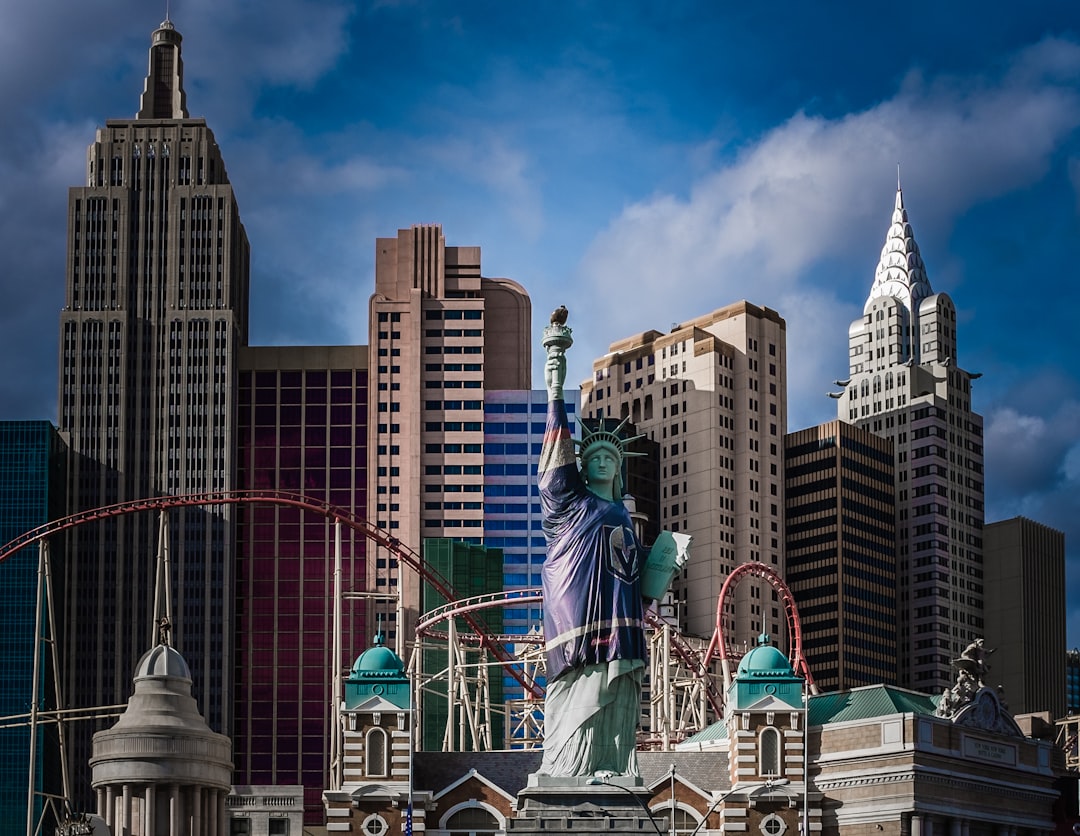
Visiting requires a ferry, a wait, and a climb. The views from the top are extensive and somewhat underwhelming—you're looking at New Jersey, at the harbor, at the city in the distance. What you're actually doing is completing a ritual, checking a box, participating in a tradition so established that it no longer requires justification. This is not a criticism. Some rituals are worth completing. Just understand what you're doing: not discovering something, but confirming something you already knew.
Il consiglio del team
The early morning ferry is less crowded. The climb to the crown is steep and requires advance reservation.
Discover the World Like Never Before with Secret World's Innovative App — the promise and the problem

New York doesn't need an app. The city is legible. The streets are marked. The museums have hours posted. What an app does is accelerate your movement through the city, which means you see more and experience less. The promise of innovation often means the elimination of friction, but friction—getting lost, waiting in line, discovering something by accident—is where the actual encounter with a place happens.
Il consiglio del team
Download the app for practical information. Ignore its recommendations for where to eat.
New York doesn't improve with return visits the way other cities do. Venice becomes more beautiful the second time you see it. Paris rewards familiarity. New York simply becomes more familiar, which is a different thing. The shock wears off. The crowds remain. The rents continue to climb. What changes is your capacity to see the city as it actually is rather than as you imagined it would be.
The ten things listed above are not the best things to do in New York. They're simply things worth doing if you want to move past the postcard version of the city. They involve history, food, crowds, walking, waiting, and the occasional moment of genuine encounter with something that matters. They involve no superlatives. They involve friction.
New York will always have famous landmarks, tourist attractions, experiences that everyone agrees are worth having. What's harder to find is the texture of the city as a place where people actually live—where history is buried and then excavated, where the oldest restaurant in the city serves competent food to crowds of people who came for the mythology, where parks exist as spaces of genuine refuge from the apparatus of tourism. This is the New York worth visiting. It requires no special access, no advance booking, no influencer recommendation. It requires only attention, time, and the willingness to see what's actually there rather than what you expected to find.
The ten things listed above are not the best things to do in New York. They're simply things worth doing if you want to move past the postcard version of the city. They involve history, food, crowds, walking, waiting, and the occasional moment of genuine encounter with something that matters. They involve no superlatives. They involve friction.
New York will always have famous landmarks, tourist attractions, experiences that everyone agrees are worth having. What's harder to find is the texture of the city as a place where people actually live—where history is buried and then excavated, where the oldest restaurant in the city serves competent food to crowds of people who came for the mythology, where parks exist as spaces of genuine refuge from the apparatus of tourism. This is the New York worth visiting. It requires no special access, no advance booking, no influencer recommendation. It requires only attention, time, and the willingness to see what's actually there rather than what you expected to find.