10 Best Things to Do in Los Angeles, USA — beyond the obvious
A resident's guide to what actually rewards your time in a city built for the car, not the walker
L
Una guida di
Lena Hofmann
Aggiornata il
16 settembre 2026
Lettura
13 minuti
Comprende
10 luoghi · mappa interattiva
★ Guida d'Italia 2026
Pianifica con cura. Viaggia più a fondo.
1.3M+ luoghi curati nel mondo, mappe offline e itinerari intelligenti — tutto in un'app gratuita.
1.3M+ luoghiMappe offlineItinerari AIGratis
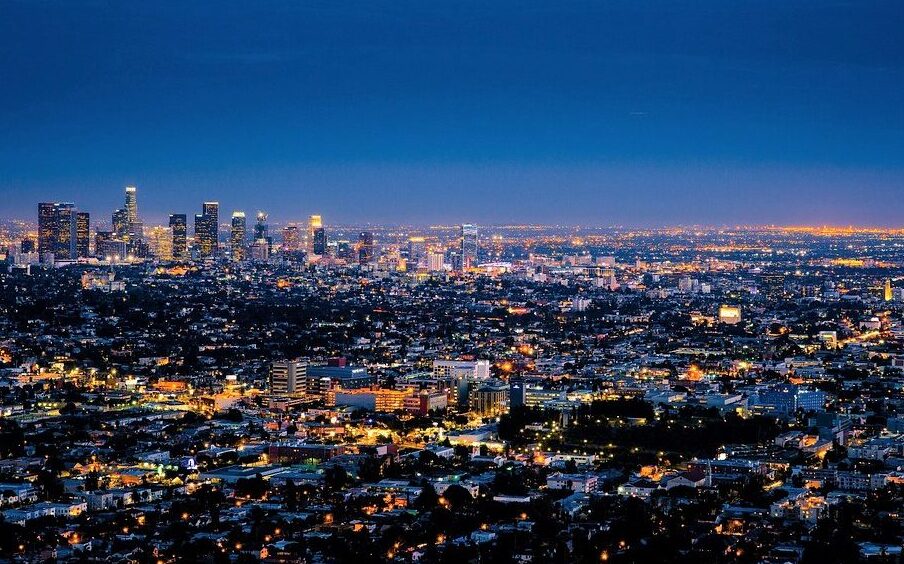
I moved to Los Angeles in 2015 thinking I would stay six months. I'm still here, which either says something about the city or something about my own inability to commit. The truth is probably both. Los Angeles doesn't seduce you with first impressions. It exhausts you first. The sprawl is real—1,300 square kilometres of it, fragmented into neighbourhoods that feel like separate cities. The traffic is a form of meditation or torture, depending on the day. The sunshine, which everyone mentions, is actually a kind of erasure: it makes everything look the same, temporally speaking. No season to anchor you. No rain to mark time's passage.
But if you stay long enough, if you stop expecting the city to be compact or coherent, something shifts. You begin to understand that Los Angeles is less a city than a collection of obsessions: with light, with reinvention, with the possibility that you might become someone else entirely if you just move west enough. The tourist version of LA—the Walk of Fame, the Getty Center, Venice Beach—is real but thin. It's the kind of tourism that confirms what you already believed about Los Angeles from television. What I've learned, living here, is that the real LA lives in the spaces between those landmarks, in buildings that few people know about, in the particular way light hits a concert hall at dusk, in a bookstore so large it feels like a city unto itself.
This list is not about the obvious. It's about the things that made me stop resenting the drive and start understanding why people stay.
The Bradbury Building sits on Broadway in downtown Los Angeles, a five-storey structure completed in 1893. From the street, it announces itself with modest Romanesque details—nothing that would make you stop. Step inside and you enter a different order of experience entirely. The interior is a light-filled atrium ringed by wrought-iron railings, with natural light pouring through a glass roof. The space feels like a stage set from a film noir, which is perhaps why it has been used as a filming location dozens of times. The building was designed by George H. Wyman, a young architect who reportedly took the job after his uncle convinced him through a Ouija board. The decision proved consequential. Inside, you can see the city's commercial aspirations from the 1890s—the belief that work could happen in beauty, that a warehouse for human labour could also be a work of art.
Il consiglio del team
Go on a weekday morning before the lunch crowd. The light is clearest then, and you can hear the building's acoustic properties—the way sound travels through the atrium creates an almost musical quality.
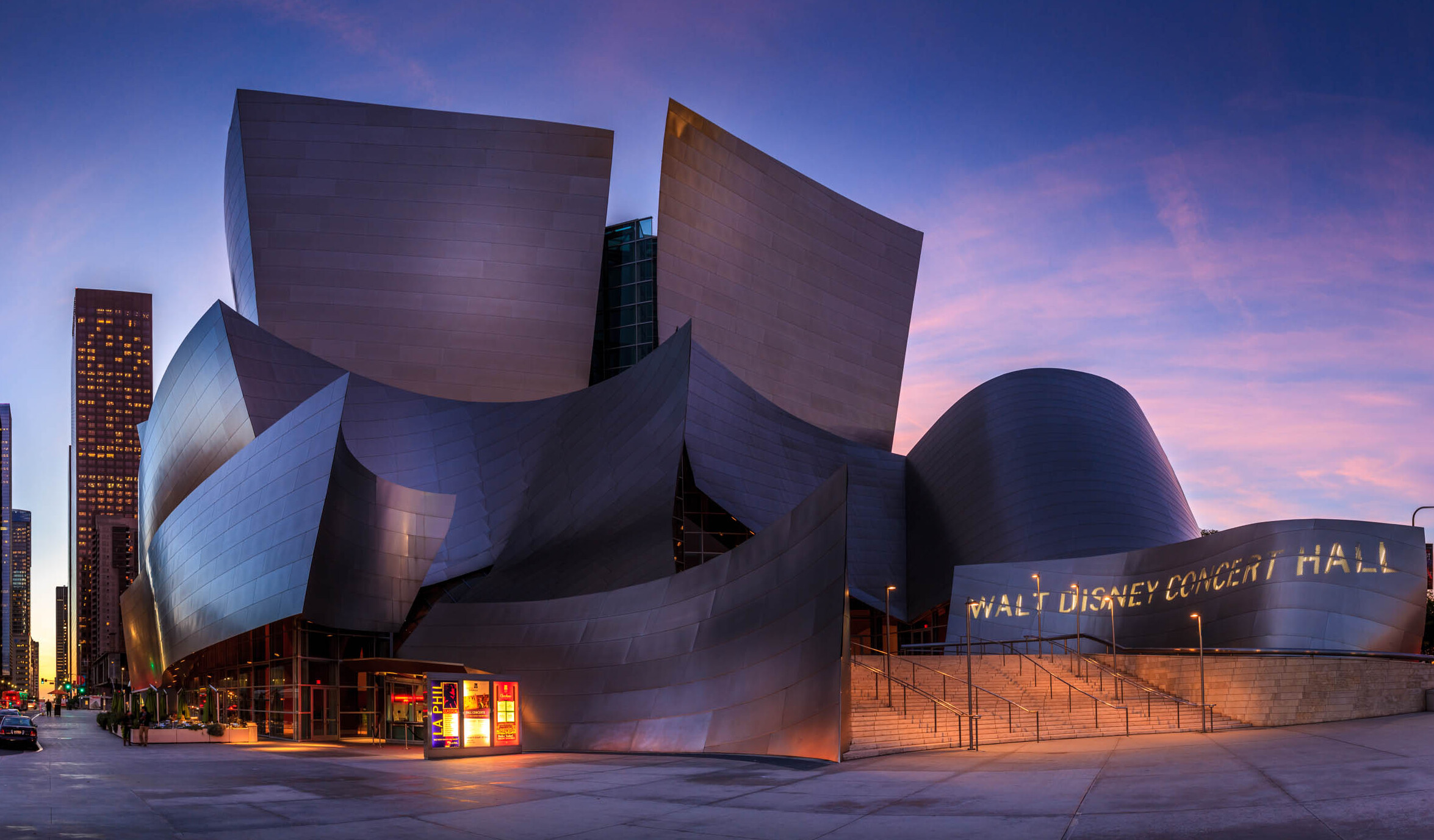
The Walt Disney Concert Hall opened in 2003 and remains the most visually arresting building in downtown Los Angeles. Frank Gehry's design—a series of sweeping, curved stainless-steel panels—catches light differently depending on the time of day and your position relative to it. From some angles it looks like a ship; from others, like a musical instrument frozen mid-performance. The interior is equally considered. The main auditorium has excellent acoustics, a rarity in contemporary concert halls, and the stage is open, meaning musicians perform without a proscenium barrier between them and the audience. The building sits at the heart of the Music Center, a complex that includes three other performance venues. Even if you don't attend a concert, the building is worth visiting for its architecture alone. The plaza in front is often empty, which is itself notable in a city that rarely feels quiet.
Il consiglio del team
The building's exterior is designed to be self-cleaning, thanks to a special coating on the steel. In heavy rain, you can see water cascade down the panels in sheets—a sight that transforms the architecture into something almost alive.
Yayoi Kusama's Infinity Mirrored Room is a small chamber lined entirely with mirrors and populated by thousands of LED lights that pulse in sequence. The experience lasts forty-five seconds. The wait to enter typically lasts three to four hours. This ratio—forty-five seconds of experience to four hours of anticipation—is somehow very Los Angeles. You stand in line, watching the door, watching other people emerge with the dazed expression of someone who has briefly left the material world. The room itself is simple in concept but disorienting in practice. The mirrors create an illusion of infinite space; the LEDs twinkle like stars receding into impossible distance. Kusama, now in her nineties, has created a series of these rooms across the world. The Los Angeles version is housed in a museum downtown. The experience is less about what you see in forty-five seconds and more about what you anticipate during the hours of waiting—a very contemporary form of desire.
Il consiglio del team
Book tickets online in advance. The museum often sells out weeks ahead, and showing up without a reservation means joining a queue that may not move for hours. The wait time is posted on the museum's website and updated hourly.
The Last Bookstore occupies 22,000 square feet of a former bank building downtown. It is California's largest used and new book store. The space is deliberately labyrinthine—narrow corridors lined floor to ceiling with books, with sections that double back on themselves, creating a sense of being lost that is somehow comforting rather than frustrating. The lighting is soft, almost deliberately dim, which means you move slowly through the space, reading spines, discovering books you didn't know you wanted. The store also sells vinyl records, which occupy their own section with the same careful curation. There are reading nooks built into the architecture, small corners where you can sit and read without feeling like you're in anyone's way. The store opened in its current location in 2005 and has become one of those rare places in Los Angeles where people linger. The cash registers are slow, which used to annoy me until I realized that the slowness is part of the experience—it gives you time to keep browsing.
Il consiglio del team
The store hosts author events and readings several times a week. Check their calendar online. These events are free and tend to draw interesting crowds of readers, a rare thing in a city that doesn't always feel like a reading culture.
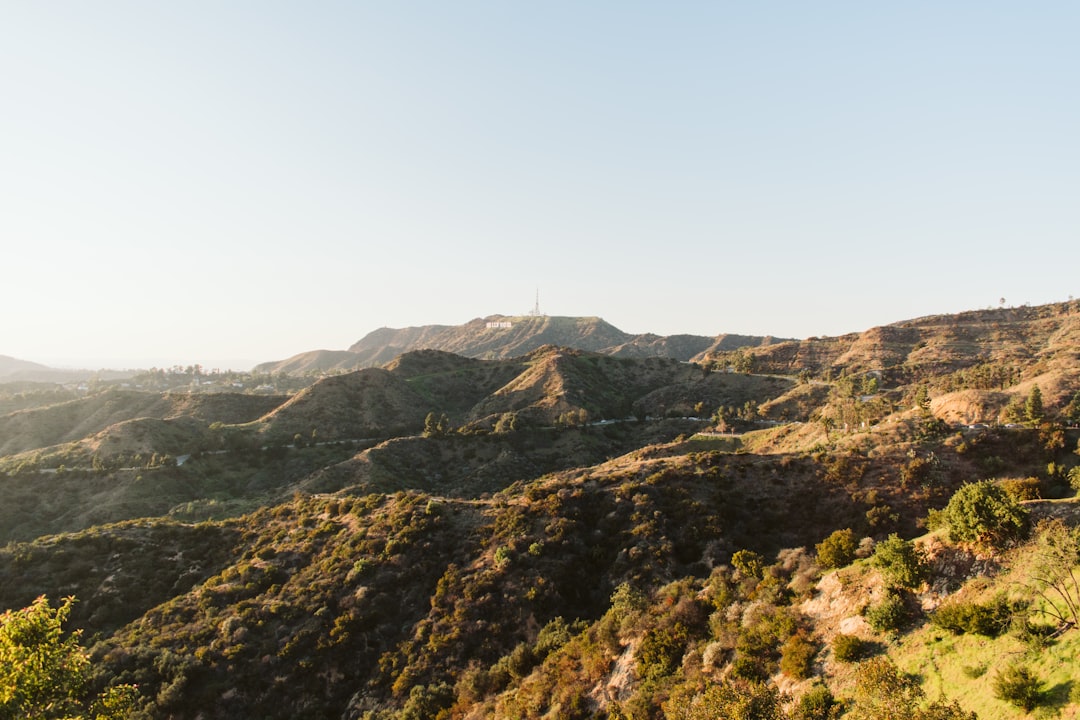
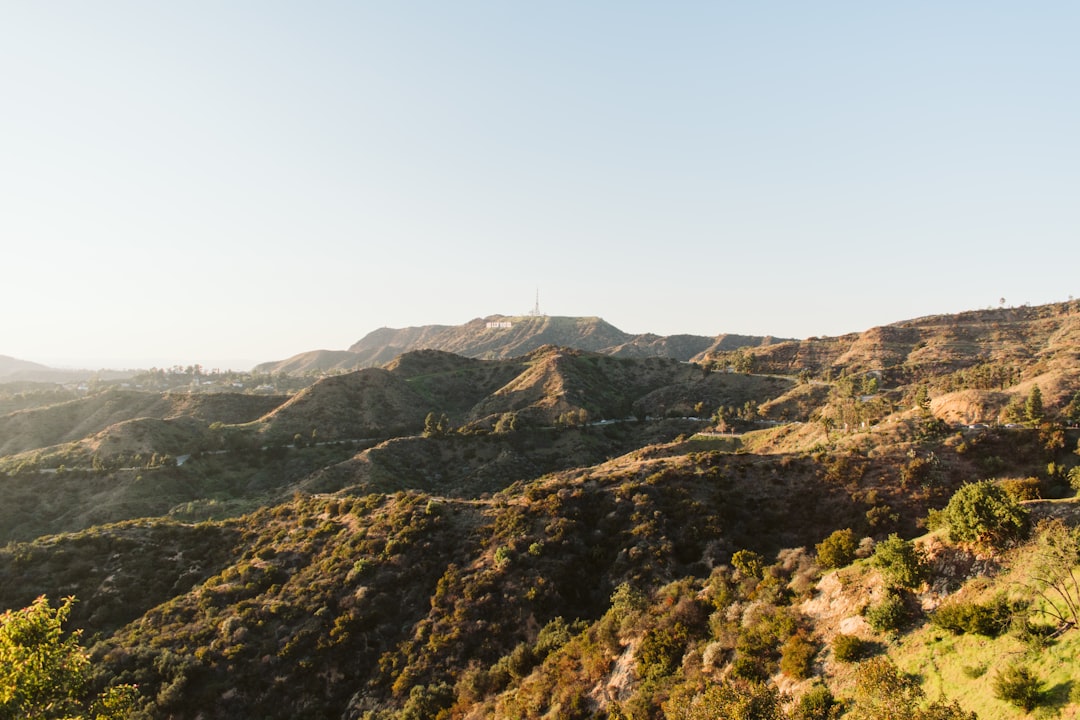
Griffith Park covers 4,310 acres and is one of the largest urban parks in North America. The original land was donated to the city in 1896 by Colonel J. Griffith, a mining magnate whose name now graces one of Los Angeles' most important green spaces. The park contains hiking trails, an observatory, a zoo, and areas of chaparral and oak woodland that feel genuinely wild despite the city surrounding them. The park is hilly, which means the views from various points offer perspective on how vast Los Angeles actually is. On clear days, you can see from downtown to the ocean. The park is also where you find the Hollywood Sign, though the sign itself is technically outside the park boundaries. The park is popular with hikers, runners, and people on horses—yes, you can rent horses and ride through the park, which is a very Los Angeles way to experience nature. The trails range from easy to strenuous, and the park is never entirely empty but never feels crowded in the way that Venice Beach does.
Il consiglio del team
Arrive early on weekends. The parking areas fill up by mid-morning, particularly near the more popular trailheads. The Griffith Observatory parking lot is particularly competitive on clear nights.
Los Angeles receives approximately 280 days of sunshine per year. This is not poetic exaggeration—it's a statistical fact that shapes everything about the city. The average temperature ranges from 17 degrees Celsius in winter to 28 degrees in summer, which means the distinction between seasons is often invisible. This consistency of light and warmth is what allows the city to sprawl the way it does. There's no need for the density that weather-challenged cities require. The sunshine also creates a particular kind of visual culture. Shadows are sharp and defined. Architecture casts itself in high contrast. The light at sunset is golden and extended, lasting from about 5 p.m. in winter to nearly 8 p.m. in summer. This light has attracted filmmakers since the early days of cinema. The sun is not a backdrop in Los Angeles—it's a character. It's also, for many people, the reason they came here. The promise of endless summer is real, even if the reality is more complicated.
Il consiglio del team
The quality of light changes depending on where you are in the city. Downtown has different light than the beaches; the hills have different light than the valleys. Learning to recognize these variations is part of understanding Los Angeles visually.
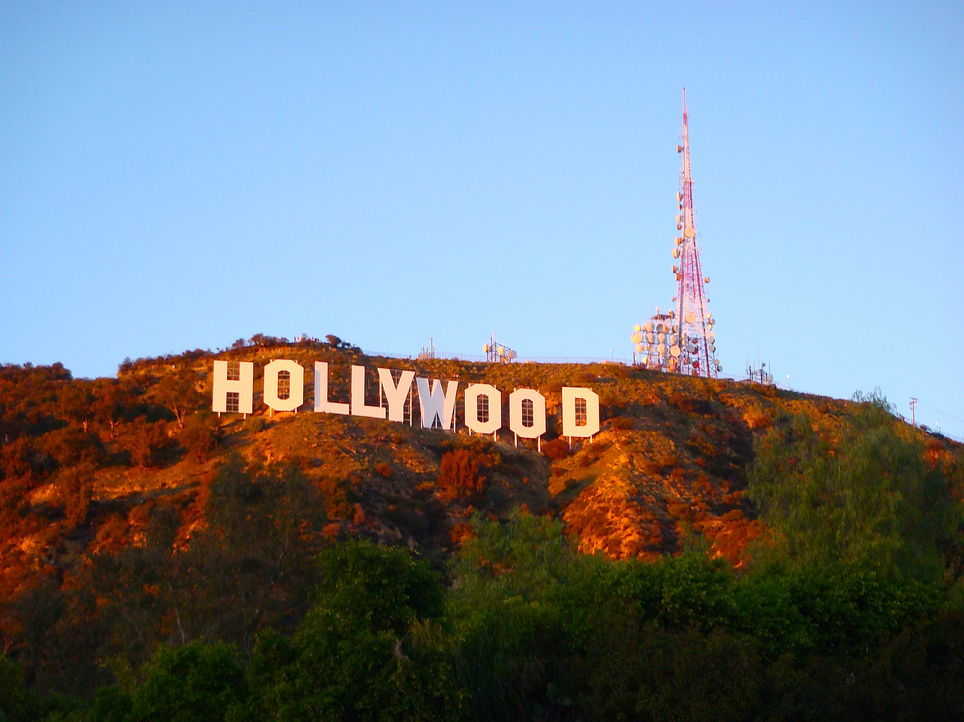
The Hollywood Sign sits on Mount Lee in the Hollywood Hills, overlooking the neighbourhood that gave it its name. The sign was originally erected in 1923 as an advertisement for a local real-estate development. It read 'Hollywoodland' and was meant to last about eighteen months. The letters fell into disrepair over the decades and were eventually restored in 1978 through a campaign that included celebrity donations. The sign is now a cultural icon, visible from various points throughout the city, though seeing it clearly requires either proximity or a clear day. The sign is technically not accessible to the public—there's a fence around it—but it can be approached via hiking trails that require moderate effort and take forty-five minutes to an hour. The hike itself is less interesting than the destination, but the view from the vantage point where you can see the sign is substantial. You can see across the city in multiple directions. On clear days, you can see the ocean. The sign has been featured in countless films and photographs, which means the experience of seeing it in person is slightly haunted by its own representation.
Il consiglio del team
Go early in the morning or late in the afternoon. Midday heat on the trail is significant, and the light for photography is better at the edges of the day. Bring water—there are no facilities on the trail.
Musso & Frank Grill opened in 1919 and remains a functioning restaurant in an era when most institutions from that period have been demolished or transformed beyond recognition. The restaurant is a steakhouse and cocktail bar, decorated in dark wood and red leather booths. The waiters wear red jackets and move with the formality of another era. The menu hasn't changed substantially in decades—you order a steak, a cocktail, and you sit in a booth that may have held Charlie Chaplin or Raymond Chandler or countless other figures from Hollywood's early history. The restaurant is not cheap, and the food is competent but not exceptional. What you're paying for is the experience of sitting in a space that has remained largely unchanged for over a century. The bar is particularly good—the bartenders know how to make a proper cocktail, which is not always true in Los Angeles. The restaurant fills with a particular crowd: older men in suits, tourists seeking authenticity, and a surprising number of film industry people who still believe in the power of institutional memory.
Il consiglio del team
Make a reservation. The restaurant is small and fills quickly, particularly in the evening. Lunch is quieter and offers a different experience of the space.
Los Angeles is one of the world's most difficult cities to plan. Not because it lacks attractions—it has an excess of them. The problem is distribution. The city sprawls across more than 1,300 square kilometres, fragmented into neighbourhoods separated by significant distances. A journey that looks short on a map can take forty-five minutes by car. This is where planning applications become essential. The best travel apps for Los Angeles are those that account for distance and traffic patterns, not just attractions. You need tools that help you cluster destinations by neighbourhood and understand transit times realistically. Many visitors underestimate how much time they'll spend driving or in traffic. The apps that work best in Los Angeles are those designed for car-based cities, not those built for dense European cities where everything is within walking distance. The geography of Los Angeles is not a flaw to be overcome—it's a fundamental aspect of the experience. Understanding this from the beginning makes the city feel less chaotic and more navigable.
Il consiglio del team
Use multiple apps. Google Maps for navigation, a parking app for finding spots, and a traffic app for real-time conditions. No single app captures the full complexity of moving through Los Angeles.
A perfect Los Angeles weekend requires accepting that you cannot see everything, and that the attempt to do so will result in frustration and excessive driving. The city offers culture, entertainment, and natural beauty, but these are distributed across the landscape in ways that demand choice. A weekend itinerary should be organized by geography rather than by attraction type. Spend one day in downtown and the surrounding neighbourhoods, another in the hills or at the beaches, depending on what interests you. The worst mistake is trying to combine downtown, Hollywood, and the beaches in a single day—the driving alone will consume most of your time. Los Angeles rewards focused exploration. Pick a neighbourhood and spend time understanding it. Walk around. Eat lunch at a place that locals go to. Sit in a park and watch how the light changes. This approach yields more than rushing between landmarks. The city reveals itself slowly, which is frustrating if you're accustomed to cities that can be 'done' in a weekend, but rewarding if you accept the pace.
Il consiglio del team
Check what neighbourhoods are near each other before planning your route. Downtown is near the Arts District and Little Tokyo. The beaches are separate from the hills. Hollywood is closer to Silver Lake than to the ocean. Organizing by geography rather than by attraction type saves hours of driving.
After eight years in Los Angeles, I still don't fully understand the city. I know how to move through it more efficiently than I did when I arrived. I know which neighbourhoods I prefer, which routes avoid the worst traffic, which times of day are worth being outside. But the city resists comprehensive understanding. It's too large, too fragmented, too willing to reinvent itself. The things I've listed here are not the 'best' in any absolute sense—they're the things that have sustained my interest in a place that initially felt like a punishment. They're places where the city's contradictions become visible: a concert hall that is simultaneously sculptural and functional, a bookstore that feels like a secret despite being downtown, a restaurant that has survived by refusing to change. Los Angeles is often criticized for lacking history, for being a city of surfaces and reinvention. But the truth is more complicated. The city does have history—it's just not the kind of history that reads as picturesque from a distance. It's the history of a place built for cars, for sunshine, for people fleeing other places. Understanding Los Angeles means accepting that it will never feel like home in the way that older cities do. It's too new, too sprawling, too committed to the possibility of becoming something else. But there's a particular kind of freedom in that. The city doesn't insist on who you are or where you belong. It simply provides the space—vast, indifferent, luminous—for you to figure that out.
★ Guida tascabile
Porta questa guida con te.
Salvala offline, ottieni le indicazioni a piedi e scopri migliaia di luoghi come questi.
October through April offers the most pleasant weather and the fewest crowds. Summer (June to August) is warm but also brings peak tourism and traffic. Winter rarely sees rain, though it does happen. The city is never truly 'off-season,' but spring and fall offer a better balance of weather and crowd levels. Avoid visiting during major holidays like Thanksgiving and Christmas, when traffic becomes genuinely dangerous.
Do I need a car in Los Angeles?
Yes. Public transit exists (Metro buses and light rail), but it's not comprehensive or frequent enough to be your primary transportation. Ride-sharing apps like Uber and Lyft are available but expensive for frequent use. If you're staying in a specific neighbourhood and willing to walk locally, you might manage without a car for a few days. But for seeing multiple parts of the city, a car is essential. Rental cars are inexpensive; parking varies by neighbourhood but is generally available.
How much time should I spend in Los Angeles?
Three days is the minimum to see a few neighbourhoods without feeling rushed. A week allows you to explore different areas more thoroughly and understand how the city is organized geographically. Two weeks is ideal if you want to develop a real sense of the place. Most visitors spend three to five days, which is enough to see major attractions but not enough to move beyond the tourist version of the city.
What are the safest neighbourhoods for tourists?
Downtown Los Angeles, the Arts District, Silver Lake, Los Feliz, and the beach communities (Santa Monica, Venice, Manhattan Beach) are generally safe and have good infrastructure for visitors. Hollywood is touristy but can feel sketchy in some areas, particularly around the Walk of Fame. Avoid walking alone at night in any neighbourhood, and be aware of your surroundings. Like any large city, Los Angeles has areas that are safer than others, but most tourist areas are reasonably secure.
What's the food scene like in Los Angeles?
Los Angeles has excellent food, particularly in specific neighbourhoods. Downtown has a growing restaurant scene. Silver Lake and Los Feliz have independent restaurants and cafes. The San Gabriel Valley (east of downtown) has some of the best Asian food in the United States. Beaches have fresh seafood. The city doesn't have a single 'cuisine'—it's defined by diversity. Avoid eating at chains in tourist areas; seek out neighbourhood restaurants where locals eat. Food is generally expensive compared to other American cities, but quality is high.
★ Leggila quando vuoi
Salvala sul tuo telefono.
Aggiungi questa guida ai preferiti, pianifica il viaggio offline, scopri luoghi come questi.