Mirrors that infinitely multiply crystal chandeliers, hand-painted ceramics that cover entire courtyards, and thrones inlaid with precious stones: the Golestān Palace in Tehran does not announce itself discreetly. This royal complex, declared UNESCO World Heritage Site in 2013, has been for centuries the heart of Persian power, first the seat of the Zand dynasty and then the official residence of the Qajar dynasty, which inhabited and expanded it from the late 18th century until the early 20th century.
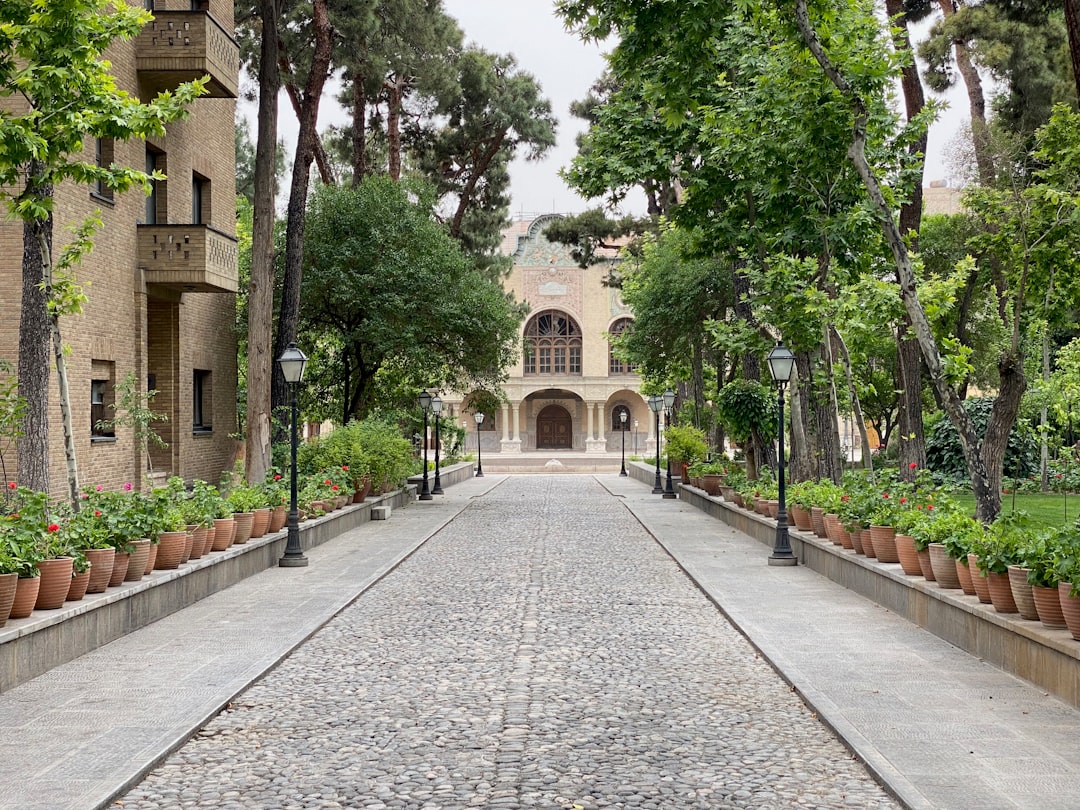
The name literally means "palace of the rose garden," and the central garden — now an open courtyard for visitors — still retains fountains and flower beds that give an idea of how this space must have appeared when it was reserved for the Shah's gaze. The complex is not a single building but a collection of pavilions, halls, museums, and terraces that develop around this green core in the heart of the Tehran Bazaar, in the historical district of the city.
The collection: between mirrors and imperial thrones
The Golestān today hosts several thematic museums distributed among the various pavilions. The most photographed room is undoubtedly the Hall of Mirrors (Tālār-e Āyene), whose walls and ceilings are entirely covered with thousands of fragments of reflective glass arranged in complex geometric patterns. The effect, especially with the natural light filtering through the windows, is that of being inside a living prism. This decorative technique, called āyene-kāri, is one of the most refined expressions of Persian craftsmanship from the Qajar period.
Equally impressive is the Throne of the Sun (Takht-e Marmar), a yellow marble throne decorated with bas-reliefs and inscriptions, located in a pavilion open to the garden. It was commissioned by the ruler Fath Ali Shah in the early 19th century and is considered one of the most recognizable symbols of Qajar art. Visitors can observe it up close and notice the details carved into the columns that support it, representing human figures and stylized floral motifs.

The Internal Museums: Photography, Ivory, and Lacquer
Inside the complex, there are exhibition spaces dedicated to specific collections. The Photography Museum houses a collection of historical images dating back to the early decades of photography in Iran, many of which depict the Qajar court in official poses — a rare visual document of the life of the dynasty. Photography arrived in Persia surprisingly early: Naser al-Din Shah, who reigned from 1848 to 1896, was an enthusiastic amateur photographer and personally contributed to the royal archive.

Another pavilion hosts a collection of lacquer and ivory objects, including boxes, trays, and musical instruments decorated with Persian miniatures of extraordinary finesse. These pieces testify to the influence of trade and diplomatic exchanges with Europe and East Asia that characterized the Qajar period. Each object is accompanied by captions in Persian and English, making the visit accessible even to non-Iranists.
The architecture: a hybrid between Persia and Europe
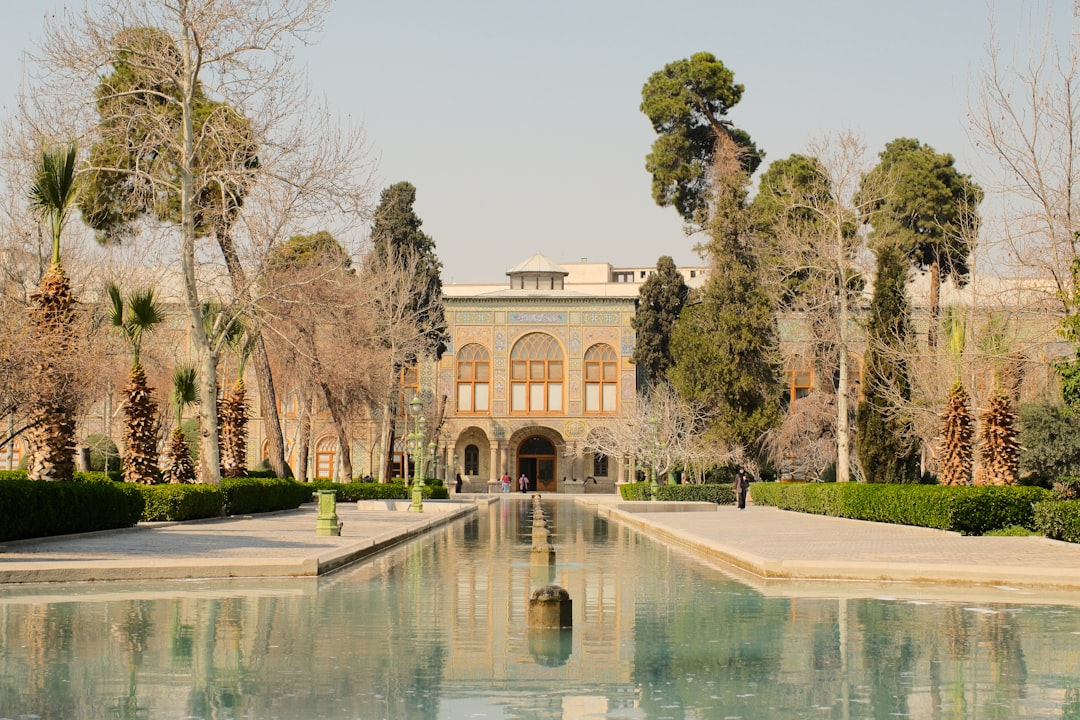
One of the most interesting aspects of Golestān from an architectural point of view is its hybrid nature. The Qajar rulers, fascinated by Europe which they visited several times, incorporated neoclassical and baroque elements alongside Persian construction traditions. The result is visible in facades that mix stalactite arches muqarnas with Ionic-style columns, or in reception halls where gilded stuccos coexist with Delft tiles imported from Holland.
The Clock Tower, one of the most visible elements of the complex from the outside, was added during the Qajar period and reflects this stylistic synthesis. Walking along the perimeter of the palace, it is possible to observe how the different pavilions, built in different eras between the 18th and 19th centuries, interact with each other while maintaining their own characteristics.
Practical Information for the Visit
The Golestān Palace is located in the historic center of Tehran, easily reachable on foot from the Panzdah-e Khordad subway station (line 7). The entrance ticket to the main complex is separate from that for the individual internal museums, so it is advisable to check at the entrance which pavilions are included in the base price and which require an additional fee. Allow at least two and a half hours for a complete visit without rushing.
The best time to visit is early in the morning on weekdays, when school groups are less numerous and the light in the mirror halls is more intense. The complex is closed on Tuesdays. Wear comfortable shoes: the marble floors and the thresholds of the pavilions require attention, and some areas are visited without shoes. Inside the main courtyard, there is a small café where you can sit among the rose bushes and rest before tackling the secondary pavilions.