





← Back

Gateway to Santiago: The Fortress of Malacca ( A Famosa)

Jalan Parameswara, Bandar Hilir, 78000 Alor Gajah, Melaka, Malesia ★★★★☆ 725 views
Fabiana Moro
Alor Gajah
🏆 AI Trip Planner 2026

Get the free app

Discover the best of Alor Gajah with Secret World — the AI trip planner with 1M+ destinations. Get personalized itineraries, hidden gems and local tips. Free on iOS & Android.

🧠 AI Itineraries 🎒 Trip Toolkit 🎮 KnowWhere Game 🎧 Audio Guides 📹 Videos
Scan to download iOS / Android
Scan for AppGallery Huawei users

About Gateway to Santiago: The Fortress of Malacca ( A Famosa)

Gateway to Santiago: The Fortress of Malacca ( A Famosa) - Alor Gajah | Secret World Trip Planner

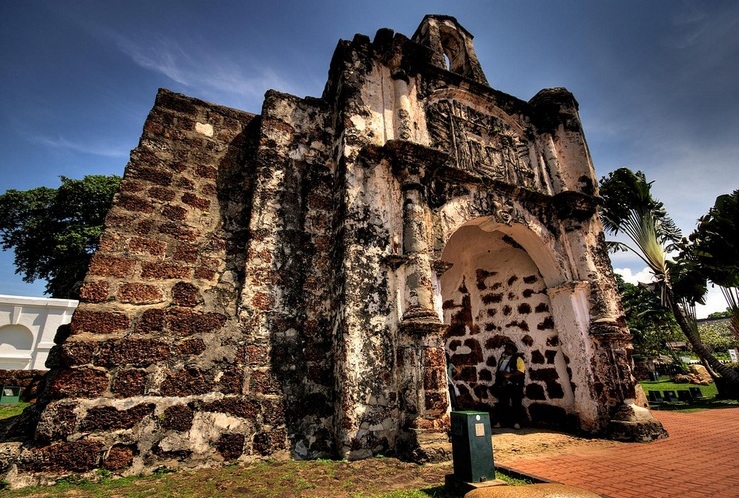
Not even 100 meters away from the Sultanate Palace, there is one of the oldest ruins of European origin in Asia: its name is A Famosa, and it is a fortress built during the period of Portuguese colonialism. Nowadays, only the part where the Porta de Santiago, one of the entrance gates of the outpost, opened, has survived. In 1511, the Portuguese fleet commanded by Afonso de Albuquerque landed, attacked and defeated the forces of the Sultanate of Malacca, the oldest in Malaysia and, at that time, the most powerful kingdom on the Malay Peninsula. Commander Albuquerque urgently requested the construction of a fortress built around a hill that at that time was in front of the sea (today the shore has moved several hundred meters). Albuquerque in fact believed that Malacca would become an important port to connect the Empire of Portugal with the spice route to China. In the same period other Portuguese fleets conquered places like Macao, in China, and Goa, in India, with the same aim of creating satellite ports where Portuguese ships transiting between Portugal and China could dock safely for supplies and shelter. The Strait of Malacca, dominated by the city of the same name, was of vital importance to ensure the safe passage of European ships between the West and the Far East. The power that dominated Malacca would have exercised control over the entire strait thanks to its strategic position. The fortress, in the vision of the Portuguese captain, would naturally have to be the outpost to guard a city of such importance. It was built in a short period of time with high walls, towers and four fortified entrance gates. Each tower had a warehouse for ammunition, there was a residence for the captain and for the officers on duty. The actual village was located, according to medieval schemes still in use among the Portuguese, within the walls of the fortress. Naturally, as the importance of the Malaysian port grew, as well as the population of inhabitants and merchants who stopped there, houses soon began to be built well outside the perimeter of the walls. The fortress changed hands in 1641 when the Dutch, who were already active in Indonesia with their own East India Company, overpowered their European rivals with the help of Malay fringes hostile to Portuguese rule. The fort was preserved as it was still of strategic use, although damaged by cannon fire. Above the four entrance gates the Dutch carved a bas-relief with the logo of the Dutch East India Company. In 1806 the British ordered the destruction of the fort.

Buy Unique Travel Experiences

Powered by Viator

See more on Viator.com

Frequently Asked Questions

A Famosa is one of the oldest ruins of European origin in Asia, built by the Portuguese in 1511 after Commander Afonso de Albuquerque conquered the Sultanate of Malacca. It was constructed as a strategic military outpost to control the Strait of Malacca and serve as a vital port connecting Portugal's empire with the spice route to China, similar to Portuguese settlements in Macao and Goa.
Today, only the Porta de Santiago (gateway entrance) has survived from the original fortress structure, which once featured high walls, towers, four fortified entrance gates, ammunition warehouses, and residences for the captain and officers. The gate stands as a remarkable testament to Portuguese colonial architecture and serves as the main attraction visitors can explore.
A Famosa is situated less than 100 meters away from the Sultanate Palace in Malacca, making it convenient to visit both historical sites in one trip. The fortress was originally built on a hill that faced the sea during the Portuguese period, though the shoreline has since moved several hundred meters away.
Commander Albuquerque recognized that the Strait of Malacca, controlled by the city of the same name, was strategically vital for safe passage of European ships traveling between the West and Far East. The fortress was designed to guard this important port and ensure that Portuguese ships could dock safely for supplies and shelter while traversing the spice route to China.
The fortress was built in a short period with high walls, towers, and four fortified entrance gates, following medieval Portuguese architectural schemes of the time. It housed ammunition warehouses in each tower, official residences for the captain and officers, and the entire village was located within the fortress walls according to medieval fortified city planning principles.