





A whispering sea of sand stretches infinitely under the Tunisian sun, where the town of Douz acts as a gateway to the majestic Sahara Desert. Nestled at the coordinates 33.4614354, 9.0294708, Douz is often referred to as the "Gateway to the Sahara." This small town, with its enchanting allure and rich tapestry of history and culture, offers travelers a unique glimpse into a world where time seems to stand still.

Douz's history is as ancient as the shifting dunes that surround it. It has long been a vital oasis in the Nefzaoua region of Tunisia, serving as a crucial stop for caravans traversing the vast expanse of the Sahara. Historically, it was a vibrant hub for the Beni Zid tribe, known for their resilience and adaptability to the harsh desert environment. The town's prominence grew during the era of the trans-Saharan trade routes, where it thrived as a center for exchanging goods like dates, leather, and wool. The legacy of these ancient trading days still lingers in the air, as visitors can almost hear the echoes of bustling merchants and the distant bells of camels.
Architecturally, Douz is a testament to the ingenuity of its people in adapting to the desert's demands. The town's structures are characterized by their traditional Tunisian architecture, with simple, robust designs meant to withstand the harsh climate. The Ksar Ghilane, a nearby oasis with remnants of Roman fortifications, offers a glimpse into the ancient architectural prowess that once dominated the region. These structures are not merely buildings but storied relics that speak volumes about the resilience and creativity of the people who built them.
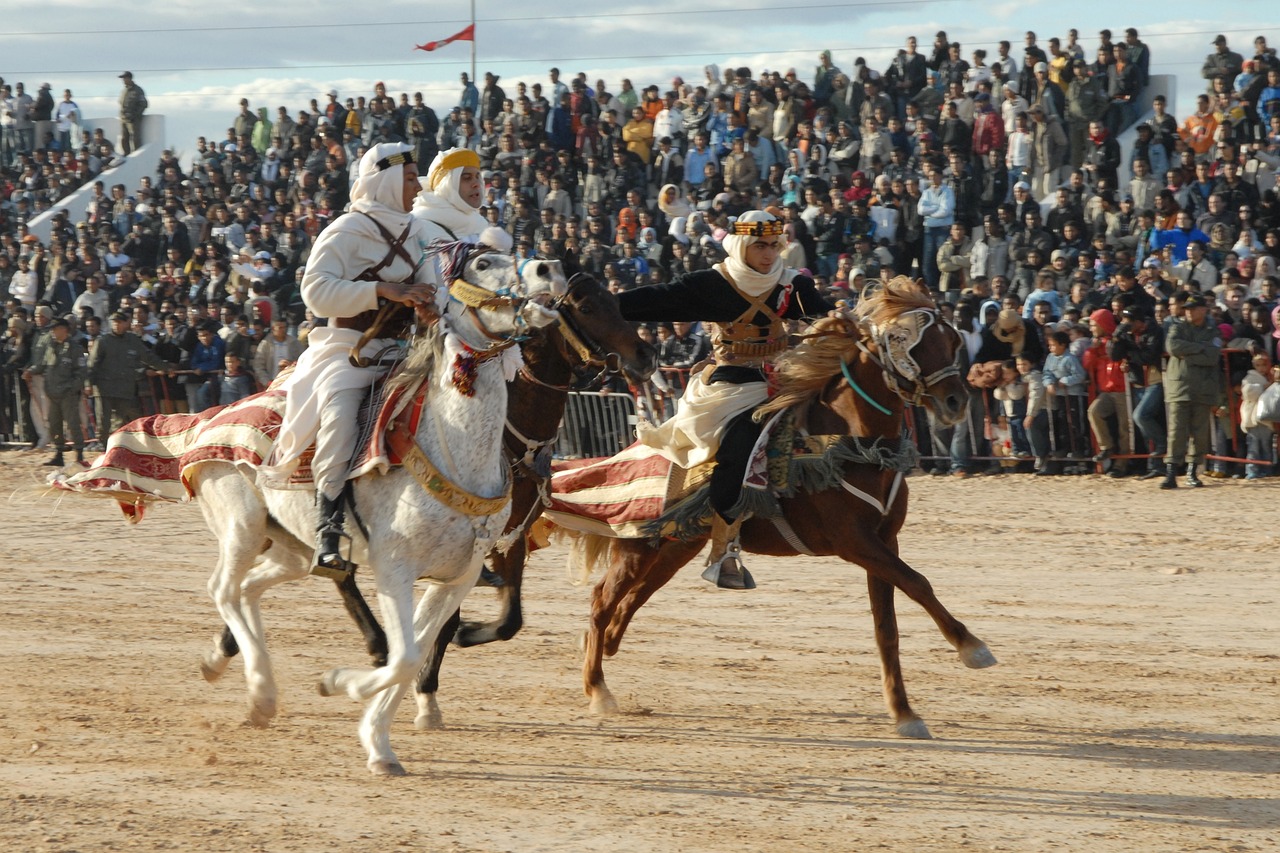
Culturally, Douz is a vibrant tapestry woven with the threads of tradition and modernity. Every December, the town hosts the International Festival of the Sahara, a celebration that draws visitors from across the globe. This festival is a sensory feast, showcasing traditional music, camel races, and the mesmerizing art of Mehari, or camel riding. The festival serves as a reminder of the deep connection between the people of Douz and the desert that surrounds them. Traditional crafts like weaving and pottery are also celebrated, with artisans displaying their skills in creating handmade goods that reflect the town's rich heritage.
The gastronomic delights of Douz are as rich as its history. A visit here is incomplete without indulging in couscous with lamb and vegetables, a staple of Tunisian cuisine. Dates, one of Douz's most famous exports, are a must-try; they are often served as a sweet treat or used to flavor a variety of dishes. The local brik, a savory pastry filled with egg and tuna, is a testament to the inventive spirit of Tunisian cooks, blending simple ingredients into a dish of unexpected complexity.
While Douz is renowned for its more famous attractions, there are hidden gems that often escape the tourist radar. The Sahel, a vast salt flat, offers a surreal landscape where the horizon seems to melt into the sky, creating an otherworldly experience for those who venture there. The lesser-known Chott el-Jerid, the largest salt pan of the Sahara, is famed for its mirages and shifting hues, a sight that feels almost magical to witness in person.
For those planning a visit, the best time to experience Douz is during the cooler months, from November to March, when the desert sun is more forgiving. Visitors should be prepared for extreme temperatures and pack accordingly, with plenty of water and sun protection. Exploring the local souks is a must, where one can barter for handcrafted goods and immerse themselves in the daily life of the town. A camel trek into the dunes offers not just an experience, but a journey into the soul of this remarkable landscape.
In Douz, the desert is not just a backdrop but a living entity, intertwining with every aspect of life. As you sit on a sand dune, feeling the grains slip through your fingers, it's easy to understand what Saint-Exupéry meant when he spoke of the desert's silent shine. Douz is a place where the past and present converge, inviting visitors to lose themselves in its timeless embrace.