





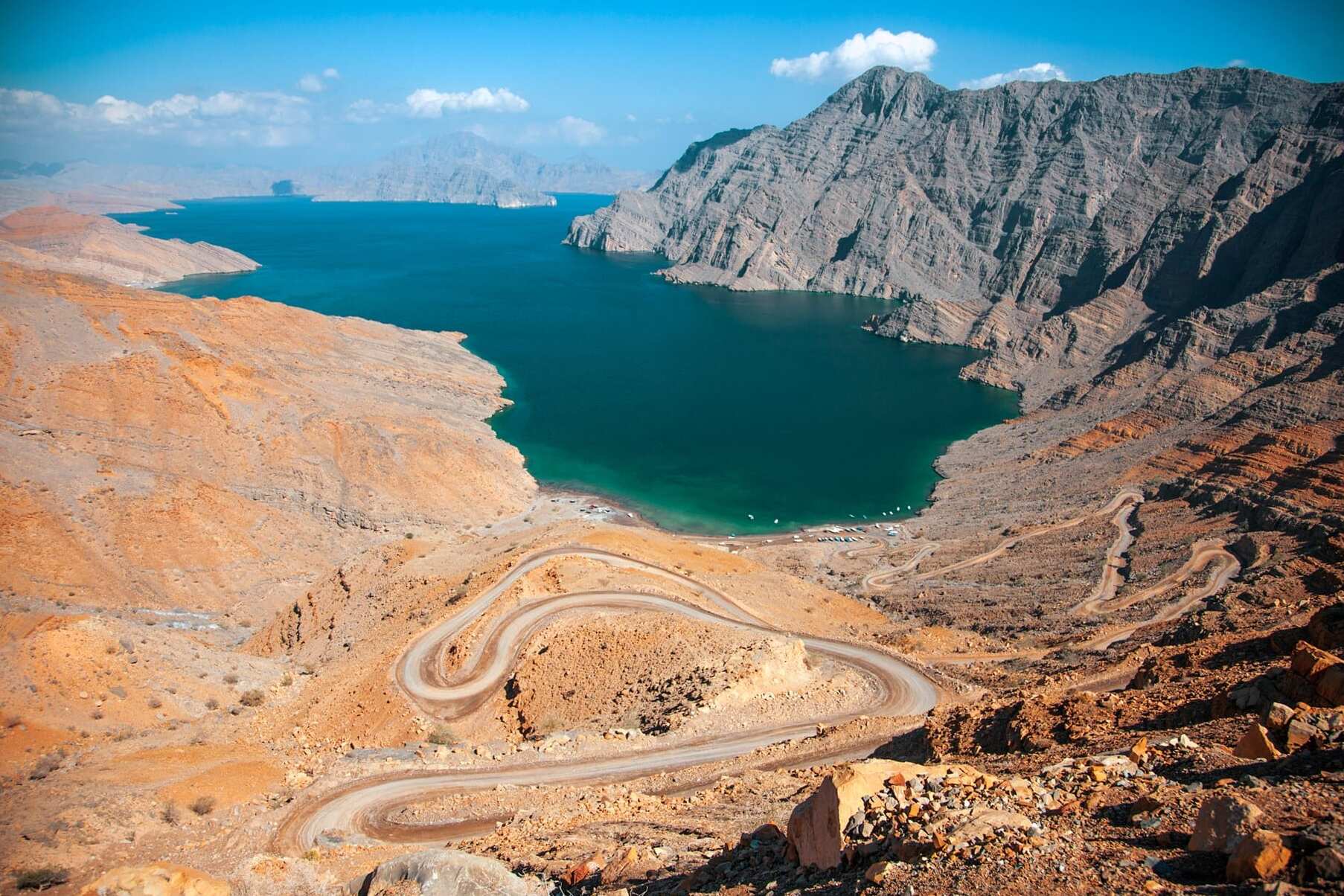
Nestled along the strategic Strait of Hormuz, the Musandam Peninsula in Oman is a hidden gem that offers breathtaking landscapes, rich history, and vibrant culture. Often overlooked due to its separation from the rest of Oman by the United Arab Emirates, this remote enclave is a testament to nature's artistry and human resilience.

History and Origins
The history of the Musandam Peninsula is as dramatic as its rugged cliffs. Its strategic location has made it a coveted region for centuries, playing host to a tapestry of cultures and civilizations. Archaeological evidence suggests that human settlements in this area date back to the Stone Age. The peninsula's significance grew in the 16th century when the Portuguese and later the Ottomans sought control over the Strait of Hormuz, a vital maritime route. In the 19th century, the British Empire also recognized its importance, leaving behind a legacy of colonial architecture. Today, Musandam's history is a mosaic of these influences, each leaving an indelible mark on its cultural landscape.

Art and Architecture
The architecture in Musandam is a reflection of its diverse historical influences. The Khasab Castle, built by the Portuguese in the early 17th century, is a prime example. Originally a military garrison, it now serves as a museum showcasing local artifacts, traditional costumes, and ancient pottery. The fortress-like homes in the villages, known as Bayt al-Qufl (lock houses), are unique to the region. These stone structures, with their distinctive flat roofs and narrow windows, were designed to withstand the harsh climate and potential invasions. Art in Musandam is often found in the form of intricate dhow models, a nod to the region's seafaring heritage.
Local Culture and Traditions
The culture of Musandam is deeply intertwined with its maritime environment. The Shihuh tribe, the original inhabitants, have a rich tradition of storytelling and music, often performed during community gatherings. Their traditional Al-Razfa dance, accompanied by the beat of drums and the rhythm of poetry, is a cultural highlight. Festivals such as Eid al-Adha are celebrated with fervor, where families gather to share feasts and stories. The preservation of these customs is a testament to the community's resilience and pride in their heritage.
Gastronomy
Musandam's cuisine is a flavorful blend of traditional Omani dishes with influences from neighboring cultures. Shuwa, a slow-cooked marinated lamb dish, is a festive favorite, often prepared during celebrations. Seafood is a staple, with Samak Mashwi (grilled fish) and Harees (a hearty wheat and meat dish) frequently gracing local tables. The use of spices like saffron, cardamom, and cumin gives the food its distinctive taste. For a sweet finish, try Halwa, a rich dessert made from rose water, saffron, and nuts.
Lesser-Known Curiosities
One of the peninsula's most intriguing features is its fjord-like inlets, often referred to as the "Norway of Arabia." These khors offer stunning vistas and are best explored by traditional dhow cruises. Beneath the waters of Musandam lies a thriving marine ecosystem, home to dolphins, turtles, and vibrant coral reefs. A lesser-known fact is the presence of ancient petroglyphs etched into the rocks near Tawi, believed to be thousands of years old, offering glimpses into the lives of early inhabitants.
Practical Visitor Information
The best time to visit Musandam is between October and April when the weather is cooler and more conducive to outdoor activities. Travelers should consider flying into Khasab Airport, or alternatively, driving from Dubai, which is about a 2-hour journey. For a more immersive experience, hiring a local guide can provide deeper insights into the hidden stories and traditions of the peninsula. Be sure to bring a camera to capture the dramatic landscapes and a good pair of binoculars for dolphin watching.
Musandam Peninsula is not just a destination; it's a journey into the heart of a land where time seems to stand still. Its untouched beauty, rich history, and cultural tapestry offer a uniquely rewarding experience for those willing to venture off the beaten path.