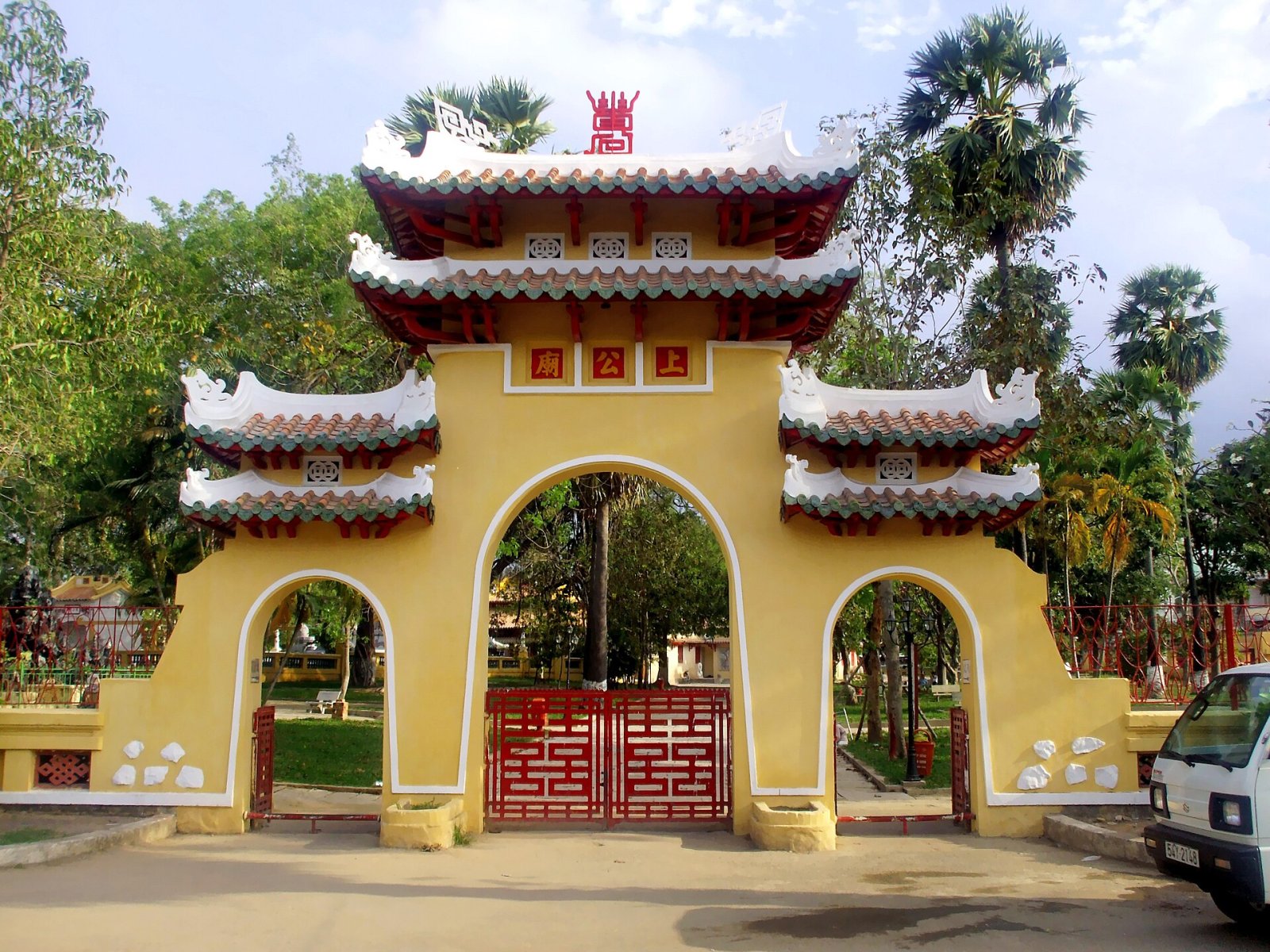

In the heart of Ho Chi Minh City, specifically in the Bình Thạnh district, stands the Lăng Lê Văn Duyệt, a monument that tells the story of a crucial era for Vietnam. This mausoleum, dedicated to General Lê Văn Duyệt, is not only a resting place for a great leader but also an important symbol of Vietnamese culture and history. Its fascinating architecture and historical context make it a must-visit for those wishing to immerse themselves in the rich heritage of this country.
Originally built to honor the general and his consort, the Lăng has over time become a place of worship for other mandarins of the Nguyễn dynasty. The architectural structure, with its elaborate details and historical significance, attracts visitors and historians from all over the world, making this site a landmark in Vietnamese history.
History and Origins
Lê Văn Duyệt, born in 1763, was a key figure in Vietnamese history. His military career began in the service of Prince Nguyễn Ánh, where he played a decisive role in defeating the Tây Sơn rebellion and the subsequent unification of Vietnam. Thanks to his strategic skills, Duyệt quickly rose through the ranks of the Nguyễn army, becoming a marshal by the end of the conflict. His influence extended beyond battles to governance, where he distinguished himself as viceroy of southern Vietnam, stabilizing and developing the region, transforming it into a prosperous and peaceful area.
After his death in 1832, the Lăng Lê Văn Duyệt became a place of worship, not only to honor his memory but also to celebrate his opposition to the isolationist policies of Emperor Minh Mạng. This mausoleum thus represents an important testimony to the struggle for modernization and the opening of Vietnam to the outside world, a recurring theme in the country's history.