Nestled in the shadows of Mount Pentelicus, just north of Athens, lies one of Greece's most enigmatic sites: Davelis Cave. This subterranean wonder has captivated visitors and locals alike with its rich tapestry of history, folklore, and natural beauty. The cave’s allure is heightened by its connection to ancient mythology and its storied past, making it a must-visit for anyone seeking to delve deeper into the mysteries of Greek culture.

History and Origins
The history of Davelis Cave stretches back to ancient times. It is believed that the cave served as a sanctuary for the god Pan, the half-man, half-goat deity associated with nature, shepherds, and flocks. Archaeological excavations have uncovered ceramics depicting Pan and his nymphs, hinting at the site’s significance in ancient religious practices. These findings can now be admired at the Archaeological Museum of Athens, where they provide insight into the spiritual life of the ancients.
Fast forward to the 19th century, and the cave took on a different narrative. It became notorious as the hideout of Davelis, a bandit who allegedly used the labyrinthine tunnels to evade capture with his gang. This association with criminal lore is how the cave earned its present name, Davelis Cave. Over the years, the cave has continued to inspire tales of mystery, with reports of strange phenomena and disappearances that have only added to its mystique.
Art and Architecture
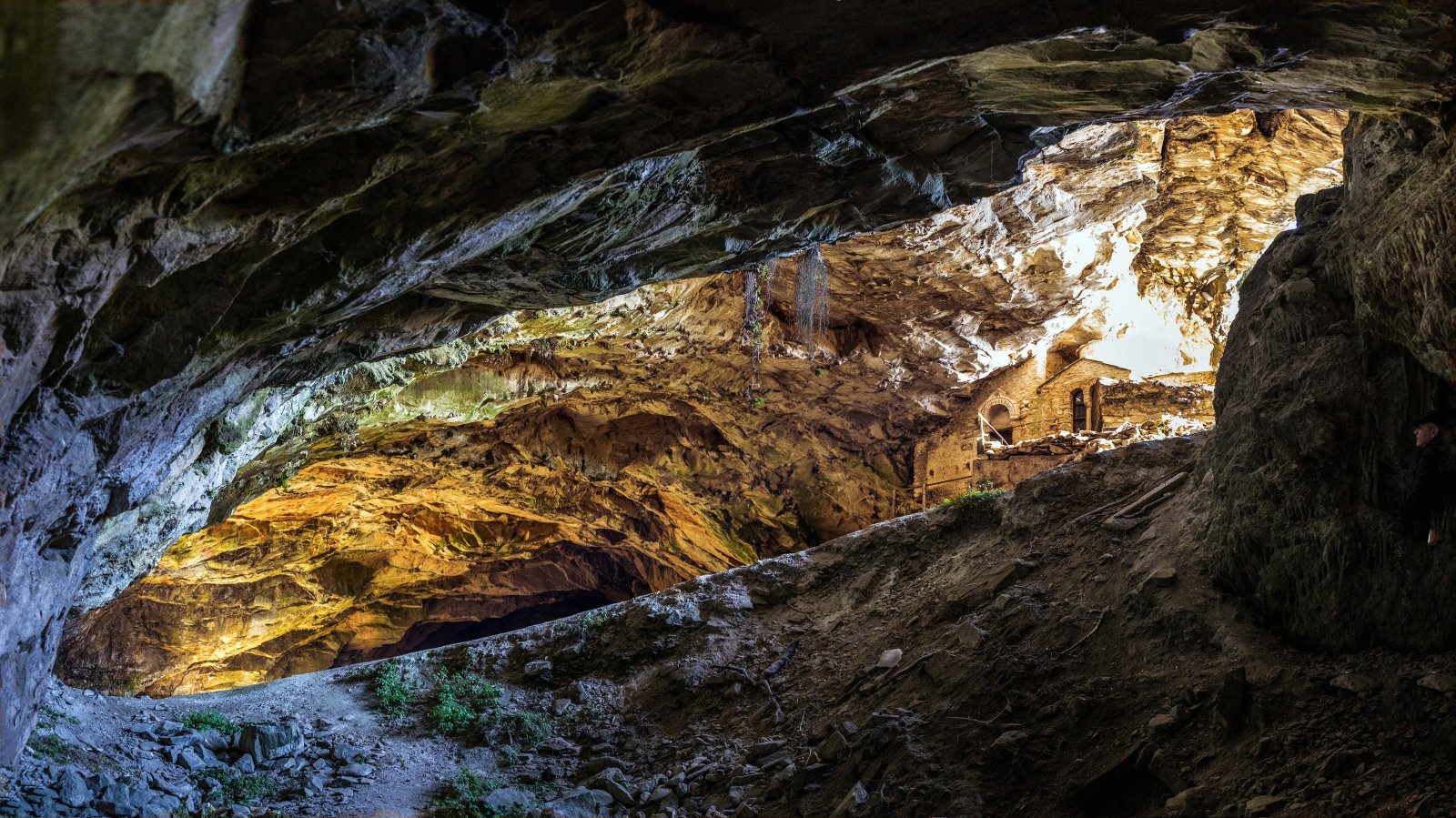
The architectural features of Davelis Cave are as intriguing as its history. The entrance to the cave reveals a rugged, natural rock formation that invites exploration. Inside, visitors encounter a series of tunnels that weave through the mountain, showcasing the raw beauty of nature sculpted over millennia. Notably, embedded within the rock is a Byzantine church, a remarkable feat of engineering that exemplifies the region's religious and architectural heritage. The church, dedicated to Saint George, serves as a testament to the area's Christian history and its reconciliation with ancient pagan traditions.
The artistry of the cave is not limited to its structural elements; the walls bear the etchings of past visitors, including renowned 19th and early 20th-century English writers. These inscriptions tell their own stories and serve as a reminder of the cave's long-standing allure for those drawn by its mystery.
Local Culture and Traditions
Davelis Cave is not just a geological marvel; it is also a cultural landmark. Local customs often intertwine with the cave's legends, particularly during the festival of Saint George. Celebrated on April 23rd, this event draws both locals and pilgrims who gather at the church to honor the saint. The festivities typically include music, dancing, and traditional food, fostering a sense of community while honoring the site’s spiritual significance.
Additionally, the region surrounding Penteli is steeped in local lore, with stories of supernatural occurrences attributed to the cave. Locals recount tales of unexplainable events—like water flowing upstream or electronic devices malfunctioning—keeping the atmosphere of mystery alive.
Gastronomy
The culinary scene near Davelis Cave reflects the rich traditions of Greek cuisine. Visitors can indulge in traditional dishes such as moussaka, a layered casserole of eggplant, minced meat, and béchamel sauce, or souvlaki, grilled meat served with pita and fresh vegetables. The local tavernas offer a variety of meze (small dishes) that showcase the region’s flavors, accompanied by the famous ouzo, a strong anise-flavored spirit that is a staple in Greek culture.
Don’t miss the opportunity to savor Penteli’s honey, renowned for its quality and flavor due to the region’s abundant wildflowers and herbs. This sweet delight is often served with yogurt or drizzled over local pastries, providing a perfect ending to any meal.
Lesser-known Curiosities
Beyond the well-trodden paths of history and mythology, Davelis Cave harbors some lesser-known curiosities. For instance, the cave has long been rumored to contain a hidden treasure that dates back to the time of the bandit Davelis. While no treasure has been officially found, the legend persists, drawing treasure hunters and adventurers.
Moreover, the cave's unique geological features have led to bizarre stories. Some explorers have reported feeling an inexplicable chill or a sense of unease when navigating its depths. These experiences have fueled local tales of the cave being a portal to another realm, adding an intriguing layer to its narrative.
Practical Visitor Information
For those eager to explore Davelis Cave, the best time to visit is during the spring or early fall when the weather is mild and conducive to hiking. The cave is accessible via a short trek from the main road, and sturdy footwear is recommended due to uneven terrain.
When inside, pay close attention to the natural formations and the inscriptions left by previous visitors—each tells a story of its own. Be prepared for limited cell service, as many visitors have reported their devices malfunctioning in the cave’s depths, adding a tangible sense of disconnect from the outside world.
In conclusion, Davelis Cave is not just a geological site but a living tapestry of history, culture, and mystery waiting to be uncovered. Whether you come for the legends, the natural beauty, or the chance to connect with ancient traditions, this hidden gem north of Athens promises an unforgettable experience. For a personalized itinerary to explore the wonders of Penteli, consider using the Secret World app to map out your adventure.