




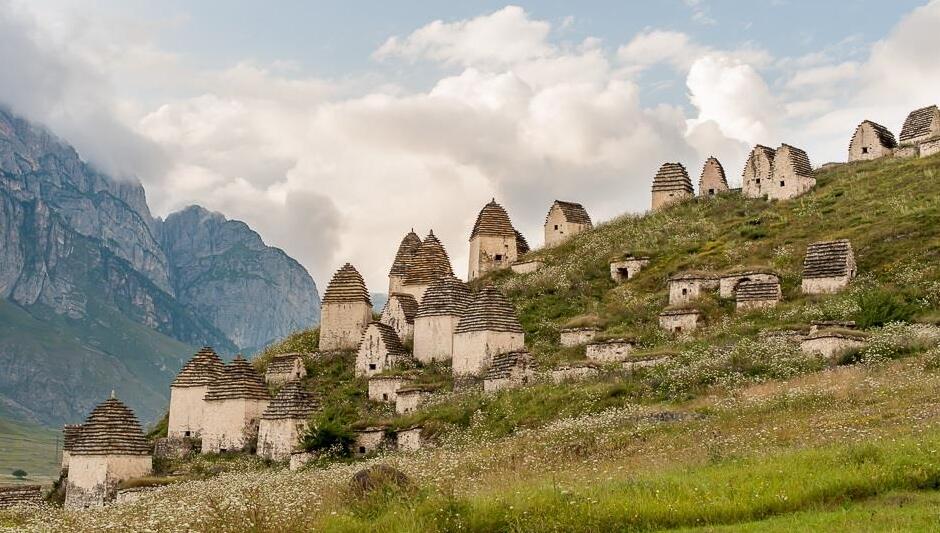
Nestled in the scenic mountains of North Ossetia, Dargavs is often referred to as the 'City of the Dead.' This hauntingly beautiful village is unlike any other, offering visitors a unique glimpse into the region's cultural past. The origins of Dargavs can be traced back to ancient times, as early as the 14th century, when it served as a burial site for the Ossetian people. The area's history is steeped in folklore and tragedy; it is said that during the 19th century, an epidemic swept through the village, prompting the locals to bury their deceased relatives in the hillside tombs, which resemble small white houses. Today, Dargavs stands as a poignant reminder of mortality and a testament to the resilience of the human spirit.
The architecture of Dargavs is a captivating blend of function and symbolism. The burial structures, known as khashtakhs, are stone mausoleums that dot the hillside, each uniquely crafted to honor the deceased. Their whitewashed exteriors gleam under the sun, creating a striking contrast against the rugged mountain backdrop. Visitors are often taken aback by the intricate designs and the assortment of symbols carved into the stone, which reflect the rich traditions and beliefs of the Ossetian people. The artistry extends beyond architecture; local artisans create beautiful handicrafts, including woven textiles and pottery, deeply rooted in the region's heritage.
Despite its somber reputation, Dargavs is infused with local culture and traditions that highlight the community's deep respect for life and death. Annual festivals, such as the Ossetian New Year (Khetag), celebrate the changing seasons and honor the ancestors, blending music, dance, and storytelling. Traditional Ossetian dishes, like kubbaleh (a meat-filled pie) and chudu (savory stuffed flatbreads), are often prepared during these celebrations, embodying the spirit of hospitality that the Ossetian people are known for. The locals maintain a strong connection to their customs, often sharing tales of their ancestors and the significance of the land they inhabit.
The gastronomy of Dargavs is a delightful exploration of flavors, showcasing the natural bounty of the region. Ossetian cuisine is characterized by hearty meals featuring locally sourced ingredients, such as lamb, herbs, and dairy products. Visitors should not miss trying Ossetian pies, which are filled with a variety of ingredients, from potatoes to cheese, and baked to perfection. Additionally, the region is known for its traditional drinks, including kefir, a fermented milk drink that is both refreshing and nutritious.
One of the lesser-known curiosities of Dargavs is the legend of the Khashtakhs. It is said that these burial houses were designed not only as final resting places but also as a way to protect the community from the spirits of the dead. Locals believe that the souls of the deceased linger in the area, watching over their families. Furthermore, the village has become a subject of fascination for researchers and paranormal enthusiasts, drawn to its eerie yet beautiful landscapes and the stories that echo through the mountains.
For those looking to visit Dargavs, the best time is during the late spring to early autumn months, when the weather is milder and the trails leading to the village are accessible. The journey to Dargavs is as captivating as the destination itself, with stunning views of the Caucasus Mountains and lush valleys. When you arrive, take your time to wander through the burial site, reflecting on the lives of those interred and the stories they carry. Don’t forget to bring your camera; the contrast of the white tombs against the green hills and blue sky is mesmerizing.
In conclusion, Dargavs offers visitors a unique blend of history, culture, and breathtaking scenery. Its haunting beauty and rich traditions remind us of the delicate balance between life and death. To make the most of your visit and discover the hidden gems of this mysterious village, consider using the Secret World app for a personalized itinerary that suits your interests.