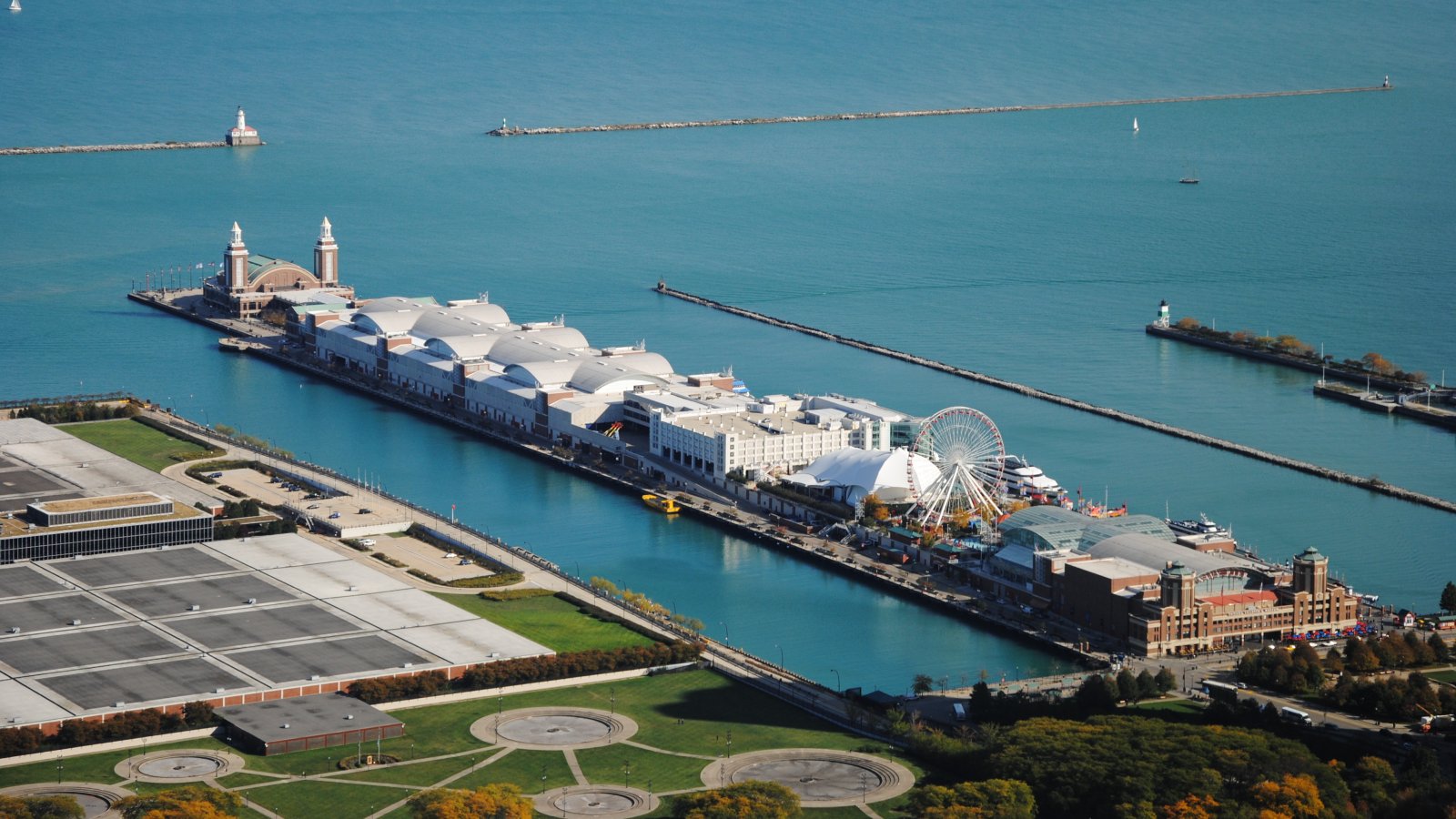
On the vibrant shores of Lake Michigan, Navy Pier stands as a testament to Chicago's dynamic spirit and rich history. This bustling hub, stretching out over 50 acres, is not just a landmark but a living, breathing part of the city's cultural tapestry. With its origins dating back to the early 20th century, Navy Pier has evolved from a modest shipping facility to one of the most visited attractions in the Midwest.

History and Origins Navy Pier's story begins in 1916 when it was opened as Municipal Pier No. 2, designed by architect Charles Sumner Frost. It was part of Daniel Burnham's grand "Plan of Chicago," intended to serve both as a shipping dock and a public space. During World War I and II, the pier's strategic location made it a crucial training facility for the Navy, which is how it earned its current name. Post-war, it served various roles, including a campus for the University of Illinois at Chicago. In the 1990s, a major redevelopment transformed Navy Pier into the entertainment and cultural center we know today.
Art and Architecture Architecturally, Navy Pier is a blend of historic and modern styles. The original structures, characterized by their Beaux-Arts design, coexist alongside contemporary additions like the Wave Wall and the iconic Centennial Wheel. The pier is also home to numerous public art installations. Notably, the "Children's Garden" mural by Chicago artist Bob Faust provides a colorful tribute to the city's youth. The pier's design harmonizes open spaces with the urban skyline, offering a unique vantage point for both art and architecture enthusiasts.
Local Culture and Traditions Navy Pier is a microcosm of Chicago’s diverse cultural scene. The pier hosts a multitude of festivals throughout the year, including the Chicago Festival of Lights and summer fireworks every Wednesday and Saturday. The Chicago Shakespeare Theater, located on the pier, is renowned for its innovative productions, drawing theatergoers from far and wide. Locals and visitors alike gather at the pier to celebrate these cultural events, which reflect the city's rich traditions and vibrant community spirit.
Gastronomy The culinary offerings at Navy Pier are as diverse as the city itself. Visitors can savor Chicago's iconic deep-dish pizza at Giordano's or indulge in fresh seafood at Riva Crabhouse, overlooking the lake. For a taste of Chicago's famous hot dogs, America's Dog & Burger serves up classic flavors with a view. Don't miss out on trying Garrett Popcorn, a local favorite since 1949, offering their famous "Chicago Mix" of caramel and cheese popcorn—a perfect snack as you stroll the pier.
Lesser-known Curiosities While millions flock to Navy Pier, few are aware of its hidden gems. Beneath the grandeur of the Centennial Wheel lies a time capsule, sealed in 1994, to be opened on the pier’s 100th anniversary. The Crystal Gardens, an indoor botanical garden, offers a tranquil oasis with its lush greenery and whimsical fountains. Another curiosity is the Anchor Memorial, which commemorates the pier's naval history with an actual anchor from the USS Chicago.
Practical Visitor Information For those planning a visit, summer is undoubtedly the most popular time, with bustling crowds and a full schedule of events. However, the autumn months provide a more serene experience with fewer crowds and the stunning backdrop of fall foliage. The pier is accessible via public transportation, and parking is available onsite. Be sure to check the calendar for special events and performances, and consider purchasing tickets in advance for attractions like the Centennial Wheel to avoid long lines.
Whether you're drawn by its historical significance, cultural offerings, or simply the stunning views of Lake Michigan, Navy Pier is a destination that encapsulates the essence of Chicago—a city that honors its past while embracing the future.