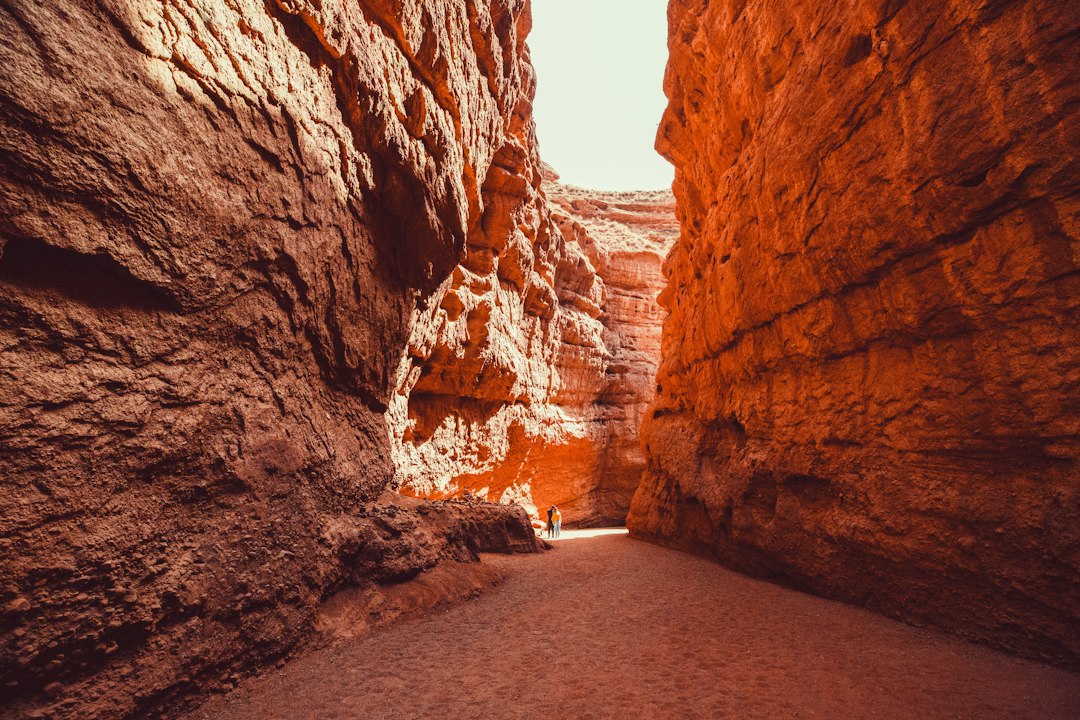

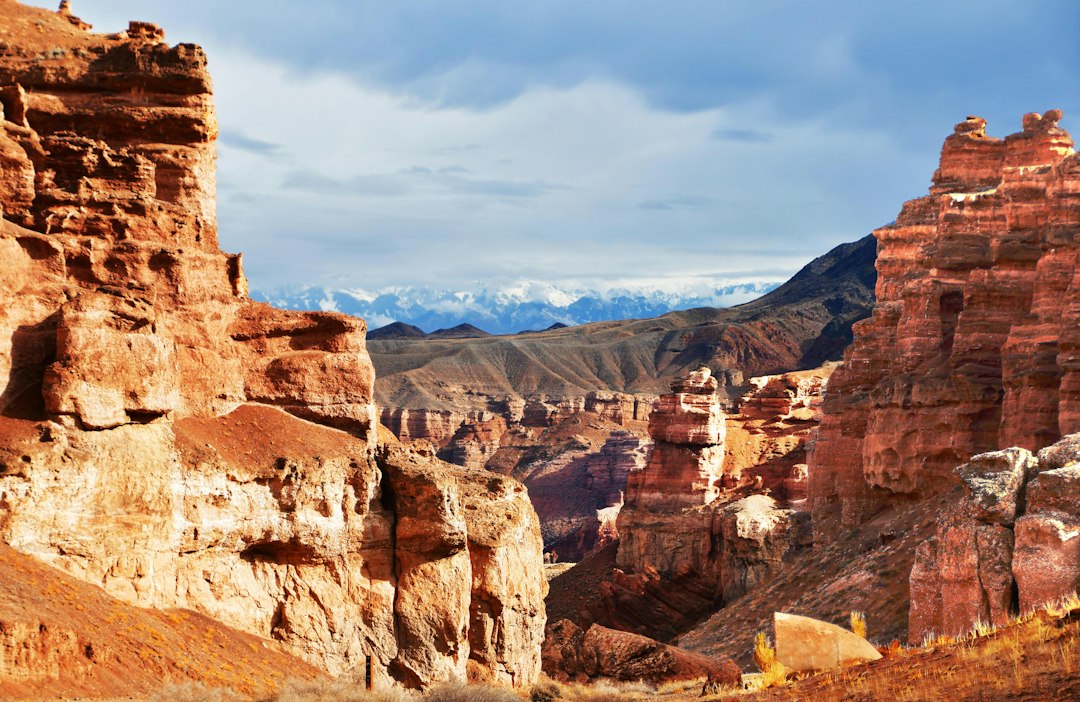
The rust-colored rocky walls rise up to 300 meters above the riverbed, and the silence is broken only by the wind whistling through the sandstone towers. The Charyn Canyon, carved by the river of the same name for about 80 kilometers through the steppes of southeastern Kazakhstan, is one of the most extraordinary geological landscapes in Central Asia. It is located about 200 kilometers east of Almaty, reachable in just over three hours by car along the road that runs along the border with China.
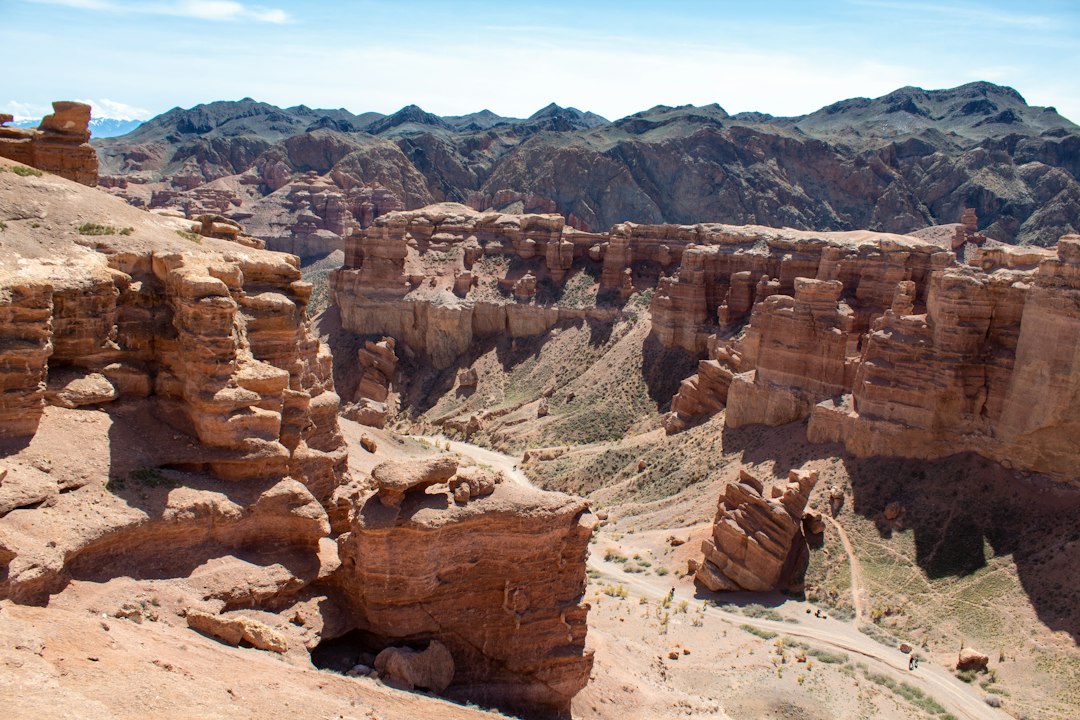
The comparison with the American Grand Canyon is recurring among those who visit, but the Charyn has its own precise identity: it is narrower, more intimate, and surrounded by a semi-arid steppe that amplifies the color contrast between the blue sky and the red and orange rock formations. The most visited section is the so-called Valley of Castles, a stretch of about three kilometers where erosion has shaped pinnacles and spires that resemble medieval towers. Walking among these natural structures, some reaching dozens of meters high, offers a physical perspective that is difficult to convey in words.
A surprising ecosystem between rock and steppe
What strikes the most, besides the geology, is the unexpected biodiversity of this environment. The canyon hosts one of the last relict forests of Sogdian ash (Fraxinus sogdiana), a tree species considered a living botanical fossil, having survived in the area since previous geological eras. This forest is located along the banks of the Charyn River, in the more humid and sheltered areas of the canyon, and represents a unique ecosystem throughout the Central Asian region.
The fauna is equally rich. Among the species observable with patience are the steppe eagle, various types of raptors, foxes, and, during the cooler hours, the souslik, small rodents similar to the ground squirrels typical of the Eurasian steppes. Along the river, one can spot waterfowl, and in the crevices of the rocks, colonies of swifts nest. Human presence is limited, which makes wildlife observation easier compared to many other protected areas.
Walking in the Valley of Castles
The main trail that crosses the Valley of Castles is accessible even to those without trekking experience. The route of about 3 kilometers winds along the bottom of the canyon, among the rock formations, and ends on the banks of the Charyn River. The elevation gain is modest for most of the trail, but the entrance and exit require descending and ascending a rather steep wall via steps carved into the rock. The average time to complete the route is about two hours, but those who want to stop to observe the wildlife or photograph the rocks can easily take three or four.

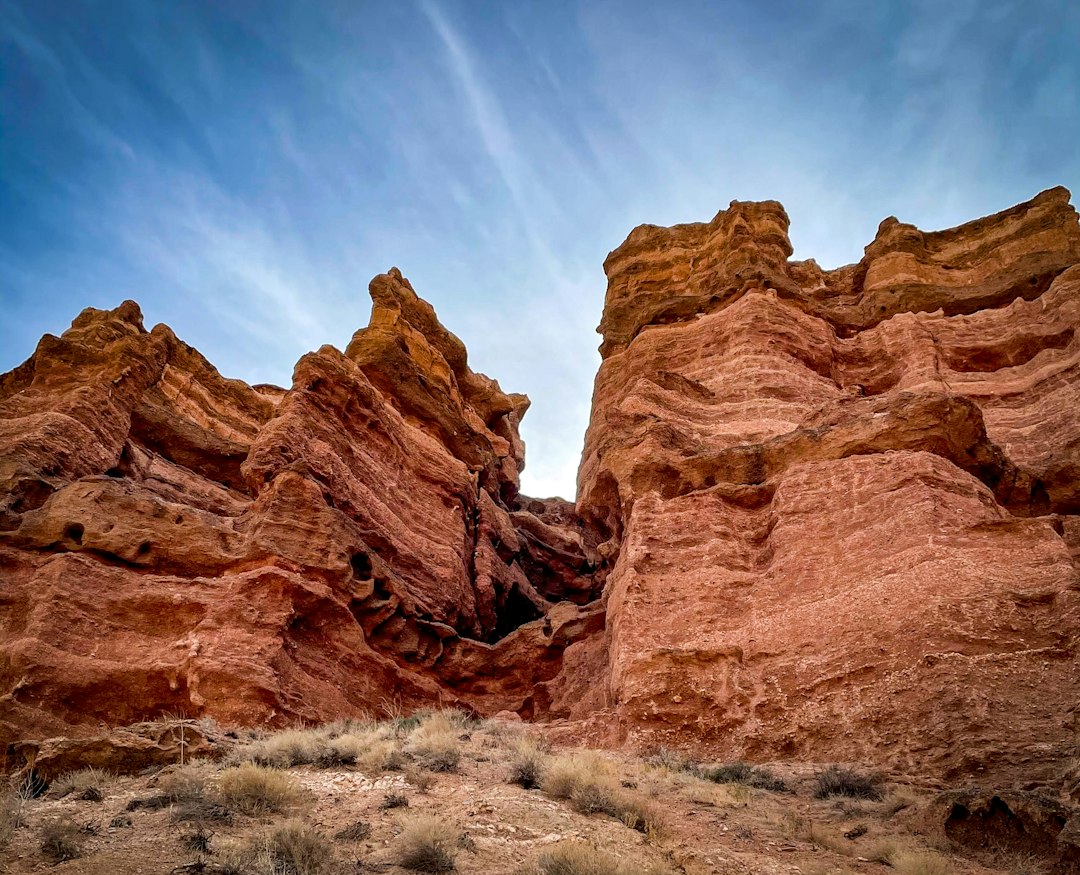
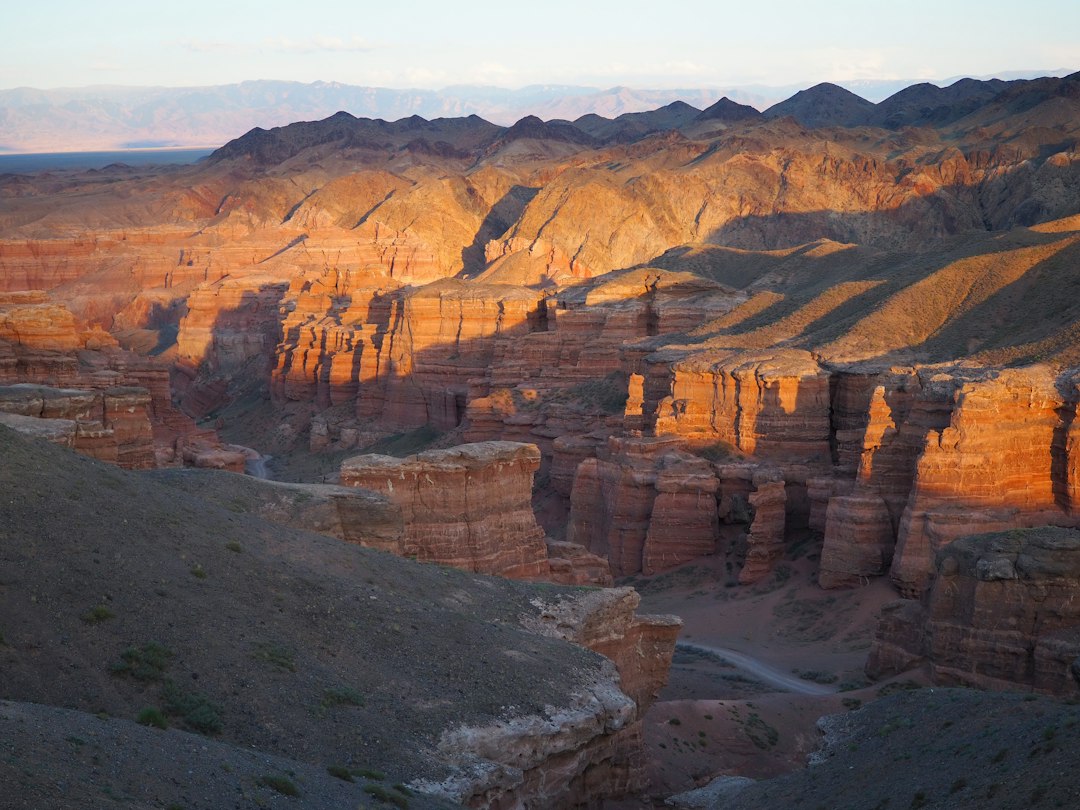
The formations encountered along the way have shapes that stimulate the imagination: natural arches, isolated columns, layered walls that clearly show the different geological periods. The colors change with the light: in the early morning, the rocks appear almost purple, while in the middle of the day, brick red and burnt orange dominate. At sunset, the chromatic effect is particularly intense.
When to go and how to organize the visit
The best time to visit the Charyn Canyon is in spring (April-May) and autumn (September-October). In summer, temperatures at the bottom of the canyon can exceed 40 degrees Celsius, making hiking strenuous and potentially dangerous without proper hydration. In winter, access can be complicated by road conditions. Spring has the advantage of bringing greener vegetation and greater wildlife activity.
The canyon is part of the Charyn National Park, officially established in 2004. Entrance is fee-based, and the cost varies depending on the visitor's nationality. Most tourists arrive from Almaty via organized tours or rental cars. There is no direct public transport to the park entrance, so it is advisable to plan ahead. At the entrance, there are some basic facilities, but bringing enough water is essential, especially in the warm seasons.
Practical tips for visitors
The most useful advice is to arrive early in the morning, preferably by eight o'clock. This way, you avoid the heat of the central hours, the light is optimal for photography, and there is less chance of encountering large groups. Shoes with non-slip soles are recommended for descending and ascending the wall at the entrance of the canyon. Bringing at least two liters of water per person is the bare minimum.
Those who have time can also explore other sections of the canyon besides the Valley of Castles, which are less frequented and equally spectacular from a geological and naturalistic point of view. Some require an off-road vehicle to reach. Sleeping in the area, in one of the campsites or lodges near the park entrance, allows you to experience the canyon at dawn and sunset, when the colors of the rocks reach their maximum intensity.