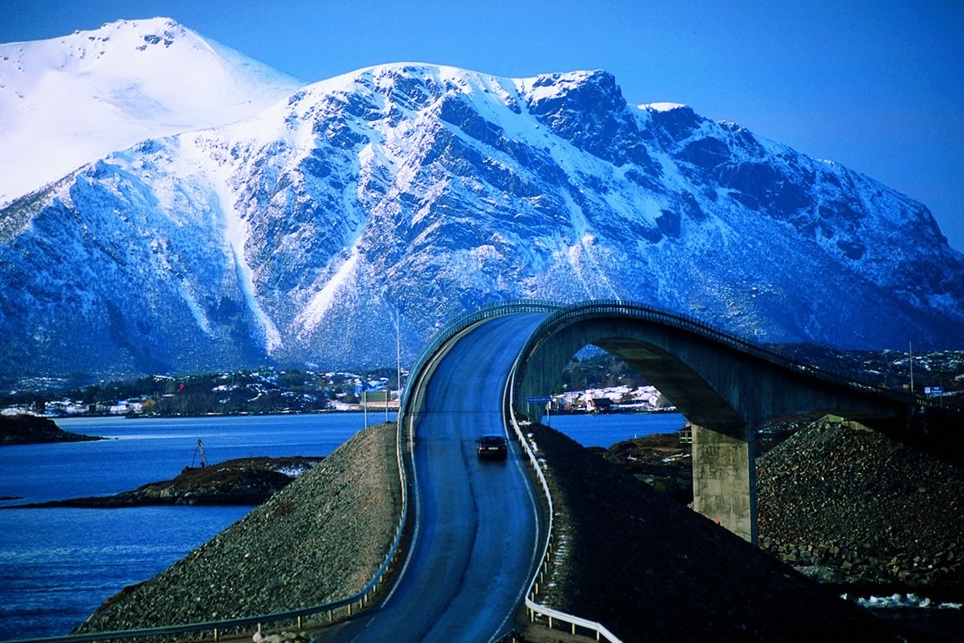

Stretching over a series of rugged islets and skerries in the Norwegian Sea, the Atlantic Ocean Road is a marvel of engineering and natural beauty, often heralded as one of the most beautiful roads in the world. This serpentine strip of asphalt connects the mainland of Norway to the island of Averøya, a breathtaking journey framed by the untamed allure of the Atlantic Ocean. But beyond its picturesque vistas, this road holds stories of resilience, artistry, and tradition.
The history of the Atlantic Ocean Road dates back to its ambitious inception in the early 20th century. Originally envisioned as a railway project in the early 1900s, the idea was shelved due to financial constraints and the onset of World War II. It wasn't until 1983 that construction began on what would become a road instead, a project that faced its own set of challenges, including harsh weather conditions and financial hurdles. After six years of perseverance, the road was finally completed in 1989, a testament to human ingenuity and determination.
Architecturally, the Atlantic Ocean Road is a feat of modern design. Comprising eight bridges and several viaducts, the most iconic of these is the Storseisundet Bridge, an elegant curve that rises and falls like a wave in the ocean. Its dramatic, gravity-defying arc is not only a spectacle but also a clever piece of engineering designed to withstand the region's fierce winds and storms. This blend of form and function allows the road to harmonize with its wild surroundings, creating a journey that is as much about the architectural experience as it is about the destination.
The road’s artistic significance extends beyond its physical structure. It has become a muse for photographers, filmmakers, and artists who are drawn to its dynamic interaction with the sea. The area surrounding the road is a constantly shifting canvas, painted by the ever-changing weather and light conditions, making each journey along its length unique.
Culturally, the Atlantic Ocean Road is set against a backdrop of rich Norwegian traditions. The nearby communities, such as Kristiansund and Molde, are steeped in maritime heritage. Here, the sea is both a livelihood and a way of life, celebrated through festivals like the Nordmøre Festival in Kristiansund, where locals and visitors alike partake in music, dance, and storytelling. The road itself has become a symbol of Norwegian tenacity and a celebration of the connection between land and sea.
This cultural richness extends to the local gastronomy. The cuisine in this part of Norway is heavily influenced by the bounty of the ocean. Travelers can savor klippfisk, a traditional dried and salted cod that has been a staple since the 18th century. Fresh seafood is abundant, with dishes such as bacalao—a hearty stew of fish, tomatoes, and peppers—being a local favorite. Pair these with a glass of aquavit, a traditional Norwegian spirit, and you have a meal that embodies the flavors of the region.
For those venturing to explore the lesser-known aspects of the Atlantic Ocean Road, there are myriad curiosities to uncover. The road is often referred to as the "Road to Nowhere" due to its dramatic and seemingly endless path over the sea. It's also home to the Håholmen, a small island that once served as a fishing village and now offers a glimpse into Norway's coastal past with its preserved wooden houses and maritime museum.
Practical information for visitors is essential to maximize the experience. The best time to visit is during the late spring to early autumn months (May to October) when the weather is milder and the days are longer. For those seeking a more dramatic experience, visiting during a storm can provide an exhilarating view of nature's raw power. When traveling the road, take time to stop at the designated viewpoints, such as the Eldhusøya and Geitøya rest areas, for panoramic views and a chance to immerse yourself in the landscape.
In summary, the Atlantic Ocean Road is more than just a road; it's a journey through history, culture, and nature. Whether you're drawn by the engineering marvels, the artistic inspiration, or the cultural experiences, this road offers a unique glimpse into the heart of Norway's coastal beauty.