
← Back

1540 STEINWEIN

Würzburg, Germany ★★★★☆ 318 views
Serena Botte
Würzburg
🏆 AI Trip Planner 2026

Get the free app

Discover the best of Würzburg with Secret World — the AI trip planner with 1M+ destinations. Get personalized itineraries, hidden gems and local tips. Free on iOS & Android.

🧠 AI Itineraries 🎒 Trip Toolkit 🎮 KnowWhere Game 🎧 Audio Guides 📹 Videos
Scan to download iOS / Android
Scan for AppGallery Huawei users

About 1540 STEINWEIN

1540 STEINWEIN - Würzburg | Secret World Trip Planner

This city of 130,000, nestled among vineyards along the river banks, is arguably the finest of Germany's Baroque and Rococo towns. Its history dates from the 8th century, when Frankish dukes, converted to Christianity by Irish missionary monks, laid the foundations of massive Marienberg Fortress on the crest of the highest of Würzburg's many terraced and vine-covered hills. There is a story about a legendary wine known as the “millennium wine”, harvested in 1540, the time of Shakespeare, Emperor Charles V and Martin Luther. The “Jahrtausendwein” is a “once-in-a-millennium” vintage wine, a very valuable Riesling wine from the Würzburger Stein vineyard, Würzburg, Germany of 1540. The year of 1540 is mostly known for its desastrous drought in Central Europe. The drought was an extreme climatic event with diverse effects on natural areas and human communities over elven months.

Due to the desastrious effects of the drought vintners believed their harvest to be lost as many other crops that year. The vineyards produced mostly shriveled and dried grapes that though produced an extraordinary and delicious wine. The heat created a millennium wine with an extremely high sugar content that was described as “so excellent” that it was preferred to foreign wines.

When the vintners in Würzburg harvested the so-called Kaiserwein in 1540 the quality of the Würzburger Stein wine was described as the best of the past millennium and is probably comparable to modern-day Trockenbeerenauslese. “It looks like gold in the glass,” described one chronicler the “Jahrtausendwein”.

When the Swedes occupied Würzburg in 1631, they searched in vain for the famous wine. The citizens of Würzburg though hid and buried the wine in the forest, and unfortunately forgot its location. It took another 52 years to recover the wine that was then stored in the famous “Schwedenfass“, the “Swedish barrel”.

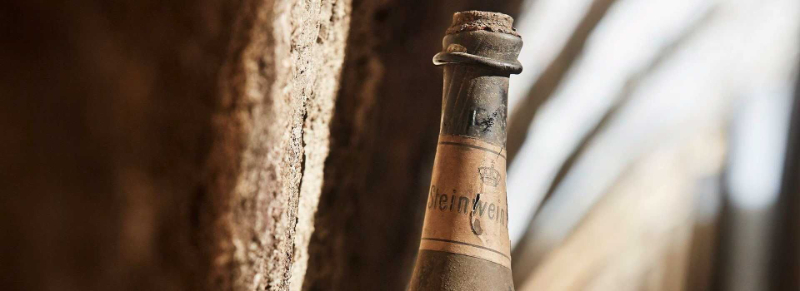
Some bottles of the “Jahrtausendwein” of have survived to this day, for example one is behind glass in the treasury of the Würzburg Bürgerspital zum Heiligen Geist. In 1966 scientists and selected people opened one bottle and determined that the wine was still drinkable, and gave a glimpse of the famous “Jahrtausendwein”. In 1996, the bottle was returned to Bürgerspital Weingut, and is thought to be the last surviving bottle of this vintage wine and the Guinness World Record stated that it was the oldest bottle of wine in 1976, 1977 and 1978. Today, it is safely stored in the wine treasury under lock and key!


🗺 L'app dei tesori italiani

Plan your visit to Würzburg

Suggested itinerary near 1540 STEINWEIN

MAJ+
500.000+ travelers worldwide
  1. 🌅
    Morning
    1540 STEINWEIN
    📍 Würzburg
  2. ☀️
    Afternoon
    Würzburg
    📍 0 km · Würzburg
  3. 🌆
    Evening
    The Würzburg Residenz & Gardens
    📍 1 km · Würzburg

Buy Unique Travel Experiences

Powered by Viator

See more on Viator.com

Explore nearby · Würzburg

Frequently Asked Questions

The 1540 Steinwein, also known as "Jahrtausendwein" or "millennium wine," is a legendary Riesling from Würzburg's Stein vineyard created during an extreme drought year. Despite vintners expecting crop failure, the intense heat produced grapes with extraordinarily high sugar content, resulting in a wine described as "so excellent" and comparable to modern Trockenbeerenauslese, with one chronicler noting it "looks like gold in the glass."
Some bottles of the 1540 Steinwein have survived to the present day and are preserved in Würzburg, including bottles stored in the famous "Schwedenfass" (Swedish barrel). The wine was hidden by Würzburg citizens when Swedish troops occupied the city in 1631, then lost for 52 years before being recovered and stored in this historic barrel.
Würzburg is a city of 130,000 nestled among vineyards, featuring the impressive Marienberg Fortress perched on the highest terraced, vine-covered hill, originally founded in the 8th century by Frankish dukes. The city's Baroque and Rococo architecture, combined with its famous Stein vineyard where the legendary 1540 wine originated, makes it one of Germany's finest wine destinations.
1540 was marked by a devastating drought across Central Europe that lasted eleven months, causing most crops to fail and leaving vintners expecting total harvest loss. However, the extreme heat paradoxically created the perfect conditions for the Kaiserwein, concentrating sugars in the shriveled grapes and producing what became known as the finest wine of the millennium.
When Swedish forces occupied Würzburg in 1631, they searched unsuccessfully for the famous 1540 wine because local citizens had hidden and buried it in the forest. The wine remained lost for 52 years until it was finally recovered and stored in the "Schwedenfass" (Swedish barrel), where some bottles remain preserved today as a testament to Würzburg's winemaking heritage.